• Fri frakt över 249 kr
  • •
  • Snabba leveranser
  • •
  • Billiga böcker
Kundservice

Du är på sajten för privatpersoner.

Företag, bibliotek eller offentlig verksamhet?

Du handlar på classic.bokus.com, där alla dina funktioner finns intakta.
Till classic.bokus.com
Bokus logotyp. Gå till startsidan.
  • Erbjudanden
  • Nyheter
  • Student
  • Topplistor
  • Barn & ungdom
  • Bokus Play
  • E-böcker
  • Pocketböcker
  • Spel & pussel

10% rabatt på allt med kod NYSTART10 →

Sidfot

Mina sidor

    Hjälp

    • Kundservice
    • Vanliga frågor och svar
    • Frakt och leverans
    • Retur vid ångerrätt
    • Reklamera vara
    • Betalning
    • Köpvillkor
    • Allmänna villkor
    • Information om webbplatsens tillgänglighet

    Om Bokus

    • Om oss
    • Pressrum
    • För studenter
    • För företag
    • För bibliotek och offentlig verksamhet
    • För leverantörer
    • Hållbarhet

    Populärt

    • Aktuella erbjudanden
    • Presentkort
    • Studentlitteratur
    • Nya böcker
    • Topplistor
    • Signerade böcker
    • Engelska böcker

    Inspiration

    • Boktips
    • BookTok
    • Populära bokserier
    • Barnbokskaraktärer
    • Populära författare
    Logotyp för Bokus
    Följ oss på Facebook (extern länk)Följ oss på Instagram (extern länk)Följ oss på YouTube (extern länk)Följ oss på TikTok (extern länk)
    bokus @ CookiesAnpassa cookiesIntegritetspolicyKöpvillkor
    Till Citymail hemsida (extern länk)Till Budbee hemsida (extern länk)Till Postnord hemsida (extern länk)Till Schenker hemsida (extern länk)Till Early Bird hemsida (extern länk)Till Walleys hemsida (extern länk)
    1. Naturvetenskap och teknik
    2. Geovetenskap
    3. Miljövetenskap och miljöpolitik

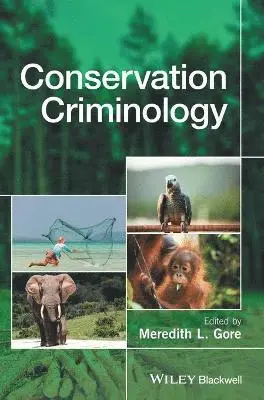
    Conservation Criminology

    AvMeredith L. Gore,Meredith L. Gore

    Inbunden, Engelska, 2017

    889 kr

    Beställningsvara. Skickas inom 5-8 vardagar. Fri frakt över 249 kr.

    Beskrivning

    This important new text introduces conservation criminology as the interdisciplinary study of environmental exploitation and risks at the intersection of human and natural systems. Taking an interdisciplinary approach, the book enhances understanding of the various human and organizational behaviors that pose risks to the environment, humans, and drive conservation crime. As human population growth, global market economies, climate change, deforestation, and illegal exploitation of natural resources continue to increase, academic research from numerous disciplines is needed to address these challenges.Conservation Criminology promotes thinking about how unsustainable natural resources exploitation is a cause and a consequence of social conflict. Case studies profiled in the book demonstrate this cause and effect type situation, as well as innovative approaches for reducing risks to people and the environment. This text encourages readers to consider how humans behave in response to environmental risks and the various mechanisms that constitute effective and ineffective approaches to enforcement of wildlife crimes, including environmental and conservation policy. Case studies from the USA, Latin America, Africa, and Asia highlight corruption in conservation, global trade in electronic waste, illegal fishing, illegal logging, human-wildlife conflict, technology and space, water insecurity, wildlife disease, and wildlife poaching. Taken together, chapters expand the reader’s perspective and employ tools to understand and address environmental crimes and risks, and to provide novel empirical evidence for positive change.  With established contributors providing interdisciplinary and global perspectives, this book establishes a foundation for the emerging field of conservation criminology.

    Produktinformation

    • Utgivningsdatum:2017-05-05
    • Mått:173 x 246 x 20 mm
    • Vikt:635 g
    • Format:Inbunden
    • Språk:Engelska
    • Antal sidor:248
    • Förlag:John Wiley and Sons Ltd
    • ISBN:9781118935484

    Utforska kategorier

    • Miljövetenskap och miljöpolitik inom Naturvetenskap och teknik
    • Miljörätt inom Juridik

    Mer om författaren

    About the editorMeredith L. Gore is a conservation social scientist whose interdisciplinary research explores relationships between human behavior and the environment. She is an Associate Professor in the Department of Fisheries & Wildlife and School of Criminal Justice at Michigan State University (MSU) and Jefferson Science Fellow with the US Department of State. Dr. Gore is a MSU Global Research Fellow and President of the Society for Conservation Biology's Social Science Working Group.

    Innehållsförteckning

    • Notes on Contributors xiiiPreface xxiAcknowledgments xxiii1 Global Risks, Conservation, and Criminology 1Meredith L. Gore1.1 Conservation Crimes Are a Global Problem 11.2 Three Foundational Fields of Conservation Criminology 41.3 Foundation 1: Natural Resource Management and Policy 41.3.1 Different Values Underlie Natural Resource Management and Conservation 41.3.2 The Precautionary Principle and Prevention 61.3.3 Community–Based Conservation 61.3.4 Protected Areas 71.4 Foundation 2: Criminology, Crime Science, and Criminal Justice 81.4.1 Opportunity Structures of Crime 91.4.2 Crime Prevention 101.4.3 Criminological Typologies 111.5 Foundation 3: Risk and Decision Science 111.5.1 Risk Assessment and Perception 131.5.2 Risk Communication 141.5.3 Risk Governance 141.6 Combining the Three Foundations: Conservation Criminology 151.6.1 Strengths 161.6.2 Shortcomings 161.7 How to “Do” Conservation Criminology 171.8 Roadmap 18References 20Part I Conceptual Advancements in Conservation Criminology2 Conservation Crime Science 27Jessica S. Kahler and Meredith L. Gore2.1 Exploitation of Natural Resources in a Globalized World 272.2 The Limits of Criminology for Conservation Practice 282.3 Overcoming the Limits of Criminology with Crime Science 302.4 State of Knowledge: Conservation Criminology and Conservation Crime Science 312.4.1 Describing the Literature 322.5 Limitations 362.6 Utility of Using Conservation Crime Science 372.7 Setting Expectations for Conservation Crime Science 382.8 Conclusion 39References 413 Deterrence, Legitimacy, and Wildlife Crime in Protected Areas 45William D. Moreto and Jacinta M. Gau3.1 Wildlife Crime in Protected Areas 463.2 Criminological and Criminal Justice Perspectives on Deterrence 463.2.1 Theoretical Foundations 463.3 Empirical Findings 483.4 Limitations with Deterrence–based Approaches in Protected Areas 483.5 Legitimacy and Its Role in Establishing Normative and Instrumental Forms of Compliance in Conservation 513.6 Alternatives to Deterrence–Based Approaches 523.6.1 Enhancing Legitimacy 523.7 Future Considerations 53References 54Part II Case Studies and Examples4 Governance for Conservation Risks and Crime 61Mark A. Axelrod, Austin Flowers, Katherine Groff, and Julia Novak Colwell4.1 Defining Governance 614.2 General Concepts of Governance for Conservation Risks 624.3 Strict Enforcement by Official Authorities and Governments 634.4 International Movement of Electronic Waste 634.5 Regulatory Efforts to Limit E–waste Trade 654.6 People–Centered Approaches Focused Local Livelihoods 674.7 Limits to Enforcement Actions in Chiquibul National Park, Belize 684.8 Limits of Alternative Livelihood Strategies 684.9 Unintended Effects and Collateral Impacts of Conservation Governance 694.10 Conclusion 71References 715 Gaining Compliance and Cooperation with Regulated Wildlife Harvest 77Brent A. Rudolph and Shawn J. Riley5.1 Importance of Compliance and Cooperation 785.2 What Drives Violations of Natural Resource Regulations? 805.3 Unintentional Violations 815.4 Intentional Violations 815.5 Violations Motivated by Direct Personal Gains 825.6 Violations Motivated by Indirect Personal Gains 835.7 Violations and Instrumental Judgments of Government Policy and Regulators 845.8 Violations and Normative Influence 855.9 What Drives Cooperation? 865.10 Considerations for Increasing Compliance and Cooperation 875.10.1 Applying Regulations to Influence Compliance 885.10.2 Applying Economic Instruments to Influence Compliance and Cooperation 895.10.3 Applying Communication to Influence Compliance and Cooperation 905.10.4 Communication to Influence Instrumental Judgments 905.10.5 Communication to Influence Behavior Through Norms 915.10.6 Communication to Influence Procedural Justice 915.11 Conclusion 92References 926 Corruption and Organized Crime in Conservation 97Aksel Sundström and Tanya Wyatt6.1 Connecting Corruption and Organized Crime to Conservation 996.1.1 Defining Corruption and Organized Crime 996.1.2 The Role and Extent of Corruption and Organized Crime in Conservation Crime 1006.1.3 Why do Environmental Black Markets Exist? 1026.2 Case Study on Abalone Poaching 1026.2.1 The Context of Bureaucratic Corruption and Presence of Criminal Groups 1026.2.2 The Investigation 1046.2.3 Non–Corrupt Inspectors are Threatened 1046.3 Case Study on Illegal Trade in Russian Raptors 1056.4 A Policy–Oriented Discussion of Solutions 1076.4.1 Supporting Non–Corrupt Officials That Receive Threats 1076.4.2 Complement Merit–Based Reforms with External Monitoring Mechanisms 1076.4.3 Public Awareness Campaigns May Help Decrease Demand for Illicit Goods 1086.4.4 A Cooperative Network Approach to Combating Organized Crime 1096.5 Conclusion 109References 1107 Problem–Oriented Policing for Natural Resource Conservation 115Mark C. G. Gibson7.1 What is Problem–Oriented Policing? 1157.2 The Opportunity for POP in Natural Resource Management 1197.3 A Case Study of Australian Commonwealth Fisheries Management 1207.3.1 The Australian Fisheries Management Authority 1207.3.2 Scanning 1237.3.3 Analysis 1247.3.4 Response 1257.3.5 Assessment 1267.4 Adapting POP for More Effective Conservation 1277.5 Conclusion 129References 1298 Exploring the Sociology of Wildlife Tourism, Global Risks, and Crime 133Jessica Bell Rizzolo8.1 Wildlife Tourism 1348.1.1 Types of Wildlife Tourism 1348.1.2 Benefits of Wildlife Tourism Link Biodiversity Conservation and Livelihood Preservation 1348.1.3 Risks Associated with Wildlife Tourism 1358.2 Conservation Criminology and Wildlife Tourism 1368.2.1 Natural Resources Management and Conservation Biology 1378.2.2 Risk and Decision Science 1378.2.3 Criminology 1388.3 Theoretical Insights on Wildlife Tourism from Sociology 1398.3.1 Wildlife Tourism and Power 1398.3.2 Authenticity as a Sociological Aspect of Tourism 1418.4 Elephant Tourism and Crime in Thailand 1448.4.1 Elephant Tourism in Thailand 1448.4.2 Wild Live Elephant Trafficking 1448.4.3 Illegal Ivory Trade 1458.4.4 Animal Welfare 1458.4.5 Elephant Tourism and Crime: Insights From Conservation Criminology and Sociological Theory 1488.5 Conclusion 150References 151Part III Models and Innovations9 Technological Innovations Supporting Wildlife Crime Detection, Deterrence, and Enforcement 157Heidi Kretser, Emma Stokes, Serge Wich, David Foran, and Alexa Montefiore9.1 Challenges for Wildlife Crime Detection and Enforcement 1589.2 Technological Advances in Conservation 1609.3 Spatial Monitoring and Reporting Tool (SMART) 1619.3.1 Limitations of SMART Technology and Opportunities for Future Improvements 1639.4 Conservation Drones 1649.4.1 Limitations of Drone Technology and Opportunities for Future Improvements 1669.5 Mobile Device Applications 1679.5.1 Limitations of Mobile App Technology and Opportunities for Future Improvements 1689.6 Conservation Forensics 1719.6.1 Limitations of Forensic Technology and Opportunities for Future Improvements 1739.7 Conclusion 174References 17510 PAWS: Game Theory Based Protection Assistant for Wildlife Security 179Fei Fang, Benjamin Ford, Rong Yang, Milind Tambe, and Andrew M. Lemieux10.1 Applying Game Theoretic Analysis to Poaching 18010.2 Modeling Human Behavior to Create Optimal Patrol Strategies 18110.3 Domain Feature Modeling 18110.4 The Genesis of PAWS from Synthesizing Conservation, Computer Science, and Criminology 18210.4.1 Describing the Poaching Domain to Create Patrols that Prevent Poaching 18410.5 The PAWS Model 18510.5.1 The Basis of Game–Theoretic Analysis in PAWS 18610.5.2 Modeling Human Behavior for PAWS 18810.5.3 Incorporating Learning into the Behavioral Model 18910.6 PAWS–Learn 18910.6.1 Domain Feature Modeling 19010.7 Discussion 192References 19311 Estimating Poaching Opportunity and Potential 197Adrian Treves, Christine Browne-Nuñez, Jamie Hogberg, Jens Karlsson Frank, Lisa Naughton-Treves, Nicole Rust, and Zachary Voyles11.1 Understanding Attitudes and Behaviors of Realized and Potential Poachers 19811.2 Social Psychological Approaches for Understanding the Potential to Poach 20011.3 Case Study on Wolf Poaching 20011.3.1 Theoretical Approach and Sampling 20011.3.2 Methods 20311.3.3 Study Site 20311.3.4 Study Respondents 20411.3.5 Survey Items 20411.3.6 Inclination to Poach 20511.3.7 Modeling Potential to Poach 20511.4 Results 20611.4.1 Potential to Poach 20611.4.2 Effects on Wolf Population 20711.4.3 Implications for Theory and Practice 20711.4.4 Deer Hunters 20811.4.5 Complainant Sample 20911.5 Theoretical Considerations on the Causes of Poaching 210References 212Index 217