• Fri frakt över 249 kr
  • •
  • Snabba leveranser
  • •
  • Billiga böcker
Kundservice

Du är på sajten för privatpersoner.

Företag, bibliotek eller offentlig verksamhet?

Du handlar på classic.bokus.com, där alla dina funktioner finns intakta.
Till classic.bokus.com
Bokus logotyp. Gå till startsidan.
  • Erbjudanden
  • Nyheter
  • Student
  • Topplistor
  • Barn & ungdom
  • Bokus Play
  • E-böcker
  • Pocketböcker
  • Spel & pussel

10% rabatt på allt med kod NYSTART10 →

Sidfot

Mina sidor

    Hjälp

    • Kundservice
    • Vanliga frågor och svar
    • Frakt och leverans
    • Retur vid ångerrätt
    • Reklamera vara
    • Betalning
    • Köpvillkor
    • Allmänna villkor
    • Information om webbplatsens tillgänglighet

    Om Bokus

    • Om oss
    • Pressrum
    • För studenter
    • För företag
    • För bibliotek och offentlig verksamhet
    • För leverantörer
    • Hållbarhet

    Populärt

    • Aktuella erbjudanden
    • Presentkort
    • Studentlitteratur
    • Nya böcker
    • Topplistor
    • Signerade böcker
    • Engelska böcker

    Inspiration

    • Boktips
    • BookTok
    • Populära bokserier
    • Barnbokskaraktärer
    • Populära författare
    Logotyp för Bokus
    Följ oss på Facebook (extern länk)Följ oss på Instagram (extern länk)Följ oss på YouTube (extern länk)Följ oss på TikTok (extern länk)
    bokus @ CookiesAnpassa cookiesIntegritetspolicyKöpvillkor
    Till Citymail hemsida (extern länk)Till Budbee hemsida (extern länk)Till Postnord hemsida (extern länk)Till Schenker hemsida (extern länk)Till Early Bird hemsida (extern länk)Till Walleys hemsida (extern länk)
    1. Naturvetenskap och teknik
    2. Geovetenskap
    3. Miljövetenskap och miljöpolitik

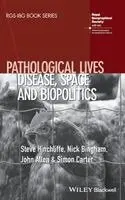
    Pathological Lives

    Disease, Space and Biopolitics

    AvSteve Hinchliffe,Nick Bingham

    Inbunden, Engelska, 2016

    Del i serien RGS-IBG Book Series

    828 kr

    Beställningsvara. Skickas inom 5-8 vardagar. Fri frakt över 249 kr.

    Fler format och utgåvor

    Häftad

    349 kr

    Beskrivning

    Pandemics, epidemics and food borne diseases are a major global challenge. Focusing on the food and farming sector, and mobilising social theory as well as empirical enquiry, Pathological Lives investigates current approaches to biosecurity and ask how pathological lives can be successfully ‘regulated’ without making life more dangerous as a result.   Uses empirical and social theoretical resources developed in the course of a 40-month research project entitled ‘Biosecurity borderlands’Focuses on the food and farming sector, where the generation and subsequent transmission of disease has the ability to reach pandemic proportionsDemonstrates the importance of a geographical and spatial analysis, drawing together social, material and biological approaches, as well as national and international examplesThe book makes three main conceptual contributions, reconceptualising disease as situated matters, the spatial or topological analysis of situations and a reformulation of biopoliticsUniquely brings together conceptual development with empirically and politically informed work on infectious and zoonotic disease, to produce a timely and important contribution to both social science and to policy debate

    Produktinformation

    • Utgivningsdatum:2016-12-23
    • Mått:158 x 236 x 19 mm
    • Vikt:472 g
    • Format:Inbunden
    • Språk:Engelska
    • Serie:RGS-IBG Book Series
    • Antal sidor:272
    • Förlag:John Wiley and Sons Ltd
    • ISBN:9781118997598

    Utforska kategorier

    • Miljövetenskap och miljöpolitik inom Naturvetenskap och teknik
    • Geografi inom Naturvetenskap och teknik
    • Agronomi inom Naturvetenskap och teknik

    Mer om författaren

    Steve Hinchliffe is Professor of Human Geography at Exeter University, UK. He is an elected Fellow of the Academy of Social Sciences and author and editor of numerous books and articles on issues ranging from risk and food, to biosecurity, urban ecologies and nature conservation. He sits on the UK’s Food Standards Agency Social Science Research Committee and has advised DEFRA on responses to exotic disease events.Nick Bingham is a Senior Lecturer in the Faculty of Social Sciences, The Open University, UK. Nick’s current areas of research focus include the management of food safety, responses to the pollination crisis, and matters of coordination in smart cities. He is the author of numerous journal articles and book chapters and is joint editor of Contested Environments (with Andrew Blowers and Chris Belshaw, 2003).John Allen is Professor of Economic Geography in the Faculty of Social Sciences, The Open University, UK. His teaching and research experience includes work on issues of power and spatiality, more recently in relation to financialization, privatization, biopower and topology. His publications include Lost Geographies of Power (Oxford, Blackwell, 2003) and Topologies of Power: Beyond Territory and Networks (2016), in addition to numerous authored and edited books.Simon Carter is a Senior Lecturer in the Faculty of Social Sciences, The Open University, UK. Hisresearch interests are in Science and Technology Studies, especially as applied to issues of health and medicine. Most recently, he has been working on an ESRC funded study into how biosecurity interfaces with other concerns in our globalized world. He is the author of Rise and Shine (2007) as well as numerous book chapters and journal articles.

    Innehållsförteckning

    • List of Figures ixSeries Editors’ Preface xAcknowledgements xiForeword xiiiPart I Framing Pathological Lives 11 Pathological Lives – Disease, Space and Biopolitics 3Introduction: The Emergency of Emergent Infectious Diseases 3The Four Moves of Pathological Lives 8References 212 Biosecurity and the Diagramming of Disease 25Disease Diagrams 27The Disease Multiple: Germs and the Return of the Outside 31Biosecurity and the Diagramming of Disease 34Conclusions 47References 493 Reconfiguring Disease Situations 52Disease Situations 54Microbial Life and Contagion as Difference and Repetition 67A Topological Disease Situation 72Conclusions 80References 81Part II Disease Situations 87Introduction 87References 894 ‘Just‐in‐Time’ Disease: A Campylobacter Situation 91Factory‐Farmed Chicken and Food‐borne Disease 93Relational Economy of Disease 101Powers of Life 107Conclusions 108References 1095 The De‐Pasteurisation of England: Pigs, Immunity and the Politics of Attention 112Birth of the Sty 113Pigs in Practice – Fieldwork and Translations 119Immunity, Attention and More‐than‐Human Responses 132Conclusions 139References 1396 Attending to Meat 143Introduction 143Mapping the Current Landscape of Food Safety 144A Failure of Coordination? 151Inspection as Tending the Tensions of Food Safety 154Being Stretched 162Conclusions 164References 1667 A Surfeit of Disease: Or How to Make a Disease Public 169The Media Background to Disease Publics 171Publicising Disease: From Public ‘Understanding’ to ‘Engagement’ 174Understanding and Engaging Disease Publics 177Understanding the Surfeit 179Conclusions: Making a Disease Public 187References 1898 Knowing Birds and Viruses – from Biopolitics to Cosmopolitics 192Sensing Life 193A Livelier Biopolitics and a Noisier Sentience 198A Perceptual Ecology of Knowing Birds 200Surveying Life 204Knowing Viruses 206The Significance of Observation 208Conclusions 210References 2119 Conclusions – Living Pathological Lives 214Time‐Space and Intra‐Actions 216A livelier Politics of Life 218A new Kind of Emergency? 220References 222Index 223