• Fri frakt över 249 kr
  • •
  • Snabba leveranser
  • •
  • Billiga böcker
Kundservice

Du är på sajten för privatpersoner.

Företag, bibliotek eller offentlig verksamhet?

Du handlar på classic.bokus.com, där alla dina funktioner finns intakta.
Till classic.bokus.com
Bokus logotyp. Gå till startsidan.
  • Erbjudanden
  • Nyheter
  • Student
  • Topplistor
  • Barn & ungdom
  • Bokus Play
  • E-böcker
  • Pocketböcker
  • Spel & pussel

10% rabatt på allt med kod NYSTART10 →

Sidfot

Mina sidor

    Hjälp

    • Kundservice
    • Vanliga frågor och svar
    • Frakt och leverans
    • Retur vid ångerrätt
    • Reklamera vara
    • Betalning
    • Köpvillkor
    • Allmänna villkor
    • Information om webbplatsens tillgänglighet

    Om Bokus

    • Om oss
    • Pressrum
    • För studenter
    • För företag
    • För bibliotek och offentlig verksamhet
    • För leverantörer
    • Hållbarhet

    Populärt

    • Aktuella erbjudanden
    • Presentkort
    • Studentlitteratur
    • Nya böcker
    • Topplistor
    • Signerade böcker
    • Engelska böcker

    Inspiration

    • Boktips
    • BookTok
    • Populära bokserier
    • Barnbokskaraktärer
    • Populära författare
    Logotyp för Bokus
    Följ oss på Facebook (extern länk)Följ oss på Instagram (extern länk)Följ oss på YouTube (extern länk)Följ oss på TikTok (extern länk)
    bokus @ CookiesAnpassa cookiesIntegritetspolicyKöpvillkor
    Till Citymail hemsida (extern länk)Till Budbee hemsida (extern länk)Till Postnord hemsida (extern länk)Till Schenker hemsida (extern länk)Till Early Bird hemsida (extern länk)Till Walleys hemsida (extern länk)
    1. Naturvetenskap och teknik
    2. Teknik och industri
    3. Maskinteknik och material

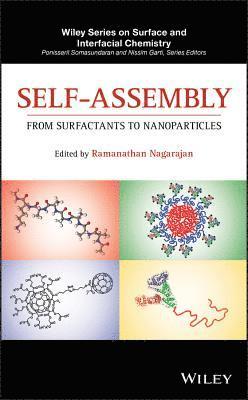
    Self-Assembly

    From Surfactants to Nanoparticles

    AvRamanathan Nagarajan,Ramanathan Nagarajan

    Inbunden, Engelska, 2019

    Del i serien Wiley Series on Surface and Interfacial Chemistry

    1 971 kr

    Beställningsvara. Skickas inom 5-8 vardagar. Fri frakt över 249 kr.

    Beskrivning

    An introduction to the state-of-the-art of the diverse self-assembly systems Self-Assembly: From Surfactants to Nanoparticles provides an effective entry for new researchers into this exciting field while also giving the state of the art assessment of the diverse self-assembling systems for those already engaged in this research. Over the last twenty years, self-assembly has emerged as a distinct science/technology field, going well beyond the classical surfactant and block copolymer molecules, and encompassing much larger and complex molecular, biomolecular and nanoparticle systems. Within its ten chapters, each contributed by pioneers of the respective research topics, the book: Discusses the fundamental physical chemical principles that govern the formation and properties of self-assembled systemsDescribes important experimental techniques to characterize the properties of self-assembled systems, particularly the nature of molecular organization and structure at the nano, meso or micro scales.Provides the first exhaustive accounting of self-assembly derived from various kinds of biomolecules including peptides, DNA and proteins. Outlines methods of synthesis and functionalization of self-assembled nanoparticles and the further self-assembly of the nanoparticles into one, two or three dimensional materials.Explores numerous potential applications of self-assembled structures including nanomedicine applications of drug delivery, imaging, molecular diagnostics and theranostics, and design of materials to specification such as smart responsive materials and self-healing materials.Highlights the unifying as well as contrasting features of self-assembly, as we move from surfactant molecules to nanoparticles. Written for students and academic and industrial scientists and engineers, by pioneers of the research field, Self-Assembly: From Surfactants to Nanoparticles is a comprehensive resource on diverse self-assembly systems, that is simultaneously introductory as well as the state of the art.

    Produktinformation

    • Utgivningsdatum:2019-02-12
    • Mått:152 x 231 x 23 mm
    • Vikt:726 g
    • Format:Inbunden
    • Språk:Engelska
    • Serie:Wiley Series on Surface and Interfacial Chemistry
    • Antal sidor:368
    • Förlag:John Wiley & Sons Inc
    • ISBN:9781119001362

    Utforska kategorier

    • Maskinteknik och material inom Naturvetenskap och teknik
    • Tillverkningsteknik inom Naturvetenskap och teknik

    Mer om författaren

    RAMANATHAN NAGARAJAN, Emeritus Professor of Chemical Engineering at the Pennsylvania State University, served on the faculty from 1979 until 2005. His research interests cover the broad areas of molecular self-assembly, colloids, polymers and nanomaterials. Currently he serves as the Army's Senior Research Scientist in nanomaterials-based technologies to address Soldier domain problem areas at the Natick Soldier Research, Development and Engineering Center.

    Innehållsförteckning

    • List of Contributors xiPreface xvAcknowledgments xxi1 Self-Assembly from Surfactants to Nanoparticles – Head vs. Tail 1Ramanathan Nagarajan1.1 Introduction 11.2 Classical Surfactants and Block Copolymers 41.2.1 Tanford Model for Surfactant Micelles 41.2.2 de Gennes Model for Block Copolymer Micelles 111.2.3 Surfactant Self-Assembly Model Incorporating Tail Effects 131.2.4 Star Polymer Model of Block Copolymer Self-Assembly Incorporating Headgroup Effects 151.2.5 Mean Field Model of Block Copolymer Self-Assembly Incorporating Headgroup Effects 171.2.6 Tail Effects on Shape Transitions in Surfactant Aggregates 201.2.7 Headgroup Effects on Shape Transitions in Block Copolymer Aggregates 221.3 Self-Assembly of Nonclassical Amphiphiles Based on Head−Tail Competition 241.3.1 Dendritic Amphiphiles 251.3.2 DNA Amphiphiles 271.3.3 Peptide Amphiphiles 291.3.4 Protein−Polymer Conjugates 311.3.5 Amphiphilic Nanoparticles 341.4 Conclusions 37Acknowledgments 37References 382 Self-Assembly into Branches and Networks 41Alexey I. Victorov2.1 Introduction 412.2 Rheology and Structure of Solutions Containing Wormlike Micelles 442.2.1 Viscoelasticity of Entangled Wormlike Micelles 442.2.2 Growth of Nonionic Micelles 502.2.3 Growth of Ionic Micelles 512.2.4 Persistence Length of an Ionic Micelle 522.2.5 Networks of Branched Micelles 532.2.6 Ion-Specific Effect on Micellar Growth and Branching 552.3 Branching and Equilibrium Behavior of a Spatial Network 562.3.1 The Entropic Network of Chains 562.3.2 The Shape of Micellar Branch and the Free Energy 612.4 Conclusions 66Acknowledgments 69References 693 Self-Assembly of Responsive Surfactants 77Timothy J. Smith and Nicholas L. Abbott3.1 Introduction 773.2 Redox-Active Surfactants 773.2.1 Reversible Changes in Interfacial Properties 783.2.2 Reversible Changes in Bulk Solution Properties 823.2.3 Control of Biomolecule-Surfactant Assemblies 843.2.4 Spatial Control of Surfactant-Based Properties 873.3 Light-Responsive Surfactants 903.3.1 Interfacial Properties 903.3.2 Bulk Solution Properties 903.3.3 Biomolecule-Surfactant Interactions 913.3.4 Spatial Control of Surfactant-Based Properties Using Light 933.4 Conclusion 93Acknowledgments 96References 964 Self-Assembly and Primitive Membrane Formation: Between Stability and Dynamism 101Martin M. Hanczyc and Pierre-AlainMonnard4.1 Introduction 1014.2 Basis of Self-Assembly of Single-Hydrocarbon-Chain Amphiphiles 1044.2.1 van derWaals Forces and Hydrophobic Effect 1044.2.2 Headgroup-to-Headgroup Interactions 1054.2.3 Interactions Between the Amphiphile Headgroups and Solute/Solvent Molecules 1064.3 Types of Structures 1064.3.1 Critical Aggregate Concentration 1074.3.2 Packing Parameter 1084.4 Self-Assembly of a Single Type of Single-Hydrocarbon-Chain Amphiphile 1094.4.1 Single Species of Single-Hydrocarbon-Chain Amphiphile 1094.4.2 Mixtures of Single-Hydrocarbon-Chain Amphiphiles 1104.4.2.1 Mixtures of Amphiphiles with the Same Functional Headgroups 1114.4.2.2 Mixtures of Single-Hydrocarbon Chain Amphiphiles and Neutral Co-surfactants 1114.4.2.3 Mixtures of Charged Single Hydrocarbon Chain Amphiphiles 1124.4.2.4 Mixtures of Single-Chain Amphiphiles and Lipids 1134.4.3 Mixtures of Single-Hydrocarbon-Chain Amphiphiles and Other Molecules 1144.4.4 Self-Assembly on Surfaces 1154.5 Catalysis Compartmentalization with Single-Hydrocarbon-Chain Amphiphiles 1164.5.1 Enclosed Protocell Models 1184.5.2 Interfacial Protocell Models 1204.5.3 Membranes as Energy Transduction Systems 1244.5.3.1 Linking Light Energy Harvesting and Chemical Conversion 1244.5.3.2 Formation of Chemical Gradients 1254.5.3.3 Energy Harvesting and Its Conversion into High-Energy Bonds of Phosphate-Chemicals 1254.6 Dynamism 1264.7 Conclusion 128Acknowledgments 129References 1295 ProgrammingMicelles with Biomolecules 137Matthew P. Thompson and Nathan C. Gianneschi5.1 Introduction 1375.2 Peptide-Containing Micelles 1385.2.1 Peptide Amphiphiles 1395.2.2 Peptide−Polymer Amphiphiles (PPAs) 1415.3 DNA-Programmed Micelle Systems 1515.3.1 Lipid-Like DNA Amphiphiles 1545.3.2 DNA−Polymer Amphiphiles 1595.4 Summary 172References 1726 Protein Analogous Micelles 179Lorraine Leon andMatthew Tirrell6.1 Introduction 1796.2 Physicochemical Properties of Peptide Amphiphiles 1816.2.1 The Role of Secondary Structures in PAMs 1826.2.2 The Role of Different Tails in PAMs 1856.2.3 The Role of Multiple Headgroups in PAMs 1866.2.4 Stabilizing Spherical Structures 1876.2.5 Electrostatic Interactions 1886.2.6 Mixed Micelles 1886.2.7 Stimuli-Responsive PAMs 1906.3 PAMs in Biomedical Applications 1926.3.1 Tissue Engineering and RegenerativeMedicine 1926.3.2 Diagnostic and Therapeutic PAMs 1956.4 Conclusions 199Acknowledgments 199References 2007 Self-Assembly of Protein−Polymer Conjugates 207Xuehui Dong, Aaron Huang, Allie Obermeyer, and Bradley D. Olsen7.1 Introduction 2077.2 Helical Protein Copolymers 2097.3 β-Sheet Protein Copolymers 2157.4 Cyclic Protein Copolymers 2207.5 Coil-Like Protein Copolymers 2237.6 Globular Protein Copolymers 2297.7 Outlook 236Acknowledgments 237References 2378 Multiscale Modeling and Simulation of DNA-Programmable Nanoparticle Assembly 257Ting Li, Rebecca J.McMurray, and Monica Olvera de la Cruz8.1 Introduction 2578.2 A Molecular Dynamics Study of a Scale-Accurate Coarse-GrainedModel with Explicit DNA Chains 2598.3 Thermally Active Hybridization 2638.4 DNA-Mediated Nanoparticle Crystallization in Wulff Polyhedra 2688.5 Conclusions 272Acknowledgments 273References 2739 Harnessing Self-Healing Vesicles to Pick Up, Transport, and Drop Off Janus Particles 277Xin Yong, Emily J. Crabb, Nicholas M. Moellers, Isaac Salib, Gerald T.McFarlin, Olga Kuksenok, and Anna C. Balazs9.1 Introduction 2779.2 Methodology 2799.3 Results and Discussion 2859.3.1 Selective Pick-Up of a Single Particle 2859.3.1.1 Symmetric Janus Particles and Pure Hydrophilic Particles 2859.3.1.2 Asymmetric Janus Particles 2889.3.2 Interaction between Multiple Particles and a Lipid Vesicle 2919.3.3 Depositing Janus Particles on Patterned Surfaces 2959.3.3.1 Step Trench 2959.3.3.2 Wedge Trench 2989.3.3.3 “Sticky” Stripe 3019.4 Conclusions 303Acknowledgments 304References 30410 Solution Self-Assembly of Giant Surfactants: An Exploration on Molecular Architectures 309Xue-Hui Dong, Yiwen Li, Zhiwei Lin, Xinfei Yu, Kan Yue, Hao Liu, Mingjun Huang,Wen-Bin Zhang, and Stephen Z. D. Cheng10.1 Introduction 30910.2 Molecular Architecture of Giant Surfactants 31110.3 Giant Surfactants with Short Nonpolymeric Tails 31210.4 Giant Surfactants with a Single Head and Single Polymer Tail 31510.5 Giant Surfactants with Multiheads and Multitails 31910.6 Giant Surfactants with Block Copolymer Tails 32110.7 Conclusions 324Acknowledgments 325References 325Index 331