• Fri frakt över 249 kr
  • •
  • Snabba leveranser
  • •
  • Billiga böcker
Kundservice

Du är på sajten för privatpersoner.

Företag, bibliotek eller offentlig verksamhet?

Du handlar på classic.bokus.com, där alla dina funktioner finns intakta.
Till classic.bokus.com
Bokus logotyp. Gå till startsidan.
  • Erbjudanden
  • Nyheter
  • Student
  • Topplistor
  • Barn & ungdom
  • Bokus Play
  • E-böcker
  • Pocketböcker
  • Spel & pussel

10% rabatt på allt med kod: NYSTART10 →

Sidfot

Mina sidor

    Hjälp

    • Kundservice
    • Vanliga frågor och svar
    • Frakt och leverans
    • Retur vid ångerrätt
    • Reklamera vara
    • Betalning
    • Köpvillkor
    • Allmänna villkor
    • Information om webbplatsens tillgänglighet

    Om Bokus

    • Om oss
    • Pressrum
    • För studenter
    • För företag
    • För bibliotek och offentlig verksamhet
    • För leverantörer
    • Hållbarhet

    Populärt

    • Aktuella erbjudanden
    • Presentkort
    • Studentlitteratur
    • Nya böcker
    • Topplistor
    • Signerade böcker
    • Engelska böcker

    Inspiration

    • Boktips
    • BookTok
    • Populära bokserier
    • Barnbokskaraktärer
    • Populära författare
    Logotyp för Bokus
    Följ oss på Facebook (extern länk)Följ oss på Instagram (extern länk)Följ oss på YouTube (extern länk)Följ oss på TikTok (extern länk)
    bokus @ CookiesAnpassa cookiesIntegritetspolicyKöpvillkor
    Till Citymail hemsida (extern länk)Till Budbee hemsida (extern länk)Till Postnord hemsida (extern länk)Till Schenker hemsida (extern länk)Till Early Bird hemsida (extern länk)Till Walleys hemsida (extern länk)
    1. Naturvetenskap och teknik
    2. Matematik och naturvetenskap
    3. Matematik
    4. Tillämpad matematik

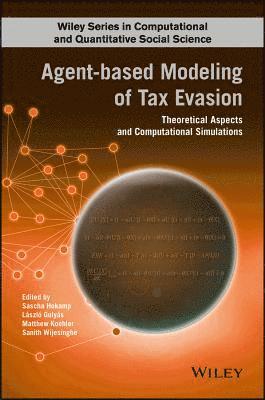
    Agent-based Modeling of Tax Evasion

    Theoretical Aspects and Computational Simulations

    AvSascha Hokamp,Sascha Hokamp

    Inbunden, Engelska, 2018

    Del i serien Wiley Series in Computational and Quantitative Social Science

    1 036 kr

    Beställningsvara. Skickas inom 5-8 vardagar. Fri frakt över 249 kr.

    Beskrivning

    The only single-source guide to understanding, using, adapting, and designing state-of-the-art agent-based modelling of tax evasionA computational method for simulating the behavior of individuals or groups and their effects on an entire system, agent-based modeling has proven itself to be a powerful new tool for detecting tax fraud. While interdisciplinary groups and individuals working in the tax domain have published numerous articles in diverse peer-reviewed journals and have presented their findings at international conferences, until Agent-based Modelling of Tax Evasion there was no authoritative, single-source guide to state-of-the-art agent-based tax evasion modeling techniques and technologies.Featuring contributions from distinguished experts in the field from around the globe, Agent-Based Modelling of Tax Evasion provides in-depth coverage of an array of field tested agent-based tax evasion models. Models are presented in a unified format so as to enable readers to systematically work their way through the various modeling alternatives available to them. Three main components of each agent-based model are explored in accordance with the Overview, Design Concepts, and Details (ODD) protocol, each section of which contains several sub elements that help to illustrate the model clearly and that assist readers in replicating the modeling results described. Presents models in a unified and structured manner to provide a point of reference for readers interested in agent-based modelling of tax evasionExplores the theoretical aspects and diversity of agent-based modeling through the example of tax evasionProvides an overview of the characteristics of more than thirty agent-based tax evasion frameworksFunctions as a solid foundation for lectures and seminars on agent-based modelling of tax evasionThe only comprehensive treatment of agent-based tax evasion models and their applications, this book is an indispensable working resource for practitioners and tax evasion modelers both in the agent-based computational domain and using other methodologies. It is also an excellent pedagogical resource for teaching tax evasion modeling and/or agent-based modeling generally.

    Produktinformation

    • Utgivningsdatum:2018-03-16
    • Mått:155 x 231 x 23 mm
    • Vikt:590 g
    • Format:Inbunden
    • Språk:Engelska
    • Serie:Wiley Series in Computational and Quantitative Social Science
    • Antal sidor:384
    • Förlag:John Wiley & Sons Inc
    • ISBN:9781119155683

    Utforska kategorier

    • Tillämpad matematik inom Naturvetenskap och teknik
    • Finansiering inom Ekonomi och Ledarskap

    Mer om författaren

    Sascha Hokamp, PhD is a member of the Research Unit for Sustainability and Global Change (FNU) and of the Center for Earth System Research and Sustainability (CEN), Universität Hamburg. His research topics include illicit activities (tax evasion and doping in elite sports) and the shadow economy. László Gulyás, PhD is Assistant Professor at Eötvös Loránd University, Budapest. He is a former Head of Division at AITIA International, Inc. He has been doing research on agent-based modeling and multi-agent systems since 1996. Matthew Koehler, PhD is the Applied Complexity Sciences Area Lead for US Treasury/Internal Revenue Service, US Commerce, and Social Security Administration Program Division at The MITRE Corporation. Sanith Wijesinghe, PhD is Chief Engineer of the Model Based Analytics department at The MITRE Corporation.

    Innehållsförteckning

    • Notes on Contributors xiiiForeword xxiPreface xxviiPart I Introduction1 Agent-Based Modeling and Tax Evasion: Theory and Application 3Sascha Hokamp, László Gulyás, Matthew Koehler and H. Sanith Wijesinghe1.1   Introduction 31.2   Tax Evasion, Tax Avoidance and Tax Noncompliance 41.3   Standard Theories of Tax Evasion 51.4   Agent-Based Models 101.5 Standard Protocols to Describe Agent-Based Models 111.5.1 The Overview, Design Concepts, Details, and Decision-Making Protocol 131.5.2 Concluding Remarks on the ODD+D Protocol 171.6 Literature Review of Agent-Based Tax Evasion Models 181.6.1 Public Goods, Governmental Tasks and Back Auditing 221.6.2 Replication, Docking, and Calibration Studies 251.6.3 Concluding Remarks on Agent-Based Tax Evasion Models 261.7 Outlook: The Structure and Presentation of the Book 271.7.1 Part I Introduction 281.7.2 Part II Agent-Based Tax Evasion Models 28References 312 How Should One Study Clandestine Activities: Crimes, Tax Fraud, and Other “Dark” Economic Behavior? 37Aloys L. Prinz2.1 Introduction 372.2 Why Study Clandestine Behavior At All? 382.3 Tools for Studying Clandestine Activities 402.4 Networks and the Complexity of Clandestine Interactions 422.5 Layers of Analysis 452.6 Research Tools and Clandestine Activities 482.7 Conclusion 55Acknowledgment 56References 563 Taxpayer’s Behavior: From the Laboratory to Agent-Based Simulations 59Luigi Mittone and Viola L. Saredi3.1 Tax Compliance: Theory and Evidence 593.2 Research on Tax Compliance: A Methodological Analysis 623.3 From Human-Subject to Computational-Agent Experiments 683.4 An Agent-Based Approach to Taxpayers’ Behavior 733.4.1 The Macroeconomic Approach 743.4.2 The Microeconomic Approach 773.4.3 Micro-Level Dynamics for Macro-Level Interactions among Behavioral Types 803.5 Conclusions 83References 84Part II Agent-Based Tax Evasion Models4 Using Agent-Based Modeling to Analyze Tax Compliance and Auditing 91Nigar Hashimzade and Gareth Myles4.1 Introduction 914.2 Agent-Based Model for Tax Compliance and Audit Research 934.2.1 Overview 934.2.2 Design Concepts 944.2.3 Details 984.3 Modeling Individual Compliance 984.3.1 Expected Utility 984.3.2 Behavioral Models 1014.3.3 Psychic Costs and Social Customs 1024.4 Risk-Taking and Income Distribution 1064.5 Attitudes, Beliefs, and Network Effects 1114.5.1 Networks and Meetings 1134.5.2 Formation of Beliefs 1134.6 Equilibrium with Random and Targeted Audits 1154.7 Conclusions 119Acknowledgments 122References 122Appendix 4A 1235 SIMULFIS: A Simulation Tool to Explore Tax Compliance Behavior 125Toni Llacer, Francisco J. Miguel Quesada, José A. Noguera and Eduardo Tapia Tejada5.1 Introduction 1255.2 Model Description 1265.2.1 Purpose 1275.2.2 Entities, State Variables, and Scales 1275.2.3 Process Overview and Scheduling 1315.2.4 Theoretical and Empirical Background 1315.2.5 Individual Decision Making 1325.2.6 Learning 1355.2.7 Individual Sensing 1365.2.8 Individual Prediction 1365.2.9 Interaction 1375.2.10 Collectives 1375.2.11 Heterogeneity 1385.2.12 Stochasticity 1385.2.13 Observation 1395.2.14 Implementation Details 1405.2.15 Initialization 1405.2.16 Input Data 1415.2.17 Submodels 1415.3 Some Experimental Results and Conclusions 145Acknowledgments 148References 1486 TAXSIM: A Generative Model to Study the Emerging Levels of Tax Compliance in a Single Market Sector 153László Gulyás, Tamás Máhr and István J. Tóth6.1 Introduction 1536.2 Model Description 1556.2.1 Overview 1556.2.2 Design Concepts 1656.2.3 Observation and Emergence 1726.2.4 Details 1736.3 Results 1756.3.1 Scenarios 1756.3.2 Sensitivity Analysis 1826.3.3 Adaptive Audit Strategy 1906.3.4 Minimum Wage Policies 1926.4 Conclusions 194Acknowledgments 196References 1967 Development and Calibration of a Large-Scale Agent-Based Model of Individual Tax Reporting Compliance 199Kim M. Bloomquist7.1 Introduction 1997.1.1 Taxpayer Dataset 2017.1.2 Agents 2027.1.3 Tax Agency 2047.1.4 Taxpayer Reporting Behavior 2077.1.5 Filer Behavioral Response to Tax Audit 2097.1.6 Model Execution 2107.2 Model Validation and Calibration 2117.3 Hypothetical Simulation: Size of the “Gig” Economy and Taxpayer Compliance 2147.4 Conclusion and Future Research 216Acknowledgments 216References 217Appendix 7A: Overview, Design Concepts, and Details (ODD) 2187a.1 Purpose 2187a.2 Entities, State Variables, and Scales 2187a.3 Process Overview and Scheduling 2197a.4 Design Concepts 2197a.4.1 Basic Principles 2197a.4.2 Emergence 2207a.4.3 Adaptation 2207a.4.4 Objectives 2207a.4.5 Learning 2207a.4.6 Prediction 2217a.4.7 Sensing 2217a.4.8 Interaction 2217a.4.9 Stochasticity 2217A.4.10 Collectives 2227A.4.11 Observation 2227a.5 Initialization 2237a.6 Input Data 2237a.7 Submodels 2248 Investigating the Effects of Network Structures in Massive Agent-Based Models of Tax Evasion 225Matthew Koehler, Shaun Michel, David Slater, Christine Harvey, Amanda Andrei and Kevin Comer8.1 Introduction 2258.2 Networks and Scale 2268.3 The Model 2308.3.1 Overview 2308.3.2 Design Concepts 2328.3.3 Details 2378.4 The Experiment 2418.5 Results 2418.5.1 Impact of Scale 2438.5.2 Distributing the Model on a Cluster Computer 2468.6 Conclusion 251References 2519 Agent-Based Simulations of Tax Evasion: Dynamics by Lapse of Time, Social Norms, Age Heterogeneity, Subjective Audit Probability, Public Goods Provision, and Pareto-Optimality 255Sascha Hokamp and Andrés M. Cuervo Díaz9.1 Introduction 2559.2 The Agent-Based Tax Evasion Model 2579.2.1 Overview of the Model 2579.2.2 Design Concepts 2649.2.3 Details 2689.3 Scenarios, Simulation Results, and Discussion 2699.3.1 Age Heterogeneity and Social Norm Updating 2699.3.2 Public Goods Provision and Pareto-optimality 2749.3.3 The Allingham-and-Sandmo Approach Reconsidered 2779.3.4 Calibration and Sensitivity Analysis 2819.4 Conclusions and Outlook 284Acknowledgments 285References 285Appendix 9A 28710 Modeling the Co-evolution of Tax Shelters and Audit Priorities 289Jacob Rosen, Geoffrey Warner, Erik Hemberg, H. Sanith Wijesinghe and Una-May O’Reilly10.1 Introduction 28910.2 Overview 29110.3 Design Concepts 29310.3.1 Simulation 29410.3.2 Optimization 29710.4 Details 29910.4.1 IBOB 29910.4.2 Grammar 30210.4.3 Parameters 30410.5 Experiments 30510.5.1 Experiment LimitedAudit: Audit Observables That Do Not Detect IBOB 30510.5.2 Experiment EffectiveAudit: Audit Observables That Can Detect IBOB 30810.5.3 Experiment CoEvolution: Sustained Oscillatory Dynamics Of Fitness Values 30810.6 Discussion 311References 31411 From Spins to Agents: An Econophysics Approach to Tax Evasion 315Götz Seibold11.1 Introduction 31511.2 The Ising Model 31611.2.1 Purpose 31611.2.2 Entities, State Variables, and Scales 31611.2.3 Process Overview and Scheduling 31811.3 Application to Tax Evasion 32011.4 Heterogeneous Agents 32411.5 Relation to Binary Choice Model 33011.6 Summary and Outlook 333References 334Index 337