• Fri frakt över 249 kr
  • •
  • Snabba leveranser
  • •
  • Billiga böcker
Kundservice

Du är på sajten för privatpersoner.

Företag, bibliotek eller offentlig verksamhet?

Du handlar på classic.bokus.com, där alla dina funktioner finns intakta.
Till classic.bokus.com
Bokus logotyp. Gå till startsidan.
  • Erbjudanden
  • Nyheter
  • Student
  • Topplistor
  • Barn & ungdom
  • Bokus Play
  • E-böcker
  • Pocketböcker
  • Spel & pussel

10% rabatt på allt med kod NYSTART10 →

Sidfot

Mina sidor

    Hjälp

    • Kundservice
    • Vanliga frågor och svar
    • Frakt och leverans
    • Retur vid ångerrätt
    • Reklamera vara
    • Betalning
    • Köpvillkor
    • Allmänna villkor
    • Information om webbplatsens tillgänglighet

    Om Bokus

    • Om oss
    • Pressrum
    • För studenter
    • För företag
    • För bibliotek och offentlig verksamhet
    • För leverantörer
    • Hållbarhet

    Populärt

    • Aktuella erbjudanden
    • Presentkort
    • Studentlitteratur
    • Nya böcker
    • Topplistor
    • Signerade böcker
    • Engelska böcker

    Inspiration

    • Boktips
    • BookTok
    • Populära bokserier
    • Barnbokskaraktärer
    • Populära författare
    Logotyp för Bokus
    Följ oss på Facebook (extern länk)Följ oss på Instagram (extern länk)Följ oss på YouTube (extern länk)Följ oss på TikTok (extern länk)
    bokus @ CookiesAnpassa cookiesIntegritetspolicyKöpvillkor
    Till Citymail hemsida (extern länk)Till Budbee hemsida (extern länk)Till Postnord hemsida (extern länk)Till Schenker hemsida (extern länk)Till Early Bird hemsida (extern länk)Till Walleys hemsida (extern länk)
    1. Naturvetenskap och teknik
    2. Teknik och industri
    3. Tillverkningsteknik

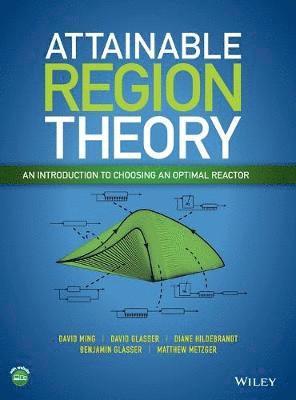
    Attainable Region Theory

    An Introduction to Choosing an Optimal Reactor

    AvDavid Ming,David Glasser

    Inbunden, Engelska, 2016

    2 654 kr

    Beställningsvara. Skickas inom 3-6 vardagar. Fri frakt över 249 kr.

    Beskrivning

    Recipient of the 2019 Most Promising New Textbook Award from the Textbook & Academic Authors Association (TAA)."The authors of Attainable Region Theory: An Introduction to an Choosing Optimal Reactor make what is a complex subject and decades of research accessible to the target audience in a compelling narrative with numerous examples of real-world applications." TAA Award Judges, February 2019Learn how to effectively interpret, select and optimize reactors for complex reactive systems, using Attainable Region theory Teaches how to effectively interpret, select and optimize reactors for complex reactive systems, using Attainable Region (AR) theoryWritten by co-founders and experienced practitioners of the theoryCovers both the fundamentals of AR theory for readers new to the field, as we all as advanced AR topics for more advanced practitioners for understanding and improving  realistic reactor systemsIncludes over 200 illustrations and 70 worked examples explaining how AR theory can be applied to complex reactor networks, making it ideal for instructors and self-studyInteractive software tools and examples written for the book help to demonstrate the concepts and encourage exploration of the ideas

    Produktinformation

    • Utgivningsdatum:2016-11-22
    • Mått:213 x 282 x 31 mm
    • Vikt:1 089 g
    • Format:Inbunden
    • Språk:Engelska
    • Antal sidor:352
    • Förlag:John Wiley & Sons Inc
    • ISBN:9781119157885

    Utforska kategorier

    • Tillverkningsteknik inom Naturvetenskap och teknik

    Mer om författaren

    David Ming holds a B.Sc. and Ph.D. in chemical engineering from the University of the Witwatersrand, Johannesburg. His research interests involve using AR theory to optimize chemical reactors, including batch reactors, and AR numerical methods.David Glasser is a Professor of Chemical Engineering and co-director of the Material and Process Synthesis (MaPS) research unit at the University of South Africa (UNISA). He was Head of Department of Chemical Engineering, and Dean of the Faculty of Engineering at University of the Witwatersrand, and is one of the co-founders of AR theory. He holds a B.Sc. in chemical engineering from University of Cape Town, and a Ph.D. in chemical engineering from Imperial College.Diane Hildebrandt is a Professor of Chemical Engineering and co-Director of the MaPS research unit at UNISA. She was the first woman in South Africa to be appointed a full professor of Chemical Engineering when she was the Unilever Professor of Reaction Engineering at the University of the Witwatersrand, and is also a co-developer of AR theory. She holds a B.Sc., M.Sc. and Ph.D. in chemical engineering from University of the Witwatersrand. Her research area is the reduction of CO2 emissions through the design of energy efficient processes.Benjamin Glasser is a Professor of Chemical and Biochemical Engineering at Rutgers University, New Jersey, USA. He holds a B.Sc. and M.Sc. in chemical engineering from University of the Witwatersrand, and a Ph.D. in chemical engineering from Princeton University. His research interests include heat and mass transfer, multiphase reactors and particle technology applied to chemical and pharmaceutical manufacturing.Matthew Metzger is a Senior Scientist at Merck & Co., Inc. He has co-authored over 14 publications, holds a B.S. in chemical engineering from Lafayette University, and a Ph.D. in chemical engineering from Rutgers University.

    Innehållsförteckning

    • Preface xiAcknowledgments xiiiPrior Knowledge xivHow this book is Structured xvSoftware and Companion Website xviiNomenclature xixSECTION I BASIC THEORY 11 Introduction 31.1 Introduction 31.2 Motivation 31.3 Reactor Network Synthesis 81.4 Solving the Reactor Network Synthesis Problem 121.5 Chapter Review 16References 172 Concentration and Mixing 192.1 Introduction 192.2 Concentration Vectors and Dimension 232.3 Mixing 282.4 Chapter Review 47References 473 The Attainable Region 493.1 Introduction 493.2 A Mixing and Reaction Game 493.3 The AR 573.4 Elementary Properties of the AR 583.5 Chapter Review 61References 614 Reaction 634.1 Introduction 634.2 Reaction Rates and Stoichiometry 634.3 Reaction from a Geometric Viewpoint 664.4 Three Fundamental Continuous Reactor Types 734.5 Summary 1024.6 Mixing Temperatures 1024.7 Additional Properties of the AR 1054.8 Chapter Review 106References 1075 Two-Dimensional Constructions 1095.1 Introduction 1095.2 A Framework for Tackling AR Problems 1095.3 Two-Dimensional Van De Vusse Kinetics 1105.4 Multiple CSTR Steady States and ISOLAS 1255.5 Constructions in Residence Time Space 1315.6 Chapter Review 141References 141SECTION II EXTENDED TOPICS 1436 Higher Dimensional AR Theory 1456.1 Introduction 1456.2 Dimension and Stoichiometry 1466.3 The Three Fundamental Reactor Types Used in AR Theory 1596.4 Critical DSRs and CSTRs 1666.5 Chapter Review 189References 1907 Applications of AR Theory 1917.1 Introduction 1917.2 Higher Dimensional Constructions 1917.3 Nonisothermal Constructions and Reactor Type Constraints 2057.4 AR Theory for Batch Reactors 2227.5 Chapter Review 232References 2338 AR Construction Algorithms 2358.1 Introduction 2358.2 Preliminaries 2358.3 Overview of AR Construction Methods 2468.4 Inside-out Construction Methods 2488.5 Outside-in Construction Methods 2628.6 Superstructure Methods 2708.7 Chapter Review 279References 2799 Attainable Regions for Variable Density Systems 2819.1 Introduction 2819.2 Common Conversions to Mass Fraction Space 2819.3 Examples 2939.4 Chapter Review 298References 29910 Final Remarks Further Reading and Future Directions 30110.1 Introduction 30110.2 Chapter Summaries and Final Remarks 30110.3 Further Reading 30410.4 Future Directions 305References 307Appendix A Fundamental Reactor Types 309A.1 The Plug Flow Reactor 309A.2 The Continuous-Flow Stirred Tank Reactor 309A.3 The Differential Sidestream Reactor 310Appendix B Mathematical Topics 311B.1 Set Notation 311B.2 Aspects of Linear Algebra 311B.3 The Complement Principle 313References 315Appendix C Companion Software and Website 317C.1 Introduction 317C.2 Obtaining Python and Jupyter 318Index 321