• Fri frakt över 249 kr
  • •
  • Snabba leveranser
  • •
  • Billiga böcker
Kundservice

Du är på sajten för privatpersoner.

Företag, bibliotek eller offentlig verksamhet?

Du handlar på classic.bokus.com, där alla dina funktioner finns intakta.
Till classic.bokus.com
Bokus logotyp. Gå till startsidan.
  • Erbjudanden
  • Nyheter
  • Student
  • Topplistor
  • Barn & ungdom
  • Bokus Play
  • E-böcker
  • Pocketböcker
  • Spel & pussel

10% rabatt på allt med kod NYSTART10 →

Sidfot

Mina sidor

    Hjälp

    • Kundservice
    • Vanliga frågor och svar
    • Frakt och leverans
    • Retur vid ångerrätt
    • Reklamera vara
    • Betalning
    • Köpvillkor
    • Allmänna villkor
    • Information om webbplatsens tillgänglighet

    Om Bokus

    • Om oss
    • Pressrum
    • För studenter
    • För företag
    • För bibliotek och offentlig verksamhet
    • För leverantörer
    • Hållbarhet

    Populärt

    • Aktuella erbjudanden
    • Presentkort
    • Studentlitteratur
    • Nya böcker
    • Topplistor
    • Signerade böcker
    • Engelska böcker

    Inspiration

    • Boktips
    • BookTok
    • Populära bokserier
    • Barnbokskaraktärer
    • Populära författare
    Logotyp för Bokus
    Följ oss på Facebook (extern länk)Följ oss på Instagram (extern länk)Följ oss på YouTube (extern länk)Följ oss på TikTok (extern länk)
    bokus @ CookiesAnpassa cookiesIntegritetspolicyKöpvillkor
    Till Citymail hemsida (extern länk)Till Budbee hemsida (extern länk)Till Postnord hemsida (extern länk)Till Schenker hemsida (extern länk)Till Early Bird hemsida (extern länk)Till Walleys hemsida (extern länk)
    1. Naturvetenskap och teknik
    2. Matematik och naturvetenskap
    3. Biologi

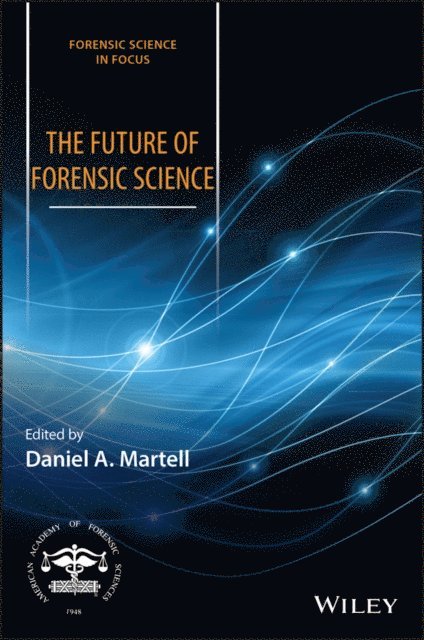
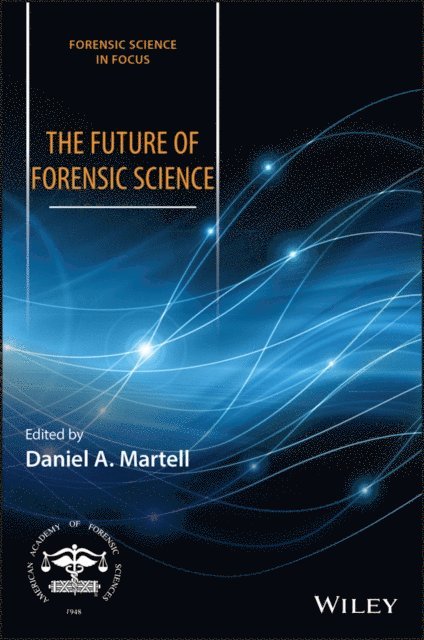
    Future of Forensic Science

    AvDaniel A. Martell

    Inbunden, Engelska, 2019

    Del i serien Forensic Science in Focus

    1 349 kr

    Beställningsvara. Skickas inom 3-6 vardagar. Fri frakt över 249 kr.

    Beskrivning

    Offers a diverse, interdisciplinary, and eye-opening view of the future direction of forensic science This one-of-a-kind book is a collection of content from the Past and Current Presidents of the American Academy of Forensic Sciences—providing readers with all of their forensic science experience, knowledge, insight, and wisdom. It envisions where forensic science will be a decade from now and the impact of these emerging advances on the law (along with our place in it), emphasizing theoretical advances, innovative leads from the laboratory, and emerging technologies.Filled with information from some of the greatest forensic minds of their generation, The Future of Forensic Science covers all of the eleven sections that comprise the AAFS. It discusses new directions in forensic anthropology, and looks at the future of such disciplines as criminalistics, forensic engineering science, forensic psychiatry and behavioral science, forensic toxicology, and forensic document examination. It also touches on the current and future state of digital and multimedia sciences. Contains contributions from an eminent group of forensic science expertsPresents a valuable repository of forensic science experience, knowledge, insight, and wisdomOffers an insightful interdisciplinary look at the future of forensic science and how it is changing forensic science for the betterTimed to coincide with the NIST forensic science initiative and the OSAC process The Future of Forensic Science is a must-have book for practicing forensic science professionals, academics, and advanced undergraduate and graduate students in forensic science. This book is published as part of the AAFS series ‘Forensic Science in Focus’.

    Produktinformation

    • Utgivningsdatum:2019-04-26
    • Mått:158 x 231 x 15 mm
    • Vikt:386 g
    • Format:Inbunden
    • Språk:Engelska
    • Serie:Forensic Science in Focus
    • Antal sidor:208
    • Förlag:John Wiley & Sons Inc
    • ISBN:9781119226673

    Utforska kategorier

    • Biologi inom Naturvetenskap och teknik

    Mer om författaren

    Edited byDaniel A. Martell, PhD, is a Past President of the American Academy of Forensic Sciences, and Professor at the Semel Institute for Neuroscience and Human Behavior, David Geffen School of Medicine at UCLA. He is Board-Certified in Forensic Psychology by the American Board of Professional Psychology; a Fellow of the American Academy of Forensic Psychology; a Fellow of the National Academy of Neuropsychology; and a Fellow of the American Academy of Forensic Sciences. He is also a consultant for the United Nations International Criminal Court in The Hague.

    Innehållsförteckning

    • Notes on contributors xiSeries preface xixPreface xxi1 New directions in forensic anthropology 1Douglas H. Ubelaker1.1 Introduction 11.2 Detection and recovery 31.3 Determination of human status 41.4 Age at death 61.5 Time since death 71.6 Sex estimation 81.7 Ancestry 91.8 Living stature 91.9 Postmortem history 101.10 Positive identification 101.11 Foul play 111.12 Certification 121.13 Conclusion 13Acknowledgments 14References 142 Some thoughts on the future challenges to criminalistics 19Ronald L. Singer2.1 Introduction 192.2 Technological advances 202.2.1 Computers software and databases 202.2.2 DNA 212.2.3 Impression evidence 212.2.4 Instrumentation 222.3 Quality issues 232.3.1 NAS Report 232.4 Financial burdens 242.4.1 Seeking additional sources of grant funding 252.4.2 Staffing 252.4.3 Regionalization 262.4.4 Consolidation 262.4.5 Cost recovery 272.4.6 Privatization 28Acknowledgments 29References 293 Digital and multimedia sciences 31Zeno Geradts3.1 Introduction 313.2 History 333.3 Digital evidence 353.4 Damaged (mobile) devices 373.5 Multimedia 383.5.1 Deep learning (Hinton et al. 2006) 393.5.2 Camera identification 403.5.3 Other biometrics 413.6 Wearables and quantified self 413.7 Drones 413.8 Sensors 423.9 Geo satellites 423.10 Disasters/large scale incidents 423.11 Quality assurance 433.12 Challenges 43References 444 A look at the future of forensic engineering science 49Thomas L. Bohan“The future”: a preface 494.1 Junk law in the courtroom 504.2 Forensic engineering sciences and needs of the modern world at large 55Acknowledgments 58References 585 General section history: look at two disciplines and a review of standards certifications and education 61John E. Gerns5.1 Introduction 615.2 Forensic veterinary science 625.3 Certification: introduction 665.4 Certification—ABMDI 665.5 Standards evolution—OSAC 685.6 Standard evolution—ASB 695.7 Education accreditation 705.8 Summary 71Acknowledgements 72References 726 The future of forensic science: hot leads in contemporary forensic research: Jurisprudence 73Carol Henderson6.1 Daubert’s history 756.2 The Daubert test 776.3 Questions raised by Daubert 776.4 The NAS report 786.5 The national commission on forensic science and the organization of scientific area committees 806.6 NCFS 806.7 OSAC 826.8 The path forward for judicial and legal education in forensic science 84Acknowledgments 87References 877 Forensic odontology 91Robert E. Barsley7.1 Introduction 917.2 Roles of the forensic odontologist 927.3 Current considerations 947.4 Identification by teeth 967.5 Dental age assessment 1047.6 Bitemarks 1057.7 Abuse and negligence 1077.8 Closing 1078 Opportunities and problems faced in forensic pathology 109Edmund R. Donoghue8.1 Opportunity: radiology technology and computer imaging 1098.2 Threat: dropping forensic pathology training requirement for anatomic pathology 1108.3 Threat: maintenance of certification could see some forensic pathologists unemployed 1118.4 Threat: standards are becoming increasingly detailed and rigorous 1128.5 Threat: forensic: overregulation by federal government and other entities 1128.6 Conclusion 1129 The future of forensic psychiatry and behavioral science 113Richard Rosner9.1 The BRAIN initiative 1149.2 The law and the human mind 1149.3 Correlation is NOT causation 1159.4 Theories of consciousness 1159.5 The hard problem of consciousness 1169.6 Consciousness and the failure of the physical sciences 1179.7 The problem of free will 1189.8 The bottom line 119References 11910 The future of forensic document examination 121John L. Sang Linton A. Mohammed and Carl R. McClary10.1 What is a forensic document examiner (FDE)? 12110.2 Origins of questioned document examination 12310.3 Albert S. Osborn and the formation of the American Society of Questioned Document Examiners (ASQDE) 12510.4 Ordway Hilton and the formation of American Academy of Forensic Sciences (AAFS) 12610.5 Questioned documents and the formation of the International Association of Forensic Sciences (IAFS) 12810.6 Key issues 12810.6.1 Certification 12810.6.2 Standardization 12910.7 Standards of practice 13210.8 The Daubert standard and FDE 13510.9 How FDE meets Daubert 13710.9.1 Standards 13710.9.2 Error rate/reliability 13810.9.3 Testing of basic principles 13910.9.4 Peer review and publication 14210.9.5 General acceptance in the forensic community 14310.10 Research in FDE 14410.10.1 Neuroscience 14410.10.2 Eye tracking 14610.11 Signature and handwriting verification systems 14810.12 Automation in the forensic examination of handwriting 14810.13 Current research 14910.14 Conclusion 15010.14.1 The public and how law and forensics will be shaped 15010.14.2 Research 15110.14.3 Research in other document examinations 151References 152Further readings 155Measurement science and standards in forensic handwriting analysis – U.S. Commerce Department’s National Institute of Standards and Technology (NIST) Symposium June 2013 presentations 15711 Past perspectives and future directions in forensic toxicology 159Barry K. Logan F-ABFT11.1 Our history 15911.2 Reflections on factors affecting our future direction 16311.3 Facing forward 16711.3.1 Laboratory resources and the role of the Federal Government 16811.3.2 Standards development and harmonization of best practices 16811.3.3 Technology 16911.3.4 Training research and interdisciplinary collaboration 17111.4 Conclusion 173Acknowledgments 174Index 175