• Fri frakt över 249 kr
  • •
  • Snabba leveranser
  • •
  • Billiga böcker
Kundservice

Du är på sajten för privatpersoner.

Företag, bibliotek eller offentlig verksamhet?

Du handlar på classic.bokus.com, där alla dina funktioner finns intakta.
Till classic.bokus.com
Bokus logotyp. Gå till startsidan.
  • Erbjudanden
  • Nyheter
  • Student
  • Topplistor
  • Barn & ungdom
  • Bokus Play
  • E-böcker
  • Pocketböcker
  • Spel & pussel

10% rabatt på allt med kod: NYSTART10 →

Sidfot

Mina sidor

    Hjälp

    • Kundservice
    • Vanliga frågor och svar
    • Frakt och leverans
    • Retur vid ångerrätt
    • Reklamera vara
    • Betalning
    • Köpvillkor
    • Allmänna villkor
    • Information om webbplatsens tillgänglighet

    Om Bokus

    • Om oss
    • Pressrum
    • För studenter
    • För företag
    • För bibliotek och offentlig verksamhet
    • För leverantörer
    • Hållbarhet

    Populärt

    • Aktuella erbjudanden
    • Presentkort
    • Studentlitteratur
    • Nya böcker
    • Topplistor
    • Signerade böcker
    • Engelska böcker

    Inspiration

    • Boktips
    • BookTok
    • Populära bokserier
    • Barnbokskaraktärer
    • Populära författare
    Logotyp för Bokus
    Följ oss på Facebook (extern länk)Följ oss på Instagram (extern länk)Följ oss på YouTube (extern länk)Följ oss på TikTok (extern länk)
    bokus @ CookiesAnpassa cookiesIntegritetspolicyKöpvillkor
    Till Citymail hemsida (extern länk)Till Budbee hemsida (extern länk)Till Postnord hemsida (extern länk)Till Schenker hemsida (extern länk)Till Early Bird hemsida (extern länk)Till Walleys hemsida (extern länk)
    1. Samhälle och politik
    2. Samhälle och kultur
    3. Kultur och medier
    4. Referensverk och tvärvetenskap

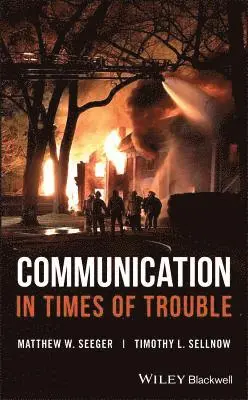
    Communication in Times of Trouble

    AvMatthew W. Seeger,Timothy L. Sellnow

    Inbunden, Engelska, 2019

    1 142 kr

    Beställningsvara. Skickas inom 5-8 vardagar. Fri frakt över 249 kr.

    Fler format och utgåvor

    Häftad

    505 kr

    Beskrivning

    Presents the best practices of crisis communication and emergency risk communicationThis book covers crisis communication strategies and focuses on practical applications for effective management. It includes an extensive discussion of best practices in pre-crisis, crisis and post crisis stages. The book pays special attention to the needs of meeting the needs of diverse audiences and communicating in a responsive and responsible way. The principles are appropriate for many kinds of events including earthquakes, tornadoes, hurricanes, tsunamis, epidemics, and pandemics as well as industrial accidents, toxic spills, transportation disasters, fires and intentional events.In the first chapter, Communication in Times of Trouble introduces the concept of best practices and establishes their relevance for crisis communication and emergency risk communication. A chapter is dedicated to each of the ten best practices. In each chapter, the best practice is described, examples of successful and unsuccessful application of the best practice in both organizational crises and natural disasters/emergencies are provided, advice for practical application is given, and a summary is provided. The concluding chapter details the challenges and opportunities for developing and implementing a response strategy that includes the best practices as a whole. Focuses on application and explanation in crisis communication to benefit those with backgrounds in emergency management, risk management, political science, disaster sociology, and public healthCovers natural, large-scale emergencies such as earthquakes, tornadoes, hurricanes, tsunamis, epidemics, and pandemics, which aren’t generally detailed in existing crisis communication textsPresents 10 best practices for dealing with emergencies: Process Approach; Pre-Event Planning; Partnerships; Public Concern; Honesty; Collaborate; Media access; Compassion; Uncertainty; EmpowermentCommunication in Times of Trouble will be of great interest to undergraduate students and practitioners in communication, public relations, public affairs, public information, public health, and emergency management.

    Produktinformation

    • Utgivningsdatum:2019-04-12
    • Mått:145 x 224 x 13 mm
    • Vikt:318 g
    • Format:Inbunden
    • Språk:Engelska
    • Antal sidor:152
    • Förlag:John Wiley and Sons Ltd
    • ISBN:9781119229247

    Utforska kategorier

    • Referensverk och tvärvetenskap inom Samhälle och politik

    Mer om författaren

    MATTHEW W. SEEGER is currently a professor communication and Dean of the College of Fine, Performing and Communication Arts at Wayne State University in Detroit. His research concerns crisis and risk communication, health promotion and communication, crisis response and agency coordination, the role of media, including new media, crisis and communication ethics, failure of complex systems and post-crisis renewal. He has worked with several national and international agencies including the United States Centers for Disease Control and Prevention and the World Health Organization. He is co-author of the CDC's Crisis and Emergency Communication, (2nd ed.) and co-editor of the International Handbook of Crisis Communication.TIMOTHY L. SELLNOW is a professor of strategic communication in the Nicholson School of Communication and Media at the University of Central Florida. Dr. Sellnow's research focuses on strategic communication for bioterrorism, pre-crisis planning, disaster warning messages, public health, and crisis recovery. He has conducted funded research for the Department of Homeland Security, the United States Department of Agriculture, the Environmental Protection Agency, the United States Geological Survey, and the World Health Organization. He has also served in an advisory role for the National Academy of Sciences and the Food and Drug Administration.Seeger and Sellnow have both published extensively on risk and crisis communication. They have previously collaborated on six books, including: Communication and Organizational Crisis, Effective Crisis Communication, Communication and the Public Health, Effective Risk Communication, Theorizing Crisis Communication, and Narratives of Crisis: Stories of Ruin and Renewal.

    Innehållsförteckning

    • Acknowledgements ix1 Introduction 1What Is a Crisis? 2What Do We Mean by Crisis Communication? 4What Distinguishes Crisis Communication? 7What Are Best Practices? 7Summary 9References 102 Process Approach: Take a Process Approach to Crisis Communication 11What Do We Mean by “Communication Is a Process”? 12What Does a Process Approach Mean for Crisis? 12What Is a Crisis Life Cycle? 14How Can These Stages Be Used by Crisis Communicators? 16Why Should Communicators Participate in the Policy Formation Process? 17Summary 19References 203 Preevent Planning: Engage in Preevent Planning for CrisisCommunication 21What Does Planning Involve? 21What Is Crisis Communication Planning? 23How Is a Plan Created? 24How Is Risk Assessed? 25What Is Included in a Crisis Plan? 26Standard Elements of a Crisis Communication Plan 28Implementing a Crisis Plan 29Summary 30References 314 Partnerships: Form Stakeholder Partnerships with Publics 33Why Do Crisis Leaders Sometimes Avoid Communicating With Their Publics? 33How Are Relationships With Publics Established? 34What Is Dialog? 35Why Do Some Agencies and Organizations Fail to Establish Dialog? 36How Does Dialog Produce Partnerships With Publics? 37Are There Times When Dialog Should Be Avoided? 38What Roles Can Publics Play in Their Partnerships With Organizations and Agencies? 39Summary 41References 425 Public Concern: Listen to and Acknowledge Concerns of Publics 45How Do Publics Respond to Risks? 46What Communication Challenges Do Hazards Create? 46What Communication Challenges Does Outrage Create? 49How Should Agencies and Organizations Acknowledge the Concerns of Publics? 50How Do Organizations and Agencies Anticipate Which Issues Are Likely to Produce Public Outrage? 51How Can Organizations Communicate to Prevent and Manage Outrage? 52Summary 54References 556 Honesty: Communication With Honesty, Frankness, and Openness 57Why Is It So Important to Be Honest? 58What Does It Really Mean to Be Honest? 60What Are Some Challenges to Being Honest During a Crisis? 62How Is Openness Achieved During a Crisis? 64Summary 66References 677 Collaboration: Collaborate and Coordinate With Credible Sources 69Who Are the Credible Partners for an Organization? 70What Do Collaboration and Coordination Mean? 72Why Are Collaboration and Coordination So Important? 75How Can an Organization Create Collaboration and Coordination? 76It Is Possible to Coordinate and Cooperate With Hostile Groups? 76Summary 77References 788 Media Access: Meet the Needs of the Media and Remain Accessible 79Why Is Media Access Important? 80What Does Accessibility Mean? 82How Does an Organization Maintain Accessibility? 83What Happens If Organizations Are Not Open During a Crisis? 85Will the Media Tell a Negative Story Regardless of the Facts? 86Summary 86References 879 Compassion: Communicate With Compassion 89What Is a Compassionate Response to Crisis? 90Who Is the Best Organizational Spokesperson for Expressing Compassion? 92When Is Expressing Compassion Most Important? 93Should an Organization Express Compassion If Blame Is Uncertain? 94How Should an Organization Express Compassion If Blame Is Certain? 94How Should Spokespersons Express Compassion Through Social Media? 95What Role Does Culture Play in the Expression of Compassion? 96Summary 97References 9810 Uncertainty: Accept Uncertainty and Ambiguity 101What Causes Uncertainty for Publics? 101How Do Publics Respond to Uncertainty? 103What Kind of Information Do Publics Seek to Reduce Their Uncertainty? 104How Can Organizations Avoid Overreassuring Their Publics? 105What Are Some Other Ways to Manage Uncertainty? 106What Are the Ethical Standards for Managing Uncertainty? 108Summary 110References 11111 Empowerment: Communicate Messages of Empowerment 113How Can Messages Empower Publics? 113What Are the Components of an Empowering Message? 114How Can Risk and Crisis Communicators Help Their Publics Internalize the Risk? 114How Should Messages Be Distributed to Publics? 116How Much Explanation of the Crisis Is Necessary? 117How Should Recommendations for Self‐Protective Actions Be Communicated? 118What If Publics Are Given Competing Recommendations for Empowerment? 120What Is the Role of Empowering Messages Outside the Acute Phase of Crisis? 121Summary 122References 12312 Conclusion: Implementing the Best Practices 125Are Crises Really Occurring More Often and Are They Getting Worse? 126How Can an Organization Repair Its Damaged Image? 128Are There Ever Positive Outcomes to a Crisis? 130What Are the Challenges to Implementing the Best Practices? 132How Can the Best Practices Approach to a Crisis Be Used? 133Summary 134References 135Index 137