• Fri frakt över 249 kr
  • •
  • Snabba leveranser
  • •
  • Billiga böcker
Kundservice

Du är på sajten för privatpersoner.

Företag, bibliotek eller offentlig verksamhet?

Du handlar på classic.bokus.com, där alla dina funktioner finns intakta.
Till classic.bokus.com
Bokus logotyp. Gå till startsidan.
  • Erbjudanden
  • Nyheter
  • Student
  • Topplistor
  • Barn & ungdom
  • Bokus Play
  • E-böcker
  • Pocketböcker
  • Spel & pussel

10% rabatt på allt med kod: NYSTART10 →

Sidfot

Mina sidor

    Hjälp

    • Kundservice
    • Vanliga frågor och svar
    • Frakt och leverans
    • Retur vid ångerrätt
    • Reklamera vara
    • Betalning
    • Köpvillkor
    • Allmänna villkor
    • Information om webbplatsens tillgänglighet

    Om Bokus

    • Om oss
    • Pressrum
    • För studenter
    • För företag
    • För bibliotek och offentlig verksamhet
    • För leverantörer
    • Hållbarhet

    Populärt

    • Aktuella erbjudanden
    • Presentkort
    • Studentlitteratur
    • Nya böcker
    • Topplistor
    • Signerade böcker
    • Engelska böcker

    Inspiration

    • Boktips
    • BookTok
    • Populära bokserier
    • Barnbokskaraktärer
    • Populära författare
    Logotyp för Bokus
    Följ oss på Facebook (extern länk)Följ oss på Instagram (extern länk)Följ oss på YouTube (extern länk)Följ oss på TikTok (extern länk)
    bokus @ CookiesAnpassa cookiesIntegritetspolicyKöpvillkor
    Till Citymail hemsida (extern länk)Till Budbee hemsida (extern länk)Till Postnord hemsida (extern länk)Till Schenker hemsida (extern länk)Till Early Bird hemsida (extern länk)Till Walleys hemsida (extern länk)
    1. Naturvetenskap och teknik
    2. Teknik och industri
    3. Agronomi och lantbruk
    4. Lantbruksteknik

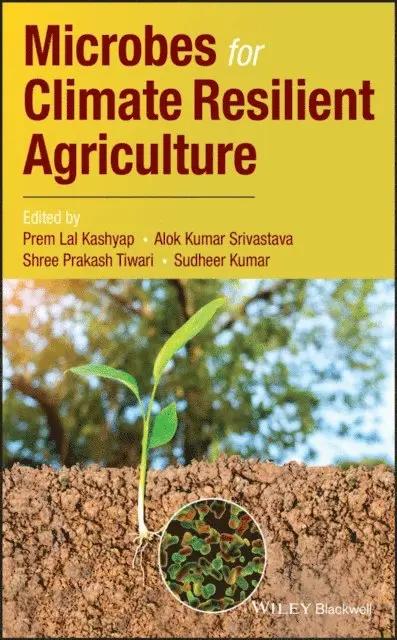
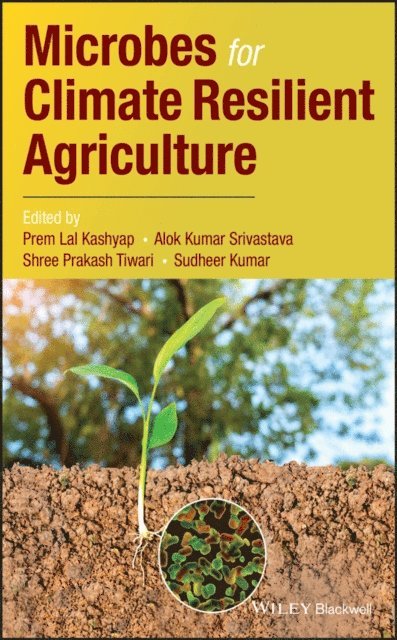
    Microbes for Climate Resilient Agriculture

    AvPrem Lal Kashyap,Alok Kumar Srivastava

    Inbunden, Engelska, 2018

    2 351 kr

    Beställningsvara. Skickas inom 5-8 vardagar. Fri frakt över 249 kr.

    Beskrivning

    A comprehensive, edited volume pulling together research on manipulation of the crop microbiome for climate resilient agricultureMicrobes for Climate Resilient Agriculture provides a unique collection of data and a holistic view of the subject with quantitative assessment of how agricultural systems will be transformed in coming decades using hidden treasure of microbes. Authored by leaders in the field and edited to ensure conciseness and clarity, it covers a broad range of agriculturally important crops, discusses the impact of climate change on crops, and examines biotechnologically and environmentally relevant microbes. The book encapsulates the understanding of microbial mediated stress management at field level, and will serve as a springboard for novel research findings and new applications in the field.Chapter coverage includes: the role of the phytomicrobiome in maintaining biofuel crop production in a changing climate; the impact of agriculture on soil microbial community composition and diversity in southeast Asia; climate change impact on plant diseases; microalgae; photosynthetic microorganisms and bioenergy prospects; amelioration of abiotic stresses in plants through multi-faceted beneficial microorganisms; role of methylotrophic bacteria in climate change mitigation; conservation agriculture for climate change resilience; archaeal community structure; mycorrhiza-helping plants to navigate environmental stresses; endophytic microorganisms; bacillus thuringiensis; and microbial nanotechnology for climate resilient agriculture. Clear and succinct chapters contributed and edited by leaders in the fieldCovers microbes' beneficial and detrimental roles in the microbiome, as well as the functions they perform under stressDiscusses the crop microbiome, nutrient cycling microbes, endophytes, mycorrhizae, and various pests and diseases, and their roles in sustainable farmingPlaces research in larger context of climate change's effect on global agricultureMicrobes for Climate Resilient Agriculture is an important text for scientists and researchers studying microbiology, biotechnology, environmental biology, agronomy, plant physiology, and plant protection.

    Produktinformation

    • Utgivningsdatum:2018-02-09
    • Mått:160 x 231 x 25 mm
    • Vikt:771 g
    • Format:Inbunden
    • Språk:Engelska
    • Antal sidor:376
    • Förlag:John Wiley and Sons Ltd
    • ISBN:9781119275923

    Utforska kategorier

    • Lantbruksteknik inom Naturvetenskap och teknik
    • Biologi inom Naturvetenskap och teknik

    Mer om författaren

    Prem Lal Kashyap, Division of Crop Protection, ICAR–Indian Institute of Wheat and Barley Research (IIWBR), Karnal, India Alok Kumar Srivastava, ICAR-National Bureau of Agriculturally Important Microorganisms (NBAIM), Uttar Pradesh, India Shree Prakash Tiwari, Department of Microbiology, Veer Bahadur Singh Purvanchal University, Uttar Pradesh, India Sudheer Kumar, Division of Crop Protection, ICAR–Indian Institute of Wheat and Barley Research (IIWBR), Karnal, India

    Innehållsförteckning

    • ABOUT THE EDITORS xvLIST OF CONTRIBUTORS xixPREFACE xxiii1 THE ROLE OF THE PHYTOMICROBIOME IN MAINTAINING BIOFUEL CROP PRODUCTION IN A CHANGING CLIMATE 1Gayathri Ilangumaran, John R. Lamont and Donald L. Smith1.1 General Background on Climate Change 11.2 More Extreme Weather More Often – More Crop Stress 21.3 Biofuel Crops – Alternative to Fossil Fuels 31.4 Avoiding Competition with Food Production 41.5 Fuel Crops Grown on Marginal Lands – Constraints 41.6 Plant Response to Stresses Related to Climate Change and Marginal Lands 61.7 Sustaining Biofuel Crops Under Stressful Environments 71.8 The Phytomicrobiome and Climate Change Conditions 81.9 The Phytomicrobiome and Abiotic Plant Stress 81.10 Mechanisms of Stress Tolerance in the Phytomicrobiome 91.11 Phytomicrobiome Engineering 111.12 The Phytomicrobiome in Biofuel Plants 121.13 Role of the Phytomicrobiome in Phytoremediation by Biofuel Plants 13References 142 THE IMPACT OF AGRICULTURE ON SOIL MICROBIAL COMMUNITY COMPOSITION AND DIVERSITY IN SOUTHEAST ASIA 25Binu M. Tripathi, Itumeleng Moroenyane and Jonathan M. Adams2.1 Introduction 252.2 The Extent of Soil Microbial Diversity and their Status in Tropical Soils 272.3 The Composition and Function of Microbial Communities in Tropical Soils of Southeast Asia 292.3.1 Unique Soil Microbial Communities of Southeast Asia and their Potential Drivers 292.4 The Impact of Land use Change on Soil Microbial Community Structure and Diversity 312.5 The Impact of Land use Change on Soil Functional Gene Diversity 342.6 Conclusions 35References 353 CLIMATE CHANGE IMPACT ON PLANT DISEASES: OPINION, TRENDS AND MITIGATION STRATEGIES 41Sachin Gupta, Deepika Sharma and Moni Gupta3.1 Introduction 413.2 Climate Change and Agriculture 423.3 Interactions among Global Change Factors 433.4 Pathogen–Host Plant Relationship under Changed Scenario 443.5 Effect of Climate Change on Plant Diseases 443.5.1 Temperature 463.5.2 Drought 483.5.3 Rainfall 483.5.4 CO2 Concentration 483.6 Adaptation and Mitigation Strategies for Climate Change 493.6.1 Adaptation Strategies 493.6.2 Mitigation Strategies 503.7 Conclusion and Future Directions 51References 514 MICROALGAE: POTENTIAL AGENTS FOR CARBON DIOXIDE MITIGATION 57Preeti Singh, Rahul Kunwar Singh and Dhananjay Kumar4.1 Introduction 574.2 Carbon Capture and Storage 604.3 Carbon Capture by Photosynthesis 604.4 CO2 Mitigation by Microalgal Culture 604.4.1 The Open Pond System 614.4.2 The Closed Photobioreactor System 624.4.3 The Environmentally Controlled System 624.5 Advantages 624.5.1 Integration of Microalgal Culture in Waste Water Treatment 624.5.2 Ability of Microalgae to Tolerate the Greenhouse Gases 624.6 Carbon Concentrating Mechanism of Microalgae 654.7 CO2 Sequestration by Microalgae 654.8 Cost Effectiveness 664.8.1 Biofertilizer 664.8.2 Biofuel 674.8.3 Other Products 674.9 Conclusion 68References 685 PHOTOSYNTHETIC MICROORGANISMS AND BIOENERGY PROSPECTS: CHALLENGES AND POTENTIAL 75Balkrishna Tiwari, Sindhunath Chakraborty, Ekta Verma and Arun Kumar Mishra5.1 Introduction 755.2 Photosynthetic Microbes 785.3 Anoxigenic Photosynthetic Microbes 795.3.1 Green Photosynthetic Bacteria 795.3.2 Purple Bacteria 825.3.3 Heliobacteria 845.3.4 Prospects of Anoxigenic Photosynthetic Microbes in Bioenergy Production 865.4 Oxygenic Photosynthetic Microbes 875.4.1 Cyanobacteria 895.4.2 Microalgae 935.5 Biomass Production and Challenges 955.6 Some Important Issues Associated with Biofuel Production 965.6.1 Use of Water 965.6.2 Nutrients and Competition with Crops 965.6.3 Minimizing Algae Death from Biotic and Abiotic Factors 965.6.4 Competition with Petroleum in Terms of Price 975.7 Conclusions 97Acknowledgements 98References 986 AMELIORATION OF ABIOTIC STRESSES IN PLANTS THROUGH MULTI‐FACETED BENEFICIAL MICROORGANISMS 105Usha Chakraborty, Bishwanath Chakraborty and Jayanwita Sarkar6.1 Introduction 1056.2 Temperature Stress Alleviation 1076.2.1 Alleviation by Bacteria 1076.2.2 Alleviation by Fungi 1106.3 Water and Salinity Stress Alleviation 1126.3.1 Alleviation by Bacteria 1126.3.2 Alleviation by Fungi 1186.4 Alleviation of Heavy Metal Toxicity 1246.5 Conclusions 131References 1327 ROLE OF METHYLOTROPHIC BACTERIA IN CLIMATE CHANGE MITIGATION 149Manish Kumar, Raghvendra Saxena, Rajesh Singh Tomar, Pankaj K. Rai and Diby Paul7.1 Introduction 1497.2 Methylotrophic Bacteria and their Role in Agriculture 1517.3 Volatile Organic Carbon Mitigation and Methylotrophs 1527.4 Carbon Cycling and Climate Change 1527.5 Methylotrophs Mitigating Methane 1547.6 Methylotrophs Mitigating Methane in Paddy Fields 1587.7 Conclusions 160Acknowledgements 160References 1608 CONSERVATION AGRICULTURE FOR CLIMATE CHANGE RESILIENCE: A MICROBIOLOGICAL PERSPECTIVE 165Raj Pal Meena and Ankita Jha8.1 Introduction 1658.2 The Effect of Climate Change on Agricultural Production 1698.3 Concepts and Principles of Conservation Agriculture 1738.4 The Ecological Role of Microbial Biodiversity in Agro‐Ecosystems 1778.5 Role of Microbial Population in C‐Sequestration, N, P Cycle 1798.6 Restoring Diversity in Large‐Scale Monocultures 1808.7 Enhancing Crops vis‐a‐vis Microbial Biodiversity to Reduce Vulnerability 1818.8 Conclusions 183References 1839 ARCHAEAL COMMUNITY STRUCTURE: RESILIENCE TO CLIMATE CHANGE 191M. Thomas, K.K. Pal and R. Dey9.1 Introduction 1919.2 Possible Role of Archaea in Agricultural Sustainability 1929.3 Ecology and Phylogeny of Domain Archaea 1939.4 Archaeal Contribution to Global Climate Change 1949.4.1 Archaeal Response to Increased Temperatures 1959.4.2 Archaeal Response to Biogeochemical Cycles 1969.5 Archaeal Mechanisms of Adaptation with Respect to Abiotic Changes 2009.6 Conclusions 200References 20110 MYCORRHIZA – HELPING PLANTS TO NAVIGATE ENVIRONMENTAL STRESSES 205Raghvendra Pratap Singh, Geetanjali Manchanda, Mian Nabeel Anwar, Jun Jie Zhang and Yue Zhang Li10.1 Introduction 20510.2 Arbuscular Mycorrhizae 20710.3 Elevated CO2 Levels 20910.4 High Temperature 21110.5 Salinity 21410.6 Conclusions 219References 22011 ENDOPHYTIC MICROORGANISMS: FUTURE TOOLS FOR CLIMATE RESILIENT AGRICULTURE 235R. Dey, K.K. Pal, M. Thomas, D.N. Sherathia, V.B. Mandaliya, R.A. Bhadania, M.B. Patel, P. Maida, D.H. Mehta, B.D. Nawade and S.V. Patel11.1 Introduction 23511.1.1 Climate Change – Impact and Need for Adaptation 23611.2 Endophytes and Climate Resilience 23911.2.1 High Temperature Stress 23911.2.2 Low Temperature Stress 24011.2.3 Moisture‐Deficit Stress 24011.2.4 Salinity Stress 24211.2.5 Waterlogging Stress 24411.3 Endophytes and Biotic Stress 24511.3.1 Plant Diseases 24511.3.2 Nematode Infestation 24711.3.3 Insect Pests 24711.4 Conclusions 247References 24812 BACILLUS THURINGIENSIS: GENETIC ENGINEERING FOR INSECT PEST MANAGEMENT 255Gothandapani Sellamuthu, Prabhakaran Narayanasamy and Jasdeep Chatrath Padaria12.1 Introduction 25512.2 Biology of Bacillus Thuringiensis 25712.2.1 Natural Occurrence of Bacillus thuringiensis 25712.2.2 Classification of Bt Toxins 25812.2.3 Mode of Action 26012.3 Biotechnological Approaches of Microbial Genes for Insect Pest Management 26112.3.1 Microbial Genes and Gene Pyramiding 26112.3.2 Alternative Insecticidal Genes 26212.3.3 Gene Pyramiding 26212.4 Methods for Development of Transgenic Crops 26312.4.1 Direct Gene Transfer 26412.4.2 Indirect Gene Transfer 26612.5 Field Evaluation and Commercially Available Insecticidal Crops 26712.5.1 Environmental Safety 26912.5.2 Ecological Balance and Food Safety 27012.6 Insecticide Resistance 27012.7 Conclusions 271References 27113 MICROBIAL NANOTECHNOLOGY FOR CLIMATE RESILIENT AGRICULTURE 279Prem Lal Kashyap, Pallavi Rai, Raj Kumar, Shikha Sharma, Poonam Jasrotia, Alok Kumar Srivastava and Sudheer Kumar13.1 Introduction 27913.2 Microbe Mediated Fabrication of Nanoparticles 28113.2.1 Bacteria 28113.2.2 Fungi 28613.2.3 Algae 28713.2.4 Viruses 29213.2.5 Actinomycetes 29313.3 Nanomaterials for Biotic and Abiotic Stress Management 29513.3.1 Biotic Stress Management 29513.3.2 Abiotic Stress Management 30613.4 Nano‐Fertilizers for Balanced Crop Nutrition 31413.5 Conclusion and Future Directions 315References 316INDEX 345