• Fri frakt över 249 kr
  • •
  • Snabba leveranser
  • •
  • Billiga böcker
Kundservice

Du är på sajten för privatpersoner.

Företag, bibliotek eller offentlig verksamhet?

Du handlar på classic.bokus.com, där alla dina funktioner finns intakta.
Till classic.bokus.com
Bokus logotyp. Gå till startsidan.
  • Erbjudanden
  • Nyheter
  • Student
  • Topplistor
  • Barn & ungdom
  • Bokus Play
  • E-böcker
  • Pocketböcker
  • Spel & pussel

Må bättre, för mindre! Upp till 50% rabatt på hälsoböcker

Sidfot

Mina sidor

    Hjälp

    • Kundservice
    • Vanliga frågor och svar
    • Frakt och leverans
    • Retur vid ångerrätt
    • Reklamera vara
    • Betalning
    • Köpvillkor
    • Allmänna villkor
    • Information om webbplatsens tillgänglighet

    Om Bokus

    • Om oss
    • Pressrum
    • För studenter
    • För företag
    • För bibliotek och offentlig verksamhet
    • För leverantörer
    • Hållbarhet

    Populärt

    • Aktuella erbjudanden
    • Presentkort
    • Studentlitteratur
    • Nya böcker
    • Topplistor
    • Signerade böcker
    • Engelska böcker

    Inspiration

    • Boktips
    • BookTok
    • Populära bokserier
    • Barnbokskaraktärer
    • Populära författare
    Logotyp för Bokus
    Följ oss på Facebook (extern länk)Följ oss på Instagram (extern länk)Följ oss på YouTube (extern länk)Följ oss på TikTok (extern länk)
    bokus @ CookiesAnpassa cookiesIntegritetspolicyKöpvillkor
    Till Citymail hemsida (extern länk)Till Budbee hemsida (extern länk)Till Postnord hemsida (extern länk)Till Schenker hemsida (extern länk)Till Early Bird hemsida (extern länk)Till Walleys hemsida (extern länk)
    1. Samhälle och politik
    2. Social välfärd och brottslighet
    3. Brottslighet och kriminologi
    4. Kriminalvård och straff

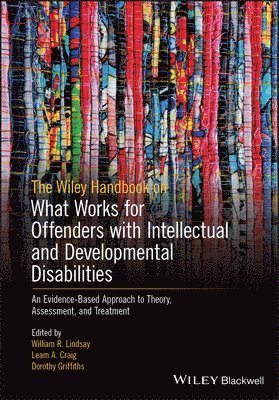
    Wiley Handbook on What Works for Offenders with Intellectual and Developmental Disabilities

    An Evidence-Based Approach to Theory, Assessment, and Treatment

    AvWilliam R. Lindsay,Leam A. Craig

    Häftad, Engelska, 2019

    540 kr

    Beställningsvara. Skickas inom 5-8 vardagar. Fri frakt över 249 kr.

    Beskrivning

    Brings together the growing amount of evidence on the assessment and treatment of offenders with intellectual and developmental disabilities.Written by a team of international experts, this comprehensive and informative book provides a contemporary picture of evidence-based practice for offenders with intellectual and developmental disabilities. By adopting a scientist-practitioner position directed at an academic level with practitioner guidelines, it provides a valuable reference source for professionals from allied disciplines who are using or seeking to apply research for this client group.The Wiley Handbook of What Works for Offenders with Intellectual and Developmental Disabilities: An Evidence Based Approach to Theory, Assessment and Treatment is divided into five sections: Introduction, Phenotypes & Genotypes and Offending Behavior, Validated Assessments, Treatment, and Conclusions. The Introduction offers an overview of the entire book and is followed by a second overview covering the ethics of evidence-based practice. After that come chapters on protecting the rights of people with intellectual disabilities in correctional settings, and behavioral and cognitive phenotypes in genetic disorders associated with offending. The third part of the book studies the assessment of individuals with anger and violence issues, inappropriate sexual behavior, alcohol abuse, and emotional difficulties. Next comes a section that looks how to offenders can be treated. The final section discusses future directions and requirements for offenders with intellectual and developmental disabilities. Provides an overview of the ethical challenges and issues faced by those who work with intellectually and developmentally disabled offendersFocuses on proof of treatment effectiveness and validation of assessment methods to direct readers toward "What Works"Features contributions from authors across the entire English-speaking world including the UK, US, Canada, Australia, and New Zealand The Wiley Handbook of What Works for Offenders with Intellectual and Developmental Disabilities: An Evidence Based Approach to Theory, Assessment and Treatment will appeal to all who work in the field of offenders with intellectual and developmental disabilities, including nursing staff, social workers and probation officers, medical and psychology staff, and more.

    Produktinformation

    • Utgivningsdatum:2019-11-28
    • Mått:170 x 241 x 18 mm
    • Vikt:816 g
    • Format:Häftad
    • Språk:Engelska
    • Antal sidor:472
    • Förlag:John Wiley and Sons Ltd
    • ISBN:9781119316237

    Utforska kategorier

    • Kriminalvård och straff inom Samhälle och politik

    Mer om författaren

    William R. Lindsay, PhD, was a Consultant Forensic Clinical Psychologist and Head of Research for Danshell, and Professor of Learning Disabilities and Forensic Psychology at Abertay University, Dundee, Scotland. Leam A. Craig, PhD, is a Consultant Forensic Clinical Psychologist and Partner at Forensic Psychology Practice Ltd. He is a visiting Professor of Forensic Clinical Psychology, Birmingham City University, Hon. Professor of Forensic Psychology, University of Birmingham, and Hon. Assoc. Professor of Forensic Psychology, University of Nottingham, UK. Dorothy Griffiths, PhD, is Emerita Professor at the Department of Child and Youth Studies and Centre for Applied Disability Studies, and former Co-Director of the International Dual Diagnosis Certificate Programme, Brock University, St. Catharines, Ontario, Canada.

    Innehållsförteckning

    • Acknowledgements ixAbout the Editors xiNotes on Contributors xiiiForeword xxiiiPart I Introduction 11 What Works for Offenders with Intellectual and Developmental Disabilities: Systems for Evaluating Evidence and Book Overview 3Leam A. Craig, William R. Lindsay, and Dorothy Griffiths2 What Works: Ethical Considerations When Treating Offenders with Intellectual and Developmental Disabilities 17Dorothy Griffiths3 Protecting the Rights of People with Intellectual Disabilities in Correctional Settings 41Frank Lambrick, Astrid Birgden, Chelsea Troutman, and Danielle McLeodPart II Phenotypes and Genotypes and Offending Behaviour 674 Behavioural and Cognitive Phenotypes in Genetic Disorders Associated with Offending 69Lauren J. Rice, Stewart L. Einfeld, and Patricia HowlinPart III Validated Assessments 975 Diagnosis of Personality Disorder in Offenders with Intellectual and Developmental Disabilities 99Nigel Beail6 Assessment of Anger and Aggression 113Paul Willner, Andrew Jahoda, and Ken MacMahon7 Psychological Assessment Procedures for Sex Offenders with Intellectual and Developmental Disabilities 133Lesley R. Steptoe and Amanda M. Michie8 Assessment for Social Problem‐Solving, Social Information Processing, and Criminal Thinking 167Peter E. Langdon9 Assessment of Alcohol Use Disorder and Alcohol‐Related Offending Behaviour 181Joanne E.L. VanDerNagel, Neomi van Duijvenbode, and Robert Didden10 Assessing People with Intellectual Disabilities Who Have Engaged in Fire Setting 193Samuel J. Tromans, Verity Chester, and Regi T. Alexander11 Biopsychosocial Assessment Approach for Offenders with Intellectual Disabilities 219Deborah Richards, Tyler Oswald, and J. Paul Fedoroff12 Using a Multicomponent Model in the Assessment of Persons with Intellectual Disabilities and Problems in Sexual Behaviour 239Robin J. Wilson, Stephanie Ioannou, and Kendra ThomsonPart IV Treatment 26113 Supporting People with Intellectual and Developmental Disabilities Leaving Prison 263Kathy Ellem, Michelle Denton, and Danielle Davidson14 Prison‐based Programmes for People with Intellectual and Developmental Disabilities 283Phillip Snoyman, Berindah Aicken, and Jayson Ware15 Treatment of Anger and Violence in Individuals with Intellectual Disability 297Robert Didden, Henk Nijman, Monique Delforterie, and Marije Keulen‐De Vos16 Treatment of Inappropriate Sexual Behaviour by People with Intellectual Developmental Disabilities 311Leam A. Craig17 Treatment for Social Problem Solving and Criminal Thinking 327Susan Hayes18 Treating Substance Misuses Amongst Offenders with Intellectual and Developmental Disabilities 341Danielle Newton and Jane McGillivray19 Treatment for Emotional Difficulties Related to Offending for People with an Intellectual Disability 357Paul Oxnam and Emma Gardner20 Treatment Outcomes for People with Autistic Spectrum Disorder in Forensic Settings 373Peter Sturmey21 Pharmacological Approaches for Offenders with Intellectual and Developmental Disabilities 389Daniel Turner and Peer BrikenPart V Conclusions 40522 Future Directions for What Works for Offenders with Intellectual and Developmental Disabilities 407Dorothy Griffiths and Leam A. CraigIndex 421