• Fri frakt över 249 kr
  • •
  • Snabba leveranser
  • •
  • Billiga böcker
Kundservice

Du är på sajten för privatpersoner.

Företag, bibliotek eller offentlig verksamhet?

Du handlar på classic.bokus.com, där alla dina funktioner finns intakta.
Till classic.bokus.com
Bokus logotyp. Gå till startsidan.
  • Erbjudanden
  • Nyheter
  • Student
  • Topplistor
  • Barn & ungdom
  • Bokus Play
  • E-böcker
  • Pocketböcker
  • Spel & pussel

10% rabatt på allt med kod NYSTART10 →

Sidfot

Mina sidor

    Hjälp

    • Kundservice
    • Vanliga frågor och svar
    • Frakt och leverans
    • Retur vid ångerrätt
    • Reklamera vara
    • Betalning
    • Köpvillkor
    • Allmänna villkor
    • Information om webbplatsens tillgänglighet

    Om Bokus

    • Om oss
    • Pressrum
    • För studenter
    • För företag
    • För bibliotek och offentlig verksamhet
    • För leverantörer
    • Hållbarhet

    Populärt

    • Aktuella erbjudanden
    • Presentkort
    • Studentlitteratur
    • Nya böcker
    • Topplistor
    • Signerade böcker
    • Engelska böcker

    Inspiration

    • Boktips
    • BookTok
    • Populära bokserier
    • Barnbokskaraktärer
    • Populära författare
    Logotyp för Bokus
    Följ oss på Facebook (extern länk)Följ oss på Instagram (extern länk)Följ oss på YouTube (extern länk)Följ oss på TikTok (extern länk)
    bokus @ CookiesAnpassa cookiesIntegritetspolicyKöpvillkor
    Till Citymail hemsida (extern länk)Till Budbee hemsida (extern länk)Till Postnord hemsida (extern länk)Till Schenker hemsida (extern länk)Till Early Bird hemsida (extern länk)Till Walleys hemsida (extern länk)
    1. Naturvetenskap och teknik
    2. Teknik och industri
    3. Biokemisk teknik

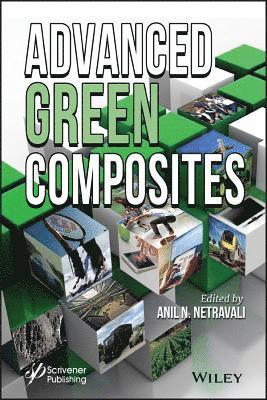
    Advanced Green Composites

    AvAnil N. Netravali,Anil N. Netravali

    Inbunden, Engelska, 2018

    2 576 kr

    Beställningsvara. Skickas inom 5-8 vardagar. Fri frakt över 249 kr.

    Beskrivning

    Most composites, particularly those made using thermoset resins, cannot be recycled or reused. As a result, most of them end up in landfills at the end of their useful life which is neither sustainable nor environment-friendly. Various laws enacted by Governments around the world and heightened global awareness about sustainability and global warming is changing this situation. Significant research is being conducted in developing and utilizing sustainable fibers and resins, mostly derived from plant, to fabricate 'Green' composites. The significant progress in the past 20 or so years in this field has led to the development of green composites with high strength or so called Advanced Green Composites. More interestingly, green composites have also acquired various different properties such as fire resistance, transparency, barrier to gases and others. The term 'advanced' which only included high strength and stiffness now includes all these special properties. The world is on the cusp of a major change, and once fully developed, such composites could be used in applications ranging from automobiles to sporting goods, from circuit boards to housing and from furniture to packaging. This book, by presenting the state-of-the-art developments in many aspects of advanced green composites adds significantly to the knowledge base that is critical for their success of expanding their use in applications never seen before. The chapters are written by world’s leading researchers and present in-depth information in a simple way.This provides readers and researchers the latest developments in the field of 'Green' resins (with ways of strengthening them), High Strength Green Fibers (including micro and nano-cellulose fibrils/fibers) and Green Composites in the first few chapters. The introductory chapter summarizes the consequences of using conventional, petroleum-based materials and the need for green composites as well as the progress being made in this field. After that the book delves in to Advanced Green Composites in a broader sense and includes chapters on High Strength Green Composites, Self-healing Green Composites, Transparent Green Composites, All-cellulose composites, Toughened Green Composites, Green Biofoams, Bioinspired Shape Memory Composites, etc. The chapters are written by the experts who are highly respected in their fields.

    Produktinformation

    • Utgivningsdatum:2018-10-16
    • Mått:10 x 10 x 10 mm
    • Vikt:454 g
    • Format:Inbunden
    • Språk:Engelska
    • Antal sidor:432
    • Upplaga:1
    • Förlag:John Wiley & Sons Inc
    • ISBN:9781119323266

    Utforska kategorier

    • Biokemisk teknik inom Naturvetenskap och teknik
    • Maskinteknik och material inom Naturvetenskap och teknik

    Mer om författaren

    Anil N. Netravali is the Jean and Douglas McLean Professor of Fiber Science and Apparel Design in the Department of Fiber Science and Apparel Design at Cornell University. Since 1984 he has been working in the field of polymer composites. He has published widely in the area of fiber/resin interface characterization and control through fiber surface modification and resin modification using nanoparticles and nanofibrils. In the past 25 years he has made significant contributions in the area of 'green' resins, composites and nanocomposites that are fully derived from plants. He was the recipient of the Fiber Society's Founders Award in 2012 and received the Green of the Crop award from the Creative Core (NY) in 2010.

    Innehållsförteckning

    • Preface xiii1 Introduction 1Anil N. Netravali1.1 Introduction 22 Green Resins from Plant Sources and Strengthening Mechanisms 11Muhammad M. Rahman and Anil N. Netravali2.1 Introduction 122.2 Green Resins from Agro-Resources 142.2.1 Plant Protein-Based Resins 142.2.2 Plant Starch-Based Resins 212.3 Green Resins from Microbial Fermentation 252.3.1 Polyhydroxyalkanoates 252.3.2 Pullulan 272.4 Green Resins Using Monomers from Agricultural Resources 292.4.1 Polylactic Acid 292.5 Strengthening of Green Resins using Nano-Fillers 322.5.1 Inorganic Nano-Fillers 332.5.2 Organic Nano-Fillers 382.6 Conclusions 43References 443 High Strength Cellulosic Fibers from Liquid Crystalline Solutions 57Yuxiang Huang and Jonathan Y. Chen3.1 Introduction 573.2 Fibers from Liquid Crystalline Solutions of Cellulose Derivatives 593.3 Fibers from Liquid Crystalline Solution of Nonderivatized Cellulose 603.4 Regenerated-Cellulose/CNT Composite Fibers with Ionic Liquids 613.5 Future Prospects 63Summary 64References 654 Cellulose Nanofibers: Electrospinning and Nanocellulose Self-Assemblies 67You-Lo Hsieh4.1 Introduction 684.2 Electrospinning of Cellulose Solutions 704.3 Cellulose Nanofibers via Electrospinning and Hydrolysis of Cellulose Acetate 704.4 Bicomponent Hybrid and Porous Cellulose Nanofibers 724.5 Wholly Polysaccharide Cellulose/Chitin/Chitosan Hybrid Nanofibers 744.6 Surface-Active Cellulose Nanofibers 764.7 Nanocelluloses 774.8 Nanocelluloses from Agricultural By-Products 794.9 Source Effects – CNCs from Grape Skin, Tomato Peel, Rice Straw, Cotton Linter 804.10 Process Effect – Nanocelluloses from Single Source (Corn Cob, Rice Straw) 824.11 Ultra-Fine Cellulose Fibers from Electrospinning and Self-Assembled Nanocellulose 854.12 Further Notes on Nanocellulose Applications and Nanocomposites 87Acknowledgement 88References 885 Advanced Green Composites with High Strength and Toughness 97Anil N. Netravali5.1 Introduction 985.2 ‘Greener’ Composites 995.3 Fully ‘Green’ Composites 1015.4 ‘Advanced Green Composites’ 1025.5 Conclusions 106References 1086 All-Cellulose (Cellulose–Cellulose) Green Composites 111Shuji Fujisawa, Tsuguyuki Saito and Akira Isogai6.1 Introduction 1116.1.1 Cellulose 1116.1.2 Nanocelluloses for Polymer Composite Materials 1126.1.3 All-Cellulose Composites 1146.2 Preparation of ACCs 1146.2.1 Dissolution of Cellulose 1146.2.1.1 Aqueous Solvents 1146.2.1.2 Organic Solvents 1156.2.1.3 Ionic Liquids 1156.2.2 Preparation of ACCs 1166.2.2.1 One-Phase Preparation 1166.2.2.2 Two-Phase Preparation 1166.3 Structures and Properties of ACCs 1206.3.1 Optical Properties 1206.3.2 Mechanical Properties 1206.3.3 Thermal Expansion Behavior 1246.3.4 Gas Barrier Properties 1246.3.5 Biodegradability 1256.4 Future Prospects 1256.5 Summary 1266.6 Acknowledgements 127References 1277 Self-Healing Green Polymers and Composites 135Joo Ran Kim and Anil N. Netravali7.1 Introduction 1367.1.1 Self-Healing Property in Materials: What is it and Why it is Needed? 1367.2 Types of Self-Healing Approaches Used in Thermoset Polymers 1377.2.1 Microcapsule-Based Self-Healing System 1387.2.1.1 Microencapsulation Techniques 1397.2.1.2 Microcapsule Systems for Self-Healing 1487.2.2 Vascular Self-Healing System 1587.2.2.1 One-, Two-, or Three-Dimensional Microvascular Systems 1597.2.3 Intrinsic Self-Healing System 1617.2.3.1 Test Methods to Characterize Self-Healing 1627.2.3.2 Quasi-Static Fracture Methods 1637.2.3.3 Fatigue Fracture Methods 1657.2.3.4 Impact Fracture Methods 1667.2.3.5 Other Techniques 1667.3 Self-Healing Polymers from Green Sources 1677.3.1 Self-Healing Polymers in Biomaterials 1687.3.2 Self-Healing Green Resins and Green Composites 1707.4 Summary and Prospects 173Acknowledgements 175References 1758 Transparent Green Composites 187Antonio Norio Nakagaito, Yukiko Ishikura and Hitoshi Takagi8.1 Introduction 1878.2 Cellulose Nanofiber-Based Composites and Papers 1898.2.1 Bacterial Cellulose-Based Composites 1898.2.2 CNF-Based Composites 1918.2.3 Transparent Nanopapers 1948.2.4 All Cellulose Transparent Composites 1958.3 Chitin-Based Transparent Composites 1978.3.1 Chitin Nanofiber-Based Composites 1978.3.2 Micro-Sized Chitin Composites 1998.3.3 Chitin-Chitosan Transparent Green Composites 2008.3.4 All Chitin Nanofiber Transparent Films 2028.4 Electronic Devices Based on CNF Films and Composites 2028.5 Future Prospects 2058.6 Summary 206References 2069 Toughened Green Composites: Improving Impact Properties 211Koichi Goda9.1 Introduction 2119.2 Significance of Fiber Length in Toughened Fibrous Composites 2129.3 Impact Properties of Green Composites 2179.3.1 Relation Between Interfacial and Mechanical Properties in Green Composites 2179.3.2 A Pattern of Increase in Tensile Strength and Decrease in Impact Strength 2219.3.3 Effect of Toughened Resin 2279.3.4 Approaches to Increase Both TS and IS 2289.4 Role of Large Elongation at Break in Regenerated Cellulose Fibers 2299.5 Toughened Cellulose Fibers and Green Composites 2319.5.1 Toughening Mechanism of Regenerated Cellulose Fibers 2319.5.2 Mercerization Effect 2349.5.3 Other Beneficial Chemical Treatments 2389.6 Conclusions 240Appendix 241References 24310 Cellulose Reinforced Green Foams 247Jasmina Obradovic, Carl Lange, Jan Gustafsson and Pedro Fardim10.1 Introduction 24810.2 Bio-Based Foams 24910.2.1 Starch-Based Foams 25010.2.2 Foams Based on Vegetable Oils 25310.2.3 Foams Based on Poly(Lactic Acid) 25510.3 Surface Engineering of Cellulose Fibres Used in Foams 25610.3.1 Chemical Modifications of Cellulose Fibres 25710.3.2 In Situ Synthesis of Hybrid Fibres 25810.3.2.1 Topology and Particle Content on Hybrid Fibres 26010.3.2.2 Foam Formation 26210.3.2.3 Combustion Behavior of Foams 26210.4 Prospects 26510.5 Summary 266Acknowledgements 267References 26711 Fire Retardants from Renewable Resources 275Zhiyu Xia, Weeradech Kiratitanavit, Shiran Yu, Jayant Kumar, Ravi Mosurkal and Ramaswamy Nagarajan11.1 Introduction 27611.2 Fire Retardant Additives Based on Phosphorus and Nitrogen from Renewable Resources 27811.2.1 Nucleic Acids 27911.2.2 Proteins Containing Phosphorus and Sulfur 28611.2.3 Phosphorus/Nitrogen-Rich Carbohydrates 28911.2.4 Carbohydrates 29111.3 Natural Phenolic Compounds as Flame Retardant Additives 29511.3.1 Lignin 29611.3.2 Tannins 30011.3.3 Cardanol and Polymers of Cardanol 30611.3.4 Polydopamines 30711.4 Other FR Materials from Renewable Sources 30811.4.1 Chicken Eggshell 30811.4.2 Banana Pseudostem Sap 30811.5 Prospects 31011.6 Summary 31111.7 Acknowledgements 312References 31212 Green Composites with Excellent Barrier Properties 321Arvind Gupta, Akhilesh Kumar Pal, Rahul Patwa, Prodyut Dhar and Vimal Katiyar12.1 Introduction 32112.2 Biodegradable Polymers: Classifications and Challenges 32312.2.1 Poly (lactic acid): Properties Evaluation, Modifications and its Applications 32812.2.2 Cellulose Based Composites: Chemical Modifications, Property Evaluation, and Applications. 33312.2.3 Chitosan Based Composites: Chemical Modifications, Properties Evaluation, and Applications 33812.2.4 Natural Gum Based Composites: Chemical Modification, Property Evaluation and Applications 34312.2.5 Silk Based Composites: Property Evaluation, Chemical Modifications and Applications 34812.3 Summary 355Acknowledgements 355References 35613 Nanocellulose-Based Composites in Biomedical Applications 369M. Osorio, A. Cañas, R. Zuluaga, P. Gañán, I. Ortiz and C. Castro13.1 Introduction 37013.2 Nanocellulose Sources and Properties 37013.2.1 Nanocellulose Sources 37013.2.2 Nanocellulose Characteristics as Green Material 37313.2.3 Nanocellulose Properties for Biomedical Composites 37413.2.3.1 Mechanical Properties 37413.2.3.2 Morphology 37513.2.3.3 Surface Charge 37513.2.3.4 Conformability 37813.2.3.5 Thermal Properties 37813.2.3.6 Non-Toxic 37913.2.3.7 Biocompatibility 37913.3 Biomedical Applications of Nanocellulose-Based Composites 37913.3.1 Nanocellulose-Based Composites with Various Polymers 38013.3.1.1 Polyvinyl Alcohol 38013.3.1.2 Chitosan (Ch) 38113.3.1.3 Acrylic Acid (AA) 38213.3.1.4 Polyhydroxyalkanoates (PHAs) 38213.3.1.5 Silk Fibroin 38313.3.1.6 Polyaniline and Polypyrrole 38313.3.1.7 Alginate 38413.3.1.8 Collagen 38413.3.2 Nanocellulose-Based Composites with Bioactive Ceramics 38513.3.2.1 Hydroxyapatite (HA) 38513.3.2.2 Iron Oxide Nanoparticles 38513.3.2.3 Calcium Peroxide (CaO2) 38613.3.2.4 Carbon Nanotubes 38613.3.3 Nanocellulose-Based Composites with Metals 38613.3.3.1 Silver Nanoparticles (Ag) 38613.3.3.2 Gold Nanoparticles (Au) 38713.4 Summary 38713.5 Prospects 390Acknowledgments 390References 390Index 403