• Fri frakt över 249 kr
  • •
  • Snabba leveranser
  • •
  • Billiga böcker
Kundservice

Du är på sajten för privatpersoner.

Företag, bibliotek eller offentlig verksamhet?

Du handlar på classic.bokus.com, där alla dina funktioner finns intakta.
Till classic.bokus.com
Bokus logotyp. Gå till startsidan.
  • Erbjudanden
  • Nyheter
  • Student
  • Topplistor
  • Barn & ungdom
  • Bokus Play
  • E-böcker
  • Pocketböcker
  • Spel & pussel

10% rabatt på allt med kod NYSTART10 →

Sidfot

Mina sidor

    Hjälp

    • Kundservice
    • Vanliga frågor och svar
    • Frakt och leverans
    • Retur vid ångerrätt
    • Reklamera vara
    • Betalning
    • Köpvillkor
    • Allmänna villkor
    • Information om webbplatsens tillgänglighet

    Om Bokus

    • Om oss
    • Pressrum
    • För studenter
    • För företag
    • För bibliotek och offentlig verksamhet
    • För leverantörer
    • Hållbarhet

    Populärt

    • Aktuella erbjudanden
    • Presentkort
    • Studentlitteratur
    • Nya böcker
    • Topplistor
    • Signerade böcker
    • Engelska böcker

    Inspiration

    • Boktips
    • BookTok
    • Populära bokserier
    • Barnbokskaraktärer
    • Populära författare
    Logotyp för Bokus
    Följ oss på Facebook (extern länk)Följ oss på Instagram (extern länk)Följ oss på YouTube (extern länk)Följ oss på TikTok (extern länk)
    bokus @ CookiesAnpassa cookiesIntegritetspolicyKöpvillkor
    Till Citymail hemsida (extern länk)Till Budbee hemsida (extern länk)Till Postnord hemsida (extern länk)Till Schenker hemsida (extern länk)Till Early Bird hemsida (extern länk)Till Walleys hemsida (extern länk)
    1. Naturvetenskap och teknik
    2. Teknik och industri
    3. Elektronik och kommunikationer

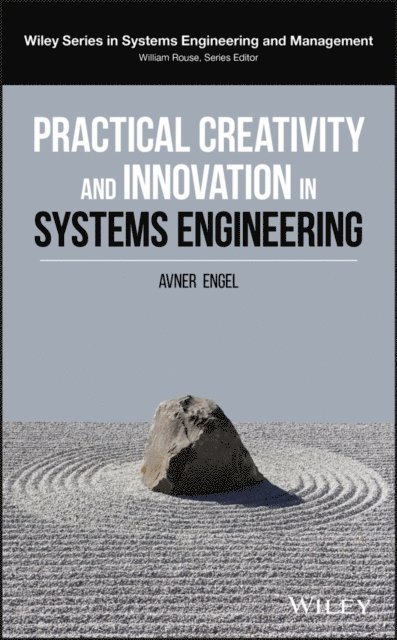
    Practical Creativity and Innovation in Systems Engineering

    AvAvner Engel

    Inbunden, Engelska, 2018

    Del i serien Wiley Series in Systems Engineering and Management

    1 574 kr

    Beställningsvara. Skickas inom 5-8 vardagar. Fri frakt över 249 kr.

    Fler format och utgåvor

    E-bok

    1 751 kr

    E-bok

    1 751 kr

    Beskrivning

    A guide to systems engineering that highlights creativity and innovation in order to foster great ideas and carry them outPractical Creativity and Innovation in Systems Engineering exposes engineers to a broad set of creative methods they can adopt in their daily practices. In addition, this book guides engineers to become entrepreneurs within traditional engineering companies, promoting creative and innovative culture around them.The author describes basic systems engineering concepts and includes an abbreviated summary of Standard 15288 systems' life cycle processes. He then provides an extensive collection of practical creative methods which are linked to the various systems' life cycle processes. Next, the author discusses obstacles to innovation and, in particular, how engineers can push creative ideas through layers of reactionary bureaucracy within non-innovative organizations. Finally, the author provides a comprehensive description of an exemplary creative and innovative case study recently completed.The book is filled with illustrative examples and offers effective guidelines that can enhance individual engineers' creative prowess as well as be used to create an organizational culture where creativity and innovation flourishes. This important book: Offers typical systems engineering processes that can be accomplished in creative ways throughout the development and post-development portions of a system's lifetime.Includes a large collection of practical creative methods applicable to engineering and other technological domainsIncludes innovation advice needed to transform creative ideas into new products, services, businesses and marketing processesContains references and notes for further reading in every sectionWritten for systems engineering practitioners, graduate school students and faculty members of systems, electrical, aerospace, mechanical and industrial engineering schools, Practical Creativity and Innovation in Systems Engineering offers a useful guide for creating a culture that promotes innovation.


    Produktinformation

    • Utgivningsdatum:2018-11-30
    • Mått:152 x 231 x 31 mm
    • Vikt:930 g
    • Format:Inbunden
    • Språk:Engelska
    • Serie:Wiley Series in Systems Engineering and Management
    • Antal sidor:512
    • Förlag:John Wiley & Sons Inc
    • ISBN:9781119383239

    Utforska kategorier

    • Elektronik och kommunikationer inom Naturvetenskap och teknik
    • Teknik: allmänt inom Naturvetenskap och teknik

    Mer om författaren

    AVNER ENGEL, PhD, has 45 years' experience in areas of software programming, systems and software engineering, technical management within large firms in the United States and Israel, academic teaching, and scientific research. He is the author of Verification, Validation and Testing of Engineered Systems, published by Wiley as part of Wiley's Systems Engineering and Management Series. Dr. Engel is currently with the Tel Aviv University – Systems Engineering Research Institute (TAU-SERI).

    Innehållsförteckning

    • ContentsPreface xiiiAcknowledgments xvPart I Introduction 11.1 Introduction to Part I 11.2 Systems Engineering 41.3 Creative Methods 51.4 Promoting Innovative Culture 61.5 Creative and Innovative Case Study 81.6 Back Matter 91.7 Bibliography 10Part II Systems Engineering 112.1 Introduction to Part II 112.2 Basic Systems Engineering Concepts 132.2.1 Essence of Systems Engineering 132.2.2 Organizations and Projects Concepts 132.2.3 System Concepts 142.2.4 Life Cycle Concepts 162.2.5 Process Concepts 182.2.6 Further Reading 192.3 Standard 15288 Processes 192.3.1 Agreement Process Group 202.3.2 Organizational Project‐Enabling Process Group 212.3.3 Technical Management Process Group 252.3.4 Technical Process Group 312.3.5 Further Reading 442.4 Philosophy of Engineering 442.4.1 Engineering and Truth 452.4.2 The Logic of Engineering Design 462.4.3 The Context and Nature of Engineering Design 482.4.4 Roles and Rules and the Modeling of Socio‐Technical Systems 512.4.5 Engineering as Synthesis – Doing Right Things and Doing Things Right 542.4.6 Further Reading 572.5 Bibliography 57Part III Creative Methods 593.1 Introduction to Part III 593.2 Divergent Methods for Individuals 613.2.1 Lateral Thinking 613.2.2 Resolving Contradictions 683.2.3 Biomimicry Engineering 763.2.4 Visual Creativity (Three Methods) 803.3 Divergent Methods for Teams 883.3.1 Classic Brainstorming 883.3.2 Six Thinking Hats 913.3.3 SWOT Analysis 943.3.4 SCAMPER Analysis 1003.3.5 Focus Groups 1033.4 Convergent Methods for Individuals 1053.4.1 PMI Analysis 1053.4.2 Morphological Analysis 1103.4.3 Decision Tree Analysis 1123.4.4 Value Analysis/Value Engineering 1163.4.5 Pareto Analysis 1223.5 Convergent Methods for Teams 1243.5.1 Delphi Method 1243.5.2 SAST Analysis 1293.5.3 Cause‐and‐Effect Diagram 1343.5.4 Kano Model Analysis 1373.5.5 Group Decisions: Theoretical Background 1423.5.6 Group Decisions: Practical Methods 1503.6 Other Creative Methods 1563.6.1 Process Map Analysis 1573.6.2 Nine‐Screens Analysis 1603.6.3 Technology Forecasting 1653.6.4 Design Structure Matrix Analysis 1723.6.5 Failure Mode Effect Analysis 1753.6.6 Anticipatory Failure Determination 1843.6.7 Conflict Analysis and Resolution 1913.7 Bibliography 198Part IV Promoting Innovative Culture 2054.1 Introduction to Part IV 2054.2 Systems Evolution 2074.2.1 Modeling Systems Evolution – S‐Curve 2074.2.2 Laws of Systems Evolution 2094.2.3 Further Reading 2264.3 Modeling the Innovation Process 2264.3.1 Classes and Types of Innovations 2264.3.2 Technological Innovation Process 2284.3.3 Innovation Funding 2354.3.4 Further Reading 2394.4 Measuring Creativity and Innovation 2394.4.1 Defining Innovation Objectives 2394.4.2 Measuring the Innovation Process 2414.4.3 Innovation Capability Maturity Model 2464.4.4 Further Reading 2504.5 Obstacles to Innovation 2504.5.1 Human Habits Factors 2504.5.2 Costs Factors 2524.5.3 Institutional Factors 2524.5.4 Knowledge Factors 2534.5.5 Markets Factors 2534.5.6 Innovation Obstacles and Classes of Innovations 2544.5.7 Further Reading 2554.6 Promoting Organization’s Innovative Culture 2554.6.1 Introduction 2554.6.2 Innovation and Leadership 2564.6.3 Innovation and Organization 2594.6.4 Innovation and People 2604.6.5 Innovation and Assets 2624.6.6 Innovation and Culture 2644.6.7 Innovation and Values 2674.6.8 Innovation and Processes 2684.6.9 Innovation and Tools 2684.6.10 Conclusion: Ascent to Innovation: Practical Steps 2714.6.11 Further Reading 2744.7 Pushing Creative Ideas by Individual Engineers 2754.7.1 Large Organizations Seldom Innovate 2754.7.2 Characteristics of Innovative Engineers 2804.7.3 Innovation Advice to Creative Engineers 2854.7.4 Further Reading 2904.8 Human Diversity and Gendered Innovation 2904.8.1 Human Diversity 2904.8.2 Shift in Gender Paradigm 2924.8.3 Gender Disparity and Innovation Implications 2954.8.4 Advancing Gendered Innovation 2984.8.5 Gendered Innovation Example 3044.8.6 Further Reading 3084.9 Cognitive Biases and Decision‐Making 3084.9.1 Cognitive Biases 3094.9.2 Cognitive Biases and Strategic Decisions 3154.9.3 Further Reading 3184.10 Bibliography 319Part V Creative and Innovative Case Study 3275.1 Introduction to Part V 3275.2 A Problem Seeking a Solution 3295.2.1 The Problem and Its Inception 3295.2.2 Initial Funding Effort 3315.2.3 Further Reading 3315.3 Gaining Deeper Insights 3315.3.1 The Problem and the Approach 3325.3.2 Main Ideas of the Proposed Work 3345.3.3 Measurable Project Objectives 3365.3.4 Basis for Predicting the Objectives 3375.3.5 Systems Adaptability: State‐of‐the‐Art 3405.3.6 Further Reading 3455.4 Project Planning 3465.4.1 Project Planned Activities 3465.4.2 Detailed Work Package Descriptions 3595.4.3 Risks and Contingency Plans 3725.4.4 Management Structure and Procedures 3755.4.5 Project Participants 3825.4.6 Resources Needed 3875.5 The AMISA Project 3885.5.1 AMISA Initiation 3885.5.2 Identifying the DFA State‐of‐the‐Art 3895.5.3 Establishing Requirements for AMISA 3905.5.4 Implementing a Software Support Tool 3905.5.5 Developing Six Pilot Projects 3915.5.6 Generating Deliverables 3975.5.7 Planning Exploitation beyond AMISA 3995.5.8 Disseminating Project Results 3995.5.9 Assessing the AMISA Project 4005.5.10 Consortium Meetings 4025.5.11 EC Summary of the Project 4055.5.12 Further Reading 4085.6 Architecture Options Theory 4085.6.1 Financial and Engineering Options 4085.6.2 Transaction Costs and Interface Costs 4105.6.3 Architecture Adaptability Value 4125.6.4 Design Structure Matrix 4135.6.5 Dynamic System Value Modeling 4145.6.6 Further Reading 4175.7 Architecture Options Example 4175.7.1 Step 1: Define the System and Its Environment 4185.7.2 Step 2: Decompose the System Architecture 4195.7.3 Step 3: Determine a Time Horizon for System Upgrade 4195.7.4 Step 4: Determine Option Value (OV) of Each Component 4225.7.5 Step 5: Determine Interface Cost (IC) of Each Interface 4265.7.6 Step 6: Model the System by Way of Design Structure Matrix (DSM) 4275.7.7 Step 7: Compute Base System’s AAV 4285.7.8 Step 8: Define Components’ Exclusion Sets 4285.7.9 Step 9: Optimize the System Architecture (Merging) 4315.7.10 Step 10: Perform Sensitivity Analyses 4345.7.11 Step 11: Evaluate Alternative System Architectures 4385.7.12 Step 12: Define System Variants 4395.7.13 Step 13: Estimate the Optimal Upgrade Time 4415.7.14 Further Reading 4425.8 AMISA – Endnote 4425.9 Bibliography 444Appendix A Life Cycle Processes versus Recommended Creative Methods 447Appendix B Extended Laws of Technical Systems Evolution 451B.1 Law 1: System Convergence 452B.2 Laws 2 to 7: Systems Merging 452B.3 Law 8: Flow Conductivity 456B.4 Laws 9 to 14: Enhanced Coordination 458B.5 Law 15: Controllability 462B.6 Law 16: Dynamization 463B.7 Law 17: Transition to Super System 463B.8 Law 18: Increasing System Completeness 465B.9 Law 19: Displacement of Human 466B.10 Law 20: Uneven System Evolution 466B.11 Law 21: Technology General Progress 467Appendix C List of Acronyms 469Appendix D Permissions to Use Third‐Party Copyright Material 475D.1 Part I: Introduction 475D.2 Part II: Systems Engineering 475D.3 Part III: Creative Methods 476D.4 Part IV: Promoting Innovative Culture 477D.5 Part V: Creative and Innovative Case Study 479D.6 Appendices 480Index 483Wiley Series in Systems Engineering and Management 491