• Fri frakt över 249 kr
  • •
  • Snabba leveranser
  • •
  • Billiga böcker
Kundservice

Du är på sajten för privatpersoner.

Företag, bibliotek eller offentlig verksamhet?

Du handlar på classic.bokus.com, där alla dina funktioner finns intakta.
Till classic.bokus.com
Bokus logotyp. Gå till startsidan.
  • Erbjudanden
  • Nyheter
  • Student
  • Topplistor
  • Barn & ungdom
  • Bokus Play
  • E-böcker
  • Pocketböcker
  • Spel & pussel

10% rabatt på allt med kod: NYSTART10 →

Sidfot

Mina sidor

    Hjälp

    • Kundservice
    • Vanliga frågor och svar
    • Frakt och leverans
    • Retur vid ångerrätt
    • Reklamera vara
    • Betalning
    • Köpvillkor
    • Allmänna villkor
    • Information om webbplatsens tillgänglighet

    Om Bokus

    • Om oss
    • Pressrum
    • För studenter
    • För företag
    • För bibliotek och offentlig verksamhet
    • För leverantörer
    • Hållbarhet

    Populärt

    • Aktuella erbjudanden
    • Presentkort
    • Studentlitteratur
    • Nya böcker
    • Topplistor
    • Signerade böcker
    • Engelska böcker

    Inspiration

    • Boktips
    • BookTok
    • Populära bokserier
    • Barnbokskaraktärer
    • Populära författare
    Logotyp för Bokus
    Följ oss på Facebook (extern länk)Följ oss på Instagram (extern länk)Följ oss på YouTube (extern länk)Följ oss på TikTok (extern länk)
    bokus @ CookiesAnpassa cookiesIntegritetspolicyKöpvillkor
    Till Citymail hemsida (extern länk)Till Budbee hemsida (extern länk)Till Postnord hemsida (extern länk)Till Schenker hemsida (extern länk)Till Early Bird hemsida (extern länk)Till Walleys hemsida (extern länk)
    1. Filosofi och religion
    2. Religion och tro
    3. Andra religioner och trosföreställningar
    4. Östasiatiska religioner

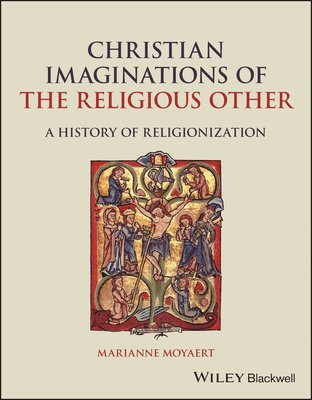
    Christian Imaginations of the Religious Other

    A History of Religionization

    AvMarianne Moyaert

    Häftad, Engelska, 2024

    Del i serien *Wiley-Blackwell

    409 kr

    Skickas . Fri frakt över 249 kr.

    Fler format och utgåvor

    E-bok

    473 kr

    E-bok

    474 kr

    Beskrivning

    Explores how Christians created, used, and adapted religionized categories of non-Christians through the centuriesChristian Imaginations of the Religious Other traces the genealogy of religionization, the various ways Christians throughout history have created a sense of religious normativity while simultaneously producing various categories of non-Christian "otherness." Covering a broad expanse of processes, practices, and socio-political contexts, this innovative volume analyzes the complex intersections of patterns of religionization in different eras while investigating their entanglements with racialization, sexualization, and ethnicization.With a readable and accessible style, Marianne Moyaert offers a nuanced and well-balanced critical analysis of how and why Christianity’s otherswere named, categorized, essentialized, and governed by those exemplifying Christian normativity in Western European society. The author takes a longue durée approach — a long-term perspective on history that extends past human memory and the archaeological record — that integrates different case studies and a variety of ecclesial, theological, and literary documents. Throughout the text, Moyaert demonstrates how religionization shaped the ways Christians classified people, organized Christian societies, interacted with different Christian and non-Christian groups, and more. Surveys the relationship between shifts in Christian normativity and the way non-Christians are imaginedHelps readers connect the lasting effects of patterns of religionization with their everyday experiencesDiscusses the role of Christian expansion in the differential and unequal treatment of Christianity’s othersExamines legal regulations and disciplinary practices that were established to define the boundaries between Christians and non-ChristiansIncorporates a wide range of scholarly resources, cutting-edge research, and the most recent insights and issues in the fieldIncludes textboxes with helpful summaries, illustrations, and commentary in each chapterChristian Imaginations of the Religious Other: A History of Religionization is an excellent textbook for undergraduate and graduate courses ininterreligious studies, comparative theology, theological approaches to religious diversity, Christian-Jewish-Muslim relations, race and religion, and theorizing religion."Professor Moyaert is one of the world’s best scholars of comparative theology. In this magisterial new work, she helps scholars of religion to better learn how religious images, whether drawn with pictures or words, are crucial to how we understand ourselves and each other." - Amir Hussain, President, American Academy of Religion"Breathtaking in scope and detail, Moyaert offers an original history of the ways Christians have projected distorted images of their religious ‘others,’ with devastating material consequences.  Her illuminating story of the past is a searchlight for our present." - Jeannine Hill Fletcher, Professor of Theology, Fordham University"Christian Imaginations is a superb study of the role that Western political programs play in the historical construction of identity boundaries. Analytically erudite and socially committed, Moyaert’s book powerfully interrogates what counts as religion making this text a must-read for anyone interested in interreligious studies." - Santiago Slabodsky, Florence and Robert Kaufman Professor in Jewish Studies, Hofstra University"Raising the historical formation of religious identities to the level of contemporary treatments of gender and racialization, Christian Imaginations of the Religious Other is essential reading for students of religion." - Michelle Voss, Professor of Theology and Past Principal, Emmanuel College of Victoria University in the University of Toronto"Crafting a Western European mosaic of religionization's turbulent history, Moyaert unveils how religious identities are constructed, hierarchies function, and their relevance for engaging diverse societies today worldwide." - Hans Gustafson, Adjunct Professor of Theology, University of St. Thomas

    Produktinformation

    • Utgivningsdatum:2024-02-22
    • Mått:244 x 15 x 170 mm
    • Vikt:680 g
    • Format:Häftad
    • Språk:Engelska
    • Serie:*Wiley-Blackwell
    • Antal sidor:368
    • Förlag:John Wiley and Sons Ltd
    • ISBN:9781119545507

    Utforska kategorier

    • Östasiatiska religioner inom Filosofi och religion

    Mer om författaren

    MARIANNE MOYAERT is Professor of Comparative Theology and the Study of Interreligious Relations at the Faculty of Theology and Religious Studies, KU Leuven, Belgium. She specializes in the comparative theology of religions, interreligious hermeneutics, and research into the religio-racialization. She has authored and edited several books including Fragile Identities: Towards a Theology of Interreligious Hospitality (2011), In Response to the Religious Other: Ricoeur and the Fragility of Interreligious Encounters (2014), and Interreligious Relations and the Negotiation of Ritual Boundaries: Explorations in Interrituality (2019).

    Innehållsförteckning

    • List of Text Boxes xivIntroduction 11 On the Notion of Religionization 22 Mechanisms of Religionization 4Naming/Renaming 4Categorization and Classification 5Essentialization 5Governance 63 The Particular Contribution of This Book 64 The Risk of Systematization and How I Seek to Avoid It 75 The Use of the Text Boxes 96 A Word of Gratitude 10Notes 11References 11Part 1 Religionization in Early Christianity: Christians, Heretics, Jews, and Pagans 131 The Creation of Key Religionized Categories in Early Christianity 151 Religio and Its Counterpart Superstitio 16Religio in Antique Times 17Antiquity and Ethnicity of Religio 17Pax Romana, Pax Deorum 18Superstitio and Religio 192 Christians as Targets of Religionization 21Christian Apologists and Ethnoreligious Reasoning 23Crafting a Sense of Christian Ethnicity 23Crafting Christian Religio as the Most Ancient 263 Christians against the Nations: The Distinction between Religio Vera and Falsa 27Religio as True Worship of the True God 274 Crafting the Jew as Un- Christian 30Jews, Christ- following Jews, and Christians from Gentiles 31Adversus Iudaeos 32Anti- Jewish Typologies 33The Supersessionist Logic 35The Deicide Charge 365 Making the Figure of the Heretic 38The Notion of Heresy 39Adversus Haereses 406 Conclusion 43Note 43References 432 The Coercive Turn: Institutionalizing Religionized Categories 461 On Heresiology: Epiphanius’ Panarion 48The Microscopical ‘Ethnographic’ Work of Epiphanius 48Epiphanius’ Universal Account of History 502 When Heresiology Intersects with Imperial Law 513 The Codex Theodosianus and the Criminalization of Heresy 52The Codex Theodosianus: De Haereticis 54Augustine and the Persecution of Heretics 564 The Constantinian Turn and the Destruction of Paganism? 56The Pagan as a Hermeneutical Figure 57The Codex Theodosianus: De Paganis 595 Anti- Jewish Rhetoric and the Establishment of Jewish Tradition as Religio Licita 61Anti- Jewish Rhetorics: Chrysostom as a Case in Point 62Augustine’s Doctrine of Jewish Witness: A Different Sound 64The Codex Theodosianus and the Jews 666 Islam Enters the Scene 67Early Christian Interpretations of Islam 67Jews and Ishmaelites and Their Place in Christian Imagination 70Christian Saracen Law 717 Conclusion 72Notes 73References 73Part 2 Body Politics in the Aftermath of the Gregorian Reform 77An Ongoing Spiritual Drama 78References 793 Unification, Purification, and Dehumanization 811 The Time of the Crusades and Dehumanizing Saracens 82The Emergence of Crusading Ideology 82The Saracen as Pagan 84Defiled, Monstrous Black Bodies 86The Danger of Blurring Religious Boundaries 87The Conflation of Jew and Muslim 892 The Deteriorating Fate of the Jews 91Flashback: The Jews and the Legacy of Antiquity 92The Jews under the Frankish Merovingians and the Carolingians 92The Jew: From Unwilling Witness to Enemy, Child Murderer, and Usurer 93Crusading Ideology and the Jew as Christianity’s Internal Enemy 94Jews and Usury 94Blood Libels 95Blackness, Disfiguration, and Bodily Afflictions 963 The Return of the Problem of Heresy 98Flashback on Heresiology 98The Disappearance and Return of the Problem of Heresy 98The Cathars and Waldensians 99Polemical Depictions of Heresy 100Heretics as Foxes 100Heretics as Morally and Sexually Perverse Creatures in the Service of Satan 102The War on Heresy 104Preaching 104Crusading 104The Inquisition 1054 The Fourth Lateran Council 1065 Conclusion 109Notes 109References 1094 The Spanish Catholic Monarchy and Religio- racialization 1131 The Reconquista and the Re- Christianization of the Iberian Peninsula 114Reclaiming Space: Converting and Cleansing Mosques 116Law Making 117On the Jews (De los judíos) 118On the Moors (De los moros) 1192 The Long Road towards Blood Purity Laws 120Crusading Ideology and the Ideal of Christian Visigothic Descent 120Increasing Anti- Judaism 122The Conversionist Programme of the Mendicant Orders 122Conspiracy Theories: Treason, Ritual Murder, and Poisoning 123Economic Motives 123Political Instability 1243 Forced Mass Conversions 125Questions about Authenticity 125Conversos Destabilize Boundaries 1264 Law Making: Limpieza de Sangre 1285 The Catholic Monarchs and the Purgation of the Spanish Monarchy 1306 The Religio- racial Project of the Spanish Catholic Monarchy: An Exceptional Case? 1337 Columbus, New Worlds, and the Question of Religion 134First Encounters 135No Religion 1368 Conclusion: Blurring Boundaries between Racialization and Religionization 139Notes 141References 142Part 3 The Long Reformation 1455 The Turn Inwards 1491 Mediation, Fear of Death, Excess, and Corruption 151The Church and the Mediation of Salvation 151Death, Purgatory, and Intercession 153Corruption, Abuse, and the Practice of Indulgences 153Catholic Piety under Critique 1542 The Modern Devotion 155Geert Grote: The Fountain of Modern Devotion 156The Brethren of the Common Life and the Reinterpretation of Religio 1573 Christian Humanism 159In Praise of Folly 159Scripture as the Cornerstone of Christian Life 161Erasmus on Judaism 1624 Martin Luther 164A Reformed and Purified Christian Norm 1655 Erasmus and Luther: Profound Disagreements 166Reforming Christian Faith and Projecting False Religion onto the Enemies of God 1686 The Colonial Project and the Question of True Religion 171Context 171Juan Ginés de Sepúlveda 172Bartolomé de las Casas 173José de Acosta 1747 Protestantism and the Rejection of the Principle of Mediation 1758 Conclusion 177Notes 178References 1786 The Fragmentation of Religion and the Re- creation of Society 1811 Polemics and the Dehumanization of Religious Others 182Sexual Slander 183Corrupted Souls and Diseased Bodies 1842 Protecting the Socio- political Order: Expulsion, Confiscation, Torture 187Rituals of Purgation 189Iconoclasm 189Humiliating, Killing, and Exhuming Heretical Bodies 1903 The Legal Establishment of the Fragmentation of Religion 190Peace Treaties and the Redefinition of the Binary of Orthodoxy/Heresy 191The Peace of Augsburg 1924 Religionization as Confessionalization 195Confessionalization and the Making of Bounded Communities 197The Propagation of True Christianness 197Ritual 199Space 201Education 202Censorship 203Discipline 2045 The Parting of the Ways and Confessional Identity Markers 2046 Conclusion 205Notes 206References 2077 Reconfiguring True Religion in Terms of Toleration 2111 Sebastian Castellio: Beyond Coercion 213Context 214Preface Dedicated to Count William of Hesse 215Dedication to Duke Christoph of Württemberg 2182 John Locke on Toleration 220Toleration as a Characteristic of Being a True Christian 221True and False Religion 222The Magistrate 223What Is a Church? 224The Scope of Tolerance: Jews, Muslims, and Pagans 226Extending Toleration to the Pagans 227The Limits of Toleration 227Crafting Judaism, Islam, and Paganism as ‘Religions’: Legal and Political Consequences in Europe and Beyond 2283 Voltaire and the Problem of Fanaticism 229Context 230The Case of Jean Calas 230The Fanatic as a Rhetorical Figure 231Refuting Theological Religion 233Christianity 234Judaism 235Islam 237Deism/Theism 238Deism, Orientalism, and the Construction of the Religion of India 240Comparing Religions in Voltaire’s Work: Decentring and Recentring Christianness 2424 Conclusion 243Notes 244References 245Part 4 The World Religions Paradigm and the Turn to Dialogue 2491 What Is the World Religions Paradigm? 2492 Old Patterns of Religionization Function as Building Blocks 250Interiorization 251Confessionalization 251Religio- secularization 2523 Gathering Data in a Context of Colonization 2534 The World Religions Paradigm: Another Emancipatory Myth? 255Notes 256References 2568 Religio- racialized Taxonomies Based on Comparative Philology 2571 The Fixation on Creating ‘Scientific’ Taxonomies of Race 259Biblical Taxonomies 259Ethnographic Explorations 260Comparative Philology 2612 Romantic Musings about Language as the Gateway to the Spirit of People 262Comparative Philology, Grammar, and Race 2633 The Discovery of the Indo- European Language Family 265Oriental Jones and the Indo- European Hypothesis 265The Indo- European Myth as Colonial Ideology 2664 Friedrich Schlegel’s Comparative Philology and German Romanticism 267About the Language and Wisdom of the Indians 267Inflection and Agglutination 2675 Ernest Renan and the Invention of the Semite 270Semitic and Aryan People 270Semitic Monotheism and a Religious People 273Comparing Religions 274On Judaism 274On Christianity 275On Islam 2776 Friedrich Max Müller: ‘He Who Knows One Religion, Knows None’ 279Religion as One and Plural 2807 The Task of Classification 282The Religions of the Book and the Rest 2848 Conclusion 286Note 287References 2879 The Dialogical Turn beyond Religionization? 2911 The World Parliament of Religions in Chicago 292World Fairs 292The Columbian World Fair and National Pride 293The Tripartite Structure of the World Fair 294The Parliament of Religions as Performance of the World Religions Paradigm 296Religion Is One and Many 297Interreligious Brotherhood and Religio- secularization 298The Religions of the World and the Rest: Religio- racialization Exhibited 300Talking Back 302Interreligious Brotherhood as a Depoliticized Discourse 3032 The Second Vatican Council as a Watershed 304Opening the Windows 304Larger Context 305Dialogue as a Key Aspect of Christian Self- understanding 305Nostra Aetate 307The Institutionalization of Dialogue 312The Ritualization of Dialogue 313Changes in the Good Friday Liturgy 313Interfaith Blessings 315John Paul II Visits the Synagogue of Rome 315The Day of Prayer in Assisi 316The Dialogical Turn and the Renegotiation of the Religio- secular Divide 316The Dialogical Turn and the Erasure of the Religio- racial Constellation 318The Dismantling of the Religio- racial Constellation 319The Masking of the Religio- racial Constellation 320The Dialogical Turn and the (Non-)Shared Fate of Jews and Muslims in the Christian Imagination 3213 Dialogue in Post- secular Society 322The Return of Religion 322The Two Faces of Religion 323Interfaith Dialogue and the Performance of Good Religion 325Education, Citizenship, and the Promotion of Interfaith Competences 326Islam as Europe’s Other 3284 Conclusion 329Notes 331References 332Conclusion 337Index 339