• Fri frakt över 249 kr
  • •
  • Snabba leveranser
  • •
  • Billiga böcker
Kundservice

Du är på sajten för privatpersoner.

Företag, bibliotek eller offentlig verksamhet?

Du handlar på classic.bokus.com, där alla dina funktioner finns intakta.
Till classic.bokus.com
Bokus logotyp. Gå till startsidan.
  • Erbjudanden
  • Nyheter
  • Student
  • Topplistor
  • Barn & ungdom
  • Bokus Play
  • E-böcker
  • Pocketböcker
  • Spel & pussel

10% rabatt på allt med kod NYSTART10 →

Sidfot

Mina sidor

    Hjälp

    • Kundservice
    • Vanliga frågor och svar
    • Frakt och leverans
    • Retur vid ångerrätt
    • Reklamera vara
    • Betalning
    • Köpvillkor
    • Allmänna villkor
    • Information om webbplatsens tillgänglighet

    Om Bokus

    • Om oss
    • Pressrum
    • För studenter
    • För företag
    • För bibliotek och offentlig verksamhet
    • För leverantörer
    • Hållbarhet

    Populärt

    • Aktuella erbjudanden
    • Presentkort
    • Studentlitteratur
    • Nya böcker
    • Topplistor
    • Signerade böcker
    • Engelska böcker

    Inspiration

    • Boktips
    • BookTok
    • Populära bokserier
    • Barnbokskaraktärer
    • Populära författare
    Logotyp för Bokus
    Följ oss på Facebook (extern länk)Följ oss på Instagram (extern länk)Följ oss på YouTube (extern länk)Följ oss på TikTok (extern länk)
    bokus @ CookiesAnpassa cookiesIntegritetspolicyKöpvillkor
    Till Citymail hemsida (extern länk)Till Budbee hemsida (extern länk)Till Postnord hemsida (extern länk)Till Schenker hemsida (extern länk)Till Early Bird hemsida (extern länk)Till Walleys hemsida (extern länk)
    1. Naturvetenskap och teknik
    2. Matematik och naturvetenskap
    3. Astronomi

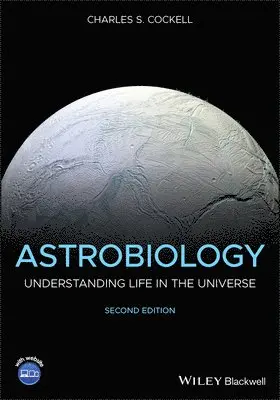
    Astrobiology

    Understanding Life in the Universe

    AvCharles S. Cockell

    Häftad, Engelska, 2020

    1 102 kr

    Beställningsvara. Skickas inom 5-8 vardagar. Fri frakt över 249 kr.

    Fler format och utgåvor

    E-bok

    1 262 kr

    E-bok

    1 265 kr

    Häftad

    Kommande

    Beskrivning

    A guide to understanding the formation of life in the UniverseThe revised and updated second edition of Astrobiology offers an introductory text that explores the structure of living things, the formation of the elements required for life in the Universe, the biological and geological history of the Earth, and the habitability of other planets. Written by a noted expert on the topic, the book examines many of the major conceptual foundations in astrobiology, which cover a diversity of traditional fields including chemistry, biology, geosciences, physics, and astronomy.The book explores many profound questions such as: How did life originate on Earth? How has life persisted on Earth for over three billion years? Is there life elsewhere in the Universe? What is the future of life on Earth? Astrobiology is centered on investigating the past and future of life on Earth by looking beyond Earth to get the answers. Astrobiology links the diverse scientific fields needed to understand life on our own planet and, potentially, life beyond. This new second edition: Expands on information about the nature of astrobiology and why it is usefulContains a new chapter “What is Life?” that explores the history of attempts to understand lifeContains 20% more material on the astrobiology of Mars, icy moons, the structure of life, and the habitability of planetsNew ‘Discussion Boxes’ to stimulate debate and thought about key questions in astrobiologyNew review and reflection questions for each chapter to aid learningNew boxes describing the careers of astrobiologists and how they got into the subjectOffers revised and updated information throughout to reflect the latest advances in the fieldWritten for students of life sciences, physics, astronomy and related disciplines, the updated edition of Astrobiology is an essential introductory text that includes recent advances to this dynamic field.

    Produktinformation

    • Utgivningsdatum:2020-04-30
    • Mått:178 x 254 x 31 mm
    • Vikt:1 338 g
    • Format:Häftad
    • Språk:Engelska
    • Antal sidor:632
    • Upplaga:2
    • Förlag:John Wiley and Sons Ltd
    • ISBN:9781119550358

    Utforska kategorier

    • Astronomi inom Naturvetenskap och teknik
    • Biovetenskap inom Naturvetenskap och teknik

    Mer om författaren

    CHARLES S. COCKELL is Professor of Astrobiology at the University of Edinburgh, United Kingdom.

    Innehållsförteckning

    • Acknowledgments xviiAbout the Companion Website xix1 Astrobiology 11.1 Introductory Remarks 11.2 The Major Questions of Astrobiology and the Content of the Textbook 31.3 Some Other Features of the Textbook 91.4 A Brief History of Astrobiology 101.5 Conclusions 15Bibliography 152 What is Life? 172.1 The Concept of “Life” 172.2 What is Life? The Historical Perspective 172.3 Spontaneous Generation 192.4 More Modern Concepts 232.5 Schrödinger and Life 272.6 Life as a Dissipative Process 272.7 Life: Just a Human Definition? 282.8 Does It Matter Anyway? 302.9 Conclusions 30Questions for Review and Reflection 30Bibliography 313 Matter and Life 333.1 Matter and Life 333.2 Life is Made of “Ordinary” Matter 343.3 The Atomic Nucleus 343.4 Electrons, Atoms, and Ions 353.5 Types of Bonding in Matter 373.6 Ionic Bonding 383.7 Covalent Bonding 393.7.1 Covalent Bonds and Life 403.8 Metallic Bonding 413.9 Van der Waals Interactions 423.10 Hydrogen Bonding 443.11 An Astrobiological Perspective 463.12 The Equation of State Describes the Relationship Between Different Types of Matter 473.13 Other States of Matter 503.14 The Interaction Between Matter and Light 533.15 Conclusions 57Questions for Review and Reflection 57Bibliography 574 The Molecular Structure of Life 594.1 Building Life 594.2 The Essential Elements: CHNOPS 594.3 Carbon is Versatile 624.4 The Chains of Life 624.5 Proteins 634.6 Chirality 664.7 Carbohydrates (Sugars) 684.8 Lipids 714.9 The Nucleic Acids 724.10 The Solvent of Life 764.11 Alternative Chemistries 784.13 Conclusions 84Questions for Review and Reflection 85Bibliography 855 The Cellular Structure of Life 875.1 From Molecules to Cells 875.2 Types of Cells 885.3 Shapes of Cells 905.4 The Structure of Cells 905.5 The Structure of Cellular Membranes 915.6 The Information Storage System of Life 965.7 Eukaryotic Cells 1055.8 The Reproduction of Cells 1075.9 Why Did Sexual Reproduction Evolve? 1085.10 The Growth of Populations of Cells 1105.11 Moving and Communicating 1115.12 Viruses 1165.13 Prions 1185.14 Conclusions 118Questions for Review and Reflection 119Bibliography 1196 Energy for Life 1216.1 Energy and Astrobiology 1216.2 Life and Energy 1226.3 The Central Role of Adenosine Triphosphate 1236.4 Chemiosmosis and Energy Acquisition 1256.5 What Types of Electron Donors and Acceptors Can Be Used? 1286.6 Aerobic Respiration 1296.7 Anaerobic Respiration 1326.8 Fermentation 1346.9 Chemoautotrophs: Changing the Electron Donor 1346.10 Energy from Light: Photosynthesis 1426.11 Oxygenic Photosynthesis 1426.12 Anoxygenic Photosynthesis 1456.13 Rhodopsins and Photosynthesis 1486.14 Evolution of Photosynthesis 1496.15 Global Biogeochemical Cycles 1506.16 Microbial Mats – Energy-Driven Zonation in Life 1526.17 The Thermodynamics of Energy Acquisition and Life 1546.18 Energy and Life in Extremes 1566.19 Conclusions 158Questions for Review and Reflection 158Bibliography 1587 The Limits of Life 1617.1 The Limits of Life 1617.2 The Importance of the Limits of Life for Astrobiology 1627.3 The Most Extreme Conditions are Dominated by Microbes 1637.4 Life at High Temperatures 1657.5 Life at Low Temperatures 1677.6 Salt-Loving Organisms 1707.7 pH Extremes 1737.8 Life Under High Pressure 1747.9 Tolerance to High Radiation 1767.10 Life in Toxic Brews 1767.11 Rocks as a Habitat 1777.12 Polyextremophiles – Dealing with Multiple Extremes 1807.13 Life Underground 1817.14 Dormancy in Extreme Conditions 1837.15 Eukaryotic Extremophiles 1847.16 Are There Other Biospheres with Different Limits? 1857.17 The Limits of Life: Habitability Revisited 1867.18 Conclusions 186Questions for Review and Reflection 186Bibliography 1878 The Tree of Life 1898.1 A Vast Quantity of Life 1898.2 Evolution and a “Tree of Life” 1908.3 Classifying Organisms 1928.4 The Tree of Life and Some Definitions 1948.5 Problems with Classification: Homology and Analogy 1968.6 Building a Phylogenetic Tree Using Genetic Material 1988.7 Types of Phylogenetic Trees 2028.8 A Modern View of the Tree of Life 2028.9 Using Phylogenetic Trees to Test Hypotheses 2048.10 Complications in Building Trees 2068.11 Origin of Eukaryotes 2108.12 The Last Universal Common Ancestor 2118.13 Multiple Origins of Life? 2128.14 Alien Life 2138.15 Conclusions 214Questions for Review and Reflection 214Bibliography 2149 The Universe, the Solar System, and the Elements of Life 2179.1 Our Cosmic Situation 2179.2 In the Beginning: The Formation of the Universe 2189.3 Stellar Evolution: Low-Mass Stars 2229.4 Stellar Evolution: High-Mass Stars 2249.5 The Elements of Life 2289.6 The Hertzsprung–Russell Diagram 2289.7 The Sun is a Blackbody 2329.8 The Formation of Planets 2339.9 Types of Objects in Our Solar System 2369.10 Meteorites and Their Classification 2399.11 Laws Governing the Motion of Planetary Bodies 2439.12 Conclusions 245Questions for Review and Reflection 246Bibliography 24610 Astrochemistry: Carbon in Space 24910.1 Astrochemistry: Carbon Molecules in Space 24910.2 Observing Organics 24910.3 In the Beginning 25010.4 Different Environments for Chemistry 25110.5 How Do Chemical Reactions Occur? 25410.6 Forming Carbon Compounds 25610.7 Formation of Water 25710.8 Interstellar Grains 25810.9 Polycyclic Aromatic Hydrocarbons 25810.10 Even More Carbon Diversity 26110.11 Comets and Organic Molecules 26110.12 The Origin of Chirality 26210.13 Laboratory Experiments 26310.14 Observing Organic Molecules 26410.15 Conclusions 265Questions for Review and Reflection 265Bibliography 26611 Early Earth: The First Billion Years 26711.1 The First Billion Years of Earth 26711.2 Earth Forms and Differentiates 26711.3 The Formation of the Moon 26811.4 The Early Oceans 27011.5 The Early Crust 27311.6 The Early Atmosphere 27311.7 The Temperature of Early Earth 27511.8 The Late Heavy Bombardment 27511.9 Implications of the Early Environment for Life 27811.10 Conclusions 280Questions for Review and Reflection 280Bibliography 28112 The Origin of Life 28312.1 The Origin of Life 28312.2 The Synthesis of Organic Compounds on Earth 28412.3 Delivery from the Extraterrestrial Environment 28812.4 The RNA World 29112.5 Early Cells 29412.6 Where Did the Origin of Life Occur? 29512.7 A Cold Origin of Life? 30112.8 The Whole Earth as a Reactor? 30112.9 Conclusions 302Questions for Review and Reflection 302Bibliography 30213 Early Life on Earth 30513.1 Early Life on Earth 30513.2 Early Life – Metabolisms and Possibilities 30513.3 Isotopic Fractionation 30813.4 Measuring the Isotope Fractionation: The Delta Notation 31113.5 Sulfur Isotope Fractionation 31113.6 Using Isotopes to Look for Ancient Life 31213.7 Morphological Evidence for Life 31513.8 Biomarkers 32113.9 Contamination is a Problem 32213.10 Instruments Used to Look for Life 32313.11 A Brief Summary 32613.12 The Search for Extraterrestrial Life 32713.13 Conclusions 327Questions for Review and Reflection 327Bibliography 32714 The Geology of a HabitableWorld 32914.1 The Geological History of Earth: A Habitable World 32914.2 Minerals and Glasses 33014.3 Types of Rocks 33114.4 The Rock Cycle 33414.5 The Composition of Earth 33614.6 Plate Tectonics 33814.7 Dating the Age of the Earth (and Other Planetary Bodies) 34414.8 Age-Dating Rocks 34514.9 Geological Timescales 35214.10 The Major Classifications of Geological Time 35214.11 Some Geological Times and Biological Changes 35314.12 Conclusions 360Questions for Review and Reflection 360Bibliography 36015 The Co-evolution of Life and a Planet: The Rise of Oxygen 36315.1 Dramatic Changes on Earth 36315.2 Measuring Oxygen Through Time 36415.3 It Was Not a Simple Rise 36815.4 Summarizing the Evidence for the GOE 37015.5 The Source of Oxygen 37115.6 Sinks for Oxygen 37115.7 Why Did Atmospheric Oxygen Concentrations Rise? 37215.8 Snowball Earth Episodes 37315.9 Other Biological Consequences of the Rise of Oxygen 37615.10 Oxygen and the Rise of Animals 37715.11 Oxygen and the Rise of Intelligence 37915.12 Periods of High Oxygen 37915.13 Conclusions 380Questions for Review and Reflection 380Bibliography 38116 Mass Extinctions 38316.1 Extinctions 38316.2 What is Extinction? 38316.3 Five Major Mass Extinctions 38516.4 Other Extinctions in Earth History 38616.5 Causes of Mass Extinction 38616.6 The End-Cretaceous Extinction 38816.7 The Other Four Big Extinctions of the Phanerozoic 39216.8 Do Microorganisms Go Extinct? 39616.9 Recovery from Extinction 39616.10 Can We Avoid Extinction? 39816.11 The Sixth Mass Extinction? 40016.12 Conclusions 401Questions for Review and Reflection 401Bibliography 40117 The Habitability of Planetary Bodies 40317.1 What is “Habitability”? 40317.2 The Habitable Zone 40517.3 Maintaining Temperature Conditions on a Planet Suitable for Water and Life 40817.4 Plate Tectonics and Habitability 41417.5 Does the Moon Play a Role in Habitability? 41617.6 Other Planetary Factors that Influence Habitability 41717.7 Surface Liquid Water, Habitability, and Intelligence 41817.8 Habitable Environments Need Not Always Contain Life 41817.9 Worlds More Habitable than Earth? 42017.10 The Anthropic Principle and Habitability 42017.11 The Fate of Earth 42017.12 The Galactic Habitable Zone 42117.13 The Right Galaxy? 42217.14 Conclusions 422Questions for Review and Reflection 423Bibliography 42318 The Astrobiology of Mars 42518.1 Mars and Astrobiology 42518.2 Martian Geological History: A Very Brief Summary 42618.3 The Environmental Deterioration of Mars 42718.4 Missions to Mars 42918.5 Mars and Life 43518.6 Trajectories of Martian Habitability 45118.7 The Viking Program and the Search for Life 45518.8 Searching for Life by Investigating Gases 45818.9 Martian Meteorites 45818.10 Mars Analog Environments 46018.11 Panspermia: The Transfer of Life between Planets? 46318.12 Conclusions 467Questions for Review and Reflection 467Bibliography 46819 Ocean Worlds and Icy Moons 47119.1 The Astrobiology of Moons 47119.2 The Moons of Jupiter: Europa 47219.3 The Moons of Jupiter: Ganymede and Callisto 47719.4 The Moons of Jupiter: Io 47919.5 The Moons of Saturn: Enceladus 47919.6 The Moons of Saturn: Titan 48419.7 Other Icy Worlds 49019.8 Planetary Protection 49419.9 Conclusions 496Questions for Review and Reflection 496Bibliography 49620 Exoplanets and the Search for Life 49920.1 Exoplanets and Life 49920.2 Detecting Exoplanets 50020.3 Exoplanet Properties 50820.4 Detecting Life 51720.5 Surface Biosignatures 52220.6 How Likely are These Signatures? 52520.7 Other Ways to Find Life 52520.8 Missions to Detect Biosignatures 52620.9 Conclusions 527Questions for Review and Reflection 527Bibliography 52821 The Search for Extraterrestrial Intelligence 52921.1 The Search for Extraterrestrial Intelligence (SETI) 52921.2 Methods in the Search for Extraterrestrial Intelligence 53021.3 Communication with Extraterrestrial Intelligence (CETI) 53321.4 The Drake Equation 53721.5 The Fermi Paradox 53821.6 Classifying Civilizations 54221.7 Policy Implications 54321.8 Conclusions 544Questions for Review and Reflection 544Bibliography 54422 Our Civilization 54722.1 Astrobiology and Human Civilization 54722.2 The Emergence of Human Society 54722.3 Threats to a Civilization 55122.4 Climate Change and the Challenge to Civilization 55322.5 The Human Future Beyond Earth 55522.6 Settling the Solar System 55622.7 Avoiding Extinction or Collapse: A Multiplanet Species 56522.8 Environmentalism and Space Exploration as a Single Goal? 56622.9 Sociology: The Overview Effect 56722.10 Will We Become Interstellar? 56822.11 Conclusions 569Questions for Review and Reflection 569Bibliography 569Appendix 571A.1 The Astrobiology Periodic Table 571A.2 Units and Scales 571A.2.1 Standard International Base Units 571A.2.2 Basic Physical Constants 572A.3 Temperature Scale Conversion 572A.4 Composition of the Sun 573A.5 Some of the Major Star Types, Temperatures, and Colors 573A.6 Three- and One-Letter Designations of Amino Acids 573A.7 Codon Table for the Genetic Code Associated with mRNA (also shown in Chapter 5; Figure 5.12) 574A.8 Planetary Data 575A.9 Geological Time Scale 576Glossary 577Index 601