• Fri frakt över 249 kr
  • •
  • Snabba leveranser
  • •
  • Billiga böcker
Kundservice

Du är på sajten för privatpersoner.

Företag, bibliotek eller offentlig verksamhet?

Du handlar på classic.bokus.com, där alla dina funktioner finns intakta.
Till classic.bokus.com
Bokus logotyp. Gå till startsidan.
  • Erbjudanden
  • Nyheter
  • Student
  • Topplistor
  • Barn & ungdom
  • Bokus Play
  • E-böcker
  • Pocketböcker
  • Spel & pussel

10% rabatt på allt med kod: NYSTART10 →

Sidfot

Mina sidor

    Hjälp

    • Kundservice
    • Vanliga frågor och svar
    • Frakt och leverans
    • Retur vid ångerrätt
    • Reklamera vara
    • Betalning
    • Köpvillkor
    • Allmänna villkor
    • Information om webbplatsens tillgänglighet

    Om Bokus

    • Om oss
    • Pressrum
    • För studenter
    • För företag
    • För bibliotek och offentlig verksamhet
    • För leverantörer
    • Hållbarhet

    Populärt

    • Aktuella erbjudanden
    • Presentkort
    • Studentlitteratur
    • Nya böcker
    • Topplistor
    • Signerade böcker
    • Engelska böcker

    Inspiration

    • Boktips
    • BookTok
    • Populära bokserier
    • Barnbokskaraktärer
    • Populära författare
    Logotyp för Bokus
    Följ oss på Facebook (extern länk)Följ oss på Instagram (extern länk)Följ oss på YouTube (extern länk)Följ oss på TikTok (extern länk)
    bokus @ CookiesAnpassa cookiesIntegritetspolicyKöpvillkor
    Till Citymail hemsida (extern länk)Till Budbee hemsida (extern länk)Till Postnord hemsida (extern länk)Till Schenker hemsida (extern länk)Till Early Bird hemsida (extern länk)Till Walleys hemsida (extern länk)
    1. Naturvetenskap och teknik
    2. Matematik och naturvetenskap
    3. Biologi

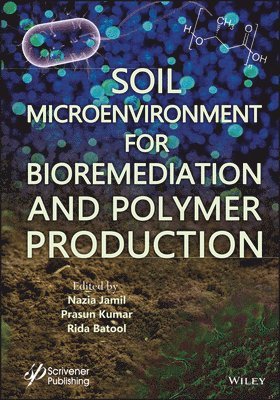
    Soil Microenvironment for Bioremediation and Polymer Production

    AvNazia Jamil,Prasun Kumar

    Inbunden, Engelska, 2019

    2 583 kr

    Beställningsvara. Skickas inom 5-8 vardagar. Fri frakt över 249 kr.

    Beskrivning

    Describes harmful elements and their bioremediation techniques for tannery waste, oil spills, wastewater, greenhouse gases, plastic and other wastes.Microenvironmental conditions in soil provide a natural niche for ultra-structures, microbes and microenvironments. The natural biodiversity of these microenvironments is being disturbed by industrialization and the proliferation of urban centers, and synthetic contaminants found in these micro-places are causing stress and instability in the biochemical systems of microbes. The development of new metabolic pathways from intrinsic metabolic cycles facilitate microbial degradation of diverse resistant synthetic compounds present in soil. These are a vital, competent and cost-effective substitute to conventional treatments. Highly developed techniques for bioremediation of these synthetic compounds are increasing and these techniques facilitate the development of a safe environment using renewable biomaterial for removal of toxic heavy metals and xenobiotics.Soil Microenvironment for Bioremediation and Polymer Production consists of 21 chapters by subject matter experts and is divided into four parts: Soil Microenvironment and Biotransformation Mechanisms; Synergistic Effects between Substrates and Microbes; Polyhydroxyalakanoates: Resources, Demands and Sustainability; and Cellulose-Based Biomaterials.This timely and important book highlights Chapters on classical bioremediation approaches and advances in the use of nanoparticles for removal of radioactive wasteDiscusses the production of applied emerging biopolymers using diverse microorganismsProvides the most innovative practices in the field of bioremediationExplores new techniques that will help to improve biopolymer production from bacteriaProvides novel concepts for the most affordable and economic societal benefits.

    Produktinformation

    • Utgivningsdatum:2019-12-03
    • Mått:10 x 10 x 10 mm
    • Vikt:454 g
    • Format:Inbunden
    • Språk:Engelska
    • Antal sidor:432
    • Förlag:John Wiley & Sons Inc
    • ISBN:9781119592051

    Utforska kategorier

    • Biologi inom Naturvetenskap och teknik
    • Maskinteknik och material inom Naturvetenskap och teknik

    Mer om författaren

    Nazia Jamil holds a PhD in genetics from the University of Karachi, Pakistan. Her research as a microbiologist and geneticist centers on investigating the synthesis of biodegradable plastic by indigenous bacteria from renewable sources. She has international and national funded projects from IFS-Sweden and HEC Pakistan to carry out research on biopolymers and antimicrobial compounds. She has authored 60 national and international research papers in peer-reviewed journals. Prasun Kumar is an applied microbiologist and biotechnologist and his main areas of research are microbial biodiversity, bioenergy, and biopolymers. Dr. Prasun holds a PhD in biotechnology from CSIR-Institute of Genomics and Integrative Biology, Delhi, India. He has over seven years of experience in applied microbiological research and bioprocessing including over 2 years of post-doctoral research experience at Chungbuk National University, Republic of Korea. He made significant contributions while working on valorising lignocellulosic biowastes of cheap raw materials into value-added products including bioenergy, biopolymers, polyhydroxyalkanoates etc. He has more than 27 articles published in various peer-reviewed SCI journals and has authored 1 book. Rida Batool PhD is an Assistant Professor in the Department of Microbiology and Molecular Genetics at University of the Punjab, Lahore, Pakistan. Her main research interests are in environmental microbiology/biotechnology with a focus on metal-microbe interaction, wastewater treatment, biosorption and mechanisms of metal resistance. Other aspects of her research involve the isolation and characterization of bioactive compounds of indigenous plant and bacterial origin. She has authored more than 20 national and international journal articles.

    Innehållsförteckning

    • Preface xviiPart 1: Soil Microenvironment and Biotransformation Mechanisms 11 Applications of Microorganisms in Agriculture for Nutrients Availability 3Fehmida Fasim and Bushra Uziar1.1 Introduction 31.2 Biofertilizers 41.3 Rhizosphere 51.4 Plant Growth Promoting Bacteria 51.5 Microbial Mechanisms of Phosphate Solubilization 91.6 Bacterial and Fungi Coinoculation 111.7 Conclusion 112 Native Soil Bacteria: Potential Agent for Bioremediation 17Ranjan Kumar Mohapatra, Haragobinda Srichandan, Snehasish Mishra and Pankaj Kumar Parhi2.1 Introduction 172.2 Current Soil Pollution Scenario 192.3 Effects of Soil Pollution 262.4 Diversity of Soil Bacteria from Contaminated Sites 272.5 Bioremediation of Toxic Pollutants 272.6 Bioremediation Mechanisms 272.7 Factors Affecting Bioremediation/Biosorption Process 292.8 Microbial Bioremediation Approaches 302.9 Conclusion and Future Prospective 303 Bacterial Mediated Remediation: A Strategy to Combat Pesticide Residues In Agricultural Soil 35Atia Iqbal3.1 Introduction 353.2 Effects of Pesticides 363.3 Pesticide Degradation 373.4 Bacterial Mediated Biodegradation of Various Pesticides 383.5 Conclusion 424 Study of Plant Microbial Interaction in Formation of Cheese Production: A Vegan's Delight 55Sundaresan Bhavaniramya, Ramar Vanajothi, Selvaraju Vishnupriya and Dharmar Baskaran4.1 Introduction 554.2 Cheese Concern – Vegan's Delight 574.3 Microorganism Interaction Pattern 574.4 Types of Microorganism Involved in Cheese Production 574.5 Lactic Acid Role in Fermentation 594.6 Microorganism Involved in Lactic Acid Fermentation 594.7 Streptococcus 604.8 Propionibacterium 604.9 Leuconostoc 604.10 Microorganisms in Flavor Development 614.11 Flavor Production 634.12 Enzymes Interaction during Ripening of Cheese 634.13 Pathways Involved in Cheese Ripening 644.14 Microbes of Interest in Flavor Formation 664.15 Structure of Flavored Compound in Cheese 674.16 Plant-Based Cheese Analogues 674.17 Plant-Based Proteins 684.18 Aspartic Protease 694.19 Cysteine Protease 694.20 Plant-Based Milk Alternatives 694.21 Types of Vegan Cheese 704.22 Future Scope and Conclusion 715 Microbial Remediation of Pesticide Polluted Soils 75César Quintela and Cristiano Varrone5.1 Introduction 755.2 Types of Pesticides 775.3 Fate of Pesticides in the Environment 815.4 Screening for Pesticide Degrading Microorganisms 855.5 Designing Pesticide Degrading Consortia 875.6 Challenges to be Addressed and Future Perspectives 886 Eco-Friendly and Economical Method for Detoxification of Pesticides by Microbes 95Anjani Kumar Upadhyay, Abhik Mojumdar, Vishakha Raina and Lopamudra Ray6.1 Introduction 956.2 Classification of Pesticides 966.3 Fate of Pesticide in Soil 966.4 Microbial and Phytoremediation of Pesticides 996.5 Effects on Human and Environment 1066.6 Advancement in Pesticide Bioremediation 1076.7 Limitations of Bioremediation 1076.8 Future Perspectives 108Part 2: Synergistic Effects Between Substrates and Microbes 1157 Bioleaching: A Bioremediation Process to Treat Hazardous Wastes 117Haragobinda Srichandan, Ranjan K. Mohapatra, Pankaj K. Parhi and Snehasish Mishra7.1 Introduction 1177.2 Microbes in Bioleaching 1187.3 Acidophilic Bioleaching 1197.4 Metal Removal Pathways 1207.5 Fungal Bioleaching 1227.6 Various Hazardous Wastes 1227.7 Applications of Bioleaching Approach to Various Hazardous Wastes 1237.8 Conclusion 1268 Microbial Bioremediation of Azo Dyes in Textile Industry Effluent: A Review on Bioreactor-Based Studies 131Shweta Agrawal, Devayani Tipre and Shailesh Dave8.1 Introduction 1318.2 Microorganism Involved in Dye Bioremediation 1328.3 Mechanism of Dye Biodegradation 1398.4 Reactor Design for Dye Bioremediation 1418.5 Limitations and Future Prospects 1638.6 Conclusions 1639 Antibiofilm Property of Biosurfactant Produced by Nesterenkonia sp. MCCB 225 Against Shrimp Pathogen, Vibrio harveyi 173Gopalakrishnan Menon, Issac Sarojini Bright Singh, Prasannan Geetha Preena and Sumitra Datta9.1 Introduction 1739.2 Materials and Methods 1749.3 Results and Discussion 1759.4 Conclusion 17810 Role of Cr (VI) Resistant Bacillus megaterium in Phytoremediation 181Rabia Faryad Khan and Rida Batool10.1 Introduction 18110.2 Materials and Methods 18310.3 Results 18510.4 Discussion 19110.5 Conclusion 19311 Conjugate Magnetic Nanoparticles and Microbial Remediation, a Genuine Technology to Remediate Radioactive Waste 197Bushra Uzair, Anum Shaukat, Fehmida Fasim, Sadaf Maqbool11.1 Introduction 19711.2 Use of Magnetic Nanoparticles Conjugates 19911.3 Microbial Communities 20311.4 Conclusion 207Part 3: Polyhydroxyalakanoates: Resources, Demands and Sustainability 21312 Microbial Degradation of Plastics: New Plastic Degraders, Mixed Cultures and Engineering Strategies 215Samantha Jenkins, Alba Martínez i Quer, César Fonseca and Cristiano Varrone12.1 Introduction 21512.2 Plastics 21612.3 Plastic Disposal, Reuse and Recycling 21812.4 Plastic Biodegradation 21912.5 Analytical Techniques to Study Plastic Degradation 23012.6 Future Perspectives 23213 Fatty acids as Novel Building-Blocks for Biomaterial Synthesis 239Prasun Kumar13.1 Introduction 23913.2 Polyurethane (PUs) 24113.3 Polyhydroxyalkanoates (PHAs) 24313.4 Other Functional Attributes 24613.5 Future Perspectives 24914 Polyhydroxyalkanoates: Resources, Demands and Sustainability 253Binita Bhattacharyya, Himadri Tanaya Behera, Abhik Mojumdar, Vishakha Raina and Lopamudra Ray14.1 Introduction 25314.2 Polyhydroxyalkanoates 25514.3 Applications of PHA 26614.4 Future Prospects 26715 Polyhydroxyalkanoates Synthesis by Bacillus aryabhattai C48 Isolated from Cassava Dumpsites in South-Western, Nigeria 271Fadipe Temitope O., Nazia Jamil and Lawal Adekunle K.15.1 Introduction 27115.2 Materials and Methods 27215.3 Results and Discussion 27415.4 Conclusion 280Part 4: Cellulose-Based Biomaterials: Benefits and Challenges 28316 Cellulose Nanocrystals-Based Composites 285Teboho Clement Mokhena, Maya Jacob John, Mokgaotsa Jonas Mochane, Asanda Mtibe, Teboho Simon Motsoeneng, Thabang Hendrica Mokhothu and Cyrus Alushavhiwi Tshifularo16.1 Introduction 28516.2 Classification of Polymers 28616.3 Preparation of Cellulose Nanocrystals Composites 28616.4 Cellulose Nanocrystals Reinforced Biopolymers 29416.5 Hybrids 29816.6 Conclusion and Future Trends 30017 Progress on Production of Cellulose from Bacteria 307Tladi Gideon Mofokeng, Mokgaotsa Jonas Mochane, Vincent Ojijo, Suprakas Sinha Ray and Teboho Clement Mokhena17.1 Introduction 30717.2 Production of Microbial Cellulose (MC) 30817.3 Applications of Microbial Cellulose (MC) 31218 Recent Developments of Cellulose-Based Biomaterials 319Asanda Mtibe, Teboho Clement Mokhena, Thabang Hendrica Mokhothu and Mokgaotsa Jonas Mochane18.1 Introduction 31918.2 Extraction of Cellulose Fibers 32018.3 Nanocellulose 32418.4 Surface Modification 32718.5 Cellulose-Based Biomaterials 32918.6 Summary and Future Prospect of Cellulose-Based Biomaterials 33319 Insights of Bacterial Cellulose: Bio and Nano-Polymer Composites Towards Industrial Application 339Vishnupriya Selvaraju, Bhavaniramya Sundaresan, Baskaran Dharmar19.1 Introduction 33919.2 Bacterial Cellulose 34319.3 Nanocomposites 34619.4 Methods of Synthesis of Bacterial Cellulose Composites 34719.5 Combination of Bacterial Cellulose with Other Materials 34919.6 Industrial Applications of Bacterial Cellulose Composites 35019.7 Future Scope and Conclusion 35220 Biodegradable Polymers Reinforced with Lignin and Lignocellulosic Materials 357M.A. Sibeko, V.C. Agbakoba, T.C. Mokhena, P.S. Hlangothi20.1 Introduction 35720.2 Biodegradable Polymers 35820.3 Biodegradable Fillers 36220.4 Properties of Different Biopolymers Reinforced with Lignin 36520.5 Applications of Bio-Nanocomposites 36921 Structure and Properties of Lignin-Based Biopolymers in Polymer Production 375Teboho Simon Motsoeneng, Mokgaotsa Jonas Mochane, Teboho Clement Mokhena and Maya Jacob John21.1 Introduction 37521.2 An Insight on the Biopolymers 37621.3 Extraction and Post-Treatment of Lignin Biomaterial 37821.4 Characterization Methods and Validation of Lignin-Biopolymers 38621.5 Indispensability of LBB on the Chemical Release Control in the Environment 38821.6 Conclusion and Future Remarks 388References 389Index 393