• Fri frakt över 249 kr
  • •
  • Snabba leveranser
  • •
  • Billiga böcker
Kundservice

Du är på sajten för privatpersoner.

Företag, bibliotek eller offentlig verksamhet?

Du handlar på classic.bokus.com, där alla dina funktioner finns intakta.
Till classic.bokus.com
Bokus logotyp. Gå till startsidan.
  • Erbjudanden
  • Nyheter
  • Student
  • Topplistor
  • Barn & ungdom
  • Bokus Play
  • E-böcker
  • Pocketböcker
  • Spel & pussel

10% rabatt på allt med kod: NYSTART10 →

Sidfot

Mina sidor

    Hjälp

    • Kundservice
    • Vanliga frågor och svar
    • Frakt och leverans
    • Retur vid ångerrätt
    • Reklamera vara
    • Betalning
    • Köpvillkor
    • Allmänna villkor
    • Information om webbplatsens tillgänglighet

    Om Bokus

    • Om oss
    • Pressrum
    • För studenter
    • För företag
    • För bibliotek och offentlig verksamhet
    • För leverantörer
    • Hållbarhet

    Populärt

    • Aktuella erbjudanden
    • Presentkort
    • Studentlitteratur
    • Nya böcker
    • Topplistor
    • Signerade böcker
    • Engelska böcker

    Inspiration

    • Boktips
    • BookTok
    • Populära bokserier
    • Barnbokskaraktärer
    • Populära författare
    Logotyp för Bokus
    Följ oss på Facebook (extern länk)Följ oss på Instagram (extern länk)Följ oss på YouTube (extern länk)Följ oss på TikTok (extern länk)
    bokus @ CookiesAnpassa cookiesIntegritetspolicyKöpvillkor
    Till Citymail hemsida (extern länk)Till Budbee hemsida (extern länk)Till Postnord hemsida (extern länk)Till Schenker hemsida (extern länk)Till Early Bird hemsida (extern länk)Till Walleys hemsida (extern länk)
    1. Naturvetenskap och teknik
    2. Teknik och industri
    3. Övrig teknik och tillämpad vetenskap

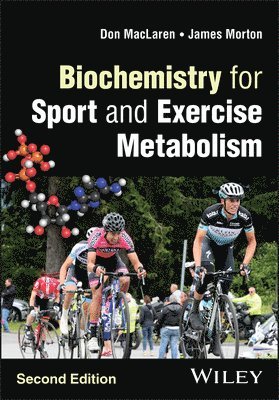
    Biochemistry for Sport and Exercise Metabolism

    AvDonald MacLaren,James Morton

    Häftad, Engelska, 2024

    674 kr

    Beställningsvara. Skickas inom 5-8 vardagar. Fri frakt över 249 kr.

    Fler format och utgåvor

    Häftad

    Tillf. slut

    Beskrivning

    All-new edition of an introductory textbook on sport and exercise biochemistry and muscle metabolism Biochemistry for Sport and Exercise Metabolism initially examines the essence of the biochemistry of the macronutrients before exploring how exercise mode, intensity, and duration, training status, and nutritional status affects the regulation of energy producing pathways, enabling readers to apply this understanding to develop training and nutrition programs that maximize athletic performance. This textbook includes an overview of energy metabolism, skeletal muscle structure and function and related biochemical concepts, carbohydrates, lipids, and proteins, metabolism, regulation of metabolism, and factors that can influence metabolism, and fatigue. This revised and updated second edition reflects some of the latest advances in the field, with new content on metabolic regulation as well as adaptations to high intensity and strength exercise, endurance exercise, and intermittent exercise. Furthermore, there is a new chapter on biochemical techniques to provide some pertinent background on how reported metabolic changes during exercise are achieved. This textbook features learning objectives, keywords, and key points in each chapter to aid in reader comprehension and reinforce information retention. Written by two highly qualified authors, Biochemistry for Sport and Exercise Metabolism discusses sample topics including: How the energy supply for muscle contraction is achieved from carbohydrates, lipids and protein Muscle contraction, covering propagation of the action potential, excitation-contraction coupling, and the sliding filament mechanismRegulation of the energy systems providing energy for exerciseTechniques for exercise metabolism, including respiratory analysis, ergometry, blood sampling, metabolomics, a-v differences, muscle biopsy, and isotopesExploration of the metabolic events occurring during high intensity, endurance, and high-intensity intermittent forms of exerciseClearly written and completely comprehensive, the second edition of Biochemistry for Sport and Exercise Metabolism continues to be an invaluable learning resource for students across a wide range of sport-related courses.

    Produktinformation

    • Utgivningsdatum:2024-09-19
    • Mått:168 x 241 x 18 mm
    • Vikt:658 g
    • Format:Häftad
    • Språk:Engelska
    • Antal sidor:352
    • Upplaga:2
    • Förlag:John Wiley & Sons Inc
    • ISBN:9781119605041

    Utforska kategorier

    • Övrig teknik och tillämpad vetenskap inom Naturvetenskap och teknik
    • Kemi inom Naturvetenskap och teknik

    Mer om författaren

    Don MacLaren is Emeritus Professor of Sports Nutrition at Liverpool John Moores University. He has taught physiology, biochemistry, and nutrition at JMU for more than 30 years and continues to engage in lecturing and research activities. James Morton is a Professor of Exercise Metabolism at Liverpool John Moores University. He teaches on various undergraduate programmes in Sports Science as well as the MSc Sports Nutrition programme and has published around 200 articles in peer review journals. Both Don and James apply their substantial research knowledge in practice by being engaged as nutrition consultants in a variety of professional team sports.

    Innehållsförteckning

    • Preface xiii1 Energy Sources for Muscular Activity 11.1 Adenosine Triphosphate: The Energy Currency 21.2 Energy Continuum 21.3 Energy Supply for Muscle Contraction 31.4 Energy Systems and Running Speed 61.5 Why Can’t a Marathon be Sprinted? 71.6 Energy Sources and Muscle 81.7 Can Muscle Use Protein for Energy? 91.8 Key Points 10References 112 Skeletal Muscle Structure and Function 132.1 Skeletal Muscle Structure 142.1.1 Gross Anatomical Structure 142.1.2 The Muscle Fibre 142.1.2.1 Sarcolemma 162.1.2.2 Sarcoplasm 172.1.2.3 Myofibrils 172.1.2.4 Sarcoplasmic Reticulum 192.1.2.5 Neuromuscular Junction 202.2 Muscle Contraction 212.2.1 Propagation of the Action Potential 222.2.2 Excitation–Contraction Coupling 242.2.3 The Sliding Filament Mechanism 242.3 Muscle Fibre Types 262.3.1 General Classification of Muscle Fibres 262.3.1.1 Slow Oxidative Fibres 262.3.1.2 Fast Oxidative Glycolytic Fibres 272.3.1.3 Fast Glycolytic Fibres 282.3.2 Muscle Fibre Distribution 282.3.3 Muscle Fibre Recruitment 292.4 Muscles in Action 302.4.1 Types of Muscle Contraction 302.4.2 The Twitch Contraction 302.4.3 The Length–Tension Relationship 312.4.4 Tetanus Contractions 312.4.5 Force–Velocity Relationship 322.4.6 Muscle Fatigue 332.5 Key Points 34References 353 Biochemical Concepts 373.1 Organization of Matter 383.1.1 Matter and Elements 383.1.2 Atoms and Atomic Structure 383.1.3 Atomic Number and Mass Number 403.1.4 Atomic Mass 403.1.5 Ions, Molecules, Compounds and Macronutrients 413.2 Chemical Bonding 423.2.1 Ionic Bonds 423.2.2 Covalent Bonds 443.2.3 Molecular Formulae and Structures 443.2.4 Functional Groups 463.3 Chemical Reactions, ATP and Energy 463.3.1 Energy 473.3.2 ATP 483.3.3 Units of Energy 503.3.4 Types of Chemical Reactions 513.3.4.1 Synthesis Reactions 513.3.4.2 Decomposition Reactions 513.3.4.3 Reversible Reactions 513.3.4.4 Phosphorylation and Dephosphorylation Reactions 523.3.4.5 Exchange Reactions 523.3.4.6 Oxidation–reduction Reactions 523.4 Water 533.4.1 General Functions of Water 533.4.2 Water as a Solvent 543.5 Solutions and Concentrations 543.6 Acid–Base Balance 563.6.1 Acids, Bases and Salts 563.6.2 pH Scale 573.6.3 Buffers 583.7 Cell Structure 583.7.1 The Plasma Membrane 593.7.2 The Nucleus 603.7.3 Cytoplasm and Organelles 613.7.3.1 Endoplasmic Reticulum 613.7.3.2 Golgi Apparatus 613.7.3.3 Mitochondria 623.7.3.4 Cytoskeleton 623.8 Key Points 62References 644 Proteins 654.1 Protein Function 664.1.1 General Protein Function 664.1.1.1 Catalytic 664.1.1.2 Transport and Storage 674.1.1.3 Hormones 674.1.1.4 Signalling 684.1.1.5 Contractile 684.1.1.6 Structural 684.1.1.7 Immunological 694.1.1.8 Regulatory 694.2 Amino Acids 694.2.1 Amino Acid Structure 694.3 Protein Structure 724.3.1 Primary Structure 724.3.2 Secondary Structure 734.3.3 Tertiary Structure 734.3.4 Quaternary Structure 754.4 Proteins as Enzymes 754.4.1 Mechanisms of Enzyme Action 764.4.2 Factors Affecting Rates of Enzymatic Reactions 774.4.2.1 Substrate Concentration 774.4.2.2 pH 784.4.2.3 Temperature 784.4.2.4 Enzyme Concentration 794.4.3 Coenzymes and Cofactors 804.4.4 Classification of Enzymes 814.4.5 Regulation of Enzyme Activity 814.4.5.1 Covalent Modification 824.4.5.2 Allosteric Modification 824.5 Protein Turnover 834.5.1 Overview of Protein Turnover 834.5.2 DNA Structure 844.5.3 Transcription 864.5.4 The Genetic Code 864.5.5 Translation 884.6 Amino Acid Metabolism 894.6.1 Free Amino Acid Pool 904.6.2 Transamination 914.6.3 Deamination 934.6.4 Branched Chain Amino Acids 934.6.5 Glucose-Alanine Cycle 954.6.6 Glutamine 954.6.7 The Urea Cycle 964.7 Key Points 97References 985 Carbohydrates 1015.1 Relevance of Carbohydrates for Sport and Exercise 1015.2 Types and Structure of Carbohydrates 1045.2.1 Monosaccharides 1055.2.2 Disaccharides and Polysaccharides 1065.2.2.1 Disaccharides 1075.2.2.2 Polysaccharides 1095.3 Metabolism of Carbohydrates 1135.3.1 Glycogenolysis 1155.3.2 Glycolysis 1155.3.3 Lactate Metabolism 1185.3.4 The ‘Link’ Reaction; Production of Acetyl-CoA 1185.3.5 The TCA (or Krebs) Cycle 1195.3.6 Electron Transport Chain 1205.3.7 Oxidative Phosphorylation 1225.3.8 Calculation of ATP Generated in Glucose Oxidation 1235.3.9 Overview of Glucose Oxidation 1245.3.10 Fructose Metabolism 1245.3.11 Gluconeogenesis 1255.3.12 Glycogenesis 1285.4 Key Points 129References 1306 Lipids 1336.1 Relevance of Lipids for Sport and Exercise 1336.2 Structure of Lipids 1376.2.1 Classification of Lipids 1376.2.2 Compound Lipids 1406.2.3 Derived Lipids 1416.3 Metabolism of Lipids 1426.3.1 Lipolysis 1426.3.2 β-Oxidation 1446.3.3 Ketone Body Formation 1466.3.4 Formation of Fatty Acids 1476.3.5 Triglyceride Synthesis 1496.4 Key Points 151References 1527 Principles of Metabolic Regulation 1557.1 Introduction 1557.2 Hormones 1567.3 Peptide Hormones, Neurotransmitters and Regulation 1597.3.1 Adrenaline Activation of Glycogenolysis 1617.3.2 Adrenaline Activation of Lipolysis 1627.3.3 Insulin Activation of Glycogen Synthase 1647.3.4 Insulin Inhibition of Lipolysis 1657.3.5 Insulin Stimulation of Protein Synthesis 1667.4 Steroid Hormones and Regulation 1677.5 Allosteric Effectors 1687.5.1 Regulation of Glycogen Phosphorylase 1697.5.2 Regulation of PFK 1697.5.3 Regulation of PDH 1707.5.4 Regulation of CPT1 1717.5.5 AMPK as a Metabolic Regulator 1717.6 Exercise-Induced Transcription Factors 1737.7 Regulators of Transcription 1757.7.1 Hypoxia-Inducible Factors 1767.7.2 Redox Balance and Sirtuins 1777.7.3 Cell Energy Status and AMPK Signalling 1777.7.4 Mechanical Stress, ROS and Mitogen-Activated Protein Kinase Signalling 1777.7.5 Calcium Flux and Calcium/Calmodulin-Dependent Protein Kinase Signalling 1787.7.6 High-Force Stimuli and Mechanosensory Signal Transduction 1787.7.7 Regulation of Skeletal Muscle Gene Expression and Muscle Adaptation 1797.8 Training Responses 1807.9 Impact of Nutrition 1817.10 Key Points 182References 1828 Techniques for Exercise Metabolism 1858.1 Introduction 1858.2 Respiratory Analysis 1868.3 Ergometry 1898.4 Blood Sampling and Analysis 1908.5 Metabolomics 1928.6 a-v Differences 1938.7 Muscle Biopsy 1938.8 Nuclear Magnetic Resonance (NMR) Magnetic Resonance Spectroscopy (mrs) 1958.9 Use of Isotopes 1978.10 Key Points 199References 2009 High-Intensity Exercise (HIE) 2019.1 Overview of Energy Production and Metabolic Regulation in High-Intensity Exercise 2019.1.1 Definition of High-Intensity Exercise 2019.1.2 Energy Production During High-Intensity Exercise 2029.1.3 Evidence of Energy Sources Used in HIE 2059.1.4 Metabolic Regulation During High-Intensity Exercise 2089.2 Effects of Exercise Duration 2099.3 Effects of Nutritional Status 2109.3.1 Can Nutritional Ergogenic Aids Help HIE? 2139.3.1.1 Creatine 2139.3.1.2 Alkalinizers 2149.3.1.3 Caffeine 2159.3.1.4 β-Alanine 2169.4 Effects of Training 2189.5 Mechanisms of Fatigue 2229.5.1 Reduced ATP 2229.5.2 Reduced PCr 2259.5.3 Increased Pi 2259.5.4 Lactate and H+ 2269.6 Resistance Exercise 2279.7 Key Points 228References 22910 Endurance Exercise 23710.1 Overview of Energy Production and Metabolic Regulation in Endurance Exercise 23810.1.1 Definition and Models of Endurance Exercise 23810.1.2 Energy Production in Endurance Exercise 23810.1.3 Overview of Metabolic Regulation in Endurance Exercise 23910.2 Effects of Exercise Intensity 24010.2.1 CHO Metabolism 24110.2.1.1 Muscle Glycogenolysis 24110.2.1.2 Plasma Glucose Utilization, Muscle Glucose Uptake and Glycolysis 24310.2.1.3 Carbohydrate Oxidation 24310.2.2 Lipid Metabolism 24310.2.2.1 Adipose Tissue Lipolysis and FFA Availability/Delivery 24410.2.2.2 FFA Transport into the Cytosol 24610.2.2.3 FFA Transport Across Mitochondrial Membranes 24610.2.2.4 Does Malonyl-CoA Regulate LCFA Uptake? 24710.2.2.5 Does Free Carnitine Availability Regulate LCFA Uptake? 24810.2.2.6 Does Exercise-Induced Decreases in Muscle pH Reduce CPTI Activity? 24810.2.2.7 So-called Fat max 24810.3 Effects of Exercise Duration 25010.4 Effects of Nutritional Status 25210.4.1 CHO-Loading and Muscle Glycogen Availability 25210.4.2 Fat-Loading Strategies 25410.4.3 Pre-exercise and During-Exercise CHO Ingestion 25710.4.4 Pre-exercise FFA Availability 26210.5 Effects of Training Status 26410.5.1 CHO Metabolism 26510.5.2 Lipid Metabolism 26710.5.3 Protein Metabolism 27010.6 Mechanisms of Fatigue 27210.7 Key Points 275References 27711 High-intensity Intermittent Exercise 28311.1 Overview of Energy Production in Intermittent Exercise 28311.1.1 Definition and Models of Intermittent Exercise 28311.1.2 Energy Systems Utilized in Intermittent Exercise 28411.2 Metabolic Regulation in Intermittent Exercise 28511.3 Effects of Manipulating Work–Rest Intensity and Ratio 29211.4 Effects of Nutritional Status 29611.4.1 Muscle Glycogen Availability 29611.4.2 Pre-exercise CHO Ingestion 29711.4.3 CHO Ingestion During Exercise 29811.5 Muscle Adaptations to Interval Training 30111.6 Mechanisms of Fatigue 30811.6.1 Carbohydrate Availability 30811.6.2 PCr Depletion 31011.6.3 Acidosis 31111.6.3.1 Lactate 31211.6.3.2 Reduced pH 31311.6.3.3 Lactate and H+ Transport 31411.6.4 Extracellular Potassium 31511.6.5 Reactive Oxygen Species (ROS) 31711.6.6 Pi Accumulation and Impaired Ca2+ Release 31811.7 Key Points 319References 320Index 327