• Fri frakt över 249 kr
  • •
  • Snabba leveranser
  • •
  • Billiga böcker
Kundservice

Du är på sajten för privatpersoner.

Företag, bibliotek eller offentlig verksamhet?

Du handlar på classic.bokus.com, där alla dina funktioner finns intakta.
Till classic.bokus.com
Bokus logotyp. Gå till startsidan.
  • Erbjudanden
  • Student
  • Topplistor
  • Barn & ungdom
  • Bokus Play
  • E-böcker
  • Ljudböcker
  • Pocketböcker
  • Spel och pussel

Pocketfynda! Hundratals böcker för 49 kr/st →

Sidfot

Mina sidor

    Hjälp

    • Kundservice
    • Vanliga frågor och svar
    • Frakt och leverans
    • Retur vid ångerrätt
    • Reklamera vara
    • Betalning
    • Köpvillkor
    • Allmänna villkor
    • Information om webbplatsens tillgänglighet

    Om Bokus

    • Om oss
    • Pressrum
    • För studenter
    • För företag
    • För bibliotek och offentlig verksamhet
    • För leverantörer
    • Hållbarhet

    Populärt

    • Aktuella erbjudanden
    • Presentkort
    • Studentlitteratur
    • Nya böcker
    • Topplistor
    • Signerade böcker
    • Engelska böcker

    Inspiration

    • Boktips
    • BookTok
    • Barnbokskaraktärer
    • Populära författare
    Logotyp för Bokus
    Följ oss på Facebook (extern länk)Följ oss på Instagram (extern länk)Följ oss på YouTube (extern länk)Följ oss på TikTok (extern länk)
    bokus @ CookiesAnpassa cookiesIntegritetspolicyKöpvillkor
    Till Citymail hemsida (extern länk)Till Budbee hemsida (extern länk)Till Postnord hemsida (extern länk)Till Schenker hemsida (extern länk)Till Early Bird hemsida (extern länk)Till Walleys hemsida (extern länk)
    1. Naturvetenskap och teknik
    2. Teknik och industri
    3. Elektronik och kommunikationer

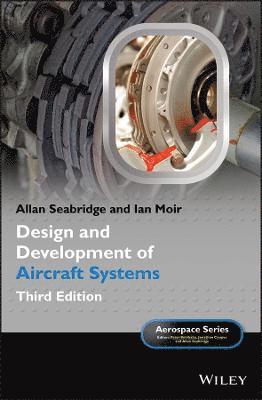
    Design and Development of Aircraft Systems

    AvAllan Seabridge,Ian Moir

    Inbunden, Engelska, 2020

    Del i serien Aerospace Series

    1 531 kr

    Beställningsvara. Skickas inom 5-8 vardagar. Fri frakt över 249 kr.

    Beskrivning

    Provides a significant update to the definitive book on aircraft system designThis book is written for anyone who wants to understand how industry develops the customer requirement for aircraft into a fully integrated, tested, and qualified product that is safe to fly and fit for purpose. The new edition of Design and Development of Aircraft Systems fully expands its already comprehensive coverage to include both conventional and unmanned systems. It also updates all chapters to bring them in line with current design practice and technologies taught in courses at Cranfield, Bristol, and Loughborough universities in the UK.Design and Development of Aircraft Systems, 3rd Edition begins with an introduction to the subject. It then introduces readers to the aircraft systems (airframe, vehicle, avionic, mission, and ground systems). Following that comes a chapter on the design and development process. Other chapters look at design drivers, systems architectures, systems integration, verification of system requirements, practical considerations, and configuration control. The book finishes with sections that discuss the potential impact of complexity on flight safety, key characteristics of aircraft systems, and more. Provides a holistic view of aircraft system design, describing the interactions among subsystems such as fuel, navigation, flight control, and moreSubstantially updated coverage of systems engineering, design drivers, systems architectures, systems integration, modelling of systems, practical considerations, and systems examplesIncorporates essential new material on the regulatory environment for both manned and unmanned systemsDiscussion of trends towards complex systems, automation, integration and the potential for an impact on flight safetyDesign and Development of Aircraft Systems, 3rd Edition is an excellent book for aerospace engineers, researchers, and graduate students involved in the field.

    Produktinformation

    • Utgivningsdatum:2020-01-02
    • Mått:175 x 246 x 28 mm
    • Vikt:885 g
    • Format:Inbunden
    • Språk:Engelska
    • Serie:Aerospace Series
    • Antal sidor:400
    • Upplaga:3
    • Förlag:John Wiley & Sons Inc
    • ISBN:9781119611509

    Utforska kategorier

    • Elektronik och kommunikationer inom Naturvetenskap och teknik
    • Flyg- och rymdteknik inom Naturvetenskap och teknik

    Mer om författaren

    Allan Seabridge has over 50 years of experience in aerospace systems engineering, business development, and research & development, and has developed systems and engineering courses at UK universities. He has retired from full time engineering and enjoys spending time at an aircraft company heritage group. Ian Moir spent 20 years as an Engineering Officer in the Royal Air Force and has broad and detailed experience working in aircraft avionics systems at a major UK avionics company. Ian has now retired from aerospace activities and is enjoying a life of leisure in the Cotswolds, whilst retaining an interest in aerospace.

    Innehållsförteckning

    • About the Authors xiiiSeries Preface xvAcknowledgements xviiGlossary of Terms xix1 Introduction 11.1 General 11.2 Systems Development 31.3 Skills 81.4 Human Aspects 91.4.1 Introduction 91.4.2 Design Considerations 101.4.3 Legislation 121.4.4 Summary of Legal Threats 121.4.5 Conclusions 131.5 Overview 14Exercises 17References 17Further Reading 172 The Aircraft Systems 192.1 Introduction 192.2 Definitions 192.3 Everyday Examples of Systems 212.4 Aircraft Systems of Interest 242.4.1 Airframe Systems 282.4.2 Vehicle Systems 282.4.3 Interface Characteristics of Vehicle Systems 302.4.4 Avionics Systems 312.4.5 Interface Characteristics of Vehicle and Avionics Systems 312.4.5.1 Vehicle Systems 322.4.5.2 Avionics Systems 322.4.6 Mission Systems 322.4.7 Interface Characteristics of Mission Systems 332.5 Ground Systems 332.6 Generic System Definition 34Exercises 37References 37Further Reading 373 The Design and Development Process 393.1 Introduction 393.2 Definitions 393.3 The Product Lifecycle 413.4 Concept Phase 463.4.1 Engineering Process 483.4.2 Engineering Skills 483.5 Definition Phase 503.5.1 Engineering Process 523.5.2 Engineering Skills 533.6 Design Phase 563.6.1 Engineering Process 563.6.2 Engineering Skills 573.7 Build Phase 583.7.1 Engineering Process 593.7.2 Engineering Skills 593.8 Test Phase 603.8.1 Engineering Process 603.8.2 Engineering Skills 603.9 Operate Phase 613.9.1 Engineering Process 623.9.2 Engineering Skills 633.10 Disposal or Retirement Phase 633.10.1 Engineering Process 653.10.2 Engineering Skills 653.11 Refurbishment Phase 653.11.1 Engineering Process 663.11.2 Engineering Skills 663.12 Whole Lifecycle Tasks 663.13 Summary 67Exercises 69References 70Further Reading 704 Design Drivers 734.1 Introduction 734.2 Design Drivers in the Business Environment 754.2.1 Customer 764.2.2 Market and Competition 764.2.3 Capacity 774.2.4 Financial Issues 774.2.5 Defence Policy 784.2.6 Leisure and Business Interests 784.2.7 Politics 794.2.8 Technology 794.2.9 Global Economy 804.3 Design Drivers in the Project Environment 804.3.1 Standards and Regulations 804.3.2 Availability 814.3.3 Cost 814.3.4 Programme 824.3.5 Performance 824.3.6 Skills and Resources 824.3.7 Health, Safety, and Environmental Issues 834.3.8 Risk 844.4 Design Drivers in the Product Environment 844.4.1 Functional Performance 844.4.2 Human–Machine Interface 854.4.3 Crew and Passengers 864.4.4 Stores and Cargo 864.4.5 Structure 874.4.6 Safety 874.4.7 Quality 874.4.8 Environmental Conditions 874.5 Design Drivers in the Product Operating Environment 884.5.1 Heat 884.5.2 Noise 894.5.3 RF Radiation 894.5.4 Solar Energy 904.5.5 Altitude 914.5.6 Temperature 914.5.7 Contaminants, and Destructive and Hazardous Substances 924.5.8 Lightning 924.5.9 Nuclear, Biological, and Chemical Contamination 924.5.10 Vibration 934.5.11 Shock 934.6 Interfaces with the Sub-system Environment 934.6.1 Physical Interfaces 944.6.2 Power Interfaces 944.6.3 Data Communication Interfaces 954.6.4 Input/Output Interfaces 954.6.5 Status/Discrete Data 954.7 Obsolescence 964.7.1 Introduction 964.7.2 The Threat of Obsolescence in the Product Lifecycle 974.7.2.1 Requirements Specification 984.7.2.2 People 994.7.2.3 Regulations 1014.7.2.4 Design, Development, and Manufacture 1014.7.2.5 The Supply Chain 1034.7.3 Managing Obsolescence 1034.8 Ageing Aircraft 1064.8.1 Introduction 1064.8.2 Some Examples 1074.8.3 Systems Issues 1084.8.4 Certification Issues 109Exercises 109References 110Further Reading 1105 System Architectures 1135.1 Introduction 1135.2 Definitions 1145.3 System Architectures 1155.3.1 Vehicle Systems 1175.3.2 Avionic Systems 1185.3.3 Mission Systems 1185.3.4 Cabin Systems 1195.3.5 Data Bus 1195.4 Architecture Modelling and Trade-off 1205.5 Example of a Developing Architecture 1235.6 Evolution of Avionics Architectures 1265.6.1 Distributed Analogue Architecture 1275.6.2 Distributed Digital Architecture 1285.6.3 Federated Digital Architecture 1305.6.4 Integrated Modular Architecture 1325.7 Example Architectures 1355.7.1 Example 1: System Architecture 1355.7.2 Example 2: Flight Control System 1365.7.3 Example 3: Radar System 1385.7.4 Example 4: Vehicle Systems Management 139Exercises 149References 149Further Reading 1496 System Integration 1516.1 Introduction 1516.2 Definitions 1536.3 Examples of System Integration 1536.3.1 Integration at the Component Level 1536.3.2 Integration at the System Level 1546.3.3 Integration at the Process Level 1606.3.4 Integration at the Functional Level 1636.3.5 Integration at the Information Level 1666.3.6 Integration at the Prime Contractor Level 1666.3.7 Integration Arising from Emergent Properties 1676.3.8 Further Examples of Integrated Systems 1696.3.8.1 The Airframe 1696.3.8.2 Propulsion 1716.3.8.3 Air Systems 1716.4 System Integration Skills 1726.5 Management of System Integration 1756.5.1 Major Activities 1756.5.2 Major Milestones 1756.5.3 Decomposition and Definition Process 1786.5.4 Integration and Verification Process 1786.5.5 Component Engineering 1786.6 Highly Integrated Systems 1786.6.1 Integration of Primary Flight Control Systems 1796.7 Discussion 182Exercises 184References 186Further Reading 1867 Verification of System Requirements 1877.1 Introduction 1877.2 Gathering Qualification Evidence in the Lifecycle 1897.3 Test Methods 1917.3.1 Inspection of Design 1927.3.2 Calculation 1927.3.3 Analogy 1937.3.4 Modelling and Simulation 1937.3.4.1 Modelling Techniques 1977.3.5 Test Rigs 2067.3.6 Environmental Testing 2077.3.7 Integration Test Rigs 2077.3.8 Aircraft Ground Testing 2097.3.9 Flight Test 2107.3.10 Trials 2117.3.11 Operational Test 2127.3.12 Demonstrations 2127.4 An Example Using a Radar System 2127.5 Summary 214Exercises 215References 215Further Reading 2168 Practical Considerations 2178.1 Introduction 2178.2 Stakeholders 2188.2.1 Identification of Stakeholders 2188.2.2 Classification of Stakeholders 2198.3 Communications 2208.3.1 The Nature of Communication 2228.3.2 Examples of Organisation Communication Media 2238.3.2.1 Mechanisms for Generating Information 2258.3.2.2 Unauthorised Access 2258.3.2.3 Data Storage and Access 2268.3.2.4 Data Discipline 2278.3.3 The Cost of Poor Communication 2278.3.4 A Lesson Learned 2288.4 Giving and Receiving Criticism 2308.4.1 The Need for Criticism in the Design Process 2308.4.2 The Nature of Criticism 2308.4.3 Behaviours Associated with Criticism 2318.4.4 Conclusions 2328.5 Supplier Relationships 2328.6 Engineering Judgement 2348.7 Complexity 2348.8 Emergent Properties 2358.9 Aircraft Wiring and Connectors 2368.9.1 Aircraft Wiring 2368.9.2 Aircraft Breaks 2378.9.3 Wiring Bundle Definition 2388.9.4 Wiring Routing 2398.9.5 Wiring Sizing 2398.9.6 Aircraft Electrical Signal Types 2418.9.7 Electrical Segregation 2428.9.8 The Nature of Aircraft Wiring and Connectors 2428.9.9 Use of Twisted Pairs and Quads 2448.10 Bonding and Grounding 246Exercise 248References 248Further Reading 2489 Configuration Control 2499.1 Introduction 2499.2 Configuration Control Process 2499.3 A Simple Portrayal of a System 2509.4 Varying System Configurations 2529.4.1 System Configuration A 2529.4.2 System Configuration B 2539.4.3 System Configuration C 2549.5 Forwards and Backwards Compatibility 2559.5.1 Forwards Compatibility 2559.5.2 Backwards Compatibility 2569.6 Factors Affecting Compatibility 2569.6.1 Hardware 2579.6.2 Software 2579.6.3 Wiring 2589.7 System Evolution 2589.8 Configuration Control 2599.8.1 Airbus A380 Example 2619.9 Interface Control 2649.9.1 Interface Control Document 2649.9.2 Aircraft-level Data Bus Data 2669.9.3 System Internal Data Bus Data 2669.9.4 Internal System Input/Output Data 2679.9.5 Fuel Component Interfaces 2679.10 Control of Day-to-Day Documents 267Exercise 26810 Aircraft System Examples 26910.1 Introduction 26910.2 Design Considerations 26910.3 Safety and Economic Considerations 27110.4 Failure Severity Categorisation 27210.5 Design Assurance Levels 27210.6 Redundancy 27310.6.1 Architecture Options 27410.6.1.1 Simplex Architecture 27410.6.1.2 Duplex Architecture 27610.6.1.3 Dual/Dual Architecture 27610.6.1.4 Triplex Architecture 27610.6.1.5 Quadruplex Architecture 27610.6.2 System Examples 27710.6.2.1 Major Systems Event 27710.6.2.2 Flight Critical Event 27810.7 Integration of Aircraft Systems 28010.7.1 Engine Control System 28210.7.2 Flight Control System 28310.7.3 Attitude Measurement System 28410.7.4 Air Data System 28410.7.5 Electrical Power System 28510.7.6 Hydraulic Power System 28610.8 Integration of Avionics Systems 287References 29011 Integration and Complexity: The Potential Impact on Flight Safety 29111.1 Introduction 29111.2 Integration 29111.3 Complexity 29411.4 Automation 29811.5 Impact on Flight Safety Discussion 29911.6 Single-pilot Operations 30211.7 Postscript: Chaos Discussion 303Exercises 307References 307Further Reading 30812 Key Characteristics of Aircraft Systems 30912.1 Introduction 30912.2 Aircraft Systems 31112.3 Avionics Systems 32612.4 Mission Systems 33612.5 Sizing and Scoping Systems 34312.6 Analysis of the Fuel Penalties of Aircraft Systems 34512.6.1 Introduction 34512.6.2 Basic Formulation of Fuel Weight Penalties of Systems 34612.6.3 Application of Fuel Weight Penalties Formulation for Multi-phase Flight 34912.6.4 Analysis of Fuel Weight Penalties Formulation for Multi-phase Flight 35012.6.5 Use of Fuel Weight Penalties to Compare Systems 35012.6.6 Determining Input Data for Systems Weight Penalties Analysis 35112.6.6.1 Lift/Drag Ratio 35112.6.6.2 Specific Fuel Consumption 35212.6.6.3 System Mass 35212.6.6.4 System Drag Increase 35212.6.6.5 Increase in sfc Due to Systems Power Off-takes 352Nomenclature 354References 35413 Conclusions 35713.1 What’s Next? 35913.2 A Historical Footnote 361References 362Index 363