• Fri frakt över 249 kr
  • •
  • Snabba leveranser
  • •
  • Billiga böcker
Kundservice

Du är på sajten för privatpersoner.

Företag, bibliotek eller offentlig verksamhet?

Du handlar på classic.bokus.com, där alla dina funktioner finns intakta.
Till classic.bokus.com
Bokus logotyp. Gå till startsidan.
  • Erbjudanden
  • Nyheter
  • Student
  • Topplistor
  • Barn & ungdom
  • Bokus Play
  • E-böcker
  • Pocketböcker
  • Spel & pussel

Må bättre, för mindre! Upp till 50% rabatt på hälsoböcker

Sidfot

Mina sidor

    Hjälp

    • Kundservice
    • Vanliga frågor och svar
    • Frakt och leverans
    • Retur vid ångerrätt
    • Reklamera vara
    • Betalning
    • Köpvillkor
    • Allmänna villkor
    • Information om webbplatsens tillgänglighet

    Om Bokus

    • Om oss
    • Pressrum
    • För studenter
    • För företag
    • För bibliotek och offentlig verksamhet
    • För leverantörer
    • Hållbarhet

    Populärt

    • Aktuella erbjudanden
    • Presentkort
    • Studentlitteratur
    • Nya böcker
    • Topplistor
    • Signerade böcker
    • Engelska böcker

    Inspiration

    • Boktips
    • BookTok
    • Populära bokserier
    • Barnbokskaraktärer
    • Populära författare
    Logotyp för Bokus
    Följ oss på Facebook (extern länk)Följ oss på Instagram (extern länk)Följ oss på YouTube (extern länk)Följ oss på TikTok (extern länk)
    bokus @ CookiesAnpassa cookiesIntegritetspolicyKöpvillkor
    Till Citymail hemsida (extern länk)Till Budbee hemsida (extern länk)Till Postnord hemsida (extern länk)Till Schenker hemsida (extern länk)Till Early Bird hemsida (extern länk)Till Walleys hemsida (extern länk)
    1. Naturvetenskap och teknik
    2. Teknik och industri
    3. Elektronik och kommunikationer

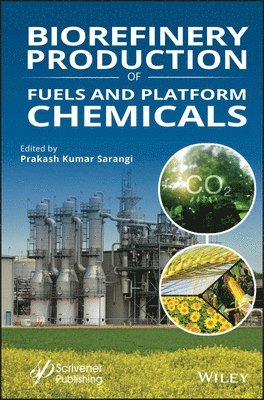
    Biorefinery Production of Fuels and Platform Chemicals

    AvPrakash Kumar Sarangi

    Inbunden, Engelska, 2023

    2 078 kr

    Beställningsvara. Skickas inom 5-8 vardagar. Fri frakt över 249 kr.

    Beskrivning

    BIOREFINERY PRODUCTION OF FUELS AND PLATFORM CHEMICALS From the selection and pretreatment of raw materials to design of reactors, methods of conversion, selection of process parameters, optimization, and production of various types of biofuels to the industrial applications for the technology, this is the most up-to-date and comprehensive coverage of liquid biofuels for engineers and students. Massive use of fossil-based fuels not only create environmental pollution, but these sources are already diminishing. Waste biomass can aid in the production of biobased energy and chemicals. This book is a complete collection of chapters on biofuel and biochemical production presented in a sustainable way. Biorefineries are the need of the day, because they have the potential to produce fuels and chemicals in an environmentally sustainable way, to eventually fully displace production based on fossil resources such as petroleum, coal and natural gas. Algal cells are also a suitable fit for the production of both fuels and chemicals replacing conventional sources. In this book, several chapters summarize how algal biomass can be processed for the production of bioenergy and biochemicals. This volume is essentially a roadmap towards thermochemical, biochemicals, bioengineering and bioprocessing. Written and edited by authors from leading biotechnology research groups from across the world, this exciting new volume covers all of these technologies, including the basic concepts and the problems and solutions involved with the practical applications in the real world. Whether for the veteran engineer or scientist, the student, or a manager or other technician working in the field, this volume is a must-have for any library.

    Produktinformation

    • Utgivningsdatum:2023-06-06
    • Mått:159 x 237 x 23 mm
    • Vikt:685 g
    • Format:Inbunden
    • Språk:Engelska
    • Antal sidor:304
    • Förlag:John Wiley & Sons Inc
    • ISBN:9781119724728

    Utforska kategorier

    • Elektronik och kommunikationer inom Naturvetenskap och teknik
    • Tillverkningsteknik inom Naturvetenskap och teknik

    Mer om författaren

    Prakash Kumar Sarangi, PhD, is a scientist with specialization in microbiology at the Central Agricultural University, Imphal, Manipur, India. He has more than 12 years of teaching and research experience in biochemical engineering, microbial biotechnology, downstream processing, food microbiology, and molecular biology. He has served on the editorial boards for many international journals and has authored more than 60 peer-reviewed research articles and 45 book chapters.

    Innehållsförteckning

    • List of Contributors xiiiPreface xvii1 Biofuels: Classification, Conversion Technologies, Optimization Techniques and Applications 1Sakthivel R, Abbhijith H, Harshini G V, Musunuri Shanmukha Vardhan and Krushna Prasad Shadangi1.1 Introduction 21.2 Classification of Biofuels 51.2.1 First-Generation Biofuels 51.2.2 Second-Generation Biofuels 71.2.3 Third-Generation Algal Biofuels 91.3 Commonly Used Conversion Technologies 101.3.1 Gasification 101.3.1.1 Factors Influencing Gasification 121.3.2 Pyrolysis 131.3.2.1 Production of Bio-Oil from Pyrolysis 131.3.3 Hydrothermal Processes 151.3.3.1 Hydrothermal Carbonization 161.3.3.2 Hydrothermal Liquefaction 161.3.3.3 Hydrothermal Gasification 161.3.4 Transesterification 171.4 Commonly Used Optimization Techniques 191.4.1 Response Surface Methodology 191.4.2 Genetic Algorithm 221.5 Application of Biofuels in Transportation Sector 241.5.1 Automobile Sector 241.5.2 Aviation Sector 25Conclusion 27References 272 Technical Challenges and Prospects of Renewable Fuel Generation and Utilization at a Global Scale 31Rajesh K. Srivastava2.1 Introduction 322.2 Biofuel Synthesis 332.2.1 Biomass Energy 342.2.2 Biofuels 362.2.3 Biodiesel 392.3 Challenges for Bioenergy Generation 442.3.1 Operation Challenges in Biomass Energy Process 442.3.2 Economic Challenges in Biomass Energy Process 482.3.3 Social Challenges in Biomass Energy Processes 482.3.3.1 Conflicting Decision on Utility of Biomass Resources 482.3.3.2 Land Use Issue or Problems on Biomass Cultivation or Utilization 492.3.3.3 Environmental Impact of Biomass Resources 492.3.4 Policy and Regulatory Challenges for Biomass Energy Utility 492.4 Conclusions 50Abbreviations 50References 513 Engineered Microbial Systems for the Production of Fuels and Industrially Important Chemicals 59Sushma Chauhan, Balasubramanian Velramar, Sneha Kumari, Anushri Keshri, Shalini Pandey, Shivam Pandey, Tanushree Baldeo Madavi, Vargobi Mukherjee, Meenakshi Jha and Pamidimarri D. V. N. Sudheer3.1 Introduction 603.2 Microbial Systems for Biofuels and Chemicals Production 623.2.1 Microbial Systems for Genetic Engineering and Cellular Fabrication 643.2.2 Engineering of Microbial Cell Systems for Biofuels Production 653.2.2.1 Alcohols 653.2.3 Engineering of Microbial Cell Systems for Chemical Synthesis 733.2.3.1 Organic Acids 733.2.3.2 Fatty Alcohols 763.2.3.3 Bioplastic 773.3 Conclusions 78References 874 Production of Biomethane and Its Perspective Conversion: An Overview 93Rajesh K. Srivastava and Prakash Kumar Sarangi4.1 Introduction 934.1.1 Sources of Methane 954.1.2 Methane from Human Activity 964.1.3 Impact of Methane on Climatic Change and Future 964.1.4 Advancements and Challenges 97References 1005 Microalgal Biomass Synthesized Biodiesel: A Viable Option to Conventional Fuel Energy in Biorefinery 105Neha Bothra, P. Maniharika and Rajesh K. Srivastava5.1 Introduction 1065.2 Diesel 1095.2.1 Biodiesel 1125.3 Production of Biodiesel 1135.3.1 Origin of Biofuels 1135.3.2 Biodiesel Production from Algae 1145.3.3 Intensity of Radiant Light 1165.3.4 Lipid Content 1175.3.5 Biomass Culturing Conditions 1175.3.5.1 Temperature of Cultivation 1185.3.5.2 pH of Cultivation 1195.3.5.3 Duration Period of Light of Cultivation 1195.3.5.4 Carbon Uptake of Cultivation 1195.3.5.5 Oxygen Generation in Cultivation 1195.3.5.6 Mixing Rates of Cultivation 1205.3.5.7 Nutrient Uptake of Cultivation 1205.4 Harvesting of Microalgae 1205.4.1 Extraction of Oil 1205.4.1.1 Varying n-Hexane to Algae Ratio 1225.4.1.2 Varying the Algal Biomass Size 1235.4.1.3 Varying Contact Time between n-Hexane and Algae Biomass 1235.4.2 Transesterification 1255.5 Conclusion 125Abbreviations 125References 1266 Algae Biofuel Production Techniques: Recent Advancements 131Trinath Biswal, Krushna Prasad Shadangi and Prakash Kumar Sarangi6.1 Introduction 1316.2 Technologies for Conversion if Algal Biofuels 1336.2.1 Thermochemical Conversion of Microalgae Biomass into Biofuel 1336.2.1.1 Gasification 1336.2.1.2 Thermochemical Liquefaction 1346.2.1.3 Pyrolysis 1346.2.1.4 Direct Combustion 1366.2.2 Biochemical Conversion 1366.2.2.1 Anaerobic Digestion 1386.2.2.2 Alcoholic Fermentation 1396.2.2.3 Photobiological Hydrogen Production 1396.3 Production of Biodiesel from Algal Biomass 1406.3.1 Transesterification 1416.4 Genetic Engineering Toward Biofuels Production 1426.5 Summary 143References 1447 Technologies of Microalgae Biomass Cultivation for Bio-Fuel Production: Challenges and Benefits 147Trinath Biswal, Krushna Prasad Shadangi and Prakash Kumar Sarangi7.1 Introduction 1487.2 Challenges Towards Algae Biofuel Technology 1497.3 Biology Related with Algae 1507.4 Algae Biofuels 1537.5 Benefits of Microalgal Biofuels 1547.6 Technologies for Production of Microalgae Biomass 1607.6.1 Photoautotrophic Production 1617.6.1.1 Open Pond Production Systems 1617.6.1.2 Closed Photobioreactor Systems 1637.6.1.3 Hybrid Production Systems 1657.6.2 Heterotrophic Method Production 1667.6.3 Mixotrophic Production 1667.6.4 Photoheterotrophic Cultivation 1687.7 Impact of Microalgae on the Environment 1697.8 Advantages of Utilizing Microalgae Biomass for Biofuels 1717.9 Conclusion 172References 1728 Agrowaste Lignin as Source of High Calorific Fuel and Fuel Additive 179Harit Jha and Neha Namdeo8.1 Agrowaste 1798.2 Lignin 1808.2.1 Structure of Lignin 1818.2.2 Types of Lignin 1838.2.3 Applications of Lignin 1848.3 Lignin as Fuel 1868.3.1 Bioethanol Production 1898.3.2 Bio-Oil Production 1918.3.3 Syngas Production 1928.4 As Fuel Additive 1928.5 Conclusion 193References 1949 Fly Ash Derived Catalyst for Biodiesel Production 203Trinath Biswal, Krushna Prasad Shadangi and Prakash Kumar Sarangi9.1 Introduction 2049.2 Coal Fly Ash: Resources and Utilization 2059.3 Composition of Coal Fly Ash 2099.4 Economic Perspective of Biodiesel 2129.5 Biodiesel from Fly Ash Derived Catalyst 2149.5.1 Coal Fly Ash-Derived Sodalite as a Heterogeneous Catalyst 2149.5.1.1 Zeolite Synthesis from Coal Fly Ash 2159.5.1.2 Production of Biodiesel through Heterogeneous Transesterification 2159.5.2 CaO/Fly Ash Catalyst for Transesterification of Palm Oil in Production of Biodiesel 2169.5.2.1 Production of Biodiesel 2179.5.2.2 Transesterification Reaction 2189.5.3 Biodiesel Production Catalysed by Sulphated Fly-Ash 2189.5.4 Composite Catalyst of Palm Mill Fly Ash-Supported Calcium Oxide (Eggshell Powder) 2209.5.4.1 Preparation of the CaO/PMFA Catalyst 2219.5.5 Kaliophilite-Fly Ash Based Catalyst for Production of Biodiesel 2219.5.5.1 Synthesis of Kaliophilite 2239.5.6 Fly-Ash Derived Zeolites for Production of Biodiesel 223Conclusion 225References 22610 Emerging Biomaterials for Bone Joints Repairing in Knee Joint Arthroplasty: An Overview 233Shankar Swarup Das10.1 Introduction 23410.2 Resources and Selecting Criteria 23410.3 Reasons for Bone Defects of Tibia Plateau 23510.4 Classification of Bone Defects of Medial Tibia Plateau 23610.5 Different Biomaterials for Tibial Plateau Bone Defects 23710.6 New Biomaterials to Repair Bone Defects in Tibia Plateau 24310.7 Conclusion 244References 245About the Editor 253Index 255