• Fri frakt över 249 kr
  • •
  • Snabba leveranser
  • •
  • Billiga böcker
Kundservice

Du är på sajten för privatpersoner.

Företag, bibliotek eller offentlig verksamhet?

Du handlar på classic.bokus.com, där alla dina funktioner finns intakta.
Till classic.bokus.com
Bokus logotyp. Gå till startsidan.
  • Erbjudanden
  • Nyheter
  • Student
  • Topplistor
  • Barn & ungdom
  • Bokus Play
  • E-böcker
  • Pocketböcker
  • Spel & pussel

10% rabatt på allt med kod: NYSTART10 →

Sidfot

Mina sidor

    Hjälp

    • Kundservice
    • Vanliga frågor och svar
    • Frakt och leverans
    • Retur vid ångerrätt
    • Reklamera vara
    • Betalning
    • Köpvillkor
    • Allmänna villkor
    • Information om webbplatsens tillgänglighet

    Om Bokus

    • Om oss
    • Pressrum
    • För studenter
    • För företag
    • För bibliotek och offentlig verksamhet
    • För leverantörer
    • Hållbarhet

    Populärt

    • Aktuella erbjudanden
    • Presentkort
    • Studentlitteratur
    • Nya böcker
    • Topplistor
    • Signerade böcker
    • Engelska böcker

    Inspiration

    • Boktips
    • BookTok
    • Populära bokserier
    • Barnbokskaraktärer
    • Populära författare
    Logotyp för Bokus
    Följ oss på Facebook (extern länk)Följ oss på Instagram (extern länk)Följ oss på YouTube (extern länk)Följ oss på TikTok (extern länk)
    bokus @ CookiesAnpassa cookiesIntegritetspolicyKöpvillkor
    Till Citymail hemsida (extern länk)Till Budbee hemsida (extern länk)Till Postnord hemsida (extern länk)Till Schenker hemsida (extern länk)Till Early Bird hemsida (extern länk)Till Walleys hemsida (extern länk)
    1. Naturvetenskap och teknik
    2. Teknik och industri
    3. Elektronik och kommunikationer

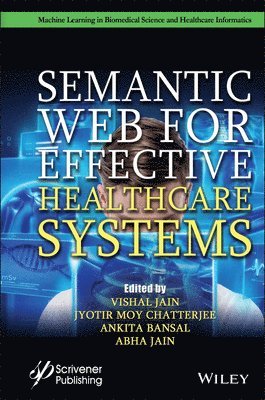
    Semantic Web for Effective Healthcare Systems

    AvVishal Jain,Jyotir Moy Chatterjee

    Inbunden, Engelska, 2021

    2 132 kr

    Beställningsvara. Skickas inom 11-20 vardagar. Fri frakt över 249 kr.

    Beskrivning

    SEMANTIC WEB FOR EFFECTIVE HEALTHCARE SYSTEMS The book summarizes the trends and current research advances in web semantics, delineating the existing tools, techniques, methodologies, and research solutions Semantic Web technologies have the opportunity to transform the way healthcare providers utilize technology to gain insights and knowledge from their data and make treatment decisions. Both Big Data and Semantic Web technologies can complement each other to address the challenges and add intelligence to healthcare management systems. The aim of this book is to analyze the current status on how the semantic web is used to solve health data integration and interoperability problems, and how it provides advanced data linking capabilities that can improve search and retrieval of medical data. Chapters analyze the tools and approaches to semantic health data analysis and knowledge discovery. The book discusses the role of semantic technologies in extracting and transforming healthcare data before storing it in repositories. It also discusses different approaches for integrating heterogeneous healthcare data. This innovative book offers: The first of its kind and highlights only the ontology driven information retrieval mechanisms and techniques being applied to healthcare as well as clinical information systems;Presents a comprehensive examination of the emerging research in areas of the semantic web; Discusses studies on new research areas including ontological engineering, semantic annotation and semantic sentiment analysis;Helps readers understand key concepts in semantic web applications for the biomedical engineering and healthcare fields;Includes coverage of key application areas of the semantic web.Audience: Researchers and graduate students in computer science, biomedical engineering, electronic and software engineering, as well as industry scientific researchers, clinicians, and systems managers in biomedical fields.

    Produktinformation

    • Utgivningsdatum:2021-12-07
    • Mått:10 x 10 x 10 mm
    • Vikt:454 g
    • Format:Inbunden
    • Språk:Engelska
    • Antal sidor:352
    • Förlag:John Wiley & Sons Inc
    • ISBN:9781119762294

    Utforska kategorier

    • Elektronik och kommunikationer inom Naturvetenskap och teknik
    • Artificiell intelligens inom Data och IT

    Mer om författaren

    Vishal Jain is an associate professor in the Department of Computer Science and Engineering, School of Engineering and Technology, Sharda University, Greater Noida, U. P. India. He obtained Ph.D (CSE), M.Tech (CSE), MBA (HR), MCA, MCP and CCNA. He has authored more than 80 research papers in reputed conferences and journals, including Web of Science and Scopus. He has authored and edited more than 10 books with various international publishers. Jyotir Moy Chatterjee is an assistant professor in the Department of Information Technology at Lord Buddha Education Foundation (Asia Pacific University of Technology & Innovation), Kathmandu, Nepal. Ankita Bansal is an assistant professor in the Division of Information Technology at Netaji Subhas University of Technology. She received her master’s and doctoral degree in computer science from Delhi Technological University (DTU). Abha Jain is an assistant professor in the Department of Computer Science Engineering, Shaheed Rajguru College of Applied Sciences for Women, Delhi University, India. She received her master’s and doctorate degree in software engineering from Delhi Technological University.

    Innehållsförteckning

    • Preface xvAcknowledgment xix1 An Ontology-Based Contextual Data Modeling for Process Improvement in Healthcare 1A. M. Abirami and A. Askarunisa1.1 Introduction 11.1.1 Ontology-Based Information Extraction 31.1.2 Ontology-Based Knowledge Representation 41.2 Related Work 51.3 Motivation 81.4 Feature Extraction 91.4.1 Vector Space Model 101.4.2 Latent Semantic Indexing (LSI) 111.4.3 Clustering Techniques 121.4.4 Topic Modeling 121.5 Ontology Development 171.5.1 Ontology-Based Semantic Indexing (OnSI) Model 171.5.2 Ontology Development 181.5.3 OnSI Model Evaluation 191.5.4 Metrics Analysis 231.6 Dataset Description 241.7 Results and Discussions 251.7.1 Discussion 1 291.7.2 Discussion 2 291.7.3 Discussion 3 301.8 Applications 311.9 Conclusion 321.10 Future Work 33References 332 Semantic Web for Effective Healthcare Systems: Impact and Challenges 39Hemendra Shankar Sharma and Ashish Sharma2.1 Introduction 402.2 Overview of the Website in Healthcare 452.2.1 What is Website? 452.2.2 Types of Website 452.2.2.1 Static Website 452.2.2.2 Dynamic Website 462.2.3 What is Semantic Web? 462.2.4 Role of Semantic Web 472.2.4.1 Pros and Cons of Semantic Web 492.2.4.2 Impact on Patient 512.2.4.3 Impact on Practitioner 522.2.4.4 Impact on Researchers 522.3 Data and Database 532.3.1 What is Data? 542.3.2 What is Database? 542.3.3 Source of Data in the Healthcare System 542.3.3.1 Electronic Health Record (EHR) 552.3.3.2 Biomedical Image Analysis 562.3.3.3 Sensor Data Analysis 572.3.3.4 Genomic Data Analysis 572.3.3.5 Clinical Text Mining 582.3.3.6 Social Media 592.3.4 Why Are Databases Important? 602.3.5 Challenges With the Database in the Healthcare System 612.4 Big Data and Database Security and Protection 612.4.1 What is Big Data 612.4.2 Five V’s of Big Data 622.4.2.1 Volume 622.4.2.2 Variety 632.4.2.3 Velocity 632.4.2.4 Veracity 642.4.2.5 Value 652.4.3 Architectural Framework of Big Data 652.4.4 Data Protection Versus Data Security in Healthcare 672.4.4.1 Phishing Attacks 672.4.4.2 Malware and Ransomware 672.4.4.3 Cloud Threats 672.4.5 Technology in Use to Secure the Healthcare Data 682.4.5.1 Access Control Policy 692.4.6 Monitoring and Auditing 692.4.7 Standard for Data Protection 702.4.7.1 Healthcare Standard in India 702.4.7.2 Security Technical Standards 712.4.7.3 Administrative Safeguards Standards 712.4.7.4 Physical Safeguard Standards 71References 713 Ontology-Based System for Patient Monitoring 75R. Mervin, Tintu Thomas and A. Jaya3.1 Introduction 763.1.1 Basics of Ontology 773.1.2 Need of Ontology in Patient Monitoring 783.2 Literature Review 783.2.1 Uses of Ontology in Various Domains 783.2.2 Ontology in Patient Monitoring System 803.3 Architectural Design 803.3.1 Phases of Patient Monitoring System 823.3.2 Reasoner in Patient Monitoring 873.4 Experimental Results 883.4.1 SPARQL Results 893.4.2 Comparison Between Other Systems 893.5 Conclusion and Future Enhancements 90References 914 Semantic Web Solutions for Improvised Search in Healthcare Systems 95Nidhi Malik, Aditi Sharan and Sadika Verma4.1 Introduction 954.1.1 Key Benefits and Usage of Technology in Healthcare System 964.2 Background 974.2.1 Significance of Semantics in Healthcare Systems 974.2.2 Scope and Benefits of Semantics in Healthcare Systems 984.2.3 Issues in Incorporating Semantics 984.2.4 Existing Semantic Web Technologies 994.3 Searching Techniques in Healthcare Systems 1004.3.1 Keyword-Based Search 1004.3.2 Controlled Vocabularies Based Search 1014.3.3 Improvising Searches With Semantic Web Solutions 1014.3.4 Health Domain-Specific Resources for Semantic Search 1024.3.4.1 Ontologies 1034.3.4.2 Libraries 1034.3.4.3 Search Engines 1034.4 Emerging Technologies/Resources in Health Sector 1084.4.1 Elasticsearch 1094.4.2 BioBERT 1094.4.3 Knowledge Graphs 1104.5 Conclusion 110References 1115 Actionable Content Discovery for Healthcare 115Ujwala Bharambe and Anuradha Srinivasaraghavan5.1 Introduction 1165.2 Actionable Content 1175.2.1 Actionable Content in Theory 1175.2.2 Actionable Content in Practice 1225.3 Health Analytics 1245.3.1 Artificial Intelligence/Machine Learning-Based Predictive Analytics 1255.3.2 Semantic Technology for Prescriptive Health Analytics 1265.4 Ontologies and Actionable Content 1275.4.1 Ontologies in Healthcare Domain 1295.5 General Architecture for the Discovery of Actionable Content for Healthcare Domain 1305.5.1 Ontology-Driven Actionable Content Discovery in Healthcare Domain 1315.5.2 Case Study for Actionable Content Discovery in Cancer Domain 1345.6 Conclusion 136References 1366 Intelligent Agent System Using Medicine Ontology 139Tintu Thomas and R. Mervin6.1 Introduction to Semantic Search 1406.1.1 What is an Ontology in Terms of Medicine? 1406.1.2 Needs and Benefits of Ontology in Medical Search 1416.2 Sematic Search 1426.2.1 How NLP Works in Sematic Search? 1426.2.2 Part of Speech Tagging and Chunking 1426.2.3 Sentence Parsing 1436.2.4 Discussion About the Various Semantic Search in Medical Databases 1446.2.5 Discussion About the Retrieval Tools Used in Sematic Search in Medline 1456.3 Structural Pattern of Semantic Search 1466.3.1 Architectural Diagram 1476.3.2 Agent Ontology 1486.3.3 Rule-Based Approach 1496.3.4 Reasoners-Based Approach 1516.4 Implementation of Reasoners 1526.5 Implementation and Results 1536.6 Conclusion and Future Prospective 153References 1547 Ontology-Based System for Robotic Surgery—A Historical Analysis 159Ajay Agarwal and Amit Kumar Mishra7.1 Historical Discourse of Surgical Robots 1607.2 The Necessity for Surgical Robots 1627.3 Ontological Evolution of Robotic Surgical Procedures in Various Domains 1637.4 Inferences Drawn From the Table 1647.5 Transoral Robotic Surgery 1667.6 Pancreatoduodenectomy 1677.7 Robotic Mitral Valve Surgery 1687.8 Rectal Tumor Surgery 1707.9 Robotic Lung Cancer Surgery 1707.10 Robotic Surgery in Gynecology 1717.11 Robotic Radical Prostatectomy 1717.12 Conclusion 1727.13 Future Work 172References 1728 IoT-Enabled Effective Healthcare Monitoring System Using Semantic Web 175Sapna Juneja, Abhinav Juneja, Annu Dhankhar and Vishal Jain8.1 Introduction 1768.2 Literature Review 1778.3 Phases of IoT-Based Healthcare 1788.4 IoT-Based Healthcare Architecture 1798.5 IoT-Based Sensors for Health Monitoring 1808.6 IoT Applications in Healthcare 1828.7 Semantic Web, Ontology, and Its Usage in Healthcare Sector 1838.8 Semantic Web-Based IoT Healthcare 1838.9 Challenges of IoT in Healthcare Industry 1858.10 Conclusion 186References 1869 Precision Medicine in the Context of Ontology 191Rehab A. Rayan and Imran Zafar9.1 Introduction 1929.2 The Rationale Behind Data 1959.3 Data Standards for Interoperability 1979.4 The Evolution of Ontology 1989.5 Ontologies and Classifying Disorders 1999.6 Phenotypic Ontology of Humans in Rare Disorders 2019.7 Annotations and Ontology Integration 2029.8 Precision Annotation and Integration 2039.9 Ontology in the Contexts of Gene Identification Research 2049.10 Personalizing Care for Chronic Illness 2079.11 Roadblocks Toward Precision Medicine 2089.12 Future Perspectives 2099.13 Conclusion 209References 21010 A Knowledgebase Model Using RDF Knowledge Graph for Clinical Decision Support Systems 215Ravi Lourdusamy and Xavierlal J. Mattam10.1 Introduction 21610.2 Relational Database to Graph Database 21710.2.1 Relational Database for Knowledge Representation 21810.2.2 NoSQL Databases 22010.2.3 Graph Database 22310.3 RDF 22510.3.1 RDF Model and Technology 22610.3.2 Metadata and URI 22610.3.3 RDF Stores 22810.4 Knowledgebase Systems and Knowledge Graphs 23010.4.1 Knowledgebase Systems 23010.4.2 Knowledge Graphs 23210.4.3 RDF Knowledge Graphs 23310.4.4 Information Retrieval Using SPARQL 23410.5 Knowledge Base for CDSS 23510.5.1 Curation of Knowledge Base for CDSS 23610.5.2 Proposed Model for Curation 23610.5.3 Evaluation Methodology 23810.6 Discussion for Further Research and Development 23910.7 Conclusion 239References 24011 Medical Data Supervised Learning Ontologies for Accurate Data Analysis 249B. Tarakeswara Rao, R. S. M. Lakshmi Patibandla, V. Lakshman Narayana and Arepalli Peda Gopi11.1 Introduction 25011.2 Ontology of Biomedicine 25111.2.1 Ontology Resource Open Sharing 25411.3 Supervised Learning 25511.4 AQ21 Rule in Machine Learning 25611.5 Unified Medical Systems 25911.5.1 Note of Relevance to Bioinformatic Experts 25911.5.2 Terminological Incorporation Principles 26011.5.3 Cross-References External 26111.5.4 UMLS Data Access 26211.6 Performance Analysis 26211.7 Conclusion 265References 26512 Rare Disease Diagnosis as Information Retrieval Task 269Jaya Lakkakula, Rutuja Phate, Alfiya Korbu and Sagar Barage12.1 Introduction 27012.2 Definition 27112.3 Characteristics of Rare Diseases (RDs) 27212.4 Types of Rare Diseases 27312.4.1 Genetic Causes 27412.4.2 Non-Genetic Causes 27512.4.3 Pathogenic Causes (Infectious Agents) 27512.4.4 Toxic Agents 27512.4.5 Other Causes 27612.5 A Brief Classification 27612.6 Rare Disease Databases and Online Resources 27712.6.1 European Reference Network: ERN 27712.6.2 Genetic and Rare Diseases Information Center: GARD 27812.6.3 International Classification of Diseases, 10th Revision: ICD-10 27912.6.4 Orphanet-INSERM (Institut National de la Santé et de la Recherche Médicale) 28012.6.5 Medical Dictionary for Regulatory Activities: MedDRA 28012.6.6 Medical Subject Headings: MeSH 28112.6.7 Online Mendelian Inheritance in Man: OMIM 28212.6.8 Orphanet Rare Disease Ontology: ORDO 28212.6.9 UMLS: Unified Medical Language System 28212.6.10 SNOMED-CT: Systematized Nomenclature of Human and Veterinary Medicine—Clinical Terms 28312.7 Information Retrieval of Rare Diseases Through a Web Search and Other Methods 28412.7.1 What is Information Retrieval (IR)? 28412.7.2 Listed Below Are Some of the Methods for Information Retrieval 28412.7.2.1 Web Search for a Diagnosis 28412.7.2.2 Cause of Diagnostic Errors in Web-Based Tools 28512.7.2.3 Nonprofessional Use of Web Tool for Diagnosis 28512.7.2.4 Performance of Web Search Tools 28512.7.2.5 Design of Watson 28612.8 Tips and Tricks for Information Retrieval 28712.9 Research on Rare Disease Throughout the World 28812.10 Conclusion 290References 29013 Atypical Point of View of Semantic Computing in Healthcare 293L. Mayuri and K. M. Mehata13.1 Introduction 29413.2 Mind the Language 29513.2.1 Why Words Matter 29613.2.2 What Words Matter 29613.2.3 How Words Matter 29713.3 Semantic Analytics and Cognitive Computing: Recent Trends 29713.3.1 Semantic Data Analysis 29813.3.2 Semantic Data Integration 29913.3.3 Semantic Applications 30013.4 Semantics-Powered Healthcare SOS Engineering 30213.5 Conclusion 303References 30414 Using Artificial Intelligence to Help COVID-19 Patients 309Ayush Hans14.1 Introduction 31014.2 Method 31314.3 Results 31414.4 Discussion 31514.4.1 What is the Use of AI in Healthcare? 31514.4.2 How to Use AI for Critical Care Units 31514.4.2.1 Input Stage 31514.4.2.2 Process Stage 31614.4.2.3 Output Stage 31714.5 Conclusion 320Acknowledgment 321References 321Index 325