• Fri frakt över 249 kr
  • •
  • Snabba leveranser
  • •
  • Billiga böcker
Kundservice

Du är på sajten för privatpersoner.

Företag, bibliotek eller offentlig verksamhet?

Du handlar på classic.bokus.com, där alla dina funktioner finns intakta.
Till classic.bokus.com
Bokus logotyp. Gå till startsidan.
  • Erbjudanden
  • Nyheter
  • Student
  • Topplistor
  • Barn & ungdom
  • Bokus Play
  • E-böcker
  • Pocketböcker
  • Spel & pussel

10% studentrabatt med kod TERM26

Sidfot

Mina sidor

    Hjälp

    • Kundservice
    • Vanliga frågor och svar
    • Frakt och leverans
    • Retur vid ångerrätt
    • Reklamera vara
    • Betalning
    • Köpvillkor
    • Allmänna villkor
    • Information om webbplatsens tillgänglighet

    Om Bokus

    • Om oss
    • Pressrum
    • För studenter
    • För företag
    • För bibliotek och offentlig verksamhet
    • För leverantörer
    • Hållbarhet

    Populärt

    • Aktuella erbjudanden
    • Presentkort
    • Studentlitteratur
    • Nya böcker
    • Topplistor
    • Signerade böcker
    • Engelska böcker

    Inspiration

    • Boktips
    • BookTok
    • Populära bokserier
    • Barnbokskaraktärer
    • Populära författare

    Mina sidor

      Hjälp

      • Kundservice
      • Vanliga frågor och svar
      • Frakt och leverans
      • Retur vid ångerrätt
      • Reklamera vara
      • Betalning
      • Köpvillkor
      • Allmänna villkor
      • Information om webbplatsens tillgänglighet

      Om Bokus

      • Om oss
      • Pressrum
      • För studenter
      • För företag
      • För bibliotek och offentlig verksamhet
      • För leverantörer
      • Hållbarhet

      Populärt

      • Aktuella erbjudanden
      • Presentkort
      • Studentlitteratur
      • Nya böcker
      • Topplistor
      • Signerade böcker
      • Engelska böcker

      Inspiration

      • Boktips
      • BookTok
      • Populära bokserier
      • Barnbokskaraktärer
      • Populära författare
      Logotyp för Bokus
      Följ oss på Facebook (extern länk)Följ oss på Instagram (extern länk)Följ oss på YouTube (extern länk)Följ oss på TikTok (extern länk)
      bokus @ CookiesAnpassa cookiesIntegritetspolicyKöpvillkor
      Till Citymail hemsida (extern länk)Till Budbee hemsida (extern länk)Till Postnord hemsida (extern länk)Till Schenker hemsida (extern länk)Till Early Bird hemsida (extern länk)Till Walleys hemsida (extern länk)
      1. Data och IT
      2. Systemvetenskap och AI
      3. Artificiell intelligens

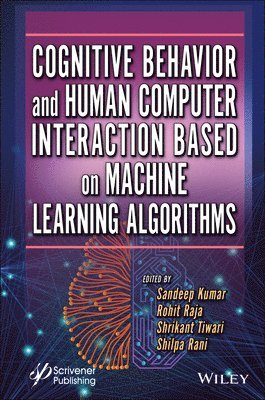
      Cognitive Behavior and Human Computer Interaction Based on Machine Learning Algorithms

      AvSandeep Kumar,Rohit Raja

      Inbunden, Engelska, 2022

      2 662 kr

      Beställningsvara. Skickas inom 5-8 vardagar. Fri frakt över 249 kr.

      Beskrivning

      COGNITIVE BEHAVIOR AND HUMAN COMPUTER INTERACTION BASED ON MACHINE LEARNING ALGORITHMS The objective of this book is to provide the most relevant information on Human-Computer Interaction to academics, researchers, and students and for those from industry who wish to know more about the real-time application of user interface design. Human-computer interaction (HCI) is the academic discipline, which most of us think of as UI design, that focuses on how human beings and computers interact at ever-increasing levels of both complexity and simplicity. Because of the importance of the subject, this book aims to provide more relevant information that will be useful to students, academics, and researchers in the industry who wish to know more about its real-time application. In addition to providing content on theory, cognition, design, evaluation, and user diversity, this book also explains the underlying causes of the cognitive, social and organizational problems typically devoted to descriptions of rehabilitation methods for specific cognitive processes. Also described are the new modeling algorithms accessible to cognitive scientists from a variety of different areas. This book is inherently interdisciplinary and contains original research in computing, engineering, artificial intelligence, psychology, linguistics, and social and system organization as applied to the design, implementation, application, analysis, and evaluation of interactive systems. Since machine learning research has already been carried out for a decade in various applications, the new learning approach is mainly used in machine learning-based cognitive applications. Since this will direct the future research of scientists and researchers working in neuroscience, neuroimaging, machine learning-based brain mapping, and modeling, etc., this book highlights the framework of a novel robust method for advanced cross-industry HCI technologies. These implementation strategies and future research directions will meet the design and application requirements of several modern and real-time applications for a long time to come. Audience: A wide range of researchers, industry practitioners, and students will be interested in this book including those in artificial intelligence, machine learning, cognition, computer programming and engineering, as well as social sciences such as psychology and linguistics.

      Produktinformation

      • Utgivningsdatum:2022-01-25
      • Mått:10 x 10 x 10 mm
      • Vikt:454 g
      • Format:Inbunden
      • Språk:Engelska
      • Antal sidor:400
      • Förlag:John Wiley & Sons Inc
      • ISBN:9781119791607

      Utforska kategorier

      • Artificiell intelligens inom Data och IT

      Mer om författaren

      Sandeep Kumar, PhD is a Professor in the Department of Computer Science and Engineering, Koneru Lakshmaiah Education Foundation, Vaddeswaram, AP, India. He has published more than 100 research papers in various international/national journals and 6 patents. He has been awarded the “Best Excellence Award” in New Delhi, 2019.Rohit Raja, PhD is an associate professor in the IT Department at the Guru Ghasidas, Vishwavidyalaya, Bilaspur (Central University-CG). He gained his PhD in Computer Science and Engineering in 2016 from C. V. Raman University India. He has filed successfully 10 (9 national + 1 international) patents and published more than 80 research papers in various international/national journals. Shrikant Tiwari, PhD is an assistant professor in the Department of Computer Science & Engineering (CSE) at Shri Shankaracharya Technical Campus, Junwani, Bhilai, Distt. Chattisgarh, India. He received his PhD from the Department of Computer Science & Engineering (CSE) from the Indian Institute of Technology (Banaras Hindu University), Varanasi (India) in 2012. Shilpa Rani, PhD is an assistant professor in the Department of Computer Science & Engineering, Neil Gogte Institute of Technology, Hyderabad, India.

      Innehållsförteckning

      • Preface xv1 Cognitive Behavior: Different Human-Computer Interaction Types 1S. Venkata Achyuth Rao, Sandeep Kumar and GVRK Acharyulu1.1 Introduction: Cognitive Models and Human-Computer User Interface Management Systems 21.1.1 Interactive User Behavior Predicting Systems 21.1.2 Adaptive Interaction Observatory Changing Systems 31.1.3 Group Interaction Model Building Systems 41.1.4 Human-Computer User Interface Management Systems 51.1.5 Different Types of Human-Computer User Interfaces 51.1.6 The Role of User Interface Management Systems 61.1.7 Basic Cognitive Behavioral Elements of Human- Computer User Interface Management Systems 71.2 Cognitive Modeling: Decision Processing User Interacting Device System (DPUIDS) 91.2.1 Cognitive Modeling Automation of Decision Process Interactive Device Example 91.2.2 Cognitive Modeling Process in the Visualization Decision Processing User Interactive Device System 111.3 Cognitive Modeling: Decision Support User Interactive Device Systems (DSUIDS) 121.3.1 The Core Artifacts of the Cognitive Modeling of User Interaction 131.3.2 Supporting Cognitive Model for Interaction Decision Supportive Mechanism 131.3.3 Representational Uses of Cognitive Modeling for Decision Support User Interactive Device Systems 141.4 Cognitive Modeling: Management Information User Interactive Device System (MIUIDS) 171.5 Cognitive Modeling: Environment Role With User Interactive Device Systems 191.6 Conclusion and Scope 20References 202 Classification of HCI and Issues and Challenges in Smart Home HCI Implementation 23Pramod Vishwakarma, Vijay Kumar Soni, Gaurav Srivastav and Abhishek Jain2.1 Introduction 232.2 Literature Review of Human-Computer Interfaces 262.2.1 Overview of Communication Styles and Interfaces 332.2.2 Input/Output 372.2.3 Older Grown-Ups 372.2.4 Cognitive Incapacities 382.3 Programming: Convenience and Gadget Explicit Substance 402.4 Equipment: BCI and Proxemic Associations 412.4.1 Brain-Computer Interfaces 412.4.2 Ubiquitous Figuring—Proxemic Cooperations 432.4.3 Other Gadget-Related Angles 442.5 CHI for Current Smart Homes 452.5.1 Smart Home for Healthcare 452.5.2 Savvy Home for Energy Efficiency 462.5.3 Interface Design and Human-Computer Interaction 462.5.4 A Summary of Status 482.6 Four Approaches to Improve HCI and UX 482.6.1 Productive General Control Panel 492.6.2 Compelling User Interface 502.6.3 Variable Accessibility 522.6.4 Secure Privacy 542.7 Conclusion and Discussion 55References 563 Teaching-Learning Process and Brain-Computer Interaction Using ICT Tools 63Rohit Raja, Neelam Sahu and Sumati Pathak3.1 The Concept of Teaching 643.2 The Concept of Learning 653.2.1 Deficient Visual Perception in a Student 673.2.2 Proper Eye Care (Vision Management) 683.2.3 Proper Ear Care (Hearing Management) 683.2.4 Proper Mind Care (Psychological Management) 693.3 The Concept of Teaching-Learning Process 703.4 Use of ICT Tools in Teaching-Learning Process 763.4.1 Digital Resources as ICT Tools 773.4.2 Special ICT Tools for Capacity Building of Students and Teachers 773.4.2.1 CogniFit 773.4.2.2 Brain-Computer Interface 783.5 Conclusion 80References 814 Denoising of Digital Images Using Wavelet-Based Thresholding Techniques: A Comparison 85Devanand Bhonsle4.1 Introduction 854.2 Literature Survey 874.3 Theoretical Analysis 894.3.1 Wavelet Transform 904.3.1.1 Continuous Wavelet Transform 904.3.1.2 Discrete Wavelet Transform 914.3.1.3 Dual-Tree Complex Wavelet Transform 944.3.2 Types of Thresholding 954.3.2.1 Hard Thresholding 964.3.2.2 Soft Thresholding 964.3.2.3 Thresholding Techniques 974.3.3 Performance Evaluation Parameters 1024.3.3.1 Mean Squared Error 1024.3.3.2 Peak Signal–to-Noise Ratio 1034.3.3.3 Structural Similarity Index Matrix 1034.4 Methodology 1034.5 Results and Discussion 1054.6 Conclusions 112References 1125 Smart Virtual Reality–Based Gaze-Perceptive Common Communication System for Children With Autism Spectrum Disorder 117Karunanithi Praveen Kumar and Perumal Sivanesan5.1 Need for Focus on Advancement of ASD Intervention Systems 1185.2 Computer and Virtual Reality–Based Intervention Systems 1185.3 Why Eye Physiology and Viewing Pattern Pose Advantage for Affect Recognition of Children With ASD 1205.4 Potential Advantages of Applying the Proposed Adaptive Response Technology to Autism Intervention 1215.5 Issue 1225.6 Global Status 1235.7 VR and Adaptive Skills 1245.8 VR for Empowering Play Skills 1255.9 VR for Encouraging Social Skills 1255.10 Public Status 1265.11 Importance 1275.12 Achievability of VR-Based Social Interaction to Cause Variation in Viewing Pattern of Youngsters With ASD 1285.13 Achievability of VR-Based Social Interaction to Cause Variety in Eye Physiological Indices for Kids With ASD 1295.14 Possibility of VR-Based Social Interaction to Cause Variations in the Anxiety Level for Youngsters With ASD 132References 1336 Construction and Reconstruction of 3D Facial and Wireframe Model Using Syntactic Pattern Recognition 137Shilpa Rani, Deepika Ghai and Sandeep Kumar6.1 Introduction 1386.1.1 Contribution 1396.2 Literature Survey 1406.3 Proposed Methodology 1436.3.1 Face Detection 1436.3.2 Feature Extraction 1436.3.2.1 Facial Feature Extraction 1436.3.2.2 Syntactic Pattern Recognition 1436.3.2.3 Dense Feature Extraction 1476.3.3 Enhanced Features 1486.3.4 Creation of 3D Model 1486.4 Datasets and Experiment Setup 1486.5 Results 1496.6 Conclusion 152References 1547 Attack Detection Using Deep Learning–Based Multimodal Biometric Authentication System 157Nishant Kaushal, Sukhwinder Singh and Jagdish Kumar7.1 Introduction 1587.2 Proposed Methodology 1607.2.1 Expert One 1607.2.2 Expert Two 1607.2.3 Decision Level Fusion 1617.3 Experimental Analysis 1627.3.1 Datasets 1627.3.2 Setup 1627.3.3 Results 1637.4 Conclusion and Future Scope 163References 1648 Feature Optimized Machine Learning Framework for Unbalanced Bioassays 167Dinesh Kumar, Anuj Kumar Sharma, Rohit Bajaj and Lokesh Pawar8.1 Introduction 1688.2 Related Work 1698.3 Proposed Work 1708.3.1 Class Balancing Using Class Balancer 1718.3.2 Feature Selection 1718.3.3 Ensemble Classification 1718.4 Experimental 1728.4.1 Dataset Description 1728.4.2 Experimental Setting 1738.5 Result and Discussion 1738.5.1 Performance Evaluation 1738.6 Conclusion 176References 1769 Predictive Model and Theory of Interaction 179Raj Kumar Patra, Srinivas Konda, M. Varaprasad Rao, Kavitarani Balmuri and G. Madhukar9.1 Introduction 1809.2 Related Work 1819.3 Predictive Analytics Process 1829.3.1 Requirement Collection 1829.3.2 Data Collection 1849.3.3 Data Analysis and Massaging 1849.3.4 Statistics and Machine Learning 1849.3.5 Predictive Modeling 1859.3.6 Prediction and Monitoring 1859.4 Predictive Analytics Opportunities 1859.5 Classes of Predictive Analytics Models 1879.6 Predictive Analytics Techniques 1889.6.1 Decision Tree 1889.6.2 Regression Model 1899.6.3 Artificial Neural Network 1909.6.4 Bayesian Statistics 1919.6.5 Ensemble Learning 1929.6.6 Gradient Boost Model 1929.6.7 Support Vector Machine 1939.6.8 Time Series Analysis 1949.6.9 k-Nearest Neighbors (k-NN) 1949.6.10 Principle Component Analysis 1959.7 Dataset Used in Our Research 1969.8 Methodology 1989.8.1 Comparing Link-Level Features 1999.8.2 Comparing Feature Models 2009.9 Results 2019.10 Discussion 2029.11 Use of Predictive Analytics 2049.11.1 Banking and Financial Services 2059.11.2 Retail 2059.11.3 Well-Being and Insurance 2059.11.4 Oil Gas and Utilities 2069.11.5 Government and Public Sector 2069.12 Conclusion and Future Work 206References 20810 Advancement in Augmented and Virtual Reality 211Omprakash Dewangan, Latika Pinjarkar, Padma Bonde and Jaspal Bagga10.1 Introduction 21210.2 Proposed Methodology 21410.2.1 Classification of Data/Information Extracted 21510.2.2 The Phase of Searching of Data/Information 21610.3 Results 21810.3.1 Original Copy Publication Evolution 21810.3.2 General Information/Data Analysis 22410.3.2.1 Nations 22410.3.2.2 Themes 22710.3.2.3 R&D Innovative Work 22710.3.2.4 Medical Services 22910.3.2.5 Training and Education 23010.3.2.6 Industries 23210.4 Conclusion 233References 23511 Computer Vision and Image Processing for Precision Agriculture 241Narendra Khatri and Gopal U Shinde11.1 Introduction 24211.2 Computer Vision 24311.3 Machine Learning 24411.3.1 Support Vector Machine 24511.3.2 Neural Networks 24511.3.3 Deep Learning 24511.4 Computer Vision and Image Processing in Agriculture 24611.4.1 Plant/Fruit Detection 24911.4.2 Harvesting Support 25211.4.3 Plant Health Monitoring Along With Disease Detection 25211.4.4 Vision-Based Vehicle Navigation System for Precision Agriculture 25211.4.5 Vision-Based Mobile Robots for Agriculture Applications 25711.5 Conclusion 259References 25912 A Novel Approach for Low-Quality Fingerprint Image Enhancement Using Spatial and Frequency Domain Filtering Techniques 265Mehak Sood and Akshay Girdhar12.1 Introduction 26612.2 Existing Works for the Fingerprint Ehancement 26912.2.1 Spatial Domain 26912.2.2 Frequency Domain 27012.2.3 Hybrid Approach 27112.3 Design and Implementation of the Proposed Algorithm 27212.3.1 Enhancement in the Spatial Domain 27312.3.2 Enhancement in the Frequency Domain 27912.4 Results and Discussion 28212.4.1 Visual Analysis 28312.4.2 Texture Descriptor Analysis 28512.4.3 Minutiae Ratio Analysis 28512.4.4 Analysis Based on Various Input Modalities 29312.5 Conclusion and Future Scope 293References 29613 Elevate Primary Tumor Detection Using Machine Learning 301Lokesh Pawar, Pranshul Agrawal, Gurjot Kaur and Rohit Bajaj13.1 Introduction 30113.2 Related Works 30213.3 Proposed Work 30313.3.1 Class Balancing 30413.3.2 Classification 30413.3.3 Eliminating Using Ranker Algorithm 30513.4 Experimental Investigation 30513.4.1 Dataset Description 30513.4.2 Experimental Settings 30613.5 Result and Discussion 30613.5.1 Performance Evaluation 30613.5.2 Analytical Estimation of Selected Attributes 31113.6 Conclusion 31113.7 Future Work 312References 31214 Comparative Sentiment Analysis Through Traditional and Machine Learning-Based Approach 315Sandeep Singh and Harjot Kaur14.1 Introduction to Sentiment Analysis 31614.1.1 Sentiment Definition 31614.1.2 Challenges of Sentiment Analysis Tasks 31814.2 Four Types of Sentiment Analyses 31914.3 Working of SA System 32114.4 Challenges Associated With SA System 32314.5 Real-Life Applications of SA 32414.6 Machine Learning Methods Used for SA 32414.7 A Proposed Method 32614.8 Results and Discussions 32814.9 Conclusion 333References 33415 Application of Artificial Intelligence and Computer Vision to Identify Edible Bird’s Nest 339Weng Kin Lai, Mei Yuan Koay, Selina Xin Ci Loh, Xiu Kai Lim and Kam Meng Goh15.1 Introduction 34015.2 Prior Work 34215.2.1 Low-Dimensional Color Features 34215.2.2 Image Pocessing for Automated Grading 34315.2.3 Automated Classification 34315.3 Auto Grading of Edible Birds Nest 34315.3.1 Feature Extraction 34415.3.2 Curvature as a Feature 34415.3.3 Amount of Impurities 34415.3.4 Color of EBNs 34515.3.5 Size—Total Area 34615.4 Experimental Results 34715.4.1 Data Pre-Processing 34715.4.2 Auto Grading 34915.4.3 Auto Grading of EBNs 35315.5 Conclusion 355Acknowledgments 356References 35616 Enhancement of Satellite and Underwater Image Utilizing Luminance Model by Color Correction Method 361Sandeep Kumar, E. G. Rajan and Shilpa Rani16.1 Introduction 36216.2 Related Work 36216.3 Proposed Methodology 36416.3.1 Color Correction 36416.3.2 Contrast Enhancement 36516.3.3 Multi-Fusion Method 36616.4 Investigational Findings and Evaluation 36716.4.1 Mean Square Error 36716.4.2 Peak Signal–to-Noise Ratio 36816.4.3 Entropy 36816.5 Conclusion 375References 376Index 381
      Hoppa över listan

      Du kanske också är intresserad av

      Rohit Raja, Sandeep Kumar, Shilpa Rani, K. Ramya Laxmi - Artificial Intelligence and Machine Learning in 2D/3D Medical Image Processing, Häftad

      Artificial Intelligence and Machine Learning in 2D/3D Medical Image Processing

      Rohit Raja, Sandeep Kumar, Shilpa Rani, K. Ramya Laxmi

      Häftad, 2023

      821 kr

      K. Ramya Laxmi, Shilpa Rani, Sandeep Kumar, Rohit Raja - Artificial Intelligence and Machine Learning in 2D/3D Medical Image Processing, E-bok

      Artificial Intelligence and Machine Learning in 2D/3D Medical Image Processing

      K. Ramya Laxmi, Shilpa Rani, Sandeep Kumar, Rohit Raja

      E-bok
      2020

      967 kr

      K. Ramya Laxmi, Shilpa Rani, Sandeep Kumar, Rohit Raja - Artificial Intelligence and Machine Learning in 2D/3D Medical Image Processing, E-bok

      Artificial Intelligence and Machine Learning in 2D/3D Medical Image Processing

      K. Ramya Laxmi, Shilpa Rani, Sandeep Kumar, Rohit Raja

      E-bok
      2020

      967 kr

      Rohit Raja, Sandeep Kumar, Shilpa Rani, K. Ramya Laxmi - Artificial Intelligence and Machine Learning in 2D/3D Medical Image Processing, Inbunden

      Artificial Intelligence and Machine Learning in 2D/3D Medical Image Processing

      Rohit Raja, Sandeep Kumar, Shilpa Rani, K. Ramya Laxmi

      Inbunden, 2020

      2 129 kr

      Shilpa Rani, Shrikant Tiwari, Rohit Raja, Sandeep Kumar - Cognitive Behavior and Human Computer Interaction Based on Machine Learning Algorithms, E-bok

      Cognitive Behavior and Human Computer Interaction Based on Machine Learning Algorithms

      Shilpa Rani, Shrikant Tiwari, Rohit Raja, Sandeep Kumar

      E-bok
      2021

      3 193 kr

      Shilpa Rani, Shrikant Tiwari, Rohit Raja, Sandeep Kumar - Cognitive Behavior and Human Computer Interaction Based on Machine Learning Algorithms, E-bok

      Cognitive Behavior and Human Computer Interaction Based on Machine Learning Algorithms

      Shilpa Rani, Shrikant Tiwari, Rohit Raja, Sandeep Kumar

      E-bok
      2021

      3 184 kr

      Sandeep Kumar, Deepika Ghai, Arpit Jain, Suman Lata Tripathi, Shilpa Rani - Multimodal Biometric and Machine Learning Technologies, Inbunden

      Multimodal Biometric and Machine Learning Technologies

      Sandeep Kumar, Deepika Ghai, Arpit Jain, Suman Lata Tripathi, Shilpa Rani

      Inbunden, 2023

      2 662 kr

      Shilpa Rani, Suman Lata Tripathi, Arpit Jain, Deepika Ghai, Sandeep Kumar - Multimodal Biometric and Machine Learning Technologies, E-bok

      Multimodal Biometric and Machine Learning Technologies

      Shilpa Rani, Suman Lata Tripathi, Arpit Jain, Deepika Ghai, Sandeep Kumar

      E-bok
      2023

      3 201 kr

      Shilpa Rani, Suman Lata Tripathi, Arpit Jain, Deepika Ghai, Sandeep Kumar - Multimodal Biometric and Machine Learning Technologies, E-bok

      Multimodal Biometric and Machine Learning Technologies

      Shilpa Rani, Suman Lata Tripathi, Arpit Jain, Deepika Ghai, Sandeep Kumar

      E-bok
      2023

      3 209 kr

      Kapil Kumar Nagwanshi, Sandeep Kumar, Harpreet Kaur, Rohit Raja, Md Rashid Mahmood - Ambient Intelligence and Internet Of Things, E-bok

      Ambient Intelligence and Internet Of Things

      Kapil Kumar Nagwanshi, Sandeep Kumar, Harpreet Kaur, Rohit Raja, Md Rashid Mahmood

      E-bok
      2022

      2 916 kr