• Fri frakt över 249 kr
  • •
  • Snabba leveranser
  • •
  • Billiga böcker
Kundservice

Du är på sajten för privatpersoner.

Företag, bibliotek eller offentlig verksamhet?

Du handlar på classic.bokus.com, där alla dina funktioner finns intakta.
Till classic.bokus.com
Bokus logotyp. Gå till startsidan.
  • Erbjudanden
  • Nyheter
  • Student
  • Topplistor
  • Barn & ungdom
  • Bokus Play
  • E-böcker
  • Pocketböcker
  • Spel & pussel

10% rabatt på allt med kod NYSTART10 →

Sidfot

Mina sidor

    Hjälp

    • Kundservice
    • Vanliga frågor och svar
    • Frakt och leverans
    • Retur vid ångerrätt
    • Reklamera vara
    • Betalning
    • Köpvillkor
    • Allmänna villkor
    • Information om webbplatsens tillgänglighet

    Om Bokus

    • Om oss
    • Pressrum
    • För studenter
    • För företag
    • För bibliotek och offentlig verksamhet
    • För leverantörer
    • Hållbarhet

    Populärt

    • Aktuella erbjudanden
    • Presentkort
    • Studentlitteratur
    • Nya böcker
    • Topplistor
    • Signerade böcker
    • Engelska böcker

    Inspiration

    • Boktips
    • BookTok
    • Populära bokserier
    • Barnbokskaraktärer
    • Populära författare
    Logotyp för Bokus
    Följ oss på Facebook (extern länk)Följ oss på Instagram (extern länk)Följ oss på YouTube (extern länk)Följ oss på TikTok (extern länk)
    bokus @ CookiesAnpassa cookiesIntegritetspolicyKöpvillkor
    Till Citymail hemsida (extern länk)Till Budbee hemsida (extern länk)Till Postnord hemsida (extern länk)Till Schenker hemsida (extern länk)Till Early Bird hemsida (extern länk)Till Walleys hemsida (extern länk)
    1. Naturvetenskap och teknik
    2. Teknik och industri
    3. Byggnadsteknik

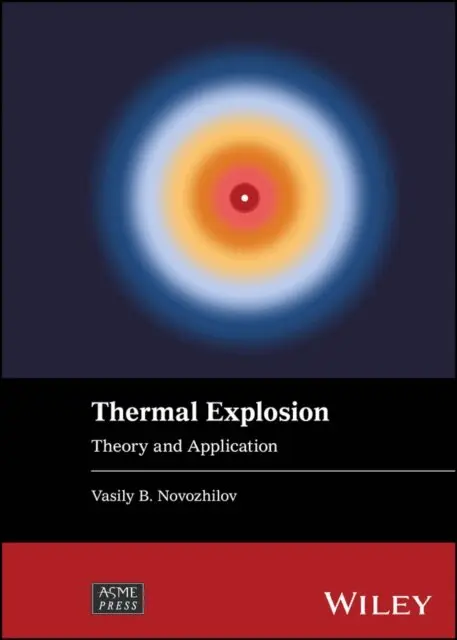
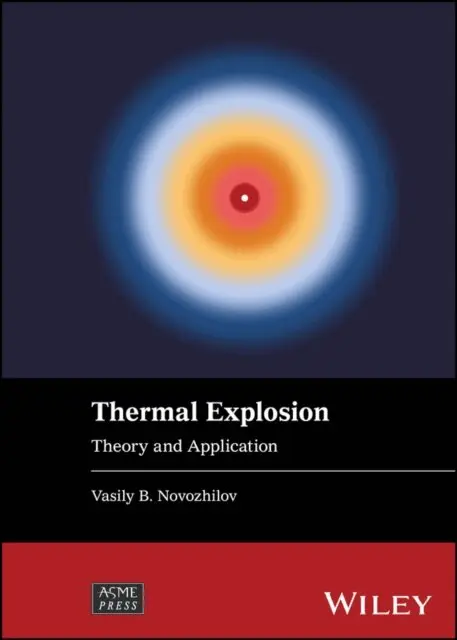
    Thermal Explosion

    Theory and Application

    AvVasily B. Novozhilov

    Inbunden, Engelska, 2025

    Del i serien Wiley-ASME Press Series

    1 488 kr

    Beställningsvara. Skickas inom 5-8 vardagar. Fri frakt över 249 kr.

    Fler format och utgåvor

    E-bok

    1 719 kr

    E-bok

    1 719 kr

    Beskrivning

    Thermal Explosion A full review of thermal explosion theory featuring a new universal notation as a framework to develop and report research results Summarizing all significant and notable developments made in the field over nearly 100 years, Thermal Explosion provides a single, authoritative source of information on the subject that connects the theory with examples from practical applications. After opening with an introduction to prerequisite technical information, the book goes on to cover the mathematical theory behind thermal explosion, with detailed explanations of how thermal explosion can develop in different media and under different conditions and strategies and techniques that can be used to prevent thermal explosion. Readers will learn how to recognize thermal explosion hazards within technical designs and operation procedures, including for lithium ion batteries, biofuels, biomaterials, and microcombustors, predict the circumstances that may cause a thermal explosion in a particular design or process, and develop optimal mitigating strategies for these risks. Each chapter is supported by extensive example problems that introduce readers to a universal notation that can be used as a framework for developing and reporting their own research results. Topics covered in Thermal Explosion include: Steady-state theory: the Semenov formulation and planar, cylindrical, and spherical symmetry cases in the Frank-Kamenetskii formulationGeneralized boundary conditions, dynamical regimes, thermal explosion in a region of arbitrary shape, and nonsteady thermal explosion theoryThermal explosion in two-phase porous systems and spotted, diffusion, and conjugate thermal explosionOne- and two-variable thermal explosion models of fire flashoverThermal explosion prevention through management of cooling flows and other passive methods, inertization, and cooling one- and two-phase media injectionsThermal Explosion is an essential, up-to-date reference on the subject for engineering researchers and professionals, along with mathematicians and other scientists working in related fields. The book is also an excellent learning aid within an academic setting for graduate-level researchers or as supplemental reading in upper-level courses.

    Produktinformation

    • Utgivningsdatum:2025-11-04
    • Vikt:680 g
    • Format:Inbunden
    • Språk:Engelska
    • Serie:Wiley-ASME Press Series
    • Antal sidor:304
    • Förlag:John Wiley & Sons Inc
    • ISBN:9781119830528

    Utforska kategorier

    • Byggnadsteknik inom Naturvetenskap och teknik
    • Maskinteknik och material inom Naturvetenskap och teknik

    Mer om författaren

    Vasily B. Novozhilov is Professor of Mathematics at Victoria University in Melbourne, Australia. He previously held professorial positions at the Institute of Fire Safety Engineering Research and Technology at the University of Ulster, UK and at Nanyang Technological University, Singapore. He is a member of The Combustion Institute and has authored or co-authored over 150 publications, including the book Theory of Solid-Propellant Nonsteady Combustion, also from Wiley.

    Innehållsförteckning

    • About the Author xiPreface xiiiImportant Notation and Abbreviations xix1 Introduction 11.1 Informal Description of Thermal Explosion 11.2 Historical Remarks and Terminology 31.3 Fundamentals of Chemical Kinetics 61.4 Definition of Thermal Explosion 101.5 Similarities and Differences with Other Phenomena 132 Classical Theory of Thermal Explosion 152.1 General Considerations 152.2 Steady-State Semenov Theory 202.3 Steady-State Frank–Kamenetskii Theory 232.3.1 Planar Symmetry 262.3.2 Cylindrical Symmetry 272.3.3 Spherical Symmetry 282.4 Non-steady Theory 322.5 Comparison of the Semenov and the Frank–Kamenetskii Formulations 373 Extended Mathematical Theory of Thermal Explosion 413.1 Generalized Boundary Conditions 413.2 Dynamical Regimes 493.3 Thermal Explosion in a Region of Arbitrary Shape 563.4 Stability of Thermal Explosion Solutions 603.5 Interpretation of Thermal Explosion in Terms of Theory of Catastrophes and Control Theory 633.6 Review of Other Results in Mathematical Theory of Thermal Explosion 664 Thermal Explosion in a Quiescent Medium 694.1 Kinetic Effects 694.2 Conjugate Thermal Explosion 804.3 Diffusion Thermal Explosion 924.4 Spotted Thermal Explosion 954.5 Experimental Validation of the Theory of Thermal Explosion 985 Thermal Explosion in Dynamic Mixtures 1015.1 Thermal Explosion in Flow Reactor 1015.2 Thermal Explosion Under Natural Convection Conditions 1065.3 Thermal Explosion Under Forced Convection Conditions 1356 Thermal Explosion and Fire Dynamics 1476.1 Compartment Fire Flashover: Problem Description 1476.2 One-Variable Thermal Explosion Models of Fire Flashover 1506.3 Two-Variable Thermal Explosion Models of Fire Flashover 1586.4 Pseudo – Three-Variable Models and Other Results in Thermal Explosion Modelling of Fire Flashover 1657 Thermal Explosion in Granular Reacting Media, Biosolid Fuels and Electric Batteries 1717.1 Experimental Data 1717.2 Thermal Explosion in Granular Reacting Media 1757.3 Thermal Explosion of Biosolid Fuels 1767.4 Thermal Explosion of Electric Batteries 1888 Control Problem in the Theory of Thermal Explosion 1958.1 Problem Formulation 1958.2 Instantaneous Control 1968.3 Smooth Control 2028.3.1 Smooth Autonomous Control 2078.3.2 Smooth Non-autonomous Control 2119 Thermal Explosion Prevention 2199.1 Concept of Thermal Management. Passive and Active Methods 2199.2 Passive Methods 2209.3 Inertization 2249.4 Cooling Media Injection 2259.5 Prevention of Fire Flashover 226References 237Problems 249Problem Solutions 251Index 263