• Fri frakt över 249 kr
  • •
  • Snabba leveranser
  • •
  • Billiga böcker
Kundservice

Du är på sajten för privatpersoner.

Företag, bibliotek eller offentlig verksamhet?

Du handlar på classic.bokus.com, där alla dina funktioner finns intakta.
Till classic.bokus.com
Bokus logotyp. Gå till startsidan.
  • Erbjudanden
  • Nyheter
  • Student
  • Topplistor
  • Barn & ungdom
  • Bokus Play
  • E-böcker
  • Pocketböcker
  • Spel & pussel

10% rabatt på allt med kod: NYSTART10 →

Sidfot

Mina sidor

    Hjälp

    • Kundservice
    • Vanliga frågor och svar
    • Frakt och leverans
    • Retur vid ångerrätt
    • Reklamera vara
    • Betalning
    • Köpvillkor
    • Allmänna villkor
    • Information om webbplatsens tillgänglighet

    Om Bokus

    • Om oss
    • Pressrum
    • För studenter
    • För företag
    • För bibliotek och offentlig verksamhet
    • För leverantörer
    • Hållbarhet

    Populärt

    • Aktuella erbjudanden
    • Presentkort
    • Studentlitteratur
    • Nya böcker
    • Topplistor
    • Signerade böcker
    • Engelska böcker

    Inspiration

    • Boktips
    • BookTok
    • Populära bokserier
    • Barnbokskaraktärer
    • Populära författare
    Logotyp för Bokus
    Följ oss på Facebook (extern länk)Följ oss på Instagram (extern länk)Följ oss på YouTube (extern länk)Följ oss på TikTok (extern länk)
    bokus @ CookiesAnpassa cookiesIntegritetspolicyKöpvillkor
    Till Citymail hemsida (extern länk)Till Budbee hemsida (extern länk)Till Postnord hemsida (extern länk)Till Schenker hemsida (extern länk)Till Early Bird hemsida (extern länk)Till Walleys hemsida (extern länk)
    1. Naturvetenskap och teknik
    2. Geovetenskap
    3. Geovetenskap

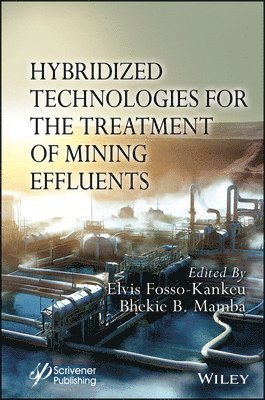
    Hybridized Technologies for the Treatment of Mining Effluents

    AvElvis Fosso-Kankeu,Bhekie B. Mamba

    Inbunden, Engelska, 2023

    2 391 kr

    Beställningsvara. Skickas inom 5-8 vardagar. Fri frakt över 249 kr.

    Beskrivning

    HYBRIDIZIED TECHNOLOGIES FOR THE TREATMENT OF MINING EFFLUENTS The main goal of this book is to review the principles, development, and performances of hybridized technologies that have been used for the treatment of mine effluents. Recent developments consist of the integration/hybridization of technologies to achieve the effective removal of pollutants from acid mine drainage (AMD) effluents in a stepwise manner such as to ensure that the cost of the process is minimized, and the resulting water is fit for purpose. This book presents eight specialized chapters that provide a state-of-the-art review of the different hybridized technologies that have been developed over the years for the treatment of mine effluent, including AMD. The successful implementation and challenges of these technologies are highlighted to give the reader a perspective on the management of such waste in the mining industry. In this innovative book, readers will be introduced to The limitations of passive and active treatment processes as stand-alone technologies while appraising the functioning and performances of these technologies when combined to address their challenges;The numerous approaches that have been considered over the years for effective combination of these technologies are explored taking into account their successful implementation at large scale as well as the long-term sustainability.Audience This book will be of interest to academic researchers from the fields of environment, chemistry, engineering, mineral processing, hydrometallurgy, geochemistry, and professionals including mining plant operators, environmental managers in the industries, water treatment plants managers and operators, water authorities, government regulatory bodies officers and environmentalists.

    Produktinformation

    • Utgivningsdatum:2023-08-02
    • Mått:160 x 231 x 25 mm
    • Vikt:680 g
    • Format:Inbunden
    • Språk:Engelska
    • Antal sidor:320
    • Förlag:John Wiley & Sons Inc
    • ISBN:9781119896425

    Utforska kategorier

    • Geovetenskap inom Naturvetenskap och teknik
    • Biologi inom Naturvetenskap och teknik

    Mer om författaren

    Elvis Fosso-Kankeu, PhD, is a professor in the Department of Metallurgy, Faculty of Engineering and Built Environment, University of Johannesburg, Doornfontein, Johannesburg, South Africa. His research focuses on the hydrometallurgical extraction of metal from solid phases, the prediction of pollutants dispersion from industrial areas, and the development of effective and sustainable methods for the removal of inorganic and organic pollutants from polluted water. He has published more than 220 papers including journal articles, books, book chapters, and conference proceeding papers. He has won several research awards including the NSTF Award (National Science and Technology Forum: largest science, engineering, technology, and innovation awards in South Africa and are known as the “Science Oscars” of recent times) Engineering Research Capacity Development, in 2019. Bhekie B. Mamba, PhD, is the executive dean of the College of Science, Engineering, and Technology, University of South Africa. Prof Mamba is a visionary and has occupied a number of leadership positions including being a Professor and Head at Department of Applied Chemistry at the University of Johannesburg, and the Director of the Institute of Nanotechnology and Water Research at the University of Johannesburg. He has published about 7 book chapters, over 250 journal papers, about 12 technical reports, and over 50 conference proceedings. His general research interest involves developing advanced technologies for water treatment, which include nanotechnology and membrane technology.

    Innehållsförteckning

    • Preface xv1 Passive Remediation of Acid Mine Drainage Using Phytoremediation: Role of Substrate, Plants, and External Factors in Inorganic Contaminants Removal 1Nguegang Beauclair, Vhahangwele, Masindi, Titus Alfred Makudali Msagati and Tekere Memory1.1 Introduction 21.2 Materials and Methods 41.2.1 Samples Collection and Characterization 41.2.2 Acquisition of the Plants and Reagents 51.2.3 Characterization of Samples 51.2.4 Quality Assurance and Quality Control (QA/QC) 51.2.5 Wetlands Design and Optimization Experiments 61.3 Results and Discussion 101.3.1 Remediation Studies 101.3.2 Tolerance Index, Bioaccumulation, and Translocation Effects 181.3.3 Metals Concentration in Substrate and Vetiveria zizanioides Before and After Contact With AMD 231.3.4 Partitioning of Metals Between Substrate, Plants, and External Factors 241.3.5 Characterization of Solid Samples 261.4 Chemical Species for Untreated and AMD-Treated Wetland With FWS-CW 311.5 Limitation of the Study 331.6 Conclusions and Recommendations 332 Recovery of Strategically Important Heavy Metals from Mining Influenced Water: An Experimental Approach Based on Ion-Exchange 41Janith Abeywickrama, Marlies Grimmer and Nils Hoth2.1 Introduction 422.2 Ion Exchange in Mine Water Treatment 442.2.1 Ion Exchange Terminology 442.2.2 Fundamentals of Ion Exchange Process 462.2.3 Selectivity of Ion-Exchange Materials 482.2.4 Chelating Cation Exchangers 492.3 Laboratory-Scale Ion Exchange Column Experiments 512.3.1 General Introduction to the Setup 512.3.2 Column Loading Process 532.3.3 Mass Transfer Zone 562.3.4 Regeneration Process (Deloading) 572.3.5 Metal Separation by Ion Exchange 582.3.6 Mass Balance Calculations 592.4 Case Study: Selective Recovery of Copper and Cobalt From a Chilean Mine Water 602.4.1 Problem Description and Objectives 602.4.2 Recovery of Copper from Mining Influenced Water 632.4.3 Cobalt Enrichment Using the Runoff Water from Previous Column Experiments 652.4.4 Copper–Cobalt Separation During the Deloading Process 692.5 Case Study: Recovery of Zinc from Abandoned Mine Water Galleries in Saxony, Germany 712.6 Perspectives and Challenges 733 Remediation of Acid Mine Drainage Using Natural Materials: A Systematic Review 79Matome L. Mothetha, Vhahangwele Masindi, Titus A.M. Msagati and Kebede K. Kefeni3.1 Introduction 803.2 Acid Mine Drainage 803.3 Formation of the Acid Mine Drainage 823.4 Potential Impacts of Acid Mine Drainage 833.4.1 The Impacts of AMD on the Environment and Ecology 843.5 Acid Mine Drainage Abatement/Prevention 853.6 Mechanisms of Pollutants Removal From AMD 853.6.1 Active Treatment 863.6.2 Chemical Precipitation 863.6.3 Adsorption 863.6.4 Passive Treatment 873.6.5 Other Treatment Methods 873.7 Conclusion 904 Recent Development of Active Technologies for AMD Treatment 95Zvinowanda, Caliphs4.1 Introduction 964.1.1 Difference Between Active and Nonactive AMD Treatment Methods 974.1.2 Conventional Active Techniques for AMD Treatment 974.2 Recent Developments of Active AMD Treatment Technologies 1024.2.1 Resource Recovery From Active AMD Treatment Technologies 1024.2.2 The Alkali-Barium-Calcium Process 1044.2.3 Magnesium-Barium Oxide (MBO) Process 1064.2.4 HybridICE Freeze Desalination Technology 1074.2.5 Evaporation-Based Technologies 1084.3 Recent Disruptive Developments of AMD Treatment Technologies 1104.3.1 Tailing Technology 1104.3.2 Advanced Oxidation Processes 1115 Buffering Capacity of Soils in Mining Areas and Mitigation of Acid Mine Drainage Formation 119Rudzani Lusunzi, Elvis Fosso-Kankeu and Frans Waanders5.1 Introduction 1205.2 Control of Acid Mine Drainage 1215.2.1 Water Covers 1225.2.2 Mine Land Reclamation 1225.2.3 Biocidal AMD Control 1245.2.4 Alternative Dump Construction 1245.3 Treatment of Acid Mine Drainage 1245.3.1 Active Treatment 1255.3.2 Passive Treatment 1285.3.3 Emerging Passive Treatment Systems 1356 Novel Approaches to Passive and Semi-Passive Treatment of Zinc-Bearing Circumneutral Mine Waters in England and Wales 147Kennedy, J., Okeme, I.C. and Sapsford D.J.6.1 Introduction 1486.1.1 Active Treatment Options for Zn 1516.1.2 Passive Treatment Options for Zn 1536.2 Hybrid Semi-Passive Treatment: Na2 Co3 Dosing and Other Water Treatment Reagents 1556.2.1 Abbey Consols Mine Water 1566.2.2 Laboratory Scale Na2 Co3 Dosing 1586.2.3 Practical Implementation of Na2 Co3 Dosing 1596.3 Polishing of Trace Metals With Vertical Flow Reactors 1626.4 Concluding Remarks 1657 Recovery of Drinking Water and Valuable Metals From Iron-Rich Acid Mine Water Through a Combined Biological, Chemical, and Physical Treatment Process 177Tumelo Monty Mogashane, Johannes Philippus Maree, Kwena Desmond Modibane, Munyaradzi Mujuru and Mamasegare Mabel Mphahlele-Makgwane7.1 Introduction 1787.1.1 General Problem with Mine Water 1787.1.2 Legislation 1797.1.3 Ideal Solution 1807.2 Objectives 1807.3 Literature 1817.3.1 Mine Water Treatment Processes 1817.3.2 Solubilities 1847.3.3 Pigment 1857.4 Materials and Methods 1857.4.1 Fe 2+ Oxidation 1857.4.2 Neutralization (CaCO 3 , Na2 Co3 and MgO) 1887.4.3 pH 7.5 Sludge From Na2 Co3 as Alkali for Fe 3+ Removal 1897.4.4 Inhibition 1907.4.5 MgO/SiO 2 Separation 1907.4.6 SiO 2 Removal 1927.4.7 Pigment Formation 1927.4.8 Analytical 1927.4.9 Characterization of the Sludge 1937.4.10 Oli 1937.5 Results and Discussion 1947.5.1 Chemical Composition 1947.5.2 Biological Fe 2+ -Oxidation 1947.5.3 CaCO 3 as Alkali for Removal of Fe 3+ and Remaining Metals 1997.5.4 MgO and Na2 Co3 as Alkalis for Selective Removal of Fe 3+ and Al 3+ 2047.5.5 Gypsum Crystallization 2167.5.6 Separation of MgO and SiO 2 2307.5.7 Si 4+ Removal from Solution 2327.5.8 Fe(OH) 3 Purity and Pigment Formation 2327.5.9 Economic Feasibility 2367.6 Conclusions 2388 Acid Mine Drainage Treatment Technologies: Challenges and Future Perspectives 245Nguegang Beauclair, Vhahangwele, Masindi, Titus Alfred Makudali Msagati and Tekere Memory8.1 Introduction 2468.2 Acid Mine Drainage 2478.2.1 Acid Mine Drainage Formation 2488.2.2 Roles of Different Factors Influencing AMD Formation 2508.3 Types of Mine Drainage 2528.3.1 Neutral/Alkaline Mine Drainage 2538.4 Physicochemical Properties of AMD 2538.4.1 Physical Properties 2538.4.2 Chemical Properties 2548.5 Environmental Impacts of Acid Mine Drainage 2548.6 AMD Abatement 2568.6.1 Alkaline Amendment Tailing 2568.6.2 Oxygen Barriers 2578.6.3 Reclamation of Contaminated Land 2578.6.4 Bacteria Control 2578.6.5 Water Cover 2578.7 Treatment Technologies of AMD 2588.7.1 Active Treatment of AMD 2588.7.2 Passive Treatment 2608.7.3 Other Commonly Used Passive Treatment Technologies 2648.7.4 Hybrid Approach in AMD Treatment 2668.7.5 Integrated Approach 2678.8 Mechanisms of Pollutants Removal in AMD Treatment 2698.8.1 Adsorption 2698.8.2 Precipitation 2708.8.3 Ion Exchange 2708.8.4 Bioadsorption 2718.8.5 Filtration 2718.8.6 Electrodialysis 2728.8.7 Crystallization 2728.9 Recovery of Natural Resources From AMD 2738.10 Future Perspectives and Challenges of AMD Treatment 2748.11 Conclusion 275References 275Index 287