Bhekie B. Mamba – författare
1 681 kr
Kommande
2 634 kr
Skickas inom 5-8 vardagar
2 992 kr
Läs direkt efter köp
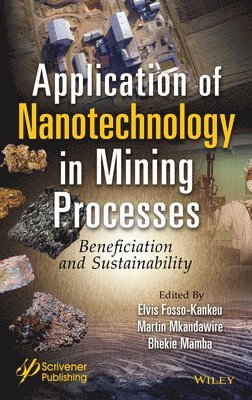
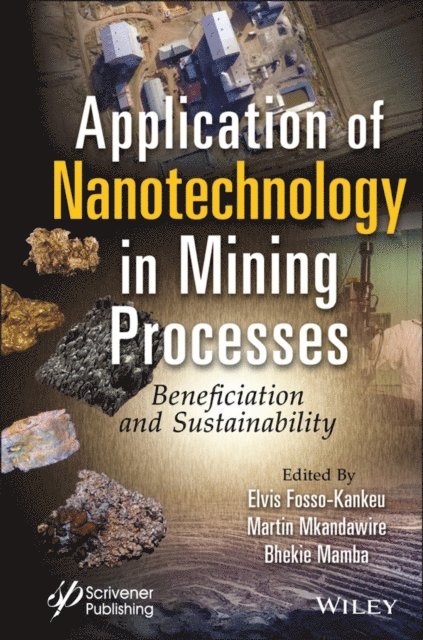
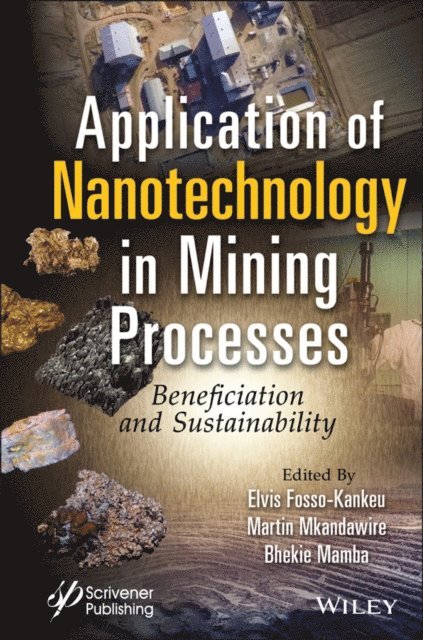
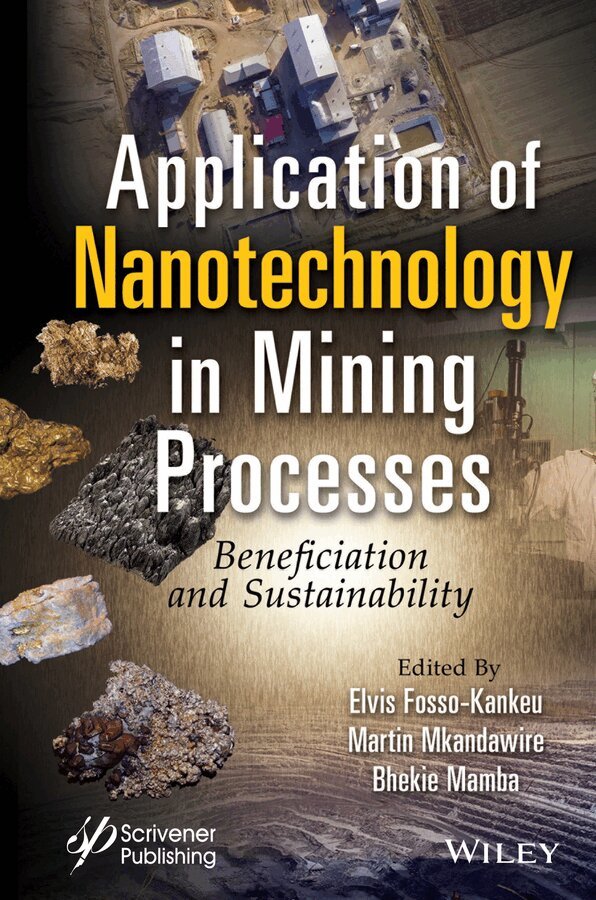
Nanotechnology has revolutionized processes in many industries but its application in the mining industry has not been widely discussed. This unique book provides an overview of the successful implementation of nanotechnology in some of the key environmental and beneficiation mining processes.
This book explores extensively the potential of nanotechnology to revolutionize the mining industry which has been relying for a very long on processes with limited efficiencies. The nine specialized chapters focus on applying nanoflotation to improve mineral processing, effective extraction of metals from leachates or pregnant solutions using nanoscale supramolecular hosts, and development of nano-adsorbents or nano-based strategies for the remediation or valorization of AMD.
The application of nanotechnology in mining has so far received little attention from the industry and researchers and this groundbreaking book features critical issues so far under-reported in the literature:
Application of nanotechnology in mineral processing for the enhancement of froth flotation Development of smart nanomaterials and application for the treatment of acid mine drainage Recovery of values from pregnant solutions using nanoadsorbents Valorization of AMD through formation of multipurpose nanoproducts.Audience
Industrial interest will be from mining plant operators, environmental managers, water treatment plants managers, and operators. Researchers in nanotechnology, environmental science, mining, and metallurgy engineering will find the book valuable, as will government entities such as regulatory bodies officers and environmentalists.
2 992 kr
Läs direkt efter köp
Nanotechnology has revolutionized processes in many industries but its application in the mining industry has not been widely discussed. This unique book provides an overview of the successful implementation of nanotechnology in some of the key environmental and beneficiation mining processes.
This book explores extensively the potential of nanotechnology to revolutionize the mining industry which has been relying for a very long on processes with limited efficiencies. The nine specialized chapters focus on applying nanoflotation to improve mineral processing, effective extraction of metals from leachates or pregnant solutions using nanoscale supramolecular hosts, and development of nano-adsorbents or nano-based strategies for the remediation or valorization of AMD.
The application of nanotechnology in mining has so far received little attention from the industry and researchers and this groundbreaking book features critical issues so far under-reported in the literature:
Application of nanotechnology in mineral processing for the enhancement of froth flotation Development of smart nanomaterials and application for the treatment of acid mine drainage Recovery of values from pregnant solutions using nanoadsorbents Valorization of AMD through formation of multipurpose nanoproducts.Audience
Industrial interest will be from mining plant operators, environmental managers, water treatment plants managers, and operators. Researchers in nanotechnology, environmental science, mining, and metallurgy engineering will find the book valuable, as will government entities such as regulatory bodies officers and environmentalists.
2 119 kr
Skickas inom 5-8 vardagar
2 437 kr
Skickas inom 5-8 vardagar
2 503 kr
Läs direkt efter köp
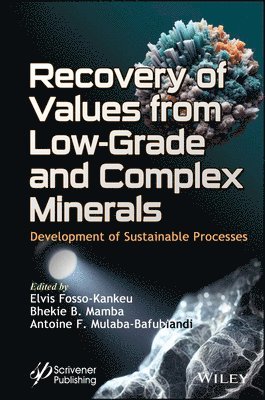
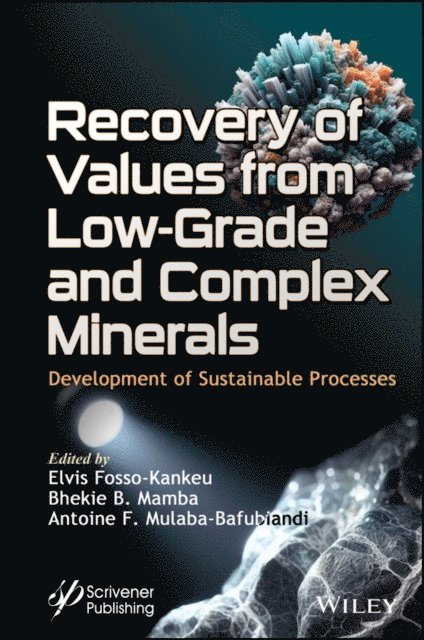
The book elaborates on various physicochemical properties of minerals and technological developments to improve the recovery of metals while ensuring cost-effectiveness and minimal environmental impact.
The mineral industry is undergoing significant cultural, organizational, and technological transformations to address some of the major limitations and challenges related to the environmental and productivity domains. As far as productivity is concerned, the decrease of high-grade ores has been one of the stumbling blocks toward the achievement of maximum recovery of metals while, on the other hand, the complexity of minerals therein makes it difficult to profitably extract metals using only conventional methods.
This book presents eight specialized chapters that focus on the exploration of the complexity of minerals that are likely to negatively influence the recovery of values, as well as the development of adequate technologies capable of improving the process of mineral concentration and/or metal recovery from complex minerals in a sustainable manner. It reviews the various physicochemical properties of minerals that are likely to pose a challenge during the attempt to recover values using conventional methods. It also elaborates on the recent technological development that has been considered by researchers to improve the recovery of metals from gangue-dominated minerals while ensuring cost-effectiveness and minimal adverse environmental impact.
Audience
This book will be of interest to academic researchers from the fields of mineral processing, hydrometallurgy, geochemistry, environment, chemistry, engineering, and professionals including mining plant operators, environmental managers in the industries, government regulatory bodies officers, and environmentalists.
2 503 kr
Läs direkt efter köp
The book elaborates on various physicochemical properties of minerals and technological developments to improve the recovery of metals while ensuring cost-effectiveness and minimal environmental impact.
The mineral industry is undergoing significant cultural, organizational, and technological transformations to address some of the major limitations and challenges related to the environmental and productivity domains. As far as productivity is concerned, the decrease of high-grade ores has been one of the stumbling blocks toward the achievement of maximum recovery of metals while, on the other hand, the complexity of minerals therein makes it difficult to profitably extract metals using only conventional methods.
This book presents eight specialized chapters that focus on the exploration of the complexity of minerals that are likely to negatively influence the recovery of values, as well as the development of adequate technologies capable of improving the process of mineral concentration and/or metal recovery from complex minerals in a sustainable manner. It reviews the various physicochemical properties of minerals that are likely to pose a challenge during the attempt to recover values using conventional methods. It also elaborates on the recent technological development that has been considered by researchers to improve the recovery of metals from gangue-dominated minerals while ensuring cost-effectiveness and minimal adverse environmental impact.
Audience
This book will be of interest to academic researchers from the fields of mineral processing, hydrometallurgy, geochemistry, environment, chemistry, engineering, and professionals including mining plant operators, environmental managers in the industries, government regulatory bodies officers, and environmentalists.
2 732 kr
Läs direkt efter köp
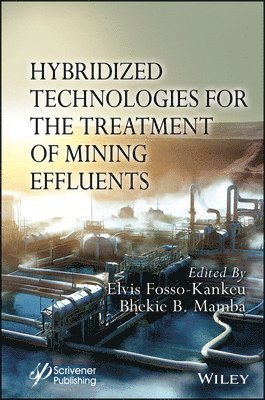
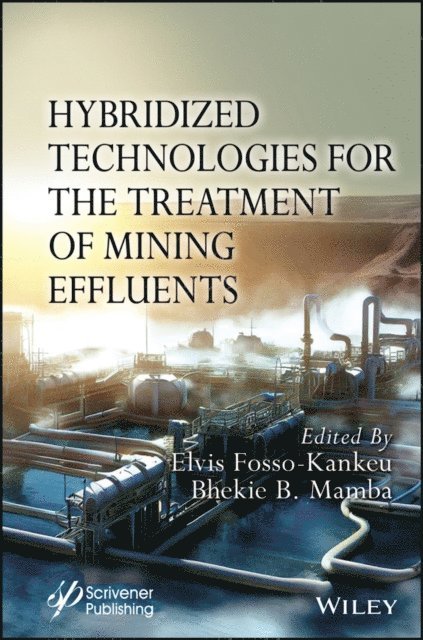
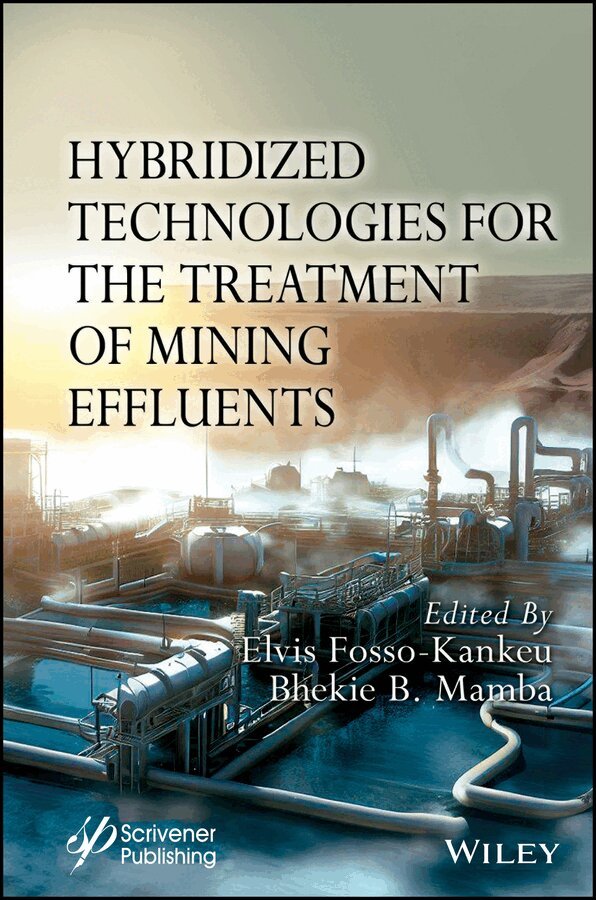
The main goal of this book is to review the principles, development, and performances of hybridized technologies that have been used for the treatment of mine effluents.
Recent developments consist of the integration/hybridization of technologies to achieve the effective removal of pollutants from acid mine drainage (AMD) effluents in a stepwise manner such as to ensure that the cost of the process is minimized, and the resulting water is fit for purpose.
This book presents eight specialized chapters that provide a state-of-the-art review of the different hybridized technologies that have been developed over the years for the treatment of mine effluent, including AMD. The successful implementation and challenges of these technologies are highlighted to give the reader a perspective on the management of such waste in the mining industry.
In this innovative book, readers will be introduced to
The limitations of passive and active treatment processes as stand-alone technologies while appraising the functioning and performances of these technologies when combined to address their challenges; The numerous approaches that have been considered over the years for effective combination of these technologies are explored taking into account their successful implementation at large scale as well as the long-term sustainability.Audience
This book will be of interest to academic researchers from the fields of environment, chemistry, engineering, mineral processing, hydrometallurgy, geochemistry, and professionals including mining plant operators, environmental managers in the industries, water treatment plants managers and operators, water authorities, government regulatory bodies officers and environmentalists.
2 732 kr
Läs direkt efter köp
The main goal of this book is to review the principles, development, and performances of hybridized technologies that have been used for the treatment of mine effluents.
Recent developments consist of the integration/hybridization of technologies to achieve the effective removal of pollutants from acid mine drainage (AMD) effluents in a stepwise manner such as to ensure that the cost of the process is minimized, and the resulting water is fit for purpose.
This book presents eight specialized chapters that provide a state-of-the-art review of the different hybridized technologies that have been developed over the years for the treatment of mine effluent, including AMD. The successful implementation and challenges of these technologies are highlighted to give the reader a perspective on the management of such waste in the mining industry.
In this innovative book, readers will be introduced to
The limitations of passive and active treatment processes as stand-alone technologies while appraising the functioning and performances of these technologies when combined to address their challenges; The numerous approaches that have been considered over the years for effective combination of these technologies are explored taking into account their successful implementation at large scale as well as the long-term sustainability.Audience
This book will be of interest to academic researchers from the fields of environment, chemistry, engineering, mineral processing, hydrometallurgy, geochemistry, and professionals including mining plant operators, environmental managers in the industries, water treatment plants managers and operators, water authorities, government regulatory bodies officers and environmentalists.
2 438 kr
Skickas inom 5-8 vardagar
2 885 kr
Läs direkt efter köp
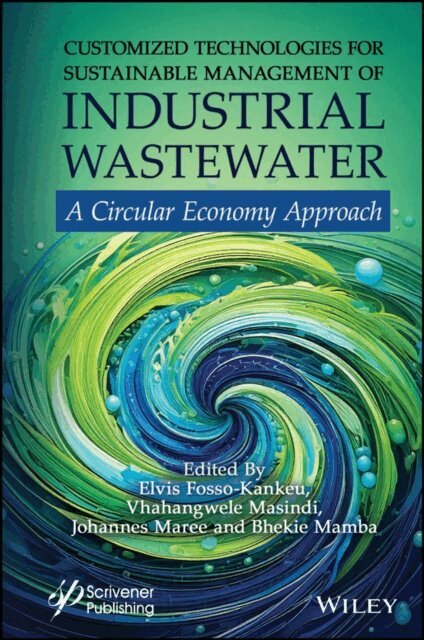
The book is essential for understanding innovative solutions to the critical challenges posed by increasing wastewater pollution and the urgent need for sustainable practices in light of climate change and resource scarcity.
Increased population growth and climate change put continuous pressure on freshwater resources across the globe. The volume and diversity of pollutants in wastewater discharged from industry have significantly increased over the years, making conventional wastewater treatment systems unfit for managing industrial wastewater released into the environment. The limitations of existing treatments appear not only in the suitability of the technologies to abate emerging pollutants, but also in the approach used to mitigate the situation and ensure sustainability of the process. For wastewater treatment, the circular economy, which is based on the principles reduce, reuse, recycle, restore, and recover, will ensure that waste is minimized and the life-cycle value of natural resources and products is maximized. Considerable progress has been made in developing new technologies that can adequately address the issue. However, with larger volumes of wastewater to treat every day, the cost of treatment is overwhelming, necessitating the right combination of technologies that will promote the reuse of pollutants recovered during the treatment process to offset the treatment cost. Customized Technologies for Sustainable Management of Industrial Wastewater: A Circular Economy Approach presents fifteen comprehensive chapters that cover the sustainability of industrial wastewater treatment technologies with consideration to the circular economy.
Readers will find the volume:
Emphasizes the mechanisms and strategic combination of technologies that maximize the recovery of valuables during industrial wastewater treatment and deliver effluents treated to the acceptable standard; Discusses the characteristics, purity, and potential uses and applications of the recovered products; Focuses on the strategic development of technologies for the sustainable treatment of industrial wastewater at large.Audience
Researchers, mining and industrial professionals, environmental managers, and policymakers involved in environmental, chemical, engineering, and mineral processing fields in the industries; water treatment plants managers and operators, water authorities, government regulatory bodies officers, and environmentalists.
2 885 kr
Läs direkt efter köp
The book is essential for understanding innovative solutions to the critical challenges posed by increasing wastewater pollution and the urgent need for sustainable practices in light of climate change and resource scarcity.
Increased population growth and climate change put continuous pressure on freshwater resources across the globe. The volume and diversity of pollutants in wastewater discharged from industry have significantly increased over the years, making conventional wastewater treatment systems unfit for managing industrial wastewater released into the environment. The limitations of existing treatments appear not only in the suitability of the technologies to abate emerging pollutants, but also in the approach used to mitigate the situation and ensure sustainability of the process. For wastewater treatment, the circular economy, which is based on the principles reduce, reuse, recycle, restore, and recover, will ensure that waste is minimized and the life-cycle value of natural resources and products is maximized. Considerable progress has been made in developing new technologies that can adequately address the issue. However, with larger volumes of wastewater to treat every day, the cost of treatment is overwhelming, necessitating the right combination of technologies that will promote the reuse of pollutants recovered during the treatment process to offset the treatment cost. Customized Technologies for Sustainable Management of Industrial Wastewater: A Circular Economy Approach presents fifteen comprehensive chapters that cover the sustainability of industrial wastewater treatment technologies with consideration to the circular economy.
Readers will find the volume:
Emphasizes the mechanisms and strategic combination of technologies that maximize the recovery of valuables during industrial wastewater treatment and deliver effluents treated to the acceptable standard; Discusses the characteristics, purity, and potential uses and applications of the recovered products; Focuses on the strategic development of technologies for the sustainable treatment of industrial wastewater at large.Audience
Researchers, mining and industrial professionals, environmental managers, and policymakers involved in environmental, chemical, engineering, and mineral processing fields in the industries; water treatment plants managers and operators, water authorities, government regulatory bodies officers, and environmentalists.
565 kr
Skickas inom 5-8 vardagar