• Fri frakt över 249 kr
  • •
  • Snabba leveranser
  • •
  • Billiga böcker
Kundservice

Du är på sajten för privatpersoner.

Företag, bibliotek eller offentlig verksamhet?

Du handlar på classic.bokus.com, där alla dina funktioner finns intakta.
Till classic.bokus.com
Bokus logotyp. Gå till startsidan.
  • Erbjudanden
  • Nyheter
  • Student
  • Topplistor
  • Barn & ungdom
  • Bokus Play
  • E-böcker
  • Pocketböcker
  • Spel & pussel

10% rabatt på allt med kod NYSTART10 →

Sidfot

Mina sidor

    Hjälp

    • Kundservice
    • Vanliga frågor och svar
    • Frakt och leverans
    • Retur vid ångerrätt
    • Reklamera vara
    • Betalning
    • Köpvillkor
    • Allmänna villkor
    • Information om webbplatsens tillgänglighet

    Om Bokus

    • Om oss
    • Pressrum
    • För studenter
    • För företag
    • För bibliotek och offentlig verksamhet
    • För leverantörer
    • Hållbarhet

    Populärt

    • Aktuella erbjudanden
    • Presentkort
    • Studentlitteratur
    • Nya böcker
    • Topplistor
    • Signerade böcker
    • Engelska böcker

    Inspiration

    • Boktips
    • BookTok
    • Populära bokserier
    • Barnbokskaraktärer
    • Populära författare
    Logotyp för Bokus
    Följ oss på Facebook (extern länk)Följ oss på Instagram (extern länk)Följ oss på YouTube (extern länk)Följ oss på TikTok (extern länk)
    bokus @ CookiesAnpassa cookiesIntegritetspolicyKöpvillkor
    Till Citymail hemsida (extern länk)Till Budbee hemsida (extern länk)Till Postnord hemsida (extern länk)Till Schenker hemsida (extern länk)Till Early Bird hemsida (extern länk)Till Walleys hemsida (extern länk)
    1. Data och IT
    2. Systemvetenskap och AI
    3. Artificiell intelligens

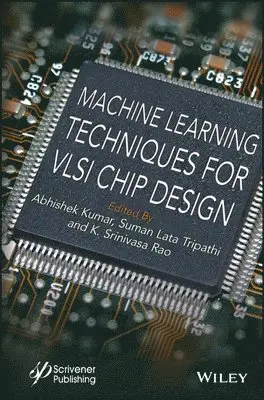
    Machine Learning Techniques for VLSI Chip Design

    AvAbhishek Kumar,Suman Lata Tripathi

    Inbunden, Engelska, 2023

    2 135 kr

    Beställningsvara. Skickas inom 5-8 vardagar. Fri frakt över 249 kr.

    Beskrivning

    MACHINE LEARNING TECHNIQUES FOR VLSI CHIP DESIGN This cutting-edge new volume covers the hardware architecture implementation, the software implementation approach, the efficient hardware of machine learning applications with FPGA or CMOS circuits, and many other aspects and applications of machine learning techniques for VLSI chip design. Artificial intelligence (AI) and machine learning (ML) have, or will have, an impact on almost every aspect of our lives and every device that we own. AI has benefitted every industry in terms of computational speeds, accurate decision prediction, efficient machine learning (ML), and deep learning (DL) algorithms. The VLSI industry uses the electronic design automation tool (EDA), and the integration with ML helps in reducing design time and cost of production. Finding defects, bugs, and hardware Trojans in the design with ML or DL can save losses during production. Constraints to ML-DL arise when having to deal with a large set of training datasets. This book covers the learning algorithm for floor planning, routing, mask fabrication, and implementation of the computational architecture for ML-DL. The future aspect of the ML-DL algorithm is to be available in the format of an integrated circuit (IC). A user can upgrade to the new algorithm by replacing an IC. This new book mainly deals with the adaption of computation blocks like hardware accelerators and novel nano-material for them based upon their application and to create a smart solution. This exciting new volume is an invaluable reference for beginners as well as engineers, scientists, researchers, and other professionals working in the area of VLSI architecture development.

    Produktinformation

    • Utgivningsdatum:2023-07-18
    • Vikt:597 g
    • Format:Inbunden
    • Språk:Engelska
    • Antal sidor:240
    • Förlag:John Wiley & Sons Inc
    • ISBN:9781119910398

    Utforska kategorier

    • Artificiell intelligens inom Data och IT

    Mer om författaren

    Abhishek Kumar, PhD, is an associate professor at and obtained his PhD in the area of VLSI design for low power and secured architecture from Lovely Professional University, India. With over 11 years of academic experience, he has published more than 30 research papers and proceedings in scholarly journals. He has also published nine book chapters and one authored book. He has worked as a reviewer and program committee member and editorial board member for academic and scholarly conferences and journals, and he has 11 patents to his credit. Suman Lata Tripathi, PhD, is a professor at Lovely Professional University with more than 21 years of experience in academics. She has published more than 103 research papers in refereed journals and conferences. She has organized several workshops, summer internships, and expert lectures for students, and she has worked as a session chair, conference steering committee member, editorial board member, and reviewer for IEEE journals and conferences. She has published three books and currently has multiple volumes scheduled for publication from Wiley-Scrivener. K. Srinivasa Rao, PhD, is a professor and Head of Microelectronics Research Group, Department of Electronics and Communication Engineering at the Koneru Lakshmaiah Education Foundation, India. He has earned multiple awards for his scholarship and has published more than 150 papers in scientific journals and presented more than 55 papers at scientific conferences around the world.

    Innehållsförteckning

    • List of Contributors xiiiPreface xix1 Applications of VLSI Design in Artificial Intelligence and Machine Learning 1Imran Ullah Khan, Nupur Mittal and Mohd. Amir Ansari1.1 Introduction 21.2 Artificial Intelligence 41.3 Artificial Intelligence & VLSI (AI and VLSI) 41.4 Applications of AI 41.5 Machine Learning 51.6 Applications of ml 61.6.1 Role of ML in Manufacturing Process 61.6.2 Reducing Maintenance Costs and Improving Reliability 61.6.3 Enhancing New Design 71.7 Role of ML in Mask Synthesis 71.8 Applications in Physical Design 81.8.1 Lithography Hotspot Detection 91.8.2 Pattern Matching Approach 91.9 Improving Analysis Correlation 101.10 Role of ML in Data Path Placement 121.11 Role of ML on Route Ability Prediction 121.12 Conclusion 13References 142 Design of an Accelerated Squarer Architecture Based on Yavadunam Sutra for Machine Learning 19A.V. Ananthalakshmi, P. Divyaparameswari and P. Kanimozhi2.1 Introduction 202.2 Methods and Methodology 212.2.1 Design of an n-Bit Squaring Circuit Based on (n-1)-Bit Squaring Circuit Architecture 222.2.1.1 Architecture for Case 1: A < B 222.2.1.2 Architecture for Case 2: A > B 242.2.1.3 Architecture for Case 3: A = B 242.3 Results and Discussion 252.4 Conclusion 29References 303 Machine Learning–Based VLSI Test and Verification 33Jyoti Kandpal3.1 Introduction 333.2 The VLSI Testing Process 353.2.1 Off-Chip Testing 353.2.2 On-Chip Testing 353.2.3 Combinational Circuit Testing 363.2.3.1 Fault Model 363.2.3.2 Path Sensitizing 363.2.4 Sequential Circuit Testing 363.2.4.1 Scan Path Test 363.2.4.2 Built-In-Self Test (BIST) 363.2.4.3 Boundary Scan Test (BST) 373.2.5 The Advantages of VLSI Testing 373.3 Machine Learning’s Advantages in VLSI Design 383.3.1 Ease in the Verification Process 383.3.2 Time-Saving 383.3.3 3Ps (Power, Performance, Price) 383.4 Electronic Design Automation (EDA) 393.4.1 System-Level Design 403.4.2 Logic Synthesis and Physical Design 423.4.3 Test, Diagnosis, and Validation 433.5 Verification 443.6 Challenges 473.7 Conclusion 47References 484 IoT-Based Smart Home Security Alert System for Continuous Supervision 51Rajeswari, N. Vinod Kumar, K. M. Suresh, N. Sai Kumar and K. Girija Sravani4.1 Introduction 524.2 Literature Survey 534.3 Results and Discussions 544.3.1 Raspberry Pi-3 B+Module 544.3.2 Pi Camera 564.3.3 Relay 564.3.4 Power Source 564.3.5 Sensors 564.3.5.1 IR & Ultrasonic Sensor 564.3.5.2 Gas Sensor 564.3.5.3 Fire Sensor 574.3.5.4 GSM Module 574.3.5.5 Buzzer 574.3.5.6 Cloud 574.3.5.7 Mobile 574.4 Conclusions 62References 625 A Detailed Roadmap from Conventional-MOSFET to Nanowire-MOSFET 65P. Kiran Kumar, B. Balaji, M. Suman, P. Syam Sundar, E. Padmaja and K. Girija Sravani5.1 Introduction 665.2 Scaling Challenges Beyond 100nm Node 675.3 Alternate Concepts in MOFSETs 695.4 Thin-Body Field-Effect Transistors 705.4.1 Single-Gate Ultrathin-Body Field-Effect Transistor 715.4.2 Multiple-Gate Ultrathin-Body Field-Effect Transistor 735.5 Fin-FET Devices 745.6 GAA Nanowire-MOSFETS 775.7 Conclusion 86References 866 Gate All Around MOSFETs-A Futuristic Approach 95Ritu Yadav and Kiran Ahuja6.1 Introduction 956.1.1 Semiconductor Technology: History 966.2 Importance of Scaling in CMOS Technology 986.2.1 Scaling Rules 996.2.2 The End of Planar Scaling 1006.2.3 Enhance Power Efficiency 1016.2.4 Scaling Challenges 1026.2.4.1 Poly Silicon Depletion Effect 1026.2.4.2 Quantum Effect 1036.2.4.3 Gate Tunneling 1036.2.5 Horizontal Scaling Challenges 1036.2.5.1 Threshold Voltage Roll-Off 1036.2.5.2 Drain Induce Barrier Lowering (DIBL) 1036.2.5.3 Trap Charge Carrier 1046.2.5.4 Mobility Degradation 1046.3 Remedies of Scaling Challenges 1046.3.1 By Channel Engineering (Horizontal) 1046.3.1.1 Shallow S/D Junction 1056.3.1.2 Multi-Material Gate 1056.3.2 By Gate Engineering (Vertical) 1056.3.2.1 High-K Dielectric 1056.3.2.2 Metal Gate 1056.3.2.3 Multiple Gate 1056.4 Role of High-K in CMOS Miniaturization 1066.5 Current Mosfet Technologies 1086.6 Conclusion 108References 1097 Investigation of Diabetic Retinopathy Level Based on Convolution Neural Network Using Fundus Images 113K. Sasi Bhushan, U. Preethi, P. Naga Sai Navya, R. Abhilash, T. Pavan and K. Girija Sravani7.1 Introduction 1147.2 The Proposed Methodology 1157.3 Dataset Description and Feature Extraction 1167.3.1 Depiction of Datasets 1167.3.2 Preprocessing 1167.3.3 Detection of Blood Vessels 1177.3.4 Microaneurysm Detection 1187.4 Results and Discussions 1207.5 Conclusions 123References 1238 Anti-Theft Technology of Museum Cultural Relics Using RFID Technology 127B. Ramesh Reddy, K. Bhargav Manikanta, P.V.V.N.S. Jaya Sai, R. Mohan Chandra, M. Greeshma Vyas and K. Girija Sravani8.1 Introduction 1288.2 Literature Survey 1288.3 Software Implementation 1298.4 Components 1308.4.1 Arduino UNO 1308.4.2 EM18 Reader Module 1308.4.3 RFID Tag 1318.4.4 LCD Display 1318.4.5 Sensors 1328.4.5.1 Fire Sensor 1328.4.5.2 IR Sensor 1328.4.6 Relay 1338.5 Working Principle 1348.5.1 Working Principle 1348.6 Results and Discussions 1358.7 Conclusions 137References 1389 Smart Irrigation System Using Machine Learning Techniques 139B. V. Anil Sai Kumar, Suryavamsham Prem Kumar, Konduru Jaswanth, Kola Vishnu and Abhishek Kumar9.1 Introduction 1399.2 Hardware Module 1419.2.1 Soil Moisture Sensor 1419.2.2 LM35-Temperature Sensor 1439.2.3 POT Resistor 1439.2.4 BC-547 Transistor 1439.2.5 Sounder 1449.2.6 LCD 16x2 1459.2.7 Relay 1459.2.8 Push Button 1469.2.9 Led 1469.2.10 Motor 1479.3 Software Module 1489.3.1 Proteus Tool 1489.3.2 Arduino Based Prototyping 1499.4 Machine Learning (Ml) Into Irrigation 1559.5 Conclusion 158References 15810 Design of Smart Wheelchair with Health Monitoring System 161Narendra Babu Alur, Kurapati Poorna Durga, Boddu Ganesh, Manda Devakaruna, Lakkimsetti Nandini, A. Praneetha, T. Satyanarayana and K. Girija Sravani10.1 Introduction 16210.2 Proposed Methodology 16310.3 The Proposed System 16410.4 Results and Discussions 16810.5 Conclusions 169References 16911 Design and Analysis of Anti-Poaching Alert System for Red Sandalwood Safety 171K. Rani Rudrama, Mounika Ramala, Poorna sasank Galaparti, Manikanta Chary Darla, Siva Sai Prasad Loya and K. Srinivasa Rao11.1 Introduction 17211.2 Various Existing Proposed Anti-Poaching Systems 17311.3 System Framework and Construction 17411.4 Results and Discussions 17611.5 Conclusion and Future Scope 182References 18212 Tumor Detection Using Morphological Image Segmentation with DSP Processor TMS320C 6748 185T. Anil Raju, K. Srihari Reddy, Sk. Arifulla Rabbani, G. Suresh, K. Saikumar Reddy and K. Girija Sravani12.1 Introduction 18612.2 Image Processing 18612.2.1 Image Acquisition 18612.2.2 Image Segmentation Method 18612.3 TMS320C6748 DSP Processor 18712.4 Code Composer Studio 18812.5 Morphological Image Segmentation 18812.5.1 Optimization 19012.6 Results and Discussions 19212.7 Conclusions 193References 19313 Design Challenges for Machine/Deep Learning Algorithms 195Rajesh C. Dharmik and Bhushan U. Bawankar13.1 Introduction 19613.2 Design Challenges of Machine Learning 19713.2.1 Data of Low Quality 19713.2.2 Training Data Underfitting 19713.2.3 Training Data Overfitting 19813.2.4 Insufficient Training Data 19813.2.5 Uncommon Training Data 19913.2.6 Machine Learning Is a Time-Consuming Process 19913.2.7 Unwanted Features 20013.2.8 Implementation is Taking Longer Than Expected 20013.2.9 Flaws When Data Grows 20013.2.10 The Model’s Offline Learning and Deployment 20013.2.11 Bad Recommendations 20113.2.12 Abuse of Talent 20113.2.13 Implementation 20113.2.14 Assumption are Made in the Wrong Way 20213.2.15 Infrastructure Deficiency 20213.2.16 When Data Grows, Algorithms Become Obsolete 20213.2.17 Skilled Resources are Not Available 20313.2.18 Separation of Customers 20313.2.19 Complexity 20313.2.20 Results Take Time 20313.2.21 Maintenance 20413.2.22 Drift in Ideas 20413.2.23 Bias in Data 20413.2.24 Error Probability 20413.2.25 Inability to Explain 20413.3 Commonly Used Algorithms in Machine Learning 20513.3.1 Algorithms for Supervised Learning 20513.3.2 Algorithms for Unsupervised Learning 20613.3.3 Algorithm for Reinforcement Learning 20613.4 Applications of Machine Learning 20713.4.1 Image Recognition 20713.4.2 Speech Recognition 20713.4.3 Traffic Prediction 20713.4.4 Product Recommendations 20813.4.5 Email Spam and Malware Filtering 20813.5 Conclusion 208References 208About the Editors 211Index 213