• Fri frakt över 249 kr
  • •
  • Snabba leveranser
  • •
  • Billiga böcker
Kundservice

Du är på sajten för privatpersoner.

Företag, bibliotek eller offentlig verksamhet?

Du handlar på classic.bokus.com, där alla dina funktioner finns intakta.
Till classic.bokus.com
Bokus logotyp. Gå till startsidan.
  • Erbjudanden
  • Nyheter
  • Student
  • Topplistor
  • Barn & ungdom
  • Bokus Play
  • E-böcker
  • Pocketböcker
  • Spel & pussel

Upp till 20% på populära nyheter →

Sidfot

Mina sidor

    Hjälp

    • Kundservice
    • Vanliga frågor och svar
    • Frakt och leverans
    • Retur vid ångerrätt
    • Reklamera vara
    • Betalning
    • Köpvillkor
    • Allmänna villkor
    • Information om webbplatsens tillgänglighet

    Om Bokus

    • Om oss
    • Pressrum
    • För studenter
    • För företag
    • För bibliotek och offentlig verksamhet
    • För leverantörer
    • Hållbarhet

    Populärt

    • Aktuella erbjudanden
    • Presentkort
    • Studentlitteratur
    • Nya böcker
    • Topplistor
    • Signerade böcker
    • Engelska böcker

    Inspiration

    • Boktips
    • BookTok
    • Populära bokserier
    • Barnbokskaraktärer
    • Populära författare

    Mina sidor

      Hjälp

      • Kundservice
      • Vanliga frågor och svar
      • Frakt och leverans
      • Retur vid ångerrätt
      • Reklamera vara
      • Betalning
      • Köpvillkor
      • Allmänna villkor
      • Information om webbplatsens tillgänglighet

      Om Bokus

      • Om oss
      • Pressrum
      • För studenter
      • För företag
      • För bibliotek och offentlig verksamhet
      • För leverantörer
      • Hållbarhet

      Populärt

      • Aktuella erbjudanden
      • Presentkort
      • Studentlitteratur
      • Nya böcker
      • Topplistor
      • Signerade böcker
      • Engelska böcker

      Inspiration

      • Boktips
      • BookTok
      • Populära bokserier
      • Barnbokskaraktärer
      • Populära författare
      Logotyp för Bokus
      Följ oss på Facebook (extern länk)Följ oss på Instagram (extern länk)Följ oss på YouTube (extern länk)Följ oss på TikTok (extern länk)
      bokus @ CookiesIntegritetspolicyKöpvillkor
      Till Citymail hemsida (extern länk)Till Budbee hemsida (extern länk)Till Postnord hemsida (extern länk)Till Schenker hemsida (extern länk)Till Early Bird hemsida (extern länk)Till Walleys hemsida (extern länk)
      1. Naturvetenskap och teknik
      2. Teknik och industri
      3. Maskinteknik och material

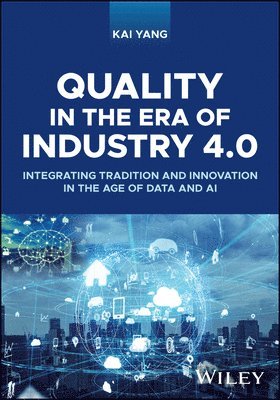
      Quality in the Era of Industry 4.0

      Integrating Tradition and Innovation in the Age of Data and AI

      AvKai Yang

      Inbunden, Engelska, 2023

      1 009 kr

      Beställningsvara. Skickas inom 5-8 vardagar. Fri frakt över 249 kr.

      Fler format och utgåvor

      E-bok

      1 147 kr

      E-bok

      1 151 kr

      Beskrivning

      QUALITY IN THE ERA OF INDUSTRY 4.0 Enables readers to use real-world data from connected devices to improve product performance, detect design vulnerabilities, and design better solutions Quality in the Era of Industry 4.0 provides an insightful guide to harnessing user performance and behavior data through AI and other Industry 4.0 technologies. This transformative approach enables companies to not only optimize products and services in real-time, but also to anticipate and mitigate likely failures proactively. In a succinct and lucid style, the book presents a pioneering framework for a new paradigm of quality management in the Industry 4.0 landscape. It introduces groundbreaking techniques such as utilizing real-world data to tailor products for superior fit and performance, leveraging connectivity to adapt products to evolving needs and use-cases, and employing cutting-edge manufacturing methods to create bespoke, cost-effective solutions with greater efficiency. Case examples featuring applications from the automotive, mobile device, home appliance, and healthcare industries are used to illustrate how these new quality approaches can be used to benchmark the product’s performance and durability, maintain smart manufacturing, and detect design vulnerabilities. Written by a seasoned expert with experience teaching quality management in both corporate and academic settings, Quality in the Era of Industry 4.0 covers topics such as: Evolution of quality through industrial revolutions, from ancient times to the first and second industrial revolutionsQuality by customer value creation, explaining differences in producers, stakeholders, and customers in the new digital age, along with new realities brought by Industry 4.0Data quality dimensions and strategy, data governance, and new talents and skill sets for quality professionals in Industry 4.0Automated product lifecycle management, predictive quality control, and defect prevention using technologies like smart factories, IoT, and sensorsQuality in the Era of Industry 4.0 is a highly valuable resource for product engineers, quality managers, quality engineers, quality consultants, industrial engineers, and systems engineers who wish to make a participatory approach towards data-driven design, economical mass-customization, and late differentiation.

      Produktinformation

      • Utgivningsdatum:2023-12-01
      • Mått:185 x 259 x 28 mm
      • Vikt:726 g
      • Format:Inbunden
      • Språk:Engelska
      • Antal sidor:352
      • Förlag:John Wiley & Sons Inc
      • ISBN:9781119932444

      Utforska kategorier

      • Maskinteknik och material inom Naturvetenskap och teknik
      • Tillverkningsteknik inom Naturvetenskap och teknik

      Mer om författaren

      Kai Yang, Ph.D., is a Professor in the Department of Industrial and Systems Engineering at Wayne State University. He is a Fellow of both the American Society of Quality and the Institute of Industrial and Systems Engineers, and he was awarded the Cecil C. Craig Lifetime Achievement Award by the Automotive Division of American Society of Quality in 2016. Dr. Yang has consulted on quality control projects for General Motors, Ford, and Siemens.

      Innehållsförteckning

      • Preface xiiiAcknowledgments xix1 Evolution of Quality Through Industrial Revolutions 11.1 Quality Before Industrial Revolutions 21.2 Quality in the First Industrial Revolution 31.3 The Second Industrial Revolution and the Birth of Modern Quality Management 31.3.1 Mass Production System Is a Game Changer 41.3.2 The Start of Modern Quality System 61.4 The Third Industrial Revolution and the Maturity of Modern Quality Management System 81.4.1 Contributions of Japan to Quality Management 81.4.1.1 Total Quality Control 81.4.1.2 Taguchi Method 91.4.1.3 Quality Function Deployment 91.4.1.4 Kano Model 91.4.1.5 Affinity Diagram 91.4.1.6 Kansei Engineering 91.4.1.7 Poka-Yoke 101.4.2 Total Quality Management (TQM) 111.4.3 The Third Industrial Revolution and Its Impact on Quality Management 111.4.4 Lean Six Sigma 121.4.4.1 Overview of Lean Six Sigma 121.4.4.2 Limitations of Lean Six Sigma 131.5 Current Challenges and Difficulties for Quality Management 141.5.1 Industry 4.0 Is Coming 141.5.2 Customers in Industry 4.0 Age and Their Expectations 151.5.3 Challenges for Modern Quality Management Brought by Industry 4.0 161.5.3.1 The Limitations of Traditional Quality Management Practices 161.5.3.2 Changing Realities in a Connected World 181.5.3.3 Smart Producers, Old Quality Management 191.5.3.4 Quality and Innovation 191.5.3.5 Quality and Risk Management 191.6 Summary 20References 202 Evolving Paradigm for Quality in the Era of Industry 4.0 232.1 Current Quality Definitions and Paradigms 232.1.1 Definitions from Quality Community 242.1.2 Quality Definitions and Paradigms from Academic Community 252.1.3 Robert M. Pirsig’s View on Quality 272.1.3.1 Summary of Robert M. Pirsig’s View on Quality 272.1.3.2 Possible Contributions for New Quality Paradigm 282.1.4 Christopher Alexander’s View on Quality 292.1.4.1 Summary of Christopher Alexander’s Work 292.1.4.2 Possible Contributions for New Quality Paradigm 332.2 Changes Brought by Industry 4.0 342.2.1 Smart Manufacturing 342.2.2 Smart Enterprise by Superconnectivity 362.2.2.1 How Superconnectivity Affects Product Development and Production 372.2.3 Other Changes Brought by Industry 4.0 382.2.4 Summary: Impact of Industry 4.0 on Quality 392.3 Quality 4.0 392.3.1 What Is Quality 4.0 392.3.2 American Society of Quality’s Descriptions on Quality 4.0 412.3.2.1 American Society of Quality Definition of Quality 4.0 412.3.2.2 Key Features of Quality 4.0 412.3.2.3 Establishing and Implementing Quality 4.0 Principles 422.3.2.4 Quality 4.0 Tools 422.3.2.5 Quality 4.0 Value Propositions 432.3.3 Reflecting on ASQ’s Quality 4.0 Narratives 432.4 Hidden Gems: Lesser Known but Potent Ideas on Quality 432.4.1 Quality as Customer Value 442.4.2 Individualized Customer Value 462.4.3 Peter Drucker’s View: Good Quality and Poor Quality 472.5 Evolving Paradigm for Quality in the Era of Industry 4.0 492.5.1 Dual Facets of Quality 502.5.2 Customer Value Creation in the New Era 512.5.3 Expanded Role of Quality Assurance 522.5.4 Evolving Trends 53References 543 Quality by Design and Innovation 573.1 The Trend of Quality: Going Upstream 573.2 The Journey into Quality by Design 603.3 Design for Six Sigma, A Serious Attempt for Quality by Design 613.3.1 Samsung’s Journey for DFSS and Innovation 623.3.1.1 DFSS and TRIZ Greatly Helped Samsung’s Innovation Initiatives 633.3.1.2 A Dual-Track Innovation Strategy: Technology Push and Market Pull 633.3.1.3 Summary of Samsung Experiences 653.3.2 Apple Inc.’s Innovation Journey Under Steve Jobs 653.4 Quality by Design in the Era of Industry 4.0 663.4.1 Overviews of Design Quality and Quality by Design 663.4.2 Some Significant Changes in Business Ecosystem in Digital Revolution 683.4.3 More Changes Expected by Industry 4.0 693.4.3.1 Summary: Benefits of Industry 4.0 Technologies for Quality by Design 713.4.4 The Objective of Quality by Design in Industry 4.0: Cultivating Customer Value 713.4.5 Identifying Customer Needs in the Era of Industry 4.0 723.4.5.1 Voice of Customer (VoC) 4.0 733.4.5.2 Mining Customer Needs with IoT (Internet of Things) 733.4.5.3 Mining Customer Needs with IoB (Internet of Behaviors) 743.4.5.4 Social Listening 743.4.6 Evaluating Customer Value and Analyzing Value Proposition 753.4.6.1 Willingness to Pay (WTP) as a Customer Value Indicator 793.4.6.2 Survey-Based Customer Value Evaluation Methods 793.5 Customer Value Creation by Innovation 803.5.1 Blue Ocean Strategy 803.5.2 Medici Effect 833.5.3 Design Thinking 853.5.4 Co-creation with Customers and Stakeholders 873.5.5 Design for Individualized Customer Value 903.5.6 Emotional, Psychological, and Culture Value Creation for Stakeholders 913.5.7 Design for Quality of Experience 933.6 Quality Management and Assurance in Early Product Life Cycle 993.6.1 Quality in Product Development: Crafting Customer Value and Controlling Quality Loss 993.6.1.1 Dual Responsibilities in Quality Management 993.6.2 Whose Responsibilities for Quality? 1013.6.2.1 Emergence of the Quality Department 1013.6.2.2 Realignment of Quality Management Functions: Integration and Deep Collaboration 1023.6.3 Quality Assurance in the Early Stage of Product Life Cycle 1043.6.3.1 Is the Separation of Value Creation and Quality Assurance a Good Idea? 1043.6.3.2 Quality and Standards: An Interconnected Relationship 1053.6.4 Overview of Risk Management for New Product Development 1083.6.4.1 Framework for Risk Management in New Product Development 1093.6.4.2 New Content Risk Analysis and Management 1113.6.4.3 Robust Technology Development 1123.6.4.4 Risk Management by Complexity Theory 112References 1134 Quality Management in the Era of Industry 4.0 1194.1 Introduction 1194.2 Smart Factory 1204.2.1 What Is a Smart Factory? 1204.2.2 Several New Quality Control Methods in Smart Factory 1244.2.2.1 Real-Time Monitoring and Control 1244.2.2.2 Predictive Quality Assurance (PQA) 1264.2.2.3 Electronic/Digital Poka Yoke Methods 1264.2.2.4 Tesla’s “Giga Press” 1274.2.3 Collaboration of Manufacturing, Engineering, and Quality in Smart Factory 1294.2.4 Predictive Maintenance in Smart Factory 1304.3 Quality Management for Smart Supply Chain 1304.3.1 Understanding the Smart Supply Chain 1304.3.2 Overview of Supplier Quality Management and Capabilities Brought by Industry 4.0 1334.3.3 Contemporary Collaboration Models Between Producers and Suppliers in Quality Management 1354.3.3.1 APQP and PPAP 1354.3.3.2 Integrated Product Development (IPD) 1364.3.4 Leveraging Industry 4.0 for Supply Quality Management Enhancement 1374.3.4.1 Early Supplier Involvement During the Product Development Stage 1374.3.4.2 Upgrading the Supplier Quality Validation Process Via Industry 4.0 Technology 1384.4 Quality Management in After-Sale Customer Service 1394.4.1 Introduction 1394.4.1.1 Regular After-Sale Customer Service 1394.4.1.2 Users Feedback Management 1404.4.1.3 Product Innovation 1404.4.2 Upgrading After-Sale Customer Services with Industry 4.0 1414.4.3 Upgrading User Feedback Management with Industry 4.0 1434.4.4 Upgrading User Feedback Management with Social Listening 1444.4.5 Upgrading User Feedback Management with Quality of Experience Mining and Analysis 1444.4.6 Improving After-Sale Customer Service Team’s Contribution in Product Innovation by Industry 4.0 1454.5 Quality Management for Service Industry 1464.5.1 What Are the Differences in Quality Management Between Service and Manufacturing Industry 1464.5.2 What Industry 4.0 Can Help in Service Quality Management 1474.5.3 Industry 4.0 and Individualized Services 1474.6 Digital Quality Management System Under Industry 4.0 1494.6.1 Introduction 1494.6.1.1 Structure 1504.6.1.2 Functionalities and Features 1504.6.2 Cloud-Based Master Platforms that Integrate eQMS with Other Business Applications 1524.6.3 Collaborative Work on Quality Through Product Life Cycle 1534.6.4 Enhance Digital Quality Management System by Industry 4.0 Technologies 1544.6.5 Unified Quality Management System 1554.6.6 Collaborations of Professionals in Unified Quality Management System 1564.6.6.1 Collaboration Among Quality Professionals in Different Sectors 1564.6.6.2 Collaboration Between Quality Professionals and Others 157References 1575 Predictive Quality 1615.1 Introduction 1615.1.1 Definition and Importance 1625.1.1.1 Definition 1625.1.1.2 Importance 1625.1.2 Historical Perspective 1625.1.3 Current Trends 1635.2 Elements of Predictive Quality 1645.2.1 Data Collection 1645.2.2 Data Quality 1645.2.3 Data Analysis 1665.2.4 Predictive Models 1675.3 Exploration of Predictive Quality Models 1685.3.1 Regression Models 1685.3.2 Time Series Model 1705.3.3 Machine Learning Model 1715.3.4 Deep Learning Models 1755.4 Performance Metrics in Predictive Modeling 1765.4.1 Accuracy 1775.4.2 Precision 1775.4.3 Recall 1785.4.4 F1 Score 1785.4.5 Auc-roc 1795.5 Application of Predictive Quality in Various Industries 1805.5.1 Manufacturing 1805.5.2 Healthcare 1905.5.3 Retail 1905.5.4 Finance 1915.5.5 Information Technology 1925.6 The Challenges and Limitations of Predictive Quality 1935.6.1 Data Privacy and Security Issues 1935.6.2 Model Interpretability 1935.6.3 Overfitting and Underfitting 1935.6.4 Need for High-Quality and Relevant Data 1945.7 The Future of Predictive Quality 194References 1946 Data Quality 1996.1 Introduction 1996.2 Data and Data Quality 2006.2.1 Overview 2006.2.1.1 Data Involved in Data Quality Study 2006.2.1.2 Definition of Data Quality 2006.2.2 Categories of Data 2016.2.3 Causes of Poor Data Quality 2056.2.4 Cost of Poor Data Quality 2056.3 Data Quality Dimensions and Measurement 2066.3.1 Data Quality Dimensions 2066.3.2 Measurement of Data Quality 2076.3.2.1 Measuring Accuracy in Data Quality 2076.3.2.2 Measure Completeness in Data Quality 2086.3.2.3 Measure Consistency in Data Quality 2096.3.2.4 Measure Timeliness in Data Quality 2106.3.2.5 Measure Validity in Data Quality 2116.3.2.6 Measure Uniqueness in Data Quality 2116.3.2.7 Measuring Integrity in Data Quality 2126.3.2.8 Measuring Relevance 2136.3.2.9 Measuring Reliability 2146.4 Data Quality Management 2166.4.1 Reactive Versus Proactive Data Quality Management 2176.4.2 Data Quality Assessment 2186.4.3 Data Cleansing 2196.4.4 Data Integration 2206.4.5 Data Validation 2216.4.6 Data Monitoring 2226.4.7 Technology, Tools, and Software on Data Quality Management 2236.4.7.1 Technologies and Tools 2236.4.7.2 Data Quality Management Software 2246.5 Data Governess 2256.5.1 Data Governance Strategy 2266.5.1.1 Fundamentals 2266.5.1.2 Objectives 2266.5.1.3 Winning Strategy 2266.5.2 Data Governance Framework 2276.5.3 Data Stewardship 2306.5.4 Data Life Cycle Management 2316.5.5 Data Governess Tools and Technology 2316.6 The Role of Quality Professionals 2326.7 Future Trends in Data Quality 234References 2357 Risk Management in the 21st Century 2377.1 Introduction 2377.1.1 Overview of Risk Management 2387.1.2 Redefining Risk Management in the 21st Century 2397.1.3 The Paramountcy of Risk Management in the Contemporary Context 2407.2 Deciphering the Nature of Risk 2417.2.1 Definition of Risk 2427.2.2 Types of Risks 2437.2.3 Risk Assessment and Analysis 2447.3 Risk Management Frameworks 2467.3.1 Traditional Risk Management Approaches 2477.3.1.1 Risk Identification 2477.3.1.2 Risk Analysis 2487.3.1.3 Risk Treatment 2497.3.1.4 Risk Monitoring 2507.3.1.5 Pros and Cons of Traditional Risk Management Approaches 2507.3.2 Contemporary Risk Management Models 2517.3.2.1 Enterprise Risk Management (ERM) 2517.3.2.2 Operational Risk Management (ORM) 2527.3.2.3 Strategic Risk Management (SRM) 2537.3.2.4 Integrated Risk Management (IRM) 2547.3.2.5 Pros and Cons of Contemporary Risk Management Models 2557.3.3 Integrating Risk Management with Strategic Planning 2557.4 Risk Management Techniques 2597.4.1 Techniques for Risk Identification 2607.4.2 Techniques for Risk Assessment 2617.4.3 Quantitative and Qualitative Risk Analysis 2627.5 Technology and Risk Management 2637.5.1 Role of Technology in Risk Management 2647.5.1.1 Current Role of Technology in Risk Management 2647.5.2 Automation and Artificial Intelligence in Risk Assessment 2667.5.2.1 State of the Art as of Now 2667.5.3 Data Analytics for Risk Prediction and Management 2687.6 Resilience and Business Continuity 2707.6.1 Cultivating Resilience in Organizations 2717.6.1.1 Historical Context and Evolution 2717.6.1.2 Current Approaches to Building Resilience 2717.6.1.3 Building Resilience through Complexity Theory 2737.6.2 Business Continuity Planning 2747.6.3 Disaster Recovery and Emergency Response 275References 2768 Emerging Organizational Changes in the 21st Century 2818.1 The Continuously Shifting Landscape of Organizational Structures 2828.1.1 Evolution from Traditional Pyramid to Contemporary Organizational Structures 2828.1.1.1 Traditional Pyramid Structures 2838.1.1.2 The Move to Matrix Structures 2838.1.1.3 The Flat and Horizontal Organizations 2838.1.1.4 Contemporary Organizational Structures 2838.1.2 The Emergence of Flexible and Flat Structures 2848.2 Impact of Technological Advances on Organizational Structures 2888.2.1 Impact of Artificial Intelligence 2888.2.1.1 AI Technologies and Their Impact 2888.2.2 The Role of Big Data 2908.2.2.1 Applications of Big Data and Their Impact 2918.2.3 Effects of Industry 4.0 2918.2.3.1 Industry 4.0 Technologies and Their Impact 2918.3 Emerging Organizational Models in the 21st Century 2928.3.1 The Networked Organization 2928.3.1.1 Structure of a Networked Organization 2928.3.1.2 Reasons for Adopting a Networked Structure 2938.3.2 The Holacracy Model 2948.3.3 The Agile Organization 2958.3.4 Virtual and Remote Organizations 2968.3.5 The Platform Model 2978.3.5.1 Assigning Roles and Responsibilities 2978.3.6 Rendanheyi Model 2988.4 Future of Organizational Structures 2998.4.1 Predicted Trends and Patterns 3008.4.2 Potential Challenges and Solutions 3018.4.3 Impact of Future Technologies 3028.5 The Impact on Quality Professionals 3038.5.1 Role Shifts and Adaptation 3048.5.2 New Quality Management Approaches 3058.5.3 Impact of Remote Working on Quality Management 3068.6 Required Skills and Knowledge for Quality Professionals in the Future 3078.6.1 Emphasizing Data Literacy 3078.6.2 Proficiency in AI and Machine Learning 3088.6.3 Understanding of Agile and Lean Methodologies 3098.6.4 Understanding the Human Side of Quality 3108.6.5 Understanding Holistic View of Quality 311References 312Index 315
      Hoppa över listan

      Mer från samma författare

      Kai Yang, Jayant Trewn - Multivariate Statistical Methods in Quality Management, Inbunden

      Multivariate Statistical Methods in Quality Management

      Kai Yang, Jayant Trewn

      Inbunden, 2004

      2 316 kr

      Kai Yang - Voice of the Customer, Inbunden

      Voice of the Customer

      Kai Yang

      Inbunden, 2007

      1 364 kr

      Jayant Trewn, Kai Yang - Multivariate Statistical Methods in Quality Management, E-bok

      Multivariate Statistical Methods in Quality Management

      Jayant Trewn, Kai Yang

      E-bok
      2004

      2 087 kr

      Kai Yang - Design for Six Sigma for Service, E-bok

      Design for Six Sigma for Service

      Kai Yang

      E-bok
      2005

      1 192 kr

      Kai Yang, Basem EI-Haik - Design for Six Sigma, Inbunden

      Design for Six Sigma

      Kai Yang, Basem EI-Haik

      Inbunden, 2008

      1 453 kr

      Basem S. EI-Haik, Kai Yang - Design for Six Sigma, E-bok

      Design for Six Sigma

      Basem S. EI-Haik, Kai Yang

      E-bok
      2008

      1 730 kr

      Kai Yang - Voice of the Customer, E-bok

      Voice of the Customer

      Kai Yang

      E-bok
      2007

      1 577 kr

      Yuanming Shi, Kai Yang, Zhanpeng Yang, Yong Zhou - Mobile Edge Artificial Intelligence, Häftad

      Mobile Edge Artificial Intelligence

      Yuanming Shi, Kai Yang, Zhanpeng Yang, Yong Zhou

      Häftad, 2021

      1 316 kr

      Yong Zhou, Zhanpeng Yang, Kai Yang, Yuanming Shi - Mobile Edge Artificial Intelligence, E-bok

      Mobile Edge Artificial Intelligence

      Yong Zhou, Zhanpeng Yang, Kai Yang, Yuanming Shi

      E-bok
      2021

      1 827 kr

      Ping Wan, Kai Yang - The Adzuki Bean Genome, Inbunden

      The Adzuki Bean Genome

      Ping Wan, Kai Yang

      Inbunden

      2 461 kr

      Hoppa över listan

      Du kanske också är intresserad av

      Kai Yang - Quality in the Era of Industry 4.0, E-bok

      Quality in the Era of Industry 4.0

      Kai Yang

      E-bok
      2023

      1 147 kr

      Yong Zhou, Zhanpeng Yang, Kai Yang, Yuanming Shi - Mobile Edge Artificial Intelligence, E-bok

      Mobile Edge Artificial Intelligence

      Yong Zhou, Zhanpeng Yang, Kai Yang, Yuanming Shi

      E-bok
      2021

      1 827 kr

      Kai Yang - Quality in the Era of Industry 4.0, E-bok

      Quality in the Era of Industry 4.0

      Kai Yang

      E-bok
      2023

      1 151 kr

      Kai Yang - Art of Trial Process, Häftad

      Art of Trial Process

      Kai Yang

      Häftad, 2021

      1 404 kr

      Kai Yang - Art of Trial Process, Inbunden

      Art of Trial Process

      Kai Yang

      Inbunden, 2020

      1 404 kr

      Jianguo Li, Jianxiong Pan, Yujie Lin, Neng Ye, Kai Yang - Key Technologies of High Frequency Wireless Communications, Häftad

      Key Technologies of High Frequency Wireless Communications

      Jianguo Li, Jianxiong Pan, Yujie Lin, Neng Ye, Kai Yang

      Häftad, 2026

      549 kr

      Xuhui Ding, Dekang Liu, Ziyi Yang, Gaoyang Li, Neng Ye, Kai Yang - Performance Analysis and Improvement in MIMO Communication Systems, Inbunden

      Performance Analysis and Improvement in MIMO Communication Systems

      Xuhui Ding, Dekang Liu, Ziyi Yang, Gaoyang Li, Neng Ye, Kai Yang

      Inbunden, 2025

      1 634 kr

      Jianguo Li, Jianxiong Pan, Yujie Lin, Neng Ye, Kai Yang - Key Technologies of High Frequency Wireless Communications, Inbunden

      Key Technologies of High Frequency Wireless Communications

      Jianguo Li, Jianxiong Pan, Yujie Lin, Neng Ye, Kai Yang

      Inbunden, 2025

      549 kr

      Zhitong Ni, Hang Yuan, Minwei Shi, Kai Yang - Millimeter-Wave Communication Systems: Network Analysis and Hybrid Precoding Design, E-bok

      Millimeter-Wave Communication Systems: Network Analysis and Hybrid Precoding Design

      Zhitong Ni, Hang Yuan, Minwei Shi, Kai Yang

      E-bok
      2022

      1 728 kr

      Kai Yang - Art of Trial Process, E-bok

      Art of Trial Process

      Kai Yang

      E-bok
      2020

      1 735 kr