• Fri frakt över 249 kr
  • •
  • Snabba leveranser
  • •
  • Billiga böcker
Kundservice

Du är på sajten för privatpersoner.

Företag, bibliotek eller offentlig verksamhet?

Du handlar på classic.bokus.com, där alla dina funktioner finns intakta.
Till classic.bokus.com
Bokus logotyp. Gå till startsidan.
  • Erbjudanden
  • Nyheter
  • Student
  • Topplistor
  • Barn & ungdom
  • Bokus Play
  • E-böcker
  • Pocketböcker
  • Spel & pussel

10% rabatt på allt med kod: NYSTART10 →

Sidfot

Mina sidor

    Hjälp

    • Kundservice
    • Vanliga frågor och svar
    • Frakt och leverans
    • Retur vid ångerrätt
    • Reklamera vara
    • Betalning
    • Köpvillkor
    • Allmänna villkor
    • Information om webbplatsens tillgänglighet

    Om Bokus

    • Om oss
    • Pressrum
    • För studenter
    • För företag
    • För bibliotek och offentlig verksamhet
    • För leverantörer
    • Hållbarhet

    Populärt

    • Aktuella erbjudanden
    • Presentkort
    • Studentlitteratur
    • Nya böcker
    • Topplistor
    • Signerade böcker
    • Engelska böcker

    Inspiration

    • Boktips
    • BookTok
    • Populära bokserier
    • Barnbokskaraktärer
    • Populära författare
    Logotyp för Bokus
    Följ oss på Facebook (extern länk)Följ oss på Instagram (extern länk)Följ oss på YouTube (extern länk)Följ oss på TikTok (extern länk)
    bokus @ CookiesAnpassa cookiesIntegritetspolicyKöpvillkor
    Till Citymail hemsida (extern länk)Till Budbee hemsida (extern länk)Till Postnord hemsida (extern länk)Till Schenker hemsida (extern länk)Till Early Bird hemsida (extern länk)Till Walleys hemsida (extern länk)
    1. Djur och Natur
    2. Naturböcker
    3. Växtböcker

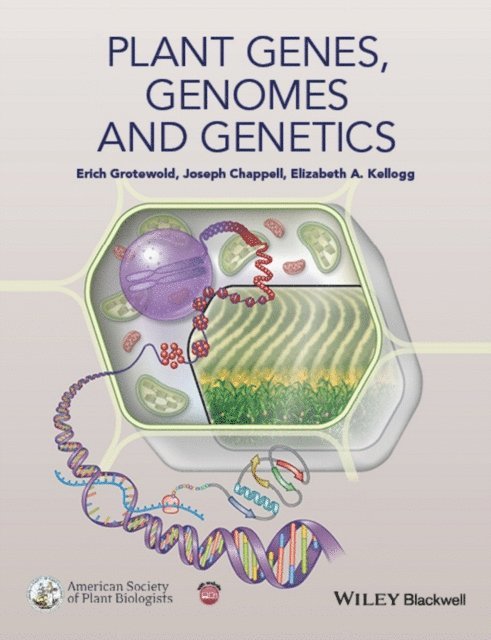
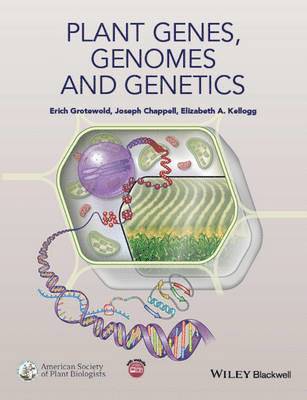
    Plant Genes, Genomes and Genetics

    AvErich Grotewold,Joseph Chappell

    Häftad, Engelska, 2015

    704 kr

    Beställningsvara. Skickas inom 5-8 vardagar. Fri frakt över 249 kr.

    Fler format och utgåvor

    Inbunden

    1 401 kr

    Beskrivning

    Plant Genes, Genomes and Genetics provides a comprehensive treatment of all aspects of plant gene expression. Unique in explaining the subject from a plant perspective, it highlights the importance of key processes, many first discovered in plants, that impact how plants develop and interact with the environment. This text covers topics ranging from plant genome structure and the key control points in how genes are expressed, to the mechanisms by which proteins are generated and how their activities are controlled and altered by posttranslational modifications.Written by a highly respected team of specialists in plant biology with extensive experience in teaching at undergraduate and graduate level, this textbook will be invaluable for students and instructors alike. Plant Genes, Genomes and Genetics also includes: specific examples that highlight when and how plants operate differently from other organismsspecial sections that provide in-depth discussions of particular issuesend-of-chapter problems to help students recapitulate the main conceptsrich, full-colour illustrations and diagrams clearly showing important processes in plant gene expressiona companion website with PowerPoint slides, downloadable figures, and answers to the questions posed in the bookAimed at upper level undergraduates and graduate students in plant biology, this text is equally suited for advanced agronomy and crop science students inclined to understand molecular aspects of organismal phenomena. It is also an invaluable starting point for professionals entering the field of plant biology.

    Produktinformation

    • Utgivningsdatum:2015-05-22
    • Mått:191 x 246 x 13 mm
    • Vikt:581 g
    • Format:Häftad
    • Språk:Engelska
    • Antal sidor:272
    • Förlag:John Wiley and Sons Ltd
    • ISBN:9781119998877

    Utforska kategorier

    • Växtböcker inom Djur och Natur
    • Botanik inom Naturvetenskap och teknik
    • Biovetenskap inom Naturvetenskap och teknik

    Mer om författaren

    Dr Erich Grotewold is currently a professor in the Department of Molecular Genetics (College of Arts & Sciences) as well as in the Department of Horticulture & Crop Sciences (College of Food, Agriculture & Environmental Sciences) at The Ohio State University. His research focuses on plant systems biology. Dr Joseph Chappell joined the faculty at the University of Kentucky in 1985, where he has developed an internationally recognized research program pioneering the molecular genetics and biochemistry of natural products in plants. Dr Elizabeth A. Kellogg was formerly the E. Desmond Lee and Family Professor of Botanical Studies at the University of Missouri–St. Louis, and is currently a Member of the Donald Danforth Plant Science Center in St. Louis. Her work focuses on the evolution of plant genes, genomes and development, particularly in the cereal crops and their wild relatives.

    Innehållsförteckning

    • Acknowledgements xiIntroduction xiiiAbout the Companion Website xixPART I: PLANT GENOMES AND GENESChapter 1 Plant genetic material 31.1 DNA is the genetic material of all living organisms, including plants 31.2 The plant cell contains three independent genomes 81.3 A gene is a complete set of instructions for building an RNA molecule 101.4 Genes include coding sequences and regulatory sequences 111.5 Nuclear genome size in plants is variable but the numbers of protein-coding, non-transposable element genes are roughly the same 121.6 Genomic DNA is packaged in chromosomes 151.7 Summary 151.8 Problems 15References 16Chapter 2 The shifting genomic landscape 172.1 The genomes of individual plants can differ in many ways 172.2 Differences in sequences between plants provide clues about gene function 202.3 SNPs and lengthmutations in simple sequence repeats are useful tools for genome mapping and marker assisted selection 222.4 Genome size and chromosome number are variable 282.5 Segments of DNA are often duplicated and can recombine 302.6 Some genes are copied nearby in the genome 312.7 Whole genome duplications are common in plants 342.8 Whole genome duplication has many effects on the genome and on gene function 372.9 Summary 412.10 Problems 42Further reading 42References 42Chapter 3 Transposable elements 453.1 Transposable elements are common in genomes of all organisms 453.2 Retrotransposons are mainly responsible for increases in genome size 463.3 DNA transposons create small mutations when they insert and excise 523.4 Transposable elements move genes and change their regulation 573.5 How are transposable elements controlled? 603.6 Summary 603.7 Problems 61References 61Chapter 4 Chromatin, centromeres and telomeres 634.1 Chromosomes are made up of chromatin, a complex of DNA and protein 634.2 Telomeres make up the ends of chromosomes 664.3 The chromosome middles–centromeres 714.4 Summary 774.5 Problems 77Further reading 77References 77Chapter 5 Genomes of organelles 795.1 Plastids and mitochondria are descendants of free-living bacteria 795.2 Organellar genes have been transferred to the nuclear genome 805.3 Organellar genes sometimes include introns 825.4 Organellar mRNA is often edited 825.5 Mitochondrial genomes contain fewer genes than chloroplasts 845.6 Plant mitochondrial genomes are large and undergo frequent recombination 875.7 All plastid genomes in a cell are identical 915.8 Plastid genomes are similar among land plants but contain some structural rearrangements 935.9 Summary 955.10 Problems 95Further reading 95References 95PART II: TRANSCRIBING PLANT GENESChapter 6 RNA 996.1 RNA links components of the Central Dogma 996.2 Structure provides RNA with unique properties 1026.3 RNA has multiple regulatory activities 1056.4 Summary 1086.5 Problems 108References 109Chapter 7 The plant RNA polymerases 1117.1 Transcription makes RNA from DNA 1117.2 Varying numbers of RNA polymerases in the different kingdoms 1127.3 RNA polymerase I transcribes rRNAs 1147.4 RNA polymerase III recruitment to upstream and internal promoters 1167.5 Plant-specific RNP-IV and RNP-V participate in transcriptional gene silencing 1177.6 Organelles have their own set of RNA polymerases 1177.7 Summary 1187.8 Problems 118References 118Chapter 8 Making mRNAs – Control of transcription by RNA polymerase II 1218.1 RNA polymerase II transcribes protein-coding genes 1218.2 The structure of RNA polymerase II reveals how it functions 1218.3 The core promoter 1238.4 Initiation of transcription 1258.5 The mediator complex 1278.6 Transcription elongation: the role of RNP-II phosphorylation 1288.7 RNP-II pausing and termination 1298.8 Transcription re-initiation 1308.9 Summary 1308.10 Problems 130References 130Chapter 9 Transcription factors interpret cis-regulatory information 1339.1 Information on when, where and how much a gene is expressed is codified by the gene’s regulatory regions 1339.2 Identifying regulatory regions requires the use of reporter genes 1349.3 Gene regulatory regions have a modular structure 1359.4 Enhancers: Cis-regulatory elements or modules that function at a distance 1379.5 Transcription factors interpret the gene regulatory code 1389.6 Transcription factors can be classified in families 1389.7 How transcription factors bind DNA 1399.8 Modular structure of transcription factors 1439.9 Organization of transcription factors into gene regulatory grids and networks 1469.10 Summary 1469.11 Problems 146More challenging problems 147References 147Chapter 10 Control of transcription factor activity 14910.1 Transcription factor phosphorylation 14910.2 Protein–protein interactions 15110.3 Preventing transcription factors from access to the nucleus 15510.4 Movement of transcription factors between cells 15610.5 Summary 15810.6 Problems 158References 158Chapter 11 Small RNAs 16111.1 The phenomenon of cosuppression or gene silencing 16111.2 Discovery of small RNAs 16211.3 Pathways for miRNA formation and function 16311.4 Plant siRNAs originate from different types of double-stranded RNAs 16611.5 Intercellular and systemic movement of small RNAs 16811.6 Role of miRNAs in plant physiology and development 17011.7 Summary 17111.8 Problems 171References 172Chapter 12 Chromatin and gene expression 17312.1 Packing long DNA molecules in a small space: the function of chromatin 17312.2 Heterochromatin and euchromatin 17312.3 Histone modifications 17412.4 Histone modifications affect gene expression 17512.5 Introducing and removing histone marks: writers and erasers 17512.6 ‘Readers’ recognize histone modifications 17712.7 Nucleosome positioning 17712.8 DNA methylation 17812.9 RNA-directed DNA methylation 17912.10 Control of flowering by histone modifications 18012.11 Summary 18112.12 Problems 181References 181PART III: FROM RNA TO PROTEINSChapter 13 RNA processing and transport 18513.1 RNA processing can be thought of as steps 18513.2 RNA capping provides a distinctive 5’ end to mRNAs 18513.3 Transcription termination consists of mRNA 3’-end formation and polyadenylation 18913.4 RNA splicing is another major source of genetic variation 19213.5 Export of mRNA from the nucleus is a gateway for regulating which mRNAs actually get translated 19413.6 Summary 19613.7 Problems 196References 196Chapter 14 Fate of RNA 19914.1 Regulation of RNA continues upon export from nucleus 19914.2 Mechanisms for RNA turnover 19914.3 RNA surveillance mechanisms 20114.4 RNA sorting 20214.5 RNA movement 20314.6 Summary 20414.7 Problems 204Further reading 205References 205Chapter 15 Translation of RNA 20715.1 Translation: a key aspect of gene expression 20715.2 Initiation 20915.3 Elongation 20915.4 Termination 21015.5 Tools for studying the regulation of translation 21115.6 Specific translational control mechanisms 21115.7 Summary 21315.8 Problems 214Further reading 214References 214Chapter 16 Protein folding and transport 21516.1 The pathway to a protein’s function is a complicated matter 21516.2 Protein folding and assembly 21516.3 Protein targeting 21816.4 Co-translational targeting 21816.5 Post-translational targeting 21916.6 Post-translational modifications regulating function 22016.7 Summary 22216.8 Problems 223Further reading 223References 224Chapter 17 Protein degradation 22517.1 Two sides of gene expression–synthesis and degradation 22517.2 Autophagy, senescence and programmed cell death 22517.3 Protein-tagging mechanisms 22617.4 The ubiquitin proteasome system rivals gene transcription 22817.5 Summary 23117.6 Problems 231Further reading 231Reference 231Index 233