
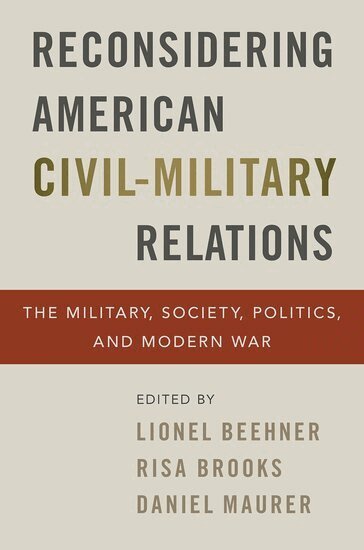
Reconsidering American Civil-Military Relations
Lionel Beehner, Risa Brooks, Daniel Maurer
Inbunden, 2020
1 450 kr
475 kr
Läs direkt i Bokus Reader – eller ladda ned till din enhet
Arab leaderships have been remarkably stable since the 1970s, particularly given the frequency of military coups in preceding years. Nonetheless, the military remains a key force in most Arab states and political leaders must maintain its loyalty if they are to retain office. Regimes have used a range of methods to ensure the military’s backing:
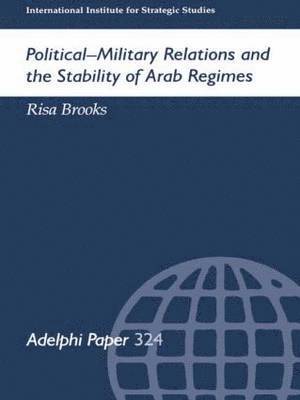
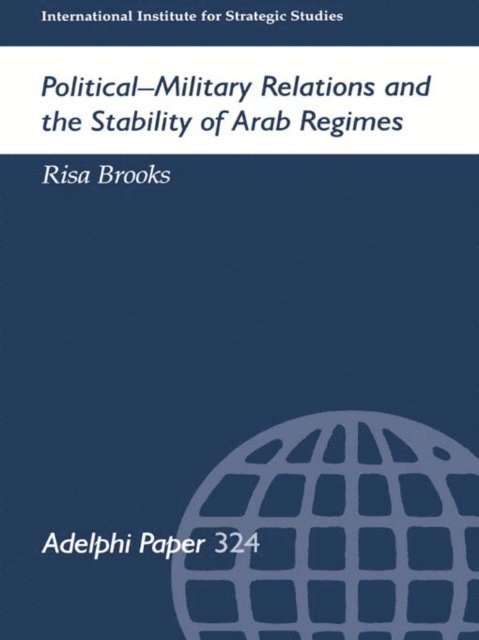
In this paper, Risa Brooks argues that the need for Arab regimes to maintain political control can undermine the combat potential of their armed forces. Centralising command, creating overlapping commands, politicising selection criteria and authorising involvement in economic activities all potentially compromise military effectiveness.
The fact that regimes have successfully managed political–military relations in the past does not mean that they will automatically do so in the future. Changing social or economic conditions could upset the equilibrium in political–military relations. Regime stability cannot therefore be taken for granted. Transition to new leadership is a looming issue for the key regimes in Egypt, Syria and Jordan; political–military relations will play a crucial role in how it is resolved. New leaders must gain and maintain social support if they are to consolidate power. The fact that so many Middle Eastern regimes face uncertain transitions raises the sobering prospect of profound instability and change in this strategically vital region. Maintaining political control is a continuous and evolving process. A breakdown in social support for the leadership, failure to detect a conspiracy within the military and economic or political change that threatens military prerogatives could all disrupt political–military relations. Current stability should not give rise to complacency.
Lionel Beehner, Risa Brooks, Daniel Maurer
Inbunden, 2020
1 450 kr
Lionel Beehner, Risa Brooks, Daniel Maurer
Häftad, 2021
484 kr
Daniel Maurer, Risa Brooks, Lionel Beehner
396 kr
Daniel Maurer, Risa Brooks, Lionel Beehner
396 kr

Daniel Maurer, Risa Brooks, Lionel Beehner
396 kr
Daniel Maurer, Risa Brooks, Lionel Beehner
396 kr
Lionel Beehner, Risa Brooks, Daniel Maurer
Inbunden, 2020
1 450 kr
Lionel Beehner, Risa Brooks, Daniel Maurer
Häftad, 2021
484 kr

475 kr
Läs direkt i Bokus Reader – eller ladda ned till din enhet
Arab leaderships have been remarkably stable since the 1970s, particularly given the frequency of military coups in preceding years. Nonetheless, the military remains a key force in most Arab states and political leaders must maintain its loyalty if they are to retain office. Regimes have used a range of methods to ensure the military’s backing:
In this paper, Risa Brooks argues that the need for Arab regimes to maintain political control can undermine the combat potential of their armed forces. Centralising command, creating overlapping commands, politicising selection criteria and authorising involvement in economic activities all potentially compromise military effectiveness.
The fact that regimes have successfully managed political–military relations in the past does not mean that they will automatically do so in the future. Changing social or economic conditions could upset the equilibrium in political–military relations. Regime stability cannot therefore be taken for granted. Transition to new leadership is a looming issue for the key regimes in Egypt, Syria and Jordan; political–military relations will play a crucial role in how it is resolved. New leaders must gain and maintain social support if they are to consolidate power. The fact that so many Middle Eastern regimes face uncertain transitions raises the sobering prospect of profound instability and change in this strategically vital region. Maintaining political control is a continuous and evolving process. A breakdown in social support for the leadership, failure to detect a conspiracy within the military and economic or political change that threatens military prerogatives could all disrupt political–military relations. Current stability should not give rise to complacency.
Lionel Beehner, Risa Brooks, Daniel Maurer
Inbunden, 2020
1 450 kr
Lionel Beehner, Risa Brooks, Daniel Maurer
Häftad, 2021
484 kr
Daniel Maurer, Risa Brooks, Lionel Beehner
396 kr
Daniel Maurer, Risa Brooks, Lionel Beehner
396 kr
Daniel Maurer, Risa Brooks, Lionel Beehner
396 kr
Daniel Maurer, Risa Brooks, Lionel Beehner
396 kr
Lionel Beehner, Risa Brooks, Daniel Maurer
Inbunden, 2020
1 450 kr
Lionel Beehner, Risa Brooks, Daniel Maurer
Häftad, 2021
484 kr