• Fri frakt över 249 kr
  • •
  • Snabba leveranser
  • •
  • Billiga böcker
Kundservice

Du är på sajten för privatpersoner.

Företag, bibliotek eller offentlig verksamhet?

Du handlar på classic.bokus.com, där alla dina funktioner finns intakta.
Till classic.bokus.com
Bokus logotyp. Gå till startsidan.
  • Erbjudanden
  • Nyheter
  • Student
  • Topplistor
  • Barn & ungdom
  • Bokus Play
  • E-böcker
  • Pocketböcker
  • Spel & pussel

10% rabatt på allt med kod NYSTART10 →

Sidfot

Mina sidor

    Hjälp

    • Kundservice
    • Vanliga frågor och svar
    • Frakt och leverans
    • Retur vid ångerrätt
    • Reklamera vara
    • Betalning
    • Köpvillkor
    • Allmänna villkor
    • Information om webbplatsens tillgänglighet

    Om Bokus

    • Om oss
    • Pressrum
    • För studenter
    • För företag
    • För bibliotek och offentlig verksamhet
    • För leverantörer
    • Hållbarhet

    Populärt

    • Aktuella erbjudanden
    • Presentkort
    • Studentlitteratur
    • Nya böcker
    • Topplistor
    • Signerade böcker
    • Engelska böcker

    Inspiration

    • Boktips
    • BookTok
    • Populära bokserier
    • Barnbokskaraktärer
    • Populära författare
    Logotyp för Bokus
    Följ oss på Facebook (extern länk)Följ oss på Instagram (extern länk)Följ oss på YouTube (extern länk)Följ oss på TikTok (extern länk)
    bokus @ CookiesAnpassa cookiesIntegritetspolicyKöpvillkor
    Till Citymail hemsida (extern länk)Till Budbee hemsida (extern länk)Till Postnord hemsida (extern länk)Till Schenker hemsida (extern länk)Till Early Bird hemsida (extern länk)Till Walleys hemsida (extern länk)
    1. Ekonomi och Ledarskap
    2. Nationalekonomi
    3. Internationell ekonomi

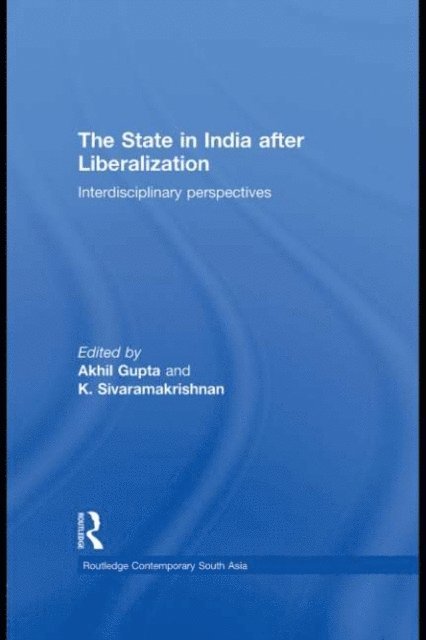
    State in India after Liberalization

    Interdisciplinary Perspectives

    AvAkhil Gupta,Kalyanakrishnan Sivaramakrishnan

    E-bok
    Engelska, 2010

    Del i serien Routledge Contemporary South Asia Series

    855 kr

    Läs direkt i Bokus Reader – eller ladda ned till din enhet

    Beskrivning

    This book assesses the impact of liberalization on practices of government and relations between state and society. It is clear that liberalization as state policy has complex forms of regulation and deregulation inbuilt, and these policies have resulted in dramatic increases in productivity and economic wealth but also generated spectacular new forms of inequality between social groups, regions, and sectors. Through a detailed examination of the Indian state, the contributors - all experts in their respective fields - explore questions such as: Have the new inequalities resulted in greater social unrest and violence? How has the meaning of citizenship changed? What will the long-term effects of regional economic imbalances be on migration, employment, and social welfare? Will increasing federalism result in new problems? Will smaller governments be more effective in providing basic necessities such as clothing, housing, food, water, and sanitation to citizens? What does liberalization mean to Indians in cities and villages, in small towns, and metropolises, in poor, middle class, or wealthy homes? Are concepts like social capital, decentralization, private enterprise, and grass-roots globalization effective in analyzing the post-liberalization state, or are new concepts needed? By focusing on what specifically has changed about the state after liberalization in India, this volume will shed light on comparative questions about the process of neoliberal restructuring across the world. As such, it will be of interest to scholars of a variety of disciplines, including sociology, anthropology, political science, geography, international studies, public policy, environmental studies and economics.

    Produktinformation

    • Utgivningsdatum:2010-10-04
    • Språk:Engelska
    • Filformat:EPUB
    • Kopieringsskydd:LCP
    • ISBN:9781136937194
    • Förlag:Taylor & Francis Ltd
    • Serie:Routledge Contemporary South Asia Series

    Utforska kategorier

    • Internationell ekonomi inom Ekonomi och Ledarskap
    • Sociologi inom Samhälle och politik
    • Centralt styre och förvaltning inom Samhälle och politik

    Mer om författaren

    Akhil Gupta is Professor of Anthropology at the University of California in Los Angeles. His research interests lie in political anthropology, cultural theory and cultural geography, postcolonial studies, development, and food and the environment. K. Sivaramakrishnan is Professor of Anthropology at Yale University. An environmental historian and political anthropologist, his research interests include colonial and contemporary forest and nature conservation in South Asia, rural and regional development, comparative social theory, and the cultural geography of migration in India.

    Recensioner i media

    "The contributions to this volume provide a colourful panorama of life in 'liberalized' India. The state is not always directly visible in these contributions, but the changed conditions of political life in the 'new' India are well illustrated by all those who have summed up their interesting field work in this publication." - Dietmar Rothermund, H-Soz-u-Kult, 2011

    Innehållsförteckning

    • Introduction: The State in India After Liberalization Part 1: The Indian State as Moral and Political Economy 1. On the Enchantment of the State 2. An Institutional Perspective on the Post-liberalization State in India Part 2: Citizens, Sociality, and Association 3. States of Empowerment 4. ‘New Politics’ and the Governmentality of the Post-liberalization State in India: An Ethnographic Perspective Part 3: Liberalization, the State, and the Experience of Poverty 5. Poverty Knowledge and Poverty Action in India 6. ‘Money Itself Discriminates’: Obstetric Crises in the Time of Liberalization Part 4: Law, Identity, and Rights 7. Normative Vision, Cultural Accommodation and Muslim Law Reform in India 8. The Rule of Law and the Rule of Property: Law-Struggles and the Neo-Liberal State in India Part 5: Enterprising Citizens 9. The Terms of Trade: Competition and Cooperation in Neoliberal North India 10. Becoming Entrepreneurial Subjects: Neoliberalism and Media