• Fri frakt över 249 kr
  • •
  • Snabba leveranser
  • •
  • Billiga böcker
Kundservice

Du är på sajten för privatpersoner.

Företag, bibliotek eller offentlig verksamhet?

Du handlar på classic.bokus.com, där alla dina funktioner finns intakta.
Till classic.bokus.com
Bokus logotyp. Gå till startsidan.
  • Erbjudanden
  • Nyheter
  • Student
  • Topplistor
  • Barn & ungdom
  • Bokus Play
  • E-böcker
  • Pocketböcker
  • Spel & pussel

10% rabatt på allt med kod: NYSTART10 →

Sidfot

Mina sidor

    Hjälp

    • Kundservice
    • Vanliga frågor och svar
    • Frakt och leverans
    • Retur vid ångerrätt
    • Reklamera vara
    • Betalning
    • Köpvillkor
    • Allmänna villkor
    • Information om webbplatsens tillgänglighet

    Om Bokus

    • Om oss
    • Pressrum
    • För studenter
    • För företag
    • För bibliotek och offentlig verksamhet
    • För leverantörer
    • Hållbarhet

    Populärt

    • Aktuella erbjudanden
    • Presentkort
    • Studentlitteratur
    • Nya böcker
    • Topplistor
    • Signerade böcker
    • Engelska böcker

    Inspiration

    • Boktips
    • BookTok
    • Populära bokserier
    • Barnbokskaraktärer
    • Populära författare
    Logotyp för Bokus
    Följ oss på Facebook (extern länk)Följ oss på Instagram (extern länk)Följ oss på YouTube (extern länk)Följ oss på TikTok (extern länk)
    bokus @ CookiesAnpassa cookiesIntegritetspolicyKöpvillkor
    Till Citymail hemsida (extern länk)Till Budbee hemsida (extern länk)Till Postnord hemsida (extern länk)Till Schenker hemsida (extern länk)Till Early Bird hemsida (extern länk)Till Walleys hemsida (extern länk)
    1. Samhälle och politik
    2. Samhälle och kultur
    3. Kultur och medier
    4. Referensverk och tvärvetenskap

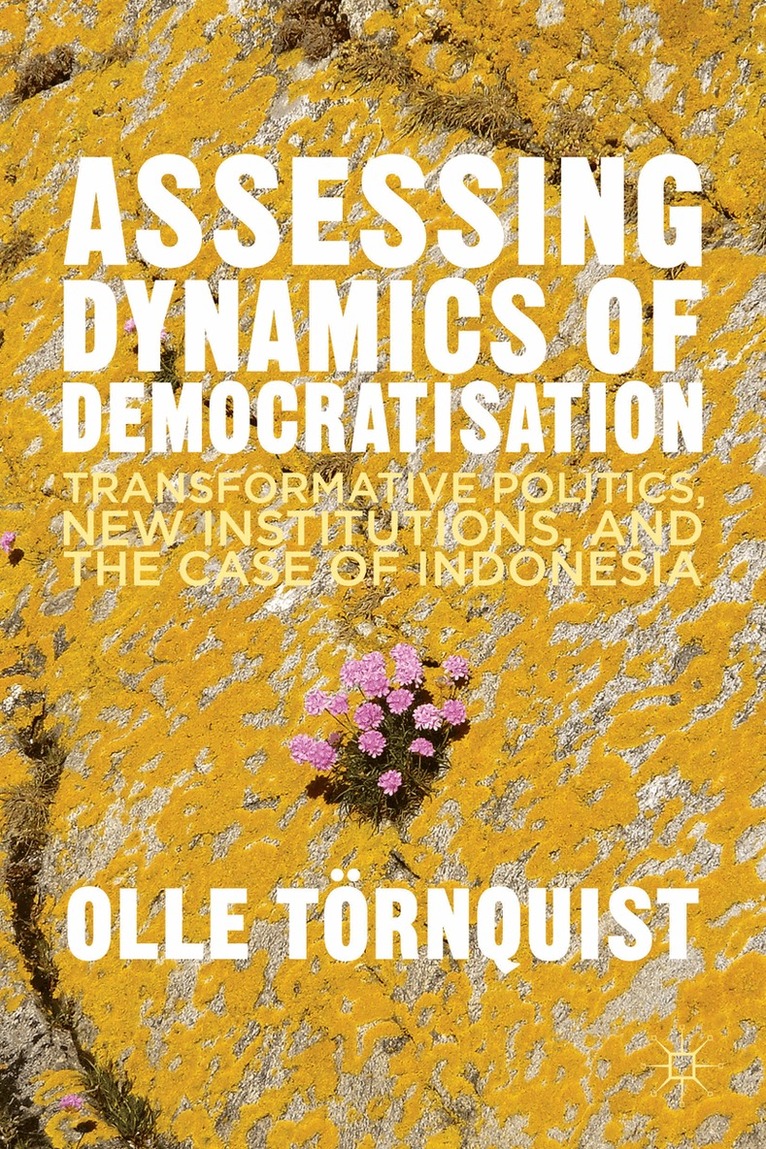
    Assessing Dynamics of Democratisation

    Transformative Politics, New Institutions, and the Case of Indonesia

    AvO. Törnquist

    Inbunden, Engelska, 2013

    547 kr

    Beställningsvara. Skickas inom 10-15 vardagar. Fri frakt över 249 kr.

    Fler format och utgåvor

    Häftad

    547 kr

    Beskrivning

    The book summarises the critique of these approaches, suggests a comprehensive alternative framework, and shows how the alternative works in reality through a case study of the largest of the new democracies, Indonesia.

    Produktinformation

    • Utgivningsdatum:2013-10-29
    • Mått:152 x 229 x 23 mm
    • Vikt:624 g
    • Format:Inbunden
    • Språk:Engelska
    • Antal sidor:302
    • Upplaga:2013
    • Förlag:Palgrave Macmillan
    • ISBN:9781137369345

    Utforska kategorier

    • Referensverk och tvärvetenskap inom Samhälle och politik
    • Sociologi inom Samhälle och politik
    • Politik och statsskick inom Samhälle och politik

    Mer om författaren

    Olle Törnquist is Professor of Political Science and Development Research, University of Oslo, Norway. He has published extensively on politics and development, radical politics, and problems of democratisation in comparative perspective. His recent books include Politics and Development: A Critical Introduction, Popular Development and Democracy: Case Studies in the Philippines, Indonesia and Kerala, and Indonesia's Post-Soeharto Democracy Movement (with S.Adi Prasetyo & E.A.Priyono).

    Recensioner i media

    "Olle Tornquist is a distinguished scholar-activist who has been dedicated to the advance of social democracy throughout his professional life. This outstanding book records his efforts of many years, with Indonesian and other colleagues, to develop the means of understanding and so of carrying forward the process of democratisation in their countries. It deserves a wide readership amongst all those who are concerned, as scholars or as practitioners, with the deepening of democracy." - John Harriss, Professor of International Studies, Simon Fraser University, Canada "Assessing the Dynamics of Democratization is one of the most unusual and most urgently needed books I have seen. Like some works, it crosses the boundaries between policy practice and academic work, speaking to both activist and scholarly audiences. It does so soberly, clearly, and with rigor. What sets it apart, however, is that it problematizes and reflects on that boundary-crossing, making explicit and questioning our assumptions along the way. Its call for strategically and knowingly engaging shallow democratic openings, rather than disparaging them from afar, is a much-needed rejoinder to current academic trends. Though rooted in a rich case study of Indonesia, this book speaks to all of us who try to connect critical, comparative, academic work with efforts at social change. This book is a bold and powerful antidote for the 'paralysis of analysis.'" - Gianpaolo Baiocchi, Associate Professor of Sociology and Ethnography, New York University "This innovative, informative study broadens our thinking about assessing democratization, bringing in the neglected dimension of political inclusion and its relationship to genuine democratic transformation. The author skillfully combines a strong values foundation with a rigorous analytic approach." - Thomas Carothers, Vice President for Studies, Carnegie Endowment for International Peace "Assessments of how far the global south has advanced on the democratic trail, has become a major industry. And western scholars do the utmost to influence policy makers and funding agencies by offering their own notions of democracy, and telling them what the state of democracy in 'this' or in 'that' country is, and what it should be. In many ways Dynamics of Democratization significantly departs from these, by now, exhausted formulae. Recognizing that people (in this case Indonesians) live and work in contexts that are shaped by political institutions, the argument simultaneously recognizes that acts of political agents sculpt and reconstitute, in noteworthy ways, the context. The recognition that political agency is both constrained as well as enabled by political contexts, and that political institutions influence as well are mediated by political agents, will impact studies of democratization, and methodologies for assessing democracy in a country, in times to come." - Neera Chandhoke, Professor emeritus of Political Science Delhi University; senior fellow Nehru Memorial Library and Museum "Tornquist does three things in this book. First, he provides a clear and succinct critique of narrowly institutionalist assessments of democracy. Second, synthesizing a wide range of literature, he builds an alternative framework for assessing actual, living, transforming democracies. Third, drawing from his own deep immersion in the Indonesian case and a long resume of comparative scholarship, he puts his frame to work and offers a concise analysis of Indonesia's young democracy. The book has the rare quality of providing a sobering picture of the challenges of democratization even as it sharpens our analytical tools and points to alternative possibilities." - Patrick Heller, Professor of Sociology and International Studies, Brown University "This volume provides refreshing insights into how the quality of democracy assessments could improve by becoming more action oriented and by empowering democratic actors of change, while retaining academic rigor. A must read for policymakers and practitioners alike." - Helena Bjuremalm, International IDEA, formerly Senior Democracy Advisor with Sida, the Swedish International Development Cooperation Agency)

    Innehållsförteckning

    • Table of Contents Preface 1. Introduction PART I: WHY ALTERNATIVE ASSESSMENTS? 2. Democracy, Democratisation and Assessments 3. The Origins of Assessments 4. Insufficient Structural Analyses 5. The Puzzling Third Wave of Democracy 6. Unintended Outcome 7. Current Positions on Democratisation 8. The Case for an Alternative 9. The Task Ahead 10. Second Thoughts 11. Structure of the Book 12. The Case of Indonesia 13. The Rise and Crisis of Early Democracy 14. Broad Agreement: Democracy Premature 15. The Old Left and Democracy 16. The Rise of a New Democracy Movement and the Overthrow of Dictatorship 17. Parachuting the Crafting of Democracy 18. The Quest for an Alternative 19. Uncertainties 20. Tracing the Dynamics of the Anti-Suharto Pro-democracy Actors 21. Mapping and Analysing the Post-Suharto Democracy Movement 22. Surveying Democracy from Below PART II: THE INSTITUTIONS OF DEMOCRACY 23. The Institutions of Democracy 24. Inclusive Assessments of Institutions  25. Points of Departure 26. Beetham's List of Institutions 27. Problems and Additions 28. The Constitution of Public Affairs and the Demos 29. Quality but also Extension, Spread and Form 30. Democratic Capacity of Governments 31. Beyond Liberal-democratic Institutions 32. Realistic Number of Intrinsic Institutions 33. The Thirteen Sets of Intrinsic Institutions 24. Indonesia's Liberal Turnabout  25. Impressive though Deteriorating Freedoms 26. Efforts to Improve Governance 27. Country-wide Political Community 28. Monopolised Representation 29. Conclusion PART III: ACTORS AND INSTITUTIONS 30. The Crucial Actors' and their Relations to the Institutions of Democracy  31. The Main Actors 32. Actors' Position on Democracy 33. Actors' Effect on Institutions  34. Institutions' Influence on Actors 35. Adaptive Indonesian Elites - and Evasive Pro-democrats 36. Politically Strong Dominant Actors and Weak Pro-democrats 37. Adaption and Evasion 38. The Relative Stability of Democracy Rests with Elitist Inclusion of People PART IV: ACTORS AND POWER 39. Actors' Political Capacity  40. Political Inclusion (versus Exclusion)  41. Authority and Legitimacy  42. Politicisation and Agenda-setting  43. Mobilisation and Organisation  44. Participation and Representation 45. The Concept of Representation 46. The Chain of Popular Sovereignty Approach 47. The Direct Democracy Approach 48. Unifying Focus on the Priniples of Democratic Representation 49. Key Questions 50. The 'where-question' 51. The 'how question' 52. Power Matters: the Case of Indonesia  53. Powerful and Hegemonic 54. Democrats on the Sidelines PART V: ACTORS AND DEMOCRATISATION 55. Actor's Strategies and Democratisation  56. Strategies and Democratisation  57. The Crucial Problems of Democratisation 58. De-politicisation of Democracy 59. Poor Popular Representation  60. Flawed Linkages in the Political System  61. The Key Problems of Fragmentation, Representation and Transformation 62. Rethinking Indonesian Pro-democrats  63. The Historical Legacies 64. Rethinking Activists 65. Society Driven Projects 66. Party-cum-candidate Driven Projects 67. Lost Opportunities in Aceh 68. The Risks: a Return to the 'politics of order'  69. Conclusion PART VI: POLICY RECOMMENDATIONS 70. From Results to Democracy Promotion  71. Research Based Recommendations  72. Cooperation with Practitioners  73. The Need for Comparative Insights 74. Upside Down Comparisons 75. The General Case of Transformative Politics 76. The Scandinavian Trail 77. Social Pact for Inclusive Growth 78. Political Conditions 79. (1) The Dynamics of Popular Organisation, State and Universal Welfare Programmes 80. (2) Unification and Interest-based Representation 81. Current Challenges and t