• Fri frakt över 249 kr
  • •
  • Snabba leveranser
  • •
  • Billiga böcker
Kundservice

Du är på sajten för privatpersoner.

Företag, bibliotek eller offentlig verksamhet?

Du handlar på classic.bokus.com, där alla dina funktioner finns intakta.
Till classic.bokus.com
Bokus logotyp. Gå till startsidan.
  • Erbjudanden
  • Nyheter
  • Student
  • Topplistor
  • Barn & ungdom
  • Bokus Play
  • E-böcker
  • Pocketböcker
  • Spel & pussel

10% rabatt på allt med kod NYSTART10 →

Sidfot

Mina sidor

    Hjälp

    • Kundservice
    • Vanliga frågor och svar
    • Frakt och leverans
    • Retur vid ångerrätt
    • Reklamera vara
    • Betalning
    • Köpvillkor
    • Allmänna villkor
    • Information om webbplatsens tillgänglighet

    Om Bokus

    • Om oss
    • Pressrum
    • För studenter
    • För företag
    • För bibliotek och offentlig verksamhet
    • För leverantörer
    • Hållbarhet

    Populärt

    • Aktuella erbjudanden
    • Presentkort
    • Studentlitteratur
    • Nya böcker
    • Topplistor
    • Signerade böcker
    • Engelska böcker

    Inspiration

    • Boktips
    • BookTok
    • Populära bokserier
    • Barnbokskaraktärer
    • Populära författare
    Logotyp för Bokus
    Följ oss på Facebook (extern länk)Följ oss på Instagram (extern länk)Följ oss på YouTube (extern länk)Följ oss på TikTok (extern länk)
    bokus @ CookiesAnpassa cookiesIntegritetspolicyKöpvillkor
    Till Citymail hemsida (extern länk)Till Budbee hemsida (extern länk)Till Postnord hemsida (extern länk)Till Schenker hemsida (extern länk)Till Early Bird hemsida (extern länk)Till Walleys hemsida (extern länk)
    1. Samhälle och politik
    2. Samhälle och kultur
    3. Sociala och etiska frågor
    4. Migration

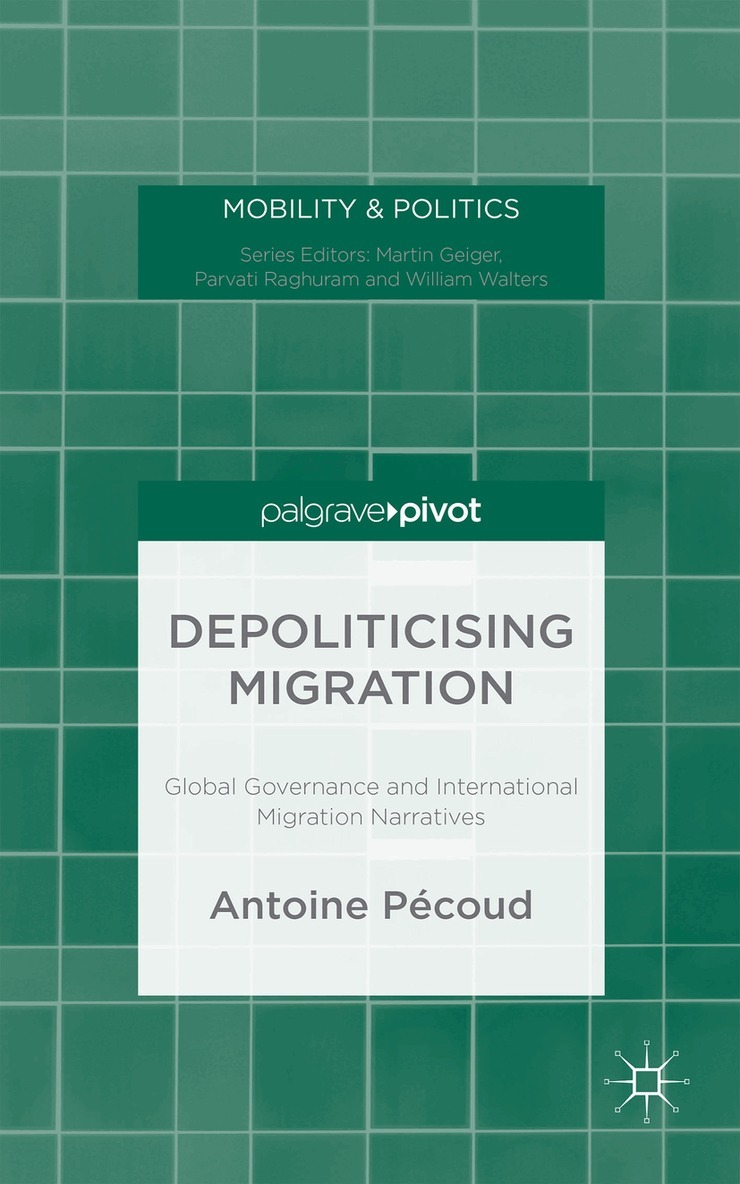
    Depoliticising Migration

    Global Governance and International Migration Narratives

    AvA. Pécoud

    Inbunden, Engelska, 2014

    Del i serien Mobility & Politics

    602 kr

    Beställningsvara. Skickas inom 10-15 vardagar. Fri frakt över 249 kr.

    Fler format och utgåvor

    E-bok

    922 kr

    Beskrivning

    Migration has become, since the nineties, the subject of growing international discussion and cooperation. By critically analyzing the reports produced by international organisations on migration, this book sheds light on the way these actors frame migration and develop their recommendations on how it should be governed.

    Produktinformation

    • Utgivningsdatum:2014-12-23
    • Mått:140 x 216 x 14 mm
    • Vikt:346 g
    • Format:Inbunden
    • Språk:Engelska
    • Serie:Mobility & Politics
    • Antal sidor:156
    • Upplaga:2015
    • Förlag:Palgrave Macmillan
    • ISBN:9781137445926

    Utforska kategorier

    • Migration inom Samhälle och politik
    • Folkrätt inom Juridik

    Mer om författaren

    Antoine Pécoud is Professor of Sociology at the University of Paris 13, France. He holds a PhD in social anthropology from the University of Oxford. Between 2003 and 2012, he worked as a migration specialist for UNESCO. His research addresses the global politics of migration. He has co-edited several books, including Migration Without Borders (with P. de Guchteneire, 2007), The Politics of International Migration Management (with M. Geiger, 2010), and Disciplining the Transnational Mobility of People (with M. Geiger, 2013).

    Recensioner i media

    "Pecoud provides a unique book that could be considered as a deepened compendium of his scholarly trajectory and of his intellectual devenir. ... Pecoud's book is ... not only an inspiring exercise in intellectual honesty; it is also a broader stimulus for social researchers to think about the current status, characteristics, constraints, and role of the social sciences." (Antonina Levatino, Population Space and Place, Vol. 23, 2017) "The writing is succinct and in only 144 pages, Pecoud outlines a convincing argument about how IMN are imbued with politics. ... the book succeeds in providing a critical and nuanced analysis of IMN, and of how they shape migration issues. ... the book may especially be of inspiration to academic researchers and civil society organisations." (Julie Schiltz, Journal of Human Development and Capabilities, Vo1. 17 (2), May, 2016) "Pecoud's own experience of the inner workings of an international organisation - of bureaucratic entrepreneurialism and political manoeuvring, of self-censorship and the politicisation of terminology - makes his book an important read not only for development and migration scholars but for general international relations students as well. It should also be of interest to practitioners who may share the author's feeling of unease at partaking in the international narratives of migration." (Sara Kalm, European Journal of Development Research, Vol. 28 (2), April, 2016) "Each chapter is preceded by a short abstract of what it contains, which makes it easy for the reader to know what the chapter is about and if s/he likes to delve deeper into it. ... Depoliticizing Migration is a useful vade mecum for interpreting and understanding these reports as it offers reflections on which stories these reports sell and how they construct migration. Even for those not into the migration field, the study might be a useful read." (Niklas Reese, Asian and Pacific Migration Journal, Vol. 25 (1), March, 2016) "This slim, readable volume is the result of the author's analysis of some 3,000 pages of major international organization policy documents dealing with international mi-gration. ... He has produced a fine piece of institutional sociology with stiff doses of international relations and policy studies thrown in. ... the analysis in this book would serve as an excellent foundation for a follow-on study on how international organizations' contributions to migration policymaking and, via donor-financed cooperation, migration policy implementation, have co-evolved." (L. MacK, Population and Development Review, Vol. 41 (3), 2015)

    Innehållsförteckning

    • 1. Introduction 2. At UNESCO 3. 'Global Migration Governance' And The Need For Shared Narratives 4. Introducing International Migration Narratives 5. Why Read IMN? 6. Constructing A Federating Discourse 7. Ordering Migration 8. Depoliticising Migration 9. Conclusion