• Fri frakt över 249 kr
  • •
  • Snabba leveranser
  • •
  • Billiga böcker
Kundservice

Du är på sajten för privatpersoner.

Företag, bibliotek eller offentlig verksamhet?

Du handlar på classic.bokus.com, där alla dina funktioner finns intakta.
Till classic.bokus.com
Bokus logotyp. Gå till startsidan.
  • Erbjudanden
  • Nyheter
  • Student
  • Topplistor
  • Barn & ungdom
  • Bokus Play
  • E-böcker
  • Pocketböcker
  • Spel & pussel

10% rabatt på allt med kod: NYSTART10 →

Sidfot

Mina sidor

    Hjälp

    • Kundservice
    • Vanliga frågor och svar
    • Frakt och leverans
    • Retur vid ångerrätt
    • Reklamera vara
    • Betalning
    • Köpvillkor
    • Allmänna villkor
    • Information om webbplatsens tillgänglighet

    Om Bokus

    • Om oss
    • Pressrum
    • För studenter
    • För företag
    • För bibliotek och offentlig verksamhet
    • För leverantörer
    • Hållbarhet

    Populärt

    • Aktuella erbjudanden
    • Presentkort
    • Studentlitteratur
    • Nya böcker
    • Topplistor
    • Signerade böcker
    • Engelska böcker

    Inspiration

    • Boktips
    • BookTok
    • Populära bokserier
    • Barnbokskaraktärer
    • Populära författare
    Logotyp för Bokus
    Följ oss på Facebook (extern länk)Följ oss på Instagram (extern länk)Följ oss på YouTube (extern länk)Följ oss på TikTok (extern länk)
    bokus @ CookiesAnpassa cookiesIntegritetspolicyKöpvillkor
    Till Citymail hemsida (extern länk)Till Budbee hemsida (extern länk)Till Postnord hemsida (extern länk)Till Schenker hemsida (extern länk)Till Early Bird hemsida (extern länk)Till Walleys hemsida (extern länk)
    1. Samhälle och politik
    2. Samhälle och kultur
    3. Sociala grupper och identitet
    4. HBTQ+

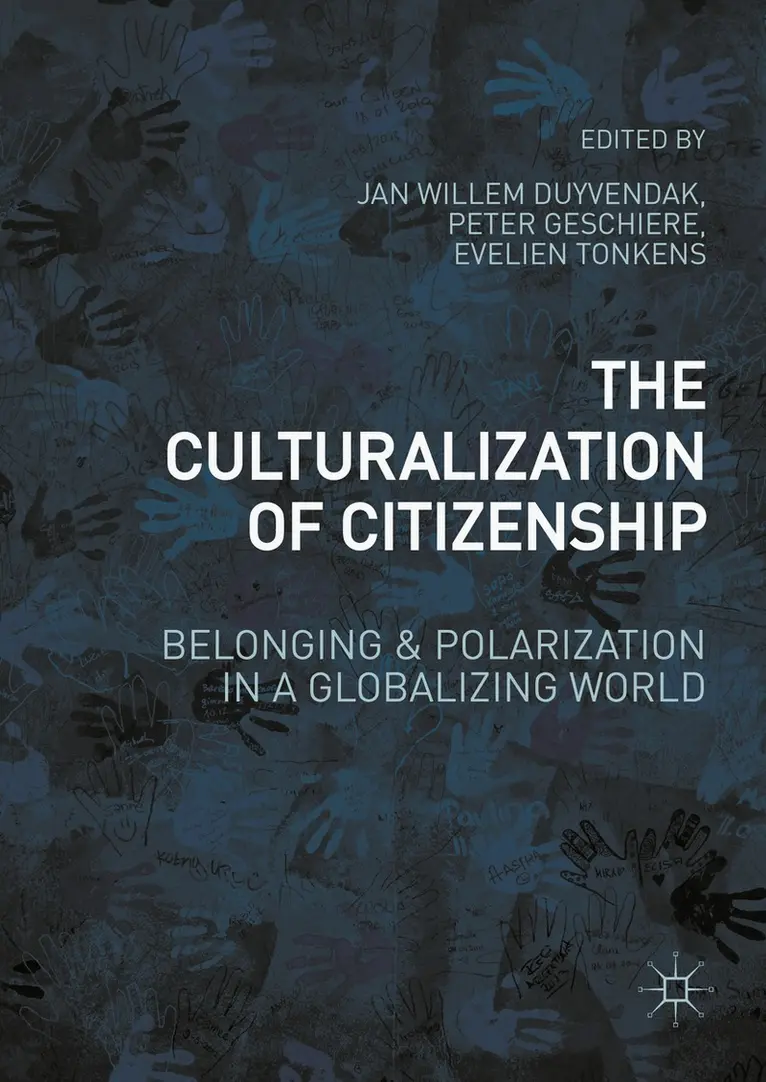
    Culturalization of Citizenship

    Belonging and Polarization in a Globalizing World

    AvJan Willem Duyvendak,Peter Geschiere

    Inbunden, Engelska, 2016

    1 194 kr

    Beställningsvara. Skickas inom 10-15 vardagar. Fri frakt över 249 kr.

    Beskrivning

    The notion of citizenship has gradually evolved from being simply a legal status or practice to a deep sentiment. Belonging, or feeling at home, hasbecome a requirement. This groundbreaking book analyzes how 'feeling rules' are developed and applied to migrants, who are increasingly expected to express feelings of attachment, belonging, connectedness and loyalty to their new country. More than this, however, it demonstrates how this culturalization of citizenship is a global trend with local variations, which develop in relation to each other. The authors pay particular attention to the intersection between sexuality, race and ethnicity, spurred on by their awareness of the dialectical construction of homosexuality, held up as representative of liberal Western values by both those in the West and by African leaders, who use such claims as proof that homosexuality is un-African.

    Produktinformation

    • Utgivningsdatum:2016-07-13
    • Mått:148 x 210 x 20 mm
    • Vikt:446 g
    • Format:Inbunden
    • Språk:Engelska
    • Antal sidor:231
    • Upplaga:16001
    • Förlag:Palgrave Macmillan
    • ISBN:9781137534095

    Utforska kategorier

    • HBTQ+ inom Samhälle och politik
    • Referensverk och tvärvetenskap inom Samhälle och politik
    • Etnicitet inom Samhälle och politik

    Mer om författaren

    Jan Willem Duyvendak is Distinguished Research Professor of Sociology atthe University of Amsterdam, the Netherlands. His current research interests span the welfarestate, social movements, nativism, belonging and ‘feeling at home’. His mostrecent books include The Politics of Home: Nostalgia and Belonging inWestern Europe and the United States (Palgrave, 2011); EuropeanStates and their Muslim Citizens: The Impact of Institutions on Perceptions andBoundaries (2014, co-edited with JohnBowen, Christophe Bertossi and Mona Lena Krook); and Players and Arenas: TheInteractive Dynamics of Protest (2015, co-editedwith James M. Jasper). He is co-editor of Ethnography.PeterGeschiere is Emeritus Professor of African Anthropology at Leiden University and theUniversity of Amsterdam, the Netherlands, and co-editor of Ethnography.He has been pursuing historical-anthropological fieldwork in Cameroon andelsewhere in West Africa since 1971. His publications include The Modernityof Witchcraft: Politics and the Occult in Post-Colonial Africa (1997), Perils of Belonging: Autochthony, Citizenship andExclusion in Africa and Europe (2009), and Witchcraft,Intimacy and Trust: Africa in Comparison (2013).Evelien Tonkens is a sociologist and Professor ofCitizenship and Humanisation of the Public Sector at the University forHumanistic Studies, the Netherlands.  She was previouslyProfessor of Active Citizenship at the University of Amsterdam, a member of theDutch parliament for the Green Left, and weekly columnist for the Dutch dailynewspaper Volkskrant. Her researchcentres on ideals of citizenship and social change. Her recent books include Summoning the Active Citizen:Responsibility, Participation and Choice (2011,with Janet Newman) and CraftingCitizenship: Negotiating Tensions inModern Society (Palgrave, 2012, with Menno Hurenkamp and Jan WillemDuyvendak).

    Innehållsförteckning

    • 1. Introduction:the culturalization of citizenship; Evelien Tonkens and Jan Willem DuyvendakI. Embattled Autochthony: The RadicalDutch Case2. Out of character: Dutchness as a public problem; Rogier vanReekum3. Nationalism without nationalism?Dutch self-images among the progressive left; Josip Kešić and Jan Willem Duyvendak4. The culturalization ofeveryday life: autochthony in Amsterdam New West; Paul Mepschen5. The nativist triangle: sexuality, race and religion in the Netherlands; Markus Balkenhol, Paul Mepschen and Jan Willem DuyvendakII. Who Belongs? Inclusion andExclusion in the Global South6. Thenation and its undesirable subjects: homosexuality, citizenship and the gay‘other’ in Cameroon; Basile Ndjio7. Yu di Kòrsou, a matterof negotiation: an anthropological exploration of the identity work ofAfro-Curaçaons; Rose May Allen & Francio Guadeloupe8. Ghanaian migrants and the culturalization of citizenship inEurope: what does autochthony and belonging have to do with it?; Maame AdwoaGyekyeh-Jandoh9. Expelled from fortress Europe:returned migrant associations in Bamako and the quest for cosmopolitancitizenship; Isaie Dougnon10. Conclusion: postscript on sex, race andculture; Peter Geschiere and Francio Guadeloupe