• Fri frakt över 249 kr
  • •
  • Snabba leveranser
  • •
  • Billiga böcker
Kundservice

Du är på sajten för privatpersoner.

Företag, bibliotek eller offentlig verksamhet?

Du handlar på classic.bokus.com, där alla dina funktioner finns intakta.
Till classic.bokus.com
Bokus logotyp. Gå till startsidan.
  • Erbjudanden
  • Nyheter
  • Student
  • Topplistor
  • Barn & ungdom
  • Bokus Play
  • E-böcker
  • Pocketböcker
  • Spel & pussel

Må bättre, för mindre! Upp till 50% rabatt på hälsoböcker

Sidfot

Mina sidor

    Hjälp

    • Kundservice
    • Vanliga frågor och svar
    • Frakt och leverans
    • Retur vid ångerrätt
    • Reklamera vara
    • Betalning
    • Köpvillkor
    • Allmänna villkor
    • Information om webbplatsens tillgänglighet

    Om Bokus

    • Om oss
    • Pressrum
    • För studenter
    • För företag
    • För bibliotek och offentlig verksamhet
    • För leverantörer
    • Hållbarhet

    Populärt

    • Aktuella erbjudanden
    • Presentkort
    • Studentlitteratur
    • Nya böcker
    • Topplistor
    • Signerade böcker
    • Engelska böcker

    Inspiration

    • Boktips
    • BookTok
    • Populära bokserier
    • Barnbokskaraktärer
    • Populära författare
    Logotyp för Bokus
    Följ oss på Facebook (extern länk)Följ oss på Instagram (extern länk)Följ oss på YouTube (extern länk)Följ oss på TikTok (extern länk)
    bokus @ CookiesAnpassa cookiesIntegritetspolicyKöpvillkor
    Till Citymail hemsida (extern länk)Till Budbee hemsida (extern länk)Till Postnord hemsida (extern länk)Till Schenker hemsida (extern länk)Till Early Bird hemsida (extern länk)Till Walleys hemsida (extern länk)
    1. Ekonomi och Ledarskap
    2. Nationalekonomi
    3. Ekonomisk politik

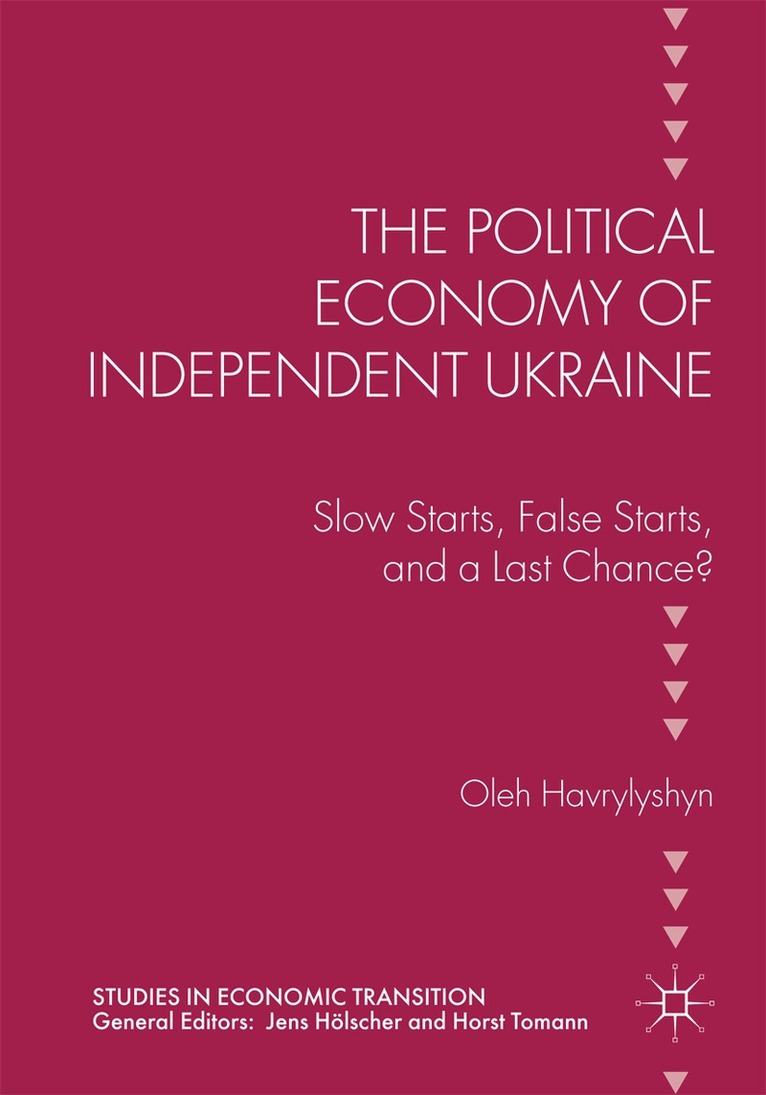
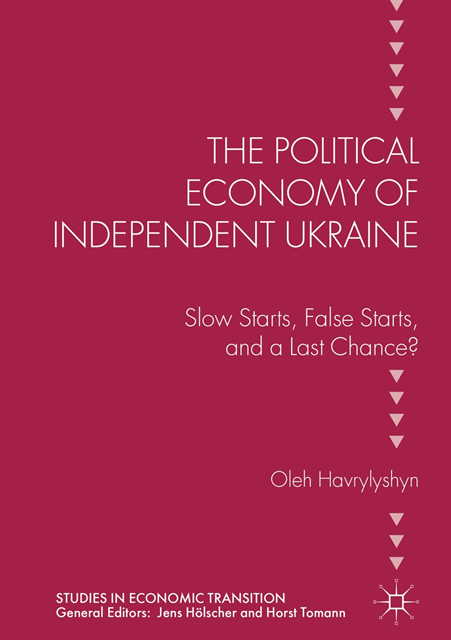
    Political Economy of Independent Ukraine

    Slow Starts, False Starts, and a Last Chance?

    AvOleh Havrylyshyn

    Inbunden, Engelska, 2017

    Del i serien Studies in Economic Transition

    1 302 kr

    Beställningsvara. Skickas inom 10-15 vardagar. Fri frakt över 249 kr.

    Fler format och utgåvor

    E-bok

    1 836 kr

    Häftad

    961 kr

    Beskrivning

    Marking the 25th anniversary of Ukraine as a sovereign nation, this book traces its economic transformation since 1991. Post-communist transition has been a highlight of recent history, and Ukraine stands out as one of its most interesting and puzzling cases. Havrylyshyn offers the first comprehensive treatise on the entire period, providing a thorough description of the slow evolution of economic reforms, exploring how and why performance in this regard fell far behind the leaders in transition. Testing several conventional hypotheses, the author argues that while Russian imperialism may form part of the explanation, the self-serving interests of domestic elites and new oligarchs may be even more important. Radically revising the traditional argument that reforms were delayed to allow nation building, this book contends that it was due more to the interests of the non-lustrated elite, who needed time to become the new capitalists.

    Produktinformation

    • Utgivningsdatum:2017-01-04
    • Mått:148 x 210 x 25 mm
    • Vikt:593 g
    • Format:Inbunden
    • Språk:Engelska
    • Serie:Studies in Economic Transition
    • Antal sidor:353
    • Upplaga:17001
    • Förlag:Palgrave Macmillan
    • ISBN:9781137576897

    Utforska kategorier

    • Ekonomisk politik inom Ekonomi och Ledarskap
    • Ekonomiska system inom Ekonomi och Ledarskap
    • Politik och statsskick inom Samhälle och politik

    Mer om författaren

    Oleh Havrylyshyn lectures at the Munk School of Global Affairs, University of Toronto, Canada, and the George Washington University, Washington DC, USA. Until 2015, he was advisor to senior officials in the Ukrainian Government. He has served as Ukraine’s Deputy Minister of Finance, and was a senior official at the Board of Directors and Management of the IMF.

    Innehållsförteckning

    • Part I. Introduction.- Part II. Post Independence Economic Reforms and Performance.- Part  III. The Key Political-Economy Challenges Since Independence.- Part IV  Summary and Conclusions.