• Fri frakt över 249 kr
  • •
  • Snabba leveranser
  • •
  • Billiga böcker
Kundservice

Du är på sajten för privatpersoner.

Företag, bibliotek eller offentlig verksamhet?

Du handlar på classic.bokus.com, där alla dina funktioner finns intakta.
Till classic.bokus.com
Bokus logotyp. Gå till startsidan.
  • Erbjudanden
  • Nyheter
  • Student
  • Topplistor
  • Barn & ungdom
  • Bokus Play
  • E-böcker
  • Pocketböcker
  • Spel & pussel

10% rabatt på allt med kod: NYSTART10 →

Sidfot

Mina sidor

    Hjälp

    • Kundservice
    • Vanliga frågor och svar
    • Frakt och leverans
    • Retur vid ångerrätt
    • Reklamera vara
    • Betalning
    • Köpvillkor
    • Allmänna villkor
    • Information om webbplatsens tillgänglighet

    Om Bokus

    • Om oss
    • Pressrum
    • För studenter
    • För företag
    • För bibliotek och offentlig verksamhet
    • För leverantörer
    • Hållbarhet

    Populärt

    • Aktuella erbjudanden
    • Presentkort
    • Studentlitteratur
    • Nya böcker
    • Topplistor
    • Signerade böcker
    • Engelska böcker

    Inspiration

    • Boktips
    • BookTok
    • Populära bokserier
    • Barnbokskaraktärer
    • Populära författare
    Logotyp för Bokus
    Följ oss på Facebook (extern länk)Följ oss på Instagram (extern länk)Följ oss på YouTube (extern länk)Följ oss på TikTok (extern länk)
    bokus @ CookiesAnpassa cookiesIntegritetspolicyKöpvillkor
    Till Citymail hemsida (extern länk)Till Budbee hemsida (extern länk)Till Postnord hemsida (extern länk)Till Schenker hemsida (extern länk)Till Early Bird hemsida (extern länk)Till Walleys hemsida (extern länk)
    1. Psykologi och pedagogik
    2. Pedagogik
    3. Skolväsen och utbildningssystem
    4. Läroplaner och kursplaner

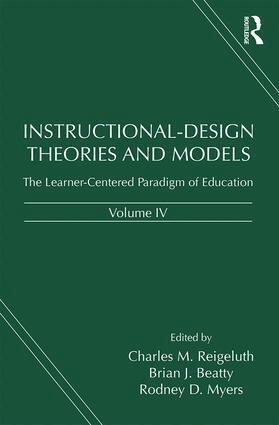
    Instructional-Design Theories and Models, Volume IV

    The Learner-Centered Paradigm of Education

    AvCharles M. Reigeluth,Brian J. Beatty

    Inbunden, Engelska, 2016

    2 123 kr

    Beställningsvara. Skickas inom 10-15 vardagar. Fri frakt över 249 kr.

    Beskrivning

    Instructional-Design Theories and Models, Volume IV provides a research-based description of the current state of instructional theory for the learner-centered paradigm of education, as well as a clear indication of how different theories and models interrelate. Significant changes have occurred in learning and instructional theory since the publication of Volume III, including advances in brain-based learning, learning sciences, information technologies, internet-based communication, a concern for customizing the student experience to maximize effectiveness, and scaling instructional environments to maximize efficiency.In order to complement the themes of Volume I (commonality and complementarity among theories of instruction), Volume II (diversity of theories) and Volume III (building a common knowledge base), the theme of Volume IV is shifting the paradigm of instruction from teacher-centered to learner-centered and integrating design theories of instruction, assessment, and curriculum. Chapters in Volume IV are collected into three primary sections: a comprehensive view of the learner-centered paradigm of education and training, elaborations on parts of that view for a variety of K-12 and higher education settings, and theories that address ways to move toward the learner-centered paradigm within the teacher-centered paradigm. Instructional-Design Theories and Models, Volume IV is an essential book for anyone interested in exploring more powerful ways of fostering human learning and development and thinking creatively about ways to best meet the needs of learners in all kinds of learning contexts.

    Produktinformation

    • Utgivningsdatum:2016-08-05
    • Mått:152 x 229 x 32 mm
    • Vikt:780 g
    • Format:Inbunden
    • Språk:Engelska
    • Antal sidor:464
    • Förlag:Taylor & Francis Ltd
    • ISBN:9781138012936

    Utforska kategorier

    • Läroplaner och kursplaner inom Psykologi och pedagogik
    • Pedagogisk metodik inom Psykologi och pedagogik

    Mer om författaren

    Charles M. Reigeluth is a speaker/consultant for paradigm change in education and Professor Emeritus in the Instructional Systems Technology Department at Indiana University, USA.Brian J. Beatty is Associate Vice President for Academic Affairs Operations and former Chair and Associate Professor in the Instructional Technologies Department at San Francisco State University, USA.Rodney D. Myers is an independent scholar and consultant who teaches courses in instructional design and technology and is Adjunct Lecturer in the Instructional Systems Technology Department at Indiana University, USA.

    Recensioner i media

    "What is really new and valuable in this volume emphasizing a learner-centered instructional design perspective is its reflection of a holistic view of the learner as an autonomous agent who is much more than a cognitive processor. Rather, these authors recognize that a learner has emotions, moods, a cultural and social context, habits, and personal and professional interests. Recalling lessons learned from prior research, providing time and informative, constructive feedback to learners, then, is likely to promote understanding and performance. These lessons are carried forward in many of the chapters of this volume, which I highly recommend to instructional designers, educational researchers, and educational practitioners."--J. Michael Spector, Professor and former Chair of the Department of Learning Technologies at the University of North Texas, USA"The fourth and latest volume of this enormously helpful series steps dramatically away from conventional patterns of education with a truly learner-centered paradigm emphasizing attainments, tasks, and personalization rather than time, content, and standardization."--David Perkins, Carl H. Pforzheimer, Jr., Research Professor of Teaching and Learning, Harvard Graduate School of Education, USA

    Innehållsförteckning

    • List of Figures and TablesPrefaceUnit 1: Fundamental Principles of the Learner-Centered Paradigm of EducationChapter 1: The Learner-Centered Paradigm of EducationCharles M. Reigeluth, Rodney D. Myers, Dabae LeeChapter 2: Principles for Competency-Based EducationRichard A. Voorhees, Alice Bedard-VoorheesChapter 3: Principles for Task-Centered Instruction Gregory M. FrancomChapter 4: Principles for Personalized InstructionWilliam R. Watson, Sunnie Lee WatsonChapter 5: A New Paradigm of CurriculumMarc PrenskyUnit 2: More Detailed Designs for the Learner-Centered ParadigmChapter 6: Designing Maker-Based InstructionChristian S. McKay, Krista D. GlazewskiChapter 7: Designing Collaborative Production of Digital MediaT.J. Kalaitzidis, Breanne Litts, Erica Rosenfeld HalversonChapter 8: Designing Games for LearningRodney D. Myers, Charles M. ReigeluthChapter 9: Designing Instruction for Self-regulated Learning Yeol Huh, Charles M. ReigeluthChapter 10: Designing Instructional CoachingDavid S. Knight, Mike Hock, Jim KnightChapter 11: Designing Technology for the Learner-Centered Paradigm of EducationCharles M. ReigeluthUnit 3: Steps Toward the Learner-Centered ParadigmChapter 12: Designing Instruction for Flipped ClassroomsJeremy F. StrayerChapter 13: Gamification Designs for InstructionKarl M. KappChapter 14: Design Considerations for Mobile LearningThomas Cochrane, Vickel NarayanChapter 15: Designing Just-in-Time InstructionGregor M. Novak, Brian J. BeattyAuthor IndexSubject Index