• Fri frakt över 249 kr
  • •
  • Snabba leveranser
  • •
  • Billiga böcker
Kundservice

Du är på sajten för privatpersoner.

Företag, bibliotek eller offentlig verksamhet?

Du handlar på classic.bokus.com, där alla dina funktioner finns intakta.
Till classic.bokus.com
Bokus logotyp. Gå till startsidan.
  • Erbjudanden
  • Student
  • Topplistor
  • Barn & ungdom
  • Bokus Play
  • E-böcker
  • Ljudböcker
  • Pocketböcker
  • Spel & pussel

Upp till 25% på utvalda nyheter →

Sidfot

Mina sidor

    Hjälp

    • Kundservice
    • Vanliga frågor och svar
    • Frakt och leverans
    • Retur vid ångerrätt
    • Reklamera vara
    • Betalning
    • Köpvillkor
    • Allmänna villkor
    • Information om webbplatsens tillgänglighet

    Om Bokus

    • Om oss
    • Pressrum
    • För studenter
    • För företag
    • För bibliotek och offentlig verksamhet
    • För leverantörer
    • Hållbarhet

    Populärt

    • Aktuella erbjudanden
    • Presentkort
    • Studentlitteratur
    • Nya böcker
    • Topplistor
    • Signerade böcker
    • Engelska böcker

    Inspiration

    • Boktips
    • BookTok
    • Populära bokserier
    • Barnbokskaraktärer
    • Populära författare
    Logotyp för Bokus
    Följ oss på Facebook (extern länk)Följ oss på Instagram (extern länk)Följ oss på YouTube (extern länk)Följ oss på TikTok (extern länk)
    bokus @ CookiesAnpassa cookiesIntegritetspolicyKöpvillkor
    Till Citymail hemsida (extern länk)Till Budbee hemsida (extern länk)Till Postnord hemsida (extern länk)Till Schenker hemsida (extern länk)Till Early Bird hemsida (extern länk)Till Walleys hemsida (extern länk)
    1. Medicin
    2. Andra medicinska specialiteter
    3. Klinisk psykologi
    4. Psykoterapi som behandlingsmetod

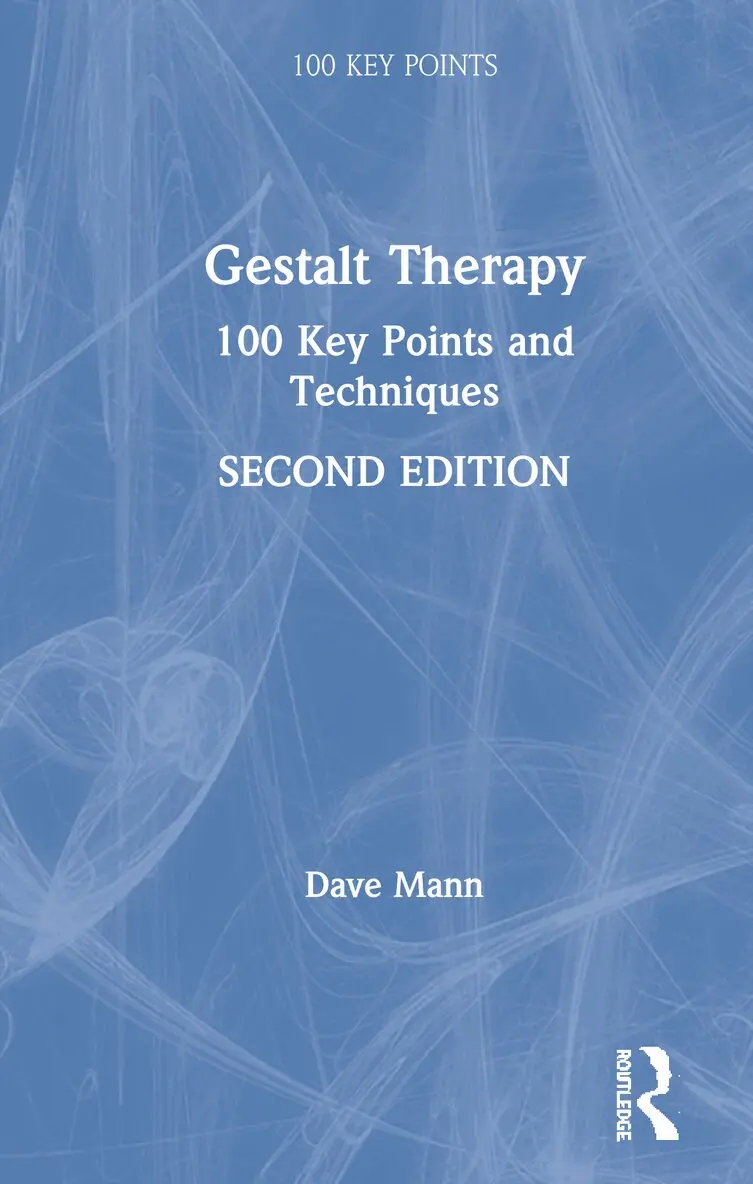
    Gestalt Therapy

    100 Key Points and Techniques

    AvDave Mann

    Inbunden, Engelska, 2020

    Del i serien 100 Key Points

    2 104 kr

    Beställningsvara. Skickas inom 10-15 vardagar. Fri frakt över 249 kr.

    Fler format och utgåvor

    Häftad

    296 kr

    Inbunden

    2 494 kr

    E-bok

    346 kr

    E-bok

    346 kr

    Häftad

    383 kr

    E-bok

    449 kr

    E-bok

    449 kr

    Beskrivning

    Gestalt therapy offers a present-focused, relational approach, central to which is the fundamental belief that the client knows the best way of adjusting to their situation. This new edition of Gestalt Therapy: 100 Key Points and Techniques provides a concise, accessible guide to this flexible and far-reaching approach. Substantially updated throughout, topics discussed include: The theoretical assumptions underpinning gestalt therapy. Gestalt assessment and process diagnosis. Field theory, phenomenology and dialogue. Ethics and values. Evaluation and research.As such this book will be essential reading for gestalt trainees, as well as all counsellors and psychotherapists wanting to learn more about the gestalt approach.

    Produktinformation

    • Utgivningsdatum:2020-09-29
    • Mått:129 x 198 x 27 mm
    • Vikt:500 g
    • Format:Inbunden
    • Språk:Engelska
    • Serie:100 Key Points
    • Antal sidor:354
    • Upplaga:2
    • Förlag:Taylor & Francis Ltd
    • ISBN:9781138067691

    Utforska kategorier

    • Psykoterapi som behandlingsmetod inom Medicin
    • Socialt arbete och välfärd inom Samhälle och politik

    Mer om författaren

    Dave Mann is a UKCP Registered Gestalt Psychotherapist, Supervisor and Trainer affiliated with the Metanoia Institute, Gestalt Psychotherapy Training Institute and Sherwood Psychotherapy Training Institute. He is also a former Assistant Editor of the British Gestalt Journal.

    Recensioner i media

    Mann’s highly accessible second edition brings gestalt therapy alive with his vignettes, and embodies it with the offer of experiments for the reader to play with. It serves as a wonderful reference text, one you can dip into as your fancy strikes you. Once you do that, you will want to go back for more!Lynne Jacobs, PhD. Co-Founder Pacific Gestalt Institute, Los Angeles, USA’Whether discovering Gestalt therapy for the first time or wanting to update previous learning, readers will find this book an indispensable companion: wide-ranging, lively, authoritative, and easy to follow. Theory and practice interweave throughout. Experiential intermissions help focus attention. The author’s choice of 100 subjects is well-judged and original. An experienced and respected Gestalt practitioner, Mann demonstrates here his deep understanding of the Gestalt approach, its history, craft, and contemporary vision. The book offers stimulus, enjoyment, and support for holistic learning.Malcolm Parlett, PhD., Former editor of the British Gestalt Journal, international trainer.Mann has excelled in producing a second edition of this key Gestalt text that both consolidates and extends the first edition. The experiential exercises encourage you to "try on" concepts in a way that brings theory vividly alive. Whether you identify as a gestalt clinician, coach, or organisational consultant, as a novice or experienced practitioner, this book is outstanding in identifying and describing the heart of the approach.Sally Denham-Vaughan, DPsych., Chair EAGT GPO committee, Co-Founder Relational Change, UK.

    Innehållsförteckning

    • Part 1: Maps for a Gestalt Therapy Journey – Laying the Ground, Theoretical Assumptions; 1. Gestalt Therapy: A Very Brief History; 2. So, what is Gestalt?; 3. And what is a Gestalt?; 4. Gestalt Psychology’s Laws of Perception; 5. Figure and Ground; 6. Awareness and The Awareness Continuum; 7. Contact; 8. The Here and Now; 9. Creative Adjustment; 10. Self and Selfing; 11. Structures of The Self: Id, Ego and Personality Functions; 12. Holism; 13. Individualism and Field Paradigms; 14. The Contact Boundary; 15. The Gestalt Cycle of Experience; 16. Resistances, Interruptions, Moderations to Contact; 17. The process of Introjection; 18. Ground Introjects; 19. Retroflection; 20. Projection; 21. Confluence; 22. Deflection; 23. Desensitisation; 24. Egotism/Self-Monitoring; 25. Continuums of Contact; 26. Creative Indifference; 27. Unfinished Business: The Zeigarnik Effect; 28. The Paradoxical Theory of Change; 29. The Aesthetics of Gestalt Therapy; 30. Support as ‘That Which Enables’; Part 2: Beginning the Therapy Journey – Preparations and Initial Assessment; 31. The Therapy Setting; 32. Contracts and Expectations; 33. Contact Functions – Making and Breaking Contact; 34. Assessment and Process Diagnosis; 35. How the Client "Bodies Forth"; 36. Zones of Awareness; 37. Emerging Relational Themes; 38. Planning the Journey; 39. Assessing Suicidal Risk; Part 3 The Therapy Journey – The Three Pillars of Gestalt; 3.1 Exploring the client’s situation or field; 40. Situation, Field, Life-space, Life-world; 41. Co-creation and Temporality; 42. The Therapy Space as Present Situation; 43. The Field Organises the Need and the Need Organises the Field; 44. The Id of the Situation; 45. Support in a Relational Field; 46. Shame as a Function of the Field; 47. Sensing into the Field; 48. Viewing the Field through a Developmental Lens; 49. Development – A Lifelong Process; 50. Developmental Theory – Six Fundamental Movements; 51. The Cultural Field; 52. Five Explorations; 53. Language and Metaphor; 54. Attending to the Wider Field; 3.2 Focus on Experience: Phenomenology in Gestalt Therapy; 55. What is Phenomenology?; 56. Phenomenological Enquiry; 57. Intentionality: Reaching Out to my World; 58. Transcendental Phenomenology and Husserl; 59. The Discipline of Phenomenological Reduction; 60. Existential Phenomenology; 61. Intersubjectivity; 62. Attending to the Bodily ‘Felt Sense’; 63. Energy and Vitality; 64. The Lived Body; 65. Perceiving the Whole; 66. Liminal Space; 3.3 Dialogue – Emerging through Relationship; 67. What is Dialogue?; 68. I-Thou and I-It Relating; 69. The Between; 70. Inclusion and Empathy; 71. Presence; 72. Confirmation; 73. Commitment to Dialogue; 74. Attunement; 75. Enduring Relational Themes; 76. Self-Disclosure; 77. The Relational Turn; 78. Rupture and Repair; 79. Living the Relationship; Part 4: Becoming – Transitions along the Journey; 80. Gestalt Experimentation; 81. Experimentation and Challenge; 82. Experimental Methods; 83. Polarities and the Top Dog/Under Dog; 84. Two Chairs and the Empty Chair; 85. Homework and Practicing; 86. Dreamwork; 87. Catharsis and Release; 88. Aggressing on the Environment; 89. Working with Trauma; 90. Phases in Therapy and Endings; 91. Developing Awareness of Awareness; Part 5: Ethics and Values: Key Signposts for All Journeys; 92. Therapeutic Boundaries; 93. Relational Ethics; 94. Therapeutic Use of Touch; 95. Non-Exploitation; 96. Therapist Support; 97. Gestalt Supervision; Part 6: Evaluating the Approach: Destination and Looking Back; 98. Gestalt Applications beyond 1:1 and Group therapy; 99. Looking Back and Reviewing; 100. On Uncertainty and Certainty