• Fri frakt över 249 kr
  • •
  • Snabba leveranser
  • •
  • Billiga böcker
Kundservice

Du är på sajten för privatpersoner.

Företag, bibliotek eller offentlig verksamhet?

Du handlar på classic.bokus.com, där alla dina funktioner finns intakta.
Till classic.bokus.com
Bokus logotyp. Gå till startsidan.
  • Erbjudanden
  • Nyheter
  • Student
  • Topplistor
  • Barn & ungdom
  • Bokus Play
  • E-böcker
  • Pocketböcker
  • Spel & pussel

10% rabatt på allt med kod: NYSTART10 →

Sidfot

Mina sidor

    Hjälp

    • Kundservice
    • Vanliga frågor och svar
    • Frakt och leverans
    • Retur vid ångerrätt
    • Reklamera vara
    • Betalning
    • Köpvillkor
    • Allmänna villkor
    • Information om webbplatsens tillgänglighet

    Om Bokus

    • Om oss
    • Pressrum
    • För studenter
    • För företag
    • För bibliotek och offentlig verksamhet
    • För leverantörer
    • Hållbarhet

    Populärt

    • Aktuella erbjudanden
    • Presentkort
    • Studentlitteratur
    • Nya böcker
    • Topplistor
    • Signerade böcker
    • Engelska böcker

    Inspiration

    • Boktips
    • BookTok
    • Populära bokserier
    • Barnbokskaraktärer
    • Populära författare
    Logotyp för Bokus
    Följ oss på Facebook (extern länk)Följ oss på Instagram (extern länk)Följ oss på YouTube (extern länk)Följ oss på TikTok (extern länk)
    bokus @ CookiesAnpassa cookiesIntegritetspolicyKöpvillkor
    Till Citymail hemsida (extern länk)Till Budbee hemsida (extern länk)Till Postnord hemsida (extern länk)Till Schenker hemsida (extern länk)Till Early Bird hemsida (extern länk)Till Walleys hemsida (extern länk)
    1. Skönlitteratur
    2. Litteraturvetenskap

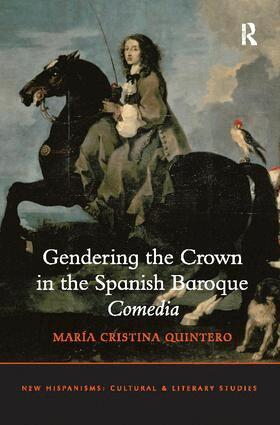
    Gendering the Crown in the Spanish Baroque Comedia

    AvMaría Cristina Quintero

    Häftad, Engelska, 2017

    Del i serien New Hispanisms: Cultural and Literary Studies

    847 kr

    Beställningsvara. Skickas inom 10-15 vardagar. Fri frakt över 249 kr.

    Fler format och utgåvor

    E-bok

    1 003 kr

    E-bok

    1 003 kr

    Inbunden

    3 042 kr

    Beskrivning

    The Baroque Spanish stage is populated with virile queens and feminized kings. This study examines the diverse ways in which seventeenth-century comedias engage with the discourse of power and rulership and how it relates to gender. A privileged place for ideological negotiation, the comedia provided negative and positive reflections of kingship at a time when there was a perceived crisis of monarchical authority in the Habsburg court. Author María Cristina Quintero explores how playwrights such as Pedro Calderón de la Barca, Tirso de Molina, Antonio Coello, and Francisco Bances Candamo--taking inspiration from legend, myth, and history--repeatedly staged fantasies of feminine rule, at a time when there was a concerted effort to contain women's visibility and agency in the public sphere. The comedia's preoccupation with kingship together with its obsession with the representation of women (and women's bodies) renders the question of royal subjectivity inseparable from issues surrounding masculinity and femininity. Taking into account theories of performance and performativity within a historical context, this study investigates how the themes, imagery, and language in plays by Calderón and his contemporaries reveal a richly paradoxical presentation of gendered monarchical power.

    Produktinformation

    • Utgivningsdatum:2017-05-22
    • Mått:156 x 234 x 14 mm
    • Vikt:453 g
    • Format:Häftad
    • Språk:Engelska
    • Serie:New Hispanisms: Cultural and Literary Studies
    • Antal sidor:264
    • Förlag:Taylor & Francis Ltd
    • ISBN:9781138109995

    Utforska kategorier

    • Litteraturvetenskap inom Skönlitteratur
    • Litteraturvetenskap inom Skönlitteratur
    • Teater inom Kultur

    Mer om författaren

    Maria Cristina Quintero is Professor of Spanish and Director of the Comparative Literature Program at Bryn Mawr College, USA.

    Recensioner i media

    'Here is a provocative analysis seasoned with lots of historical and contextual information, a valuable addition to the literature on golden age comedia. Summing Up: Highly recommended. Upper-division undergraduates and above.' Choice 'Quintero's gives us an astute study of staged representations of women in power in a dozen key Baroque comedias, brilliantly juxtaposing the flow of desire transmitted by performance to the theatrical law that encloses them in subordinate positions. Her fine-grained and theoretically informed analysis contextualizes them historically within a seventeenth-century climate of crisis for masculinity and anxiety over monarchical succession.' Margaret R. Greer, Duke University '... the book raises fascinating questions about queenly rule and its representation on stage in Baroque Spain, making a valuable contribution to our understanding of the many currents that influence theatrical performance of the period.' Bulletin of the Comediantes ’...female figures, while ostensibly bound to theatrical convention and patriarchal bias, leave a lasting contribution in their own right, at the very least a more fluid and ambiguous vision of gender and power, and perhaps even more than that, a means of interrogating the very structures by which women are contained. In doing so [Quintero] gives us further expert evidence of the Comedia’s sophisticated, self-conscious, and potentially critical relationship with the political system, and new insight into the compelling nature of a feminine power that is negated yet never wholly eradicated.’ Bulletin of Spanish Studies 'María Cristina Quintero makes a most welcome contribution to scholarship on the representation of monarchy in early modern Spanish theater. While several books have focused on kings, Quintero concentrates on queens-strikingly present in the comedia, if often overlooked by critics. Gender, Quintero forcefully argues, was at the crux of explorations of monarchical power on the s

    Innehållsförteckning

    • Introduction; Chapter 1 Women and Drama in Early Modern Spain; Chapter 2 Beauty and the Machiavellian Beast; Chapter 3 1Portions of this chapter appeared in a special volume commemorating the 400th anniversary of Calderón’s birth. See Quintero, “Gender, Tyranny, and the Performance of Power in Calderón’s La hija del aire,” Bulletin of the comediantes 53.1 (): 155–78; Chapter 4 English Queens and the Body Politic; Chapter 5 Christina of Sweden and Queenly Garb(o); epilogue Epilogue;