• Fri frakt över 249 kr
  • •
  • Snabba leveranser
  • •
  • Billiga böcker
Kundservice

Du är på sajten för privatpersoner.

Företag, bibliotek eller offentlig verksamhet?

Du handlar på classic.bokus.com, där alla dina funktioner finns intakta.
Till classic.bokus.com
Bokus logotyp. Gå till startsidan.
  • Erbjudanden
  • Nyheter
  • Student
  • Topplistor
  • Barn & ungdom
  • Bokus Play
  • E-böcker
  • Pocketböcker
  • Spel & pussel

10% rabatt på allt med kod NYSTART10 →

Sidfot

Mina sidor

    Hjälp

    • Kundservice
    • Vanliga frågor och svar
    • Frakt och leverans
    • Retur vid ångerrätt
    • Reklamera vara
    • Betalning
    • Köpvillkor
    • Allmänna villkor
    • Information om webbplatsens tillgänglighet

    Om Bokus

    • Om oss
    • Pressrum
    • För studenter
    • För företag
    • För bibliotek och offentlig verksamhet
    • För leverantörer
    • Hållbarhet

    Populärt

    • Aktuella erbjudanden
    • Presentkort
    • Studentlitteratur
    • Nya böcker
    • Topplistor
    • Signerade böcker
    • Engelska böcker

    Inspiration

    • Boktips
    • BookTok
    • Populära bokserier
    • Barnbokskaraktärer
    • Populära författare
    Logotyp för Bokus
    Följ oss på Facebook (extern länk)Följ oss på Instagram (extern länk)Följ oss på YouTube (extern länk)Följ oss på TikTok (extern länk)
    bokus @ CookiesAnpassa cookiesIntegritetspolicyKöpvillkor
    Till Citymail hemsida (extern länk)Till Budbee hemsida (extern länk)Till Postnord hemsida (extern länk)Till Schenker hemsida (extern länk)Till Early Bird hemsida (extern länk)Till Walleys hemsida (extern länk)
    1. Samhälle och politik
    2. Samhälle och kultur
    3. Kultur och medier
    4. Referensverk och tvärvetenskap

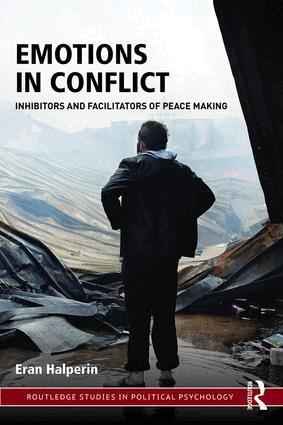
    Emotions in Conflict

    Inhibitors and Facilitators of Peace Making

    AvEran Halperin

    Häftad, Engelska, 2015

    Del i serien Routledge Studies in Political Psychology

    689 kr

    Beställningsvara. Skickas inom 10-15 vardagar. Fri frakt över 249 kr.

    Fler format och utgåvor

    Inbunden

    2 355 kr

    E-bok

    815 kr

    E-bok

    815 kr

    Beskrivning

    Social and political psychologists have attempted to reveal the reasons why individuals and societies that acknowledge that peace would improve their personal and collective well-being, and are aware of the required actions needed to promote it, are simply incapable of making this step forward. Some social psychologists have advocated the idea that certain societal beliefs and collective memories about the nature of the opponent, the in-group, the history, and the current state of the conflict distort the perceptions of society members and prevent them from identifying opportunities for peace. But these cognitive barriers capture only part of the picture. Could identifying the role of discrete emotions in conflicts and conflict resolution potentially provide a wide platform for developing pinpoint conflict resolution interventions?Using a vast array of primary sources, critical literature analysis, and firsthand personal experiences in various conflict zones (Middle East, Cyprus, Bosnia, and Northern Ireland), Eran Halperin introduces a new perspective on psychological barriers to peace. Halperin focuses on various emotional mechanisms that hamper peace processes, even when parties face real opportunities for conflict resolution. More specifically, he explores how hatred, anger, fear, angst, hope, despair, empathy, guilt, and shame, combined with various emotion regulation strategies, provide emotions-based explanations for people's attitudinal and behavioral reactions to peace-related events during the ongoing process of conflict resolution.Written in a clear and accessible style, Emotions in Conflict offers a thought-provoking and pioneering insight into the role discrete intergroup emotions play in impeding, as well as facilitating, peace processes in intractable conflicts. This book is essential reading for those who study intractable conflicts and their resolutions, and those who are interested in the ‘real-world’ implication of recent theories and findings on emotion and emotion regulation.

    Produktinformation

    • Utgivningsdatum:2015-12-22
    • Mått:152 x 229 x 13 mm
    • Vikt:354 g
    • Format:Häftad
    • Språk:Engelska
    • Serie:Routledge Studies in Political Psychology
    • Antal sidor:234
    • Förlag:Taylor & Francis Ltd
    • ISBN:9781138123427

    Utforska kategorier

    • Referensverk och tvärvetenskap inom Samhälle och politik
    • Socialpsykologi och gruppsykologi inom Psykologi och pedagogik
    • Politik och statsskick inom Samhälle och politik

    Mer om författaren

    Eran Halperin is currently an associate professor and the active dean of the School of Psychology at the Interdisciplinary Center, Herzliya, Israel. His research uses psychological and political theories and methods to investigate different aspects of intergroup conflicts. More specifically, he is interested in widening our understanding on the emotional roots of some of the most destructive political ramifications of intergroup relations.

    Recensioner i media

    'This book provides a detailed, nuanced, and novel perspective on the role of emotions in intergroup conflict and conflict resolution. Drawing on Halperin’s own extensive work in this area and integrating it with other relevant research, this book has the potential to quickly become a classic in the field.'—Johanna Ray Vollhardt, Assistant Professor of Psychology, Clark University'Although many books have been written about violent conflicts, relatively few focus on the important factor that is also responsible for their eruption, escalation and resolution—namely human emotions. This book by Eran Halperin is a pivotal contribution in closing this lacuna. He originally, eloquently, and comprehensively tackles the issue of emotions in conflict by providing a holistic analysis that not only elaborates on the role of specific emotions, but also and especially provides a holistic conceptual framework of emotions' functioning in the challenging context of intergroup violence.' —Daniel Bar-Tal, Tel Aviv University, Israel

    Innehållsförteckning

    • Table of Contents: 1. Introduction 2. The Emotion Based Approach to Conflict Resolution – Some Basic Concepts 3. Intergroup Hatred in Intractable Conflicts – The Ultimate Barrier to Peace 4. Intergroup Anger in Intractable Conflicts – Not Exactly What You Had in Mind… 5. Societies under Threat – Collective Fear and Angst as Barriers and (at Times) Catalysts of Peace 6. Is Peace Really an Option? Hope, Despair and the Peace Process 7. Moral Emotions in Intractable Conflicts: Group-Based Guilt, Conflict Resolution and Reconciliation 8. Empathy as a Peace Catalyst in Intractable Conflict: Is It Feasible? Is It Enough? 9. The "Catch 22" of Intractable Conflicts: The Role of Pride and Humiliation in Conflicts and Peace Processes 10. Changing Feelings to Promote Peace: Emotion Regulation as a New Path to Conflict Resolution