Eran Halperin – författare
2 121 kr
Skickas inom 10-15 vardagar
637 kr
Läs direkt efter köp
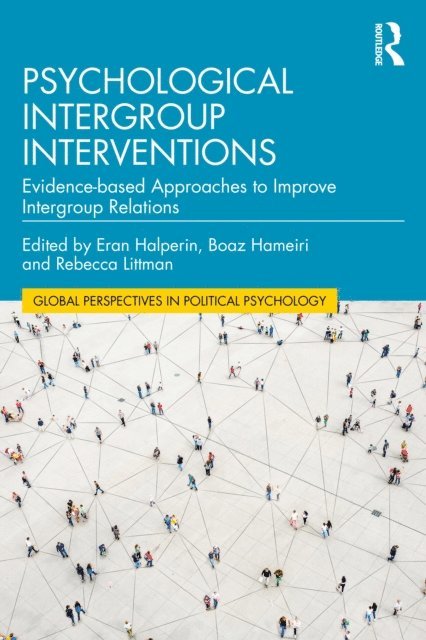
This book introduces a comprehensive and integrative collection of psychological intergroup interventions. These evidence-based interventions are scientifically established and tested in several real-world contexts of intergroup animosities and tensions, from prejudice and inequality reduction to peace promotion.
Intergroup hostility, violence, and discrimination have become more and more prevalent in recent decades. To address this challenge, recently, social scientists have shown an increasing shift from a descriptive to a more interventionist science, developing evidence-based interventions to improve intergroup relations. For the first time, this book includes research on intergroup interventions and their applications to the field, from a global collection of leading voices in the discipline. It also includes a conceptualization of intergroup interventions, a typology of different types of interventions, as well as a guideline for effective development of intergroup interventions. Each chapter focuses on one psychological intergroup intervention, further reviewing a sample of relevant platforms such as education, entertainment, and VR, upon which psychological intergroup interventions can be implemented.
With each chapter featuring both intervention research and practical advice for practitioners, this is the ideal companion for researchers and professionals in social psychology, sociology, politics, peace studies and conflict resolution. It will also be of interest to practitioners looking for practical advice to create an impact in the real-world.
637 kr
Läs direkt efter köp
This book introduces a comprehensive and integrative collection of psychological intergroup interventions. These evidence-based interventions are scientifically established and tested in several real-world contexts of intergroup animosities and tensions, from prejudice and inequality reduction to peace promotion.
Intergroup hostility, violence, and discrimination have become more and more prevalent in recent decades. To address this challenge, recently, social scientists have shown an increasing shift from a descriptive to a more interventionist science, developing evidence-based interventions to improve intergroup relations. For the first time, this book includes research on intergroup interventions and their applications to the field, from a global collection of leading voices in the discipline. It also includes a conceptualization of intergroup interventions, a typology of different types of interventions, as well as a guideline for effective development of intergroup interventions. Each chapter focuses on one psychological intergroup intervention, further reviewing a sample of relevant platforms such as education, entertainment, and VR, upon which psychological intergroup interventions can be implemented.
With each chapter featuring both intervention research and practical advice for practitioners, this is the ideal companion for researchers and professionals in social psychology, sociology, politics, peace studies and conflict resolution. It will also be of interest to practitioners looking for practical advice to create an impact in the real-world.
566 kr
Skickas inom 10-15 vardagar
1 999 kr
Skickas inom 10-15 vardagar
662 kr
Skickas inom 10-15 vardagar
784 kr
Läs direkt efter köp
Social and political psychologists have attempted to reveal the reasons why individuals and societies that acknowledge that peace would improve their personal and collective well-being, and are aware of the required actions needed to promote it, are simply incapable of making this step forward. Some social psychologists have advocated the idea that certain societal beliefs and collective memories about the nature of the opponent, the in-group, the history, and the current state of the conflict distort the perceptions of society members and prevent them from identifying opportunities for peace. But these cognitive barriers capture only part of the picture.
Could identifying the role of discrete emotions in conflicts and conflict resolution potentially provide a wide platform for developing pinpoint conflict resolution interventions?
Using a vast array of primary sources, critical literature analysis, and firsthand personal experiences in various conflict zones (Middle East, Cyprus, Bosnia, and Northern Ireland), Eran Halperin introduces a new perspective on psychological barriers to peace. Halperin focuses on various emotional mechanisms that hamper peace processes, even when parties face real opportunities for conflict resolution. More specifically, he explores how hatred, anger, fear, angst, hope, despair, empathy, guilt, and shame, combined with various emotion regulation strategies, provide emotions-based explanations for people''s attitudinal and behavioral reactions to peace-related events during the ongoing process of conflict resolution.
Written in a clear and accessible style, Emotions in Conflict offers a thought-provoking and pioneering insight into the role discrete intergroup emotions play in impeding, as well as facilitating, peace processes in intractable conflicts. This book is essential reading for those who study intractable conflicts and their resolutions, and those who are interested in the ‘real-world’ implication of recent theories and findings on emotion and emotion regulation.
784 kr
Läs direkt efter köp
Social and political psychologists have attempted to reveal the reasons why individuals and societies that acknowledge that peace would improve their personal and collective well-being, and are aware of the required actions needed to promote it, are simply incapable of making this step forward. Some social psychologists have advocated the idea that certain societal beliefs and collective memories about the nature of the opponent, the in-group, the history, and the current state of the conflict distort the perceptions of society members and prevent them from identifying opportunities for peace. But these cognitive barriers capture only part of the picture.
Could identifying the role of discrete emotions in conflicts and conflict resolution potentially provide a wide platform for developing pinpoint conflict resolution interventions?
Using a vast array of primary sources, critical literature analysis, and firsthand personal experiences in various conflict zones (Middle East, Cyprus, Bosnia, and Northern Ireland), Eran Halperin introduces a new perspective on psychological barriers to peace. Halperin focuses on various emotional mechanisms that hamper peace processes, even when parties face real opportunities for conflict resolution. More specifically, he explores how hatred, anger, fear, angst, hope, despair, empathy, guilt, and shame, combined with various emotion regulation strategies, provide emotions-based explanations for people''s attitudinal and behavioral reactions to peace-related events during the ongoing process of conflict resolution.
Written in a clear and accessible style, Emotions in Conflict offers a thought-provoking and pioneering insight into the role discrete intergroup emotions play in impeding, as well as facilitating, peace processes in intractable conflicts. This book is essential reading for those who study intractable conflicts and their resolutions, and those who are interested in the ‘real-world’ implication of recent theories and findings on emotion and emotion regulation.
Social Psychology of Intractable Conflicts
Celebrating the Legacy of Daniel Bar-Tal, Volume I
1 271 kr
Skickas inom 10-15 vardagar
1 684 kr
Läs direkt efter köp
1 060 kr
Skickas inom 10-15 vardagar
1 328 kr
Läs direkt efter köp
Opening with an introduction to the Israeli-Palestinian conflict situation and a few chapters on the theoretical backgrounds of the creation of a societal ethos of conflict, the volume then moves to an analysis of the psycho-social underpinnings of the conflict, while concluding with a discussion of the possibility of long-standing peace in the region.Among the topics included in the coverage are:
· Identity formation during conflict· The Israeli and Palestinian ethos of conflict
· The important role of Palestinian and Israeli education
· An analysis of the leadership in the Israeli-Palestinian peace process· The challenges and potential towards a road to peace in the region
All contributors to the volume are pre-eminent scholars of the Israeli-Palestinian conflict, and many of them have felt the influence of Bar-Tal’s formulations in their own work. A rich resource for those who are followers of Dr. Bar-Tal''s work, for those who study intractable conflicts in all its forms, and for those who have a particular interest in the Israeli-Palestinian conflict, A Social Psychology Perspective of the Israeli-Palestinian Case offers a detailed exploration of the psychological underpinnings of the Israeli-Palestinian conflict and the barriers to and opportunities of the peace process.
Social Psychology of Intractable Conflicts
Celebrating the Legacy of Daniel Bar-Tal, Volume I
1 271 kr
Skickas inom 10-15 vardagar
1 060 kr
Skickas inom 10-15 vardagar