• Fri frakt över 249 kr
  • •
  • Snabba leveranser
  • •
  • Billiga böcker
Kundservice

Du är på sajten för privatpersoner.

Företag, bibliotek eller offentlig verksamhet?

Du handlar på classic.bokus.com, där alla dina funktioner finns intakta.
Till classic.bokus.com
Bokus logotyp. Gå till startsidan.
  • Erbjudanden
  • Nyheter
  • Student
  • Topplistor
  • Barn & ungdom
  • Bokus Play
  • E-böcker
  • Pocketböcker
  • Spel & pussel

10% rabatt på allt med kod NYSTART10 →

Sidfot

Mina sidor

    Hjälp

    • Kundservice
    • Vanliga frågor och svar
    • Frakt och leverans
    • Retur vid ångerrätt
    • Reklamera vara
    • Betalning
    • Köpvillkor
    • Allmänna villkor
    • Information om webbplatsens tillgänglighet

    Om Bokus

    • Om oss
    • Pressrum
    • För studenter
    • För företag
    • För bibliotek och offentlig verksamhet
    • För leverantörer
    • Hållbarhet

    Populärt

    • Aktuella erbjudanden
    • Presentkort
    • Studentlitteratur
    • Nya böcker
    • Topplistor
    • Signerade böcker
    • Engelska böcker

    Inspiration

    • Boktips
    • BookTok
    • Populära bokserier
    • Barnbokskaraktärer
    • Populära författare
    Logotyp för Bokus
    Följ oss på Facebook (extern länk)Följ oss på Instagram (extern länk)Följ oss på YouTube (extern länk)Följ oss på TikTok (extern länk)
    bokus @ CookiesAnpassa cookiesIntegritetspolicyKöpvillkor
    Till Citymail hemsida (extern länk)Till Budbee hemsida (extern länk)Till Postnord hemsida (extern länk)Till Schenker hemsida (extern länk)Till Early Bird hemsida (extern länk)Till Walleys hemsida (extern länk)
    1. Data och IT
    2. Informationsteknik: allmänt

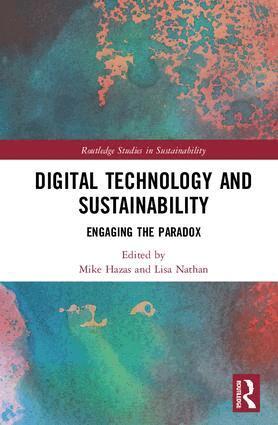
    Digital Technology and Sustainability

    Engaging the Paradox

    AvMike Hazas,Lisa Nathan

    Inbunden, Engelska, 2017

    Del i serien Routledge Studies in Sustainability

    2 423 kr

    Beställningsvara. Skickas inom 10-15 vardagar. Fri frakt över 249 kr.

    Beskrivning

    This book brings together diverse voices from across the field of sustainable human computer interaction (SHCI) to discuss what it means for digital technology to support sustainability and how humans and technology can work together optimally for a more sustainable future.Contemporary digital technologies are hailed by tech companies, governments and academics as leading-edge solutions to the challenges of environmental sustainability; smarter homes, more persuasive technologies, and a robust Internet of Things hold the promise for creating a greener world. Yet, deployments of interactive technologies for such purposes often lead to a paradox: they algorithmically "optimize" heating and lighting of houses without regard to the dynamics of daily life in the home; they can collect and display data that allow us to reflect on energy and emissions, yet the same information can cause us to raise our expectations for comfort and convenience; they might allow us to share best practice for sustainable living through social networking and online communities, yet these same systems further our participation in consumerism and contribute to an ever-greater volume of electronic waste.By acknowledging these paradoxes, this book represents a significant critical inquiry into digital technology’s longer-term impact on ideals of sustainability.Written by an interdisciplinary team of contributors this book will be of great interest to students and scholars of human computer interaction and environmental studies.

    Produktinformation

    • Utgivningsdatum:2017-11-20
    • Mått:156 x 234 x 19 mm
    • Vikt:522 g
    • Format:Inbunden
    • Språk:Engelska
    • Serie:Routledge Studies in Sustainability
    • Antal sidor:260
    • Förlag:Taylor & Francis Ltd
    • ISBN:9781138205888

    Utforska kategorier

    • Informationsteknik: allmänt inom Data och IT
    • Miljövetenskap och miljöpolitik inom Naturvetenskap och teknik
    • Människa – datorinteraktion inom Data och IT

    Mer om författaren

    Mike Hazas is Senior Lecturer in the School of Computing and Communications, Lancaster University.Lisa P. Nathan is Assistant Professor at the School of Library Archival and Information Studies, University of British Columbia.

    Innehållsförteckning

    • Photo Essay 1: Selfie TimeEli BlevisIntroduction: Digital Technology and Sustainability: Engaging the paradoxMike Hazas and Lisa P. NathanPhoto Essay 2: Artifice and NatureEli BlevisPart 1: Assessing the FieldChapter 1: Three Principles of Sustainable Interaction Design, RevisitedDavid Roedl, William Odom and Eli BlevisChapter 2: Towards a Social Practice Theory Perspective on Sustainable HCI Research and DesignAdrian K. Clear and Rob ComberChapter 3: A Conversation Between Two Sustainable HCI Researchers: The role of HCI in a Positive Socio-Ecological TransformationSamuel Mann and Oliver BatesResponse 1a: Sustainable HCI: From Individual to SystemChris Preist Response 1b: Sustainability within HCI within Society: Improvisations, Interconnections and ImaginationsJanine MorleyPhoto Essay 3: Rooftop GardenEli BlevisPart 2: Addressing LimitsChapter 4: Every Little Bit Makes Little Difference: The Paradox within SHCISomya Joshi and Tessy Cerratto PargmanChapter 5: Developing a political economy perspective for sustainable HCIBonnie Nardi and Hamid EkbiaChapter 6: Software Engineering for Sustainability: Tools for Sustainability AnalysisBirgit Penzenstadler and Colin C. VentersResponse 2: Challenging the Scope? Enrico ConstanzaPhoto Essay 4: Classroom ExerciseEli BlevisPART 3: Ways To Engage With OthersChapter 7: Communicating SHCI Research to Practitioners and StakeholdersChristian Remy and Elaine M. HuangChapter 8: Negotiating and Engaging with Environmental Public Policy at Different ScalesVanessa ThomasChapter 9: On the Inherent Contradictions of Teaching Sustainability at a Technical UniversityElina Eriksson and Daniel PargmanChapter 10: Participation in Design for SustainabilityJanet Davis and Sandra Burri Gram-HansenResponse 3a: Connected and ComplicitMél HoganResponse 3b: From Participatory Design to Participatory Governance through Sustainable HCI Rónán KennedyPhoto Essay 5: AirstreamEli BlevisPart 4: Inspiring FuturesChapter 11: A Sustainable Place: Everyday Designers as Place MakersAudrey Desjardins, Xiaolan Wang, and Ron WakkaryChapter 12: Interaction Design for Sustainability Futures: Towards Worldmaking InteractionsRoy BendorChapter 13: Think Local Act Local: The Case of Burning Mana.m. tsaasan and Bonnie NardiResponse 4: Sustainability Futures and the Future of Sustainable HCIYolande StrengersPhoto Essay 6: Locked GateEli BlevisEpilogue: Mike Hazas and Lisa P. Nathan