• Fri frakt över 249 kr
  • •
  • Snabba leveranser
  • •
  • Billiga böcker
Kundservice

Du är på sajten för privatpersoner.

Företag, bibliotek eller offentlig verksamhet?

Du handlar på classic.bokus.com, där alla dina funktioner finns intakta.
Till classic.bokus.com
Bokus logotyp. Gå till startsidan.
  • Erbjudanden
  • Nyheter
  • Student
  • Topplistor
  • Barn & ungdom
  • Bokus Play
  • E-böcker
  • Pocketböcker
  • Spel & pussel

Må bättre, för mindre! Upp till 50% rabatt på hälsoböcker

Sidfot

Mina sidor

    Hjälp

    • Kundservice
    • Vanliga frågor och svar
    • Frakt och leverans
    • Retur vid ångerrätt
    • Reklamera vara
    • Betalning
    • Köpvillkor
    • Allmänna villkor
    • Information om webbplatsens tillgänglighet

    Om Bokus

    • Om oss
    • Pressrum
    • För studenter
    • För företag
    • För bibliotek och offentlig verksamhet
    • För leverantörer
    • Hållbarhet

    Populärt

    • Aktuella erbjudanden
    • Presentkort
    • Studentlitteratur
    • Nya böcker
    • Topplistor
    • Signerade böcker
    • Engelska böcker

    Inspiration

    • Boktips
    • BookTok
    • Populära bokserier
    • Barnbokskaraktärer
    • Populära författare
    Logotyp för Bokus
    Följ oss på Facebook (extern länk)Följ oss på Instagram (extern länk)Följ oss på YouTube (extern länk)Följ oss på TikTok (extern länk)
    bokus @ CookiesAnpassa cookiesIntegritetspolicyKöpvillkor
    Till Citymail hemsida (extern länk)Till Budbee hemsida (extern länk)Till Postnord hemsida (extern länk)Till Schenker hemsida (extern länk)Till Early Bird hemsida (extern länk)Till Walleys hemsida (extern länk)
    1. Ekonomi och Ledarskap
    2. Nationalekonomi
    3. Internationell ekonomi

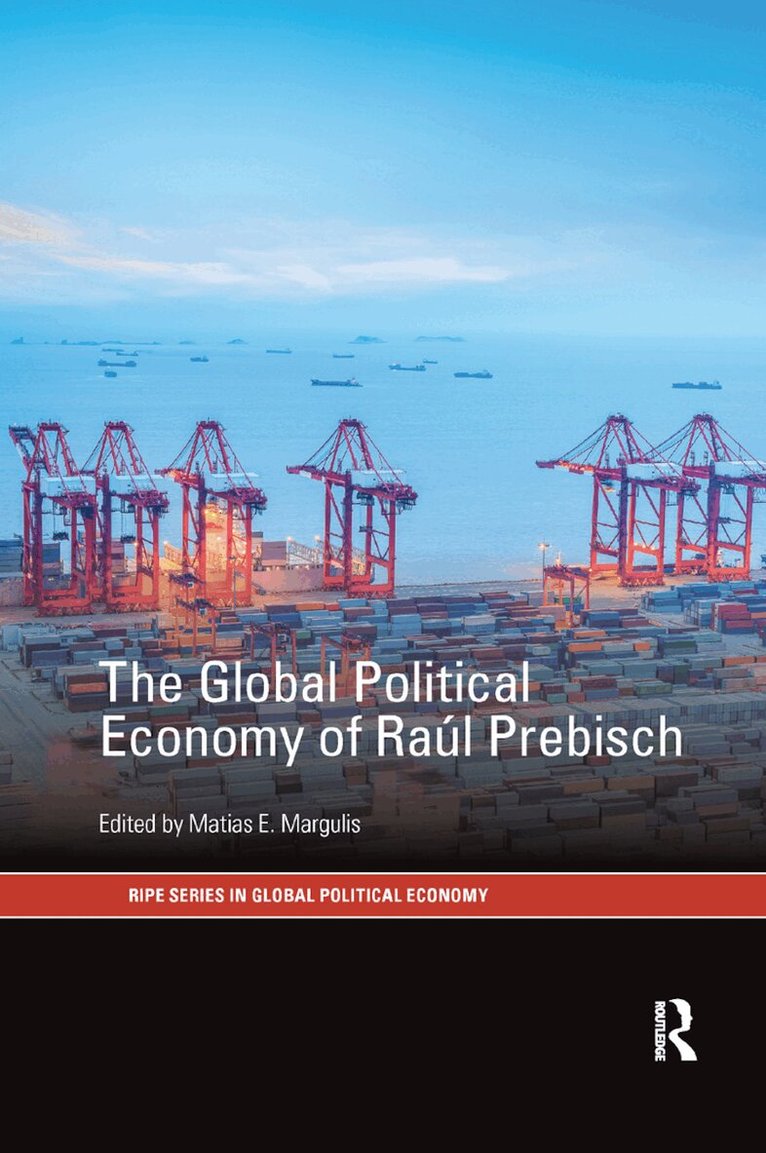
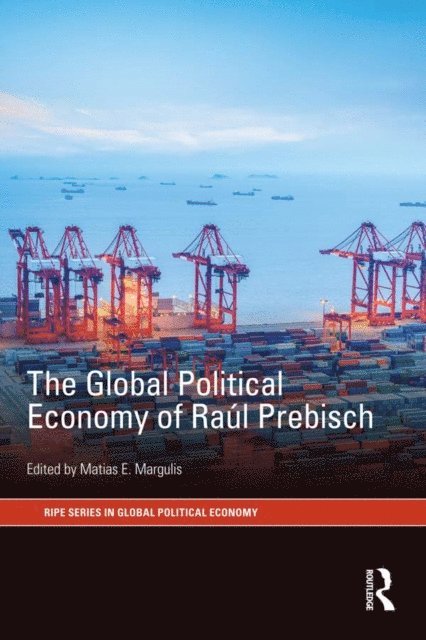
    Global Political Economy of Raúl Prebisch

    AvMatias E. Margulis

    Inbunden, Engelska, 2017

    Del i serien RIPE Series in Global Political Economy

    2 645 kr

    Beställningsvara. Skickas inom 10-15 vardagar. Fri frakt över 249 kr.

    Beskrivning

    The Global Political Economy of Raúl Prebisch offers an original analysis of global political economy by examining it through the ideas, agency and influence of one of its most important thinkers, leaders and personalities. Prebisch’s ground-breaking ideas as an economist – the terms-of-trade thesis and the economic case for state-led industrialization – changed the world and guided economic policy across the global South. As the head of two UN bodies – the Economic Commission for Latin America and the Caribbean (ECLAC) and later the United Nations Conference on Trade and Development (UNCTAD) – he was at the frontline of key North–South political struggles for a fairer global distribution of wealth and the regulation of transnational corporations. Prebisch increasingly came to view political power, not just economic capabilities, as pivotal to shaping the institutions and rules of the world economy. This book contextualizes his ideas, exploring how they were used and their relevance to contemporary issues. The neoliberal turn in economics in North America, Western Europe and across the global South led to an active discrediting of Prebisch’s theories and this volume offers an important corrective, reintroducing current and future generations of scholars and students to this important body of work and allowing a richer understanding of past and ongoing political struggles.


    Produktinformation

    • Utgivningsdatum:2017-03-07
    • Mått:156 x 234 x 19 mm
    • Vikt:600 g
    • Format:Inbunden
    • Språk:Engelska
    • Serie:RIPE Series in Global Political Economy
    • Antal sidor:218
    • Förlag:Taylor & Francis Ltd
    • ISBN:9781138219779

    Utforska kategorier

    • Internationell ekonomi inom Ekonomi och Ledarskap
    • Ekonomisk politik inom Ekonomi och Ledarskap
    • Statsvetenskap och politisk teori inom Samhälle och politik

    Mer om författaren

    Matias E. Margulis is Lecturer in Political Economy at the University of Stirling, UK. A former Canadian delegate to the WTO, OECD and United Nations agencies, his research focuses on global governance, international trade and human rights. Recent publications include 'Canada at the G8 and UN Committee on World Food Security: forum-shifting in global food security governance' (Canadian Foreign Policy Journal, 2015), 'Trading Out of the Global Food Crisis? The WTO and the Geopolitics of Food Security' (Geopolitics, 2014) and Land Grabbing and Global Governance (2014, edited with Nora McKeon and Saturnino Borras, Jr.).

    Recensioner i media

    This is a terrific volume which contributes to a much-needed movement away from the dominant intellectual histories of global political economy and their ‘peripheralising’ of non-English-speaking and non-Western thinking and thinkers. But it also develops an important and thought-provoking reflection on what taking this step means for the field itself, in expanding its theoretical and analytical horizons, and defining – or redefining – its subject matter. A top-notch collection that is essential reading for us all. - Nicola Phillips, University of Sheffield, UKMore than a half-century after the first United Nations Conference on Trade and Development (UNCTAD), organized by Raúl Prebisch, his work on development and the challenges faced by centre and peripheral economies is more relevant and alive than ever. Matias Margulis’s edited volume underlines how, as we struggle again with the failure of mainstream macroeconomic theory to explain and deal with the pervasive negative social and economic impacts of global crises, Prebisch’s insights help us to examine in a critical light the false premises of mainstream economists and propose more effective ways to cope with the current challenges. - Rubens Ricupero, Fifth Secretary General of UNCTAD (1995–2004) and former Minister of Finance, BrazilThis volume is a powerful reminder that many crucial ideas and approaches in building the contemporary world order came from the Global South, but are shamefully ignored in the mainstream accounts. By offering a sophisticated and wide-ranging analysis of Raul Prebisch’s ideas and practical contributions, the contributors to this volume significantly advance the study of Global Political Economy and Global International Relations. - Amitav Acharya, American University, USMatias Margulis has put together thought provoking perspectives on the momentous contributions of Raúl Prebisch, a critical, innovative theorist of the global political economy and an actor in global economic governance. He has been erased, or as this book claims peripheralised, as a by-product of neoliberalism. This book is not only a timely rescue but also as a fascinating contribution to understand the roots of our current era of turbulent global change. - Diana Tussie, Facultad Latinoamericana de Ciencias Sociales, Argentina

    Innehållsförteckning

    • Foreword Edgar J. DosmanIntroduction: the global political economy of Raúl Prebisch Matias Margulis PART I: Prebisch as architect and theorist of the global political economy1. Development through tighter economic integration: how might Prebisch size up some trends and issues thus far into the twenty-first century? P. Sai-wing Ho2. Thinking globally from the periphery: Raúl Prebisch and the world system Andrés Rivarola Puntigliano3. Raúl Prebisch and the theory of regional economic integration José Briceño Ruiz4. The Latin American origins of Bretton Woods Eric HelleinerPART II: Power and resistance in the global political economy5. Raúl Prebisch and the historical roots of the current movement against corporate-led globalisation Robin Broad and Zahara Heckscher6. From Palais de Nations to Centre William Rappard: Raúl Prebisch and UNCTAD as sources of ideas in the GATT/WTO Erin Hannah and James Scott7. The West remains on top, economically and politically Robert H. WadePART III: Diagnosing structural change in the global political economy8. A changing role for agriculture in global political economy? Brazil’s rise as an agro-power Kristen Hopewell 9. Back to the future reloaded: Latin America’s development strategy during the commodity boom Esteban Pérez Caldentey and Matías Vernengo10. Rául Prebisch and the terms of trade: how things have changed…. Raphael Kaplinsky and Masuma Farooki