• Fri frakt över 249 kr
  • •
  • Snabba leveranser
  • •
  • Billiga böcker
Kundservice

Du är på sajten för privatpersoner.

Företag, bibliotek eller offentlig verksamhet?

Du handlar på classic.bokus.com, där alla dina funktioner finns intakta.
Till classic.bokus.com
Bokus logotyp. Gå till startsidan.
  • Erbjudanden
  • Nyheter
  • Student
  • Topplistor
  • Barn & ungdom
  • Bokus Play
  • E-böcker
  • Pocketböcker
  • Spel & pussel

10% rabatt på allt med kod NYSTART10 →

Sidfot

Mina sidor

    Hjälp

    • Kundservice
    • Vanliga frågor och svar
    • Frakt och leverans
    • Retur vid ångerrätt
    • Reklamera vara
    • Betalning
    • Köpvillkor
    • Allmänna villkor
    • Information om webbplatsens tillgänglighet

    Om Bokus

    • Om oss
    • Pressrum
    • För studenter
    • För företag
    • För bibliotek och offentlig verksamhet
    • För leverantörer
    • Hållbarhet

    Populärt

    • Aktuella erbjudanden
    • Presentkort
    • Studentlitteratur
    • Nya böcker
    • Topplistor
    • Signerade böcker
    • Engelska böcker

    Inspiration

    • Boktips
    • BookTok
    • Populära bokserier
    • Barnbokskaraktärer
    • Populära författare
    Logotyp för Bokus
    Följ oss på Facebook (extern länk)Följ oss på Instagram (extern länk)Följ oss på YouTube (extern länk)Följ oss på TikTok (extern länk)
    bokus @ CookiesAnpassa cookiesIntegritetspolicyKöpvillkor
    Till Citymail hemsida (extern länk)Till Budbee hemsida (extern länk)Till Postnord hemsida (extern länk)Till Schenker hemsida (extern länk)Till Early Bird hemsida (extern länk)Till Walleys hemsida (extern länk)
    1. Kultur
    2. Konstböcker
    3. Konstteori

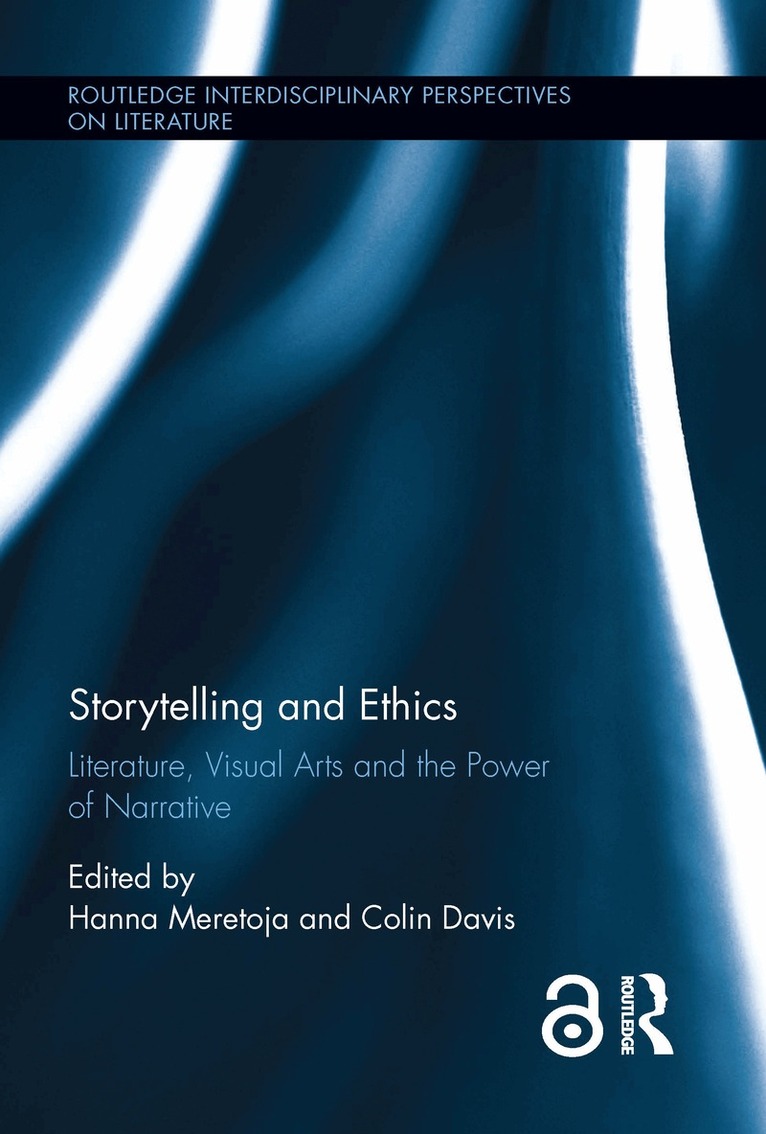
    Storytelling and Ethics

    Literature, Visual Arts and the Power of Narrative

    AvHanna Meretoja,Colin Davis

    Inbunden, Engelska, 2017

    Del i serien Routledge Interdisciplinary Perspectives on Literature

    2 786 kr

    Beställningsvara. Skickas inom 10-15 vardagar. Fri frakt över 249 kr.

    Beskrivning

    In recent years there has been a huge amount of both popular and academic interest in storytelling as something that is an essential part of not only literature and art but also our everyday lives as well as our dreams, fantasies, aspirations, historical self-understanding, and political actions. The question of the ethics of storytelling always, inevitably, lurks behind these discussions, though most frequently it remains implicit rather than explicit. This volume explores the ethical potential and risks of storytelling from an interdisciplinary perspective. It stages a dialogue between contemporary literature and visual arts across media (film, photography, performative arts), interdisciplinary theoretical perspectives (debates in narrative studies, trauma studies, cultural memory studies, ethical criticism), and history (traumatic histories of violence, cultural history). The collection analyses ethical issues involved in different strategies employed in literature and art to narrate experiences that resist telling and imagining, such as traumatic historical events, including war and political conflicts. The chapters explore the multiple ways in which the ethics of storytelling relates to the contemporary arts as they work with, draw on, and contribute to historical imagination. The book foregrounds the connection between remembering and imagining and explores the ambiguous role of narrative in the configuration of selves, communities, and the relation to the non-human. While discussing the ethical aspects of storytelling, it also reflects on the relevance of artistic storytelling practices for our understanding of ethics. Making an original contribution to interdisciplinary narrative studies and narrative ethics, this book both articulates a complex understanding of how artistic storytelling practices enable critical distance from culturally dominant narrative practices, and analyzes the limitations and potential pitfalls of storytelling.Chapter 7 of this book is freely available as a downloadable Open Access PDF at http://www.taylorfrancis.com under a Creative Commons [Attribution-Non Commercial-No Derivatives (CC-BY-NC-ND) 4.0 license.

    Produktinformation

    • Utgivningsdatum:2017-09-28
    • Mått:152 x 229 x 25 mm
    • Vikt:600 g
    • Format:Inbunden
    • Språk:Engelska
    • Serie:Routledge Interdisciplinary Perspectives on Literature
    • Antal sidor:314
    • Förlag:Taylor & Francis Ltd
    • ISBN:9781138244061

    Utforska kategorier

    • Konstteori inom Kultur
    • Filosofiska discipliner inom Filosofi och religion
    • Litteraturteori inom Skönlitteratur

    Mer om författaren

    Colin Davis is Professor of French at Royal Holloway, University of London, UK. Hanna Meretoja is Professor of Comparative Literature and Director of SELMA: Centre for the Study of Storytelling, Experientiality and Memory at the University of Turku, Finland.

    Recensioner i media

    "Thinking of the empathetic listener as secondary witness (Assmann), the assemblage of restitution (Reading), the heterogeneous temporalities of the present (Kaakinen) and subsumptive vs. non-subsumptive storytelling (Meretoja) as well as many other tools for thought and analysis introduced and developed in this volume, it becomes clear that Storytelling and Ethics has indeed brought together new vocabularies for articulating how literary and other artistic narratives open new possibilities of thought and experiences."- Anne Rüggemeier, Diegesis

    Innehållsförteckning

    • Chapter 1: Introduction: Intersections of Storytelling and EthicsHanna Meretoja and Colin DavisPart I: The ethical potential and limits of narrativeChapter 2: Truth, Ethics, Fiction: Responding to Plato’s ChallengeColin DavisChapter 3: Is there an Ethics to Story-Telling?Mieke BalChapter 4: Forms of Ordering: Trauma, Narrative and EthicsRobert EaglestoneChapter 5: The Decline of Narrative and the Rise of the ArchiveErnst van AlphenChapter 6: The Story of the "Anthropos": Writing Humans and Other Primates in Contemporary FictionDanielle SandsChapter 7: From Appropriation to Dialogic Exploration: A Non-Subsumptive Model of StorytellingHanna MeretojaPart II: Narrative temporalities: imagining an other lifeChapter 8: Alexander Kluge’s "Saturday in Utopia": Making Time for Other Lives with German Critical Theory and Heliotropic NarrationLeslie A. AdelsonChapter 9: Melancholy and the Narration of Transnational Trauma in W.G. Sebald and Teju ColeKaisa KaakinenChapter 10: Memory as Imagination in Elina Hirvonen’s When I ForgotRiitta JytiläChapter 11: Popular Representation of East Germany: Whose History is it?Molly AndrewsChapter 12: Realities in the Making: The Ethics of Fabulation in Observational Documentary CinemaIlona HongistoPart III: Narrative engagements with violence and traumaChapter 13: The Empathetic Listener and the Ethics of StorytellingAleida AssmannChapter 14: Theatre, Ethics and Restitution: What is Theatre Good For?Anna ReadingChapter 15: Towards an Intercultural Aesthetics: Shaping the Memory of Political Violence and Historical Trauma in Eija-Liisa Ahtila’s Artwork Where is Where? Mia HannulaChapter 16: Reading Terror: Imagining Violent Acts through the Rational or Narrative SublimeCassandra FalkeChapter 17: War & Storytelling After 9/11: A Photojournalist’s PerspectiveLouie PaluPart IV: Concluding reflectionsChapter 18: Narrative in Dark TimesAndreea Deciu Ritivoi