• Fri frakt över 249 kr
  • •
  • Snabba leveranser
  • •
  • Billiga böcker
Kundservice

Du är på sajten för privatpersoner.

Företag, bibliotek eller offentlig verksamhet?

Du handlar på classic.bokus.com, där alla dina funktioner finns intakta.
Till classic.bokus.com
Bokus logotyp. Gå till startsidan.
  • Erbjudanden
  • Nyheter
  • Student
  • Topplistor
  • Barn & ungdom
  • Bokus Play
  • E-böcker
  • Pocketböcker
  • Spel & pussel

10% rabatt på allt med kod NYSTART10 →

Sidfot

Mina sidor

    Hjälp

    • Kundservice
    • Vanliga frågor och svar
    • Frakt och leverans
    • Retur vid ångerrätt
    • Reklamera vara
    • Betalning
    • Köpvillkor
    • Allmänna villkor
    • Information om webbplatsens tillgänglighet

    Om Bokus

    • Om oss
    • Pressrum
    • För studenter
    • För företag
    • För bibliotek och offentlig verksamhet
    • För leverantörer
    • Hållbarhet

    Populärt

    • Aktuella erbjudanden
    • Presentkort
    • Studentlitteratur
    • Nya böcker
    • Topplistor
    • Signerade böcker
    • Engelska böcker

    Inspiration

    • Boktips
    • BookTok
    • Populära bokserier
    • Barnbokskaraktärer
    • Populära författare
    Logotyp för Bokus
    Följ oss på Facebook (extern länk)Följ oss på Instagram (extern länk)Följ oss på YouTube (extern länk)Följ oss på TikTok (extern länk)
    bokus @ CookiesAnpassa cookiesIntegritetspolicyKöpvillkor
    Till Citymail hemsida (extern länk)Till Budbee hemsida (extern länk)Till Postnord hemsida (extern länk)Till Schenker hemsida (extern länk)Till Early Bird hemsida (extern länk)Till Walleys hemsida (extern länk)
    1. Kultur
    2. Konstböcker
    3. Konsthistoria

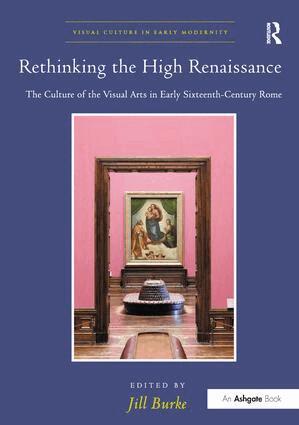
    Rethinking the High Renaissance

    The Culture of the Visual Arts in Early Sixteenth-Century Rome

    AvJill Burke

    Häftad, Engelska, 2016

    Del i serien Visual Culture in Early Modernity

    918 kr

    Beställningsvara. Skickas inom 10-15 vardagar. Fri frakt över 249 kr.

    Beskrivning

    The perception that the early sixteenth century saw a culmination of the Renaissance classical revival - only to degrade into mannerism shortly after Raphael's death in 1520 - has been extremely tenacious; but many scholars agree that this tidy narrative is deeply problematic. Exploring how we can reconceptualize the High Renaissance in a way that reflects how we research and teach today, this volume complicates and deepens our understanding of artistic change. Focusing on Rome, the paradigmatic centre of the High Renaissance narrative, each essay presents a case study of a particular aspect of the culture of the city in the early sixteenth century, including new analyses of Raphael's stanze, Michelangelo's Sistine Ceiling and the architectural designs of Bramante. The contributors question notions of periodization, reconsider the Renaissance relationship with classical antiquity, and ultimately reconfigure our understanding of 'high Renaissance style'.

    Produktinformation

    • Utgivningsdatum:2016-11-11
    • Mått:174 x 246 x 27 mm
    • Vikt:750 g
    • Format:Häftad
    • Språk:Engelska
    • Serie:Visual Culture in Early Modernity
    • Antal sidor:408
    • Förlag:Taylor & Francis Ltd
    • ISBN:9781138272668

    Utforska kategorier

    • Konsthistoria inom Kultur
    • Konstböcker inom Kultur

    Mer om författaren

    Jill Burke is Senior Lecturer in the History of Art at the University of Edinburgh, UK.

    Recensioner i media

    'The volume deserves to be commended for its graceful approach to the High Renaissance, conveying the hazards but also the value of employing such a concept. By acknowledging the High Renaissance as a construct of extraordinary enduring power, and also by linking it to sixteenth-century practice and experience, this book encourages new ways of thinking for specialists and a broad interested public alike.' Sixteenth Century Journal

    Innehållsförteckning

    • Contents: Preface; Inventing the High Renaissance from Winckelmann to Wikipedia: an introductory essay, Jill Burke; Part I Vantage Points: Teaching (and thinking about) the High Renaissance, with some observations on its relationship to Classical Antiquity, Brian A. Curran; Figments and fragments: Julius II's Rome, Suzanne B. Butters; Humanists, historians and the fullness of time in Renaissance Rome, Kenneth Gouwens; Cellini's Roma, Gwendolyn Trottein; On the unity/disunity of the arts: Vasari (and others) on architecture, David Cast. Part II Making the High Renaissance: Classicism, Conflation and Culmination: Bramante and the origins of the 'High Renaissance', Christoph Luitpold Frommel; Classical mistranslations: the absence of a modular system in Calvo's De Architectura, Angeliki Pollali; Giuliano da Sangallo between Florentine Quattrocento and Roman High Renaissance, Sabine Frommel; Perugino, Raphael and the decoration of the Stanza dell'Incendio, Michael Bury; Forgery, faith and divine hierarchy after Lorenzo Valla, Meredith J. Gill; The conception and design of Michelangelo's Sistine Chapel ceiling: 'wishing to shed a little light upon the whole rather than mentioning the parts', David Hemsoll; Pope Clement VII and the decorum of medieval art, Sheryl E. Reiss; Bibliography; Index.