• Fri frakt över 249 kr
  • •
  • Snabba leveranser
  • •
  • Billiga böcker
Kundservice

Du är på sajten för privatpersoner.

Företag, bibliotek eller offentlig verksamhet?

Du handlar på classic.bokus.com, där alla dina funktioner finns intakta.
Till classic.bokus.com
Bokus logotyp. Gå till startsidan.
  • Erbjudanden
  • Nyheter
  • Student
  • Topplistor
  • Barn & ungdom
  • Bokus Play
  • E-böcker
  • Pocketböcker
  • Spel & pussel

10% rabatt på allt med kod: NYSTART10 →

Sidfot

Mina sidor

    Hjälp

    • Kundservice
    • Vanliga frågor och svar
    • Frakt och leverans
    • Retur vid ångerrätt
    • Reklamera vara
    • Betalning
    • Köpvillkor
    • Allmänna villkor
    • Information om webbplatsens tillgänglighet

    Om Bokus

    • Om oss
    • Pressrum
    • För studenter
    • För företag
    • För bibliotek och offentlig verksamhet
    • För leverantörer
    • Hållbarhet

    Populärt

    • Aktuella erbjudanden
    • Presentkort
    • Studentlitteratur
    • Nya böcker
    • Topplistor
    • Signerade böcker
    • Engelska böcker

    Inspiration

    • Boktips
    • BookTok
    • Populära bokserier
    • Barnbokskaraktärer
    • Populära författare
    Logotyp för Bokus
    Följ oss på Facebook (extern länk)Följ oss på Instagram (extern länk)Följ oss på YouTube (extern länk)Följ oss på TikTok (extern länk)
    bokus @ CookiesAnpassa cookiesIntegritetspolicyKöpvillkor
    Till Citymail hemsida (extern länk)Till Budbee hemsida (extern länk)Till Postnord hemsida (extern länk)Till Schenker hemsida (extern länk)Till Early Bird hemsida (extern länk)Till Walleys hemsida (extern länk)
    1. Historia och arkeologi
    2. Historia
    3. Historia: särskilda händelser och ämnen
    4. Socialhistoria och kulturhistoria

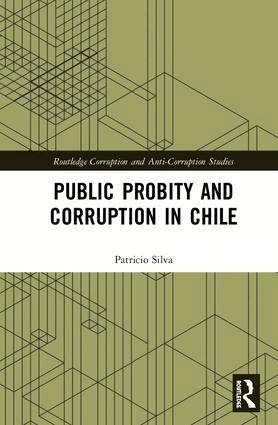
    Public Probity and Corruption in Chile

    AvPatricio Silva

    Inbunden, Engelska, 2019

    Del i serien Routledge Corruption and Anti-Corruption Studies

    2 495 kr

    Beställningsvara. Skickas inom 10-15 vardagar. Fri frakt över 249 kr.

    Fler format och utgåvor

    Häftad

    687 kr

    E-bok

    812 kr

    E-bok

    814 kr

    Beskrivning

    In most Latin American countries, key officials and political figures have been involved in big corruption scandals in the last decade, leading to a rigorous academic debate on the possible socio-economic, political and cultural factors responsible for corrupt practices across the region. This book takes a different approach by focusing on Chile, which shows the lowest levels of corruption in the region. Instead of analysing notoriously bad cases in Mexico, Argentina, Brazil and Venezuela, this book explores the factors which have led to a relatively high degree of public probity among power holders in Chile.Public Probity and Corruption in Chile presents a long-term historical analysis demonstrating that public probity in Chile has its roots in the colonial period, and that public and state responses have historically shown a low level of tolerance for public cases of corruption. In particular, the author highlights the role played by relative poverty and lack of resources, geographical remoteness, the impact of the Arauco War against the Mapuche people, the militarisation of both government and public administration, the extreme oligarchic nature of the Chilean aristocracy, the early consolidation of state institutions and the rule of law, high levels of political stability and the role played by patriotism.Studying an example of better practice in detail in this way provides valuable insights into the factors and actors which can help to prevent or to revert the phenomenon of public corruption in the region more generally. As such, this book will be of interest to researchers of corruption and public probity both in Chile and further afield.

    Produktinformation

    • Utgivningsdatum:2019-05-30
    • Mått:156 x 234 x 16 mm
    • Vikt:589 g
    • Format:Inbunden
    • Språk:Engelska
    • Serie:Routledge Corruption and Anti-Corruption Studies
    • Antal sidor:246
    • Förlag:Taylor & Francis Ltd
    • ISBN:9781138331167

    Utforska kategorier

    • Socialhistoria och kulturhistoria inom Historia och arkeologi
    • Referensverk och tvärvetenskap inom Samhälle och politik
    • Politik och statsskick inom Samhälle och politik

    Mer om författaren

    Patricio Silva is Full Professor of Modern Latin American history at the Department of Latin American Studies, Leiden University, Leiden, The Netherlands.

    Recensioner i media

    "It is commonplace to cite Chilean exceptionalism as part of any analysis of variance in the governance of Latin America states. Patricio Silva has produced an encyclopaedic analysis of how the Chilean state was able to maintain a fairly clean administration (with some exceptions). This book provides both a historical guide and a sociological analysis explaining the trends and the exceptions, and should be required reading for students of Chile and of the state in general." -- Miguel Angel Centeno, Musgrave Professor of Sociology, Princeton University, USA"When one looks at Chile from a comparative perspective, one of the country’s main mysteries are its relatively low levels of corruption. Cases which in the rest of Latin America are considered to be small acts of naughtiness or cleverness, that can even produce admiration, in Chile they constitute real scandals which offend the idea Chileans have of themselves. Chile seems to have a culture of probity, a certain allergy towards corruption which constitutes an exception in Latin America. Where does that culture of probity come from? Patricio Silva provides an answer to that question by exploring its origins in colonial Chile and its long evolution up to the present." -- Carlos Peña, Professor and Rector of Universidad Diego Portales, Chile

    Innehållsförteckning

    • Introduction 1. Public Probity in Colonial Chile: War, Poverty, Nobility and Creole Patriotism, 1541-1810 2. Public Probity in Republican Chile: Civil Virtue under the Oligarchic Order, 1810-1920 3. Public Probity and State Modernisation under the Mesocratic Order, 1920-1973 4. Public Probity under Stress, 1973-2018 Conclusion