• Fri frakt över 249 kr
  • •
  • Snabba leveranser
  • •
  • Billiga böcker
Kundservice

Du är på sajten för privatpersoner.

Företag, bibliotek eller offentlig verksamhet?

Du handlar på classic.bokus.com, där alla dina funktioner finns intakta.
Till classic.bokus.com
Bokus logotyp. Gå till startsidan.
  • Erbjudanden
  • Nyheter
  • Student
  • Topplistor
  • Barn & ungdom
  • Bokus Play
  • E-böcker
  • Pocketböcker
  • Spel & pussel

Må bättre, för mindre! Upp till 50% rabatt på hälsoböcker

Sidfot

Mina sidor

    Hjälp

    • Kundservice
    • Vanliga frågor och svar
    • Frakt och leverans
    • Retur vid ångerrätt
    • Reklamera vara
    • Betalning
    • Köpvillkor
    • Allmänna villkor
    • Information om webbplatsens tillgänglighet

    Om Bokus

    • Om oss
    • Pressrum
    • För studenter
    • För företag
    • För bibliotek och offentlig verksamhet
    • För leverantörer
    • Hållbarhet

    Populärt

    • Aktuella erbjudanden
    • Presentkort
    • Studentlitteratur
    • Nya böcker
    • Topplistor
    • Signerade böcker
    • Engelska böcker

    Inspiration

    • Boktips
    • BookTok
    • Populära bokserier
    • Barnbokskaraktärer
    • Populära författare
    Logotyp för Bokus
    Följ oss på Facebook (extern länk)Följ oss på Instagram (extern länk)Följ oss på YouTube (extern länk)Följ oss på TikTok (extern länk)
    bokus @ CookiesAnpassa cookiesIntegritetspolicyKöpvillkor
    Till Citymail hemsida (extern länk)Till Budbee hemsida (extern länk)Till Postnord hemsida (extern länk)Till Schenker hemsida (extern länk)Till Early Bird hemsida (extern länk)Till Walleys hemsida (extern länk)
    1. Kultur
    2. Arkitektur

    Politics of Furniture

    Identity, Diplomacy and Persuasion in Post-War Interiors

    AvFredie Floré,Cammie McAtee

    Häftad, Engelska, 2018

    744 kr

    Beställningsvara. Skickas inom 10-15 vardagar. Fri frakt över 249 kr.

    Beskrivning

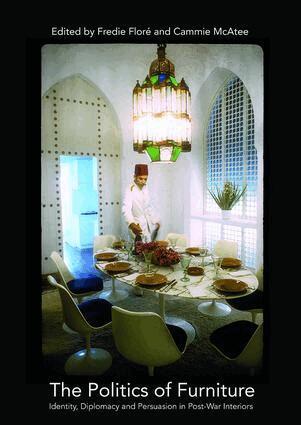
    In many different parts of the world modern furniture elements have served as material expressions of power in the post-war era. They were often meant to express an international and in some respects apolitical modern language, but when placed in a sensitive setting or a meaningful architectural context, they were highly capable of negotiating or manipulating ideological messages. The agency of modern furniture was often less overt than that of political slogans or statements, but as the chapters in this book reveal, it had the potential of becoming a persuasive and malleable ally in very diverse politically charged arenas, including embassies, governmental ministries, showrooms, exhibitions, design schools, libraries, museums and even prisons.This collection of chapters examines the consolidating as well as the disrupting force of modern furniture in the global context between 1945 and the mid-1970s. The volume shows that key to understanding this phenomenon is the study of the national as well as transnational systems through which it was launched, promoted and received. While some chapters squarely focus on individual furniture elements as vehicles communicating political and social meaning, others consider the role of furniture within potent sites that demand careful negotiation, whether between governments, cultures, or buyer and seller. In doing so, the book explicitly engages different scholarly fields: design history, history of interior architecture, architectural history, cultural history, diplomatic and political history, postcolonial studies, tourism studies, material culture studies, furniture history, and heritage and preservation studies.Taken together, the narratives and case studies compiled in this volume offer a better understanding of the political agency of post-war modern furniture in its original historical context. At the same time, they will enrich current debates on reuse, relocation or reproduction of some of these elements.

    Produktinformation

    • Utgivningsdatum:2018-08-23
    • Mått:174 x 246 x 16 mm
    • Vikt:460 g
    • Format:Häftad
    • Språk:Engelska
    • Antal sidor:232
    • Förlag:Taylor & Francis Ltd
    • ISBN:9781138342156

    Utforska kategorier

    • Arkitektur inom Kultur
    • Inredningsarkitektur inom Kultur
    • Arkitekturhistoria inom Kultur

    Mer om författaren

    Fredie Floré is an engineer-architect and Associate Professor in history of (interior) architecture at KU Leuven, Faculty of Architecture. She is a member of the research group Architecture Interiority Inhabitation (A2I). Her research focuses on the representational role of architecture, interiors and design in the post-war era.Cammie McAtee is an independent curator and architectural historian based in Montréal. For many years, she was a curator at the Canadian Centre for Architecture. Her research focuses on post-war North American architecture and design.

    Recensioner i media

    By demonstrating how furniture can perform a politically active, as well as a functional and an aesthetic role in so many of our inside spaces, The Politics of Furniture takes design historical scholarship to a new level.Penny Sparke, Director, The Modern Interiors Research Centre, Kingston University, UKCammie McAtee and Fredie Floré’s edited book The Politics of Furniture: Identity, Diplomacy and Persuasion in Postwar Interiors provides an exemplary analysis of the silent communications made by furniture, furnishings and furnished environments, meticulously set within national and transnational contexts. This edited book is remarkably coherent and convincingly arranged into three parts addressing identity politics, commercial spaces and diplomatic furniture respectively.It contributes to a surge of new scholarship demonstrating the importance of the interior and its histories, in capturing the historical relevance of often ephemeral arrangements. The editors and authors have adopted and applied cutting edge ideas and approaches in the history of design, such as the role played by mediating discourses in the complex process of creating significance for designed goods, and the benefits of transnational design histories for the globalisation of design studies and design history. McAtee and Flore’s contribution is not confined to the introduction and three chapters for which they were co-authors, as their editorial intelligence is seen throughout the book. The editors’ shared interest in Knoll (Associates and International) becomes a repeated motif throughout the book, functioning as an introductory case study, and as representative of a negotiation of US soft power and the identity of other nation states which wanted to be seen as contemporary in the post-war period. Some of the examples discussed will be familiar to readers well versed in the canon of design, such as the co-option of modernist design into US marketisation of the ‘American’ lifestyles, while others will be less well known, for instance the role of prisoner-made furniture in driving the modernisation of Japan. The Politics of Furniture is an important and relevant volume that will remain an influential reference for years to come. Grace Lees-Maffei, University of Hertfordshire, UKThis innovative and exciting addition to the literature develops recent specialist research and new debates on the role of furniture in interiors. ...[and] is an exciting and valuable addition to architecture and design studies that raises the bar for future authors.Clive Edwards, Emeritus Professor of Design History School of Art English and Drama, Loughborough University, Loughborough, UK. Journal of Design History "The editors and authors of The Politics of Furniture have set the academic bar high, with a serious collection of essays that were planned, researched, written, and edited with equal parts imagination and rigor."Mark Hinchman, University of Nebraska, USA, College of Art Association publication

    Innehållsförteckning

    • Introduction: The Politics of Furniture (Fredie Floré and Cammie McAtee), Part I: Furniture and Identity Politics, 1.Nomadic Furniture in the "Heart of Darkness": Colonial and Post-Colonial Trajectories of Modern Design Artifacts To and From Tropical Africa (Johan Lagae), 2.Modernism on Vacation: The Politics of Hotel Furniture in the Spanish Caribbean (Erica N. Morawski), 3.When Modernity Confronts Tradition: Conflicting Visions for Post-War Furniture Design in Québec (Martin Racine), 4. The Belgian Royal Library: An Expression of National Identity with an International Imprimatur (Fredie Floré and Hannes Pieters), Part II: Spaces of Persuasion, 5. Exhibitions for Modern Living: Lifestyle Propaganda and the Promotion of Modern Furniture and Furnishings in the United States, 1930s-1950s (Margaret Maile Petty), 6.Knolling Paris: From the "New Look" to Knoll au Louvre (Cammie McAtee and Fredie Floré), 7. Correction Fairs and Japanese Furniture Made in Prison (Yasuko Suga), Part III: The Diplomacy of Furniture, 8.National Identity and Modern Furniture in Brasilia’s Itamaraty Palace (Luciana Saboia, Elane Ribeiro Peixoto, and José Airton Costa Junior), 9. All-Over Inside and Out: Eero Saarinen’s United States Embassy in London (Cammie McAtee), 10. Designed Diplomacy: Furniture, Furnishing and Art in Australian Embassies for Washington DC and Paris (Philip Goad)