• Fri frakt över 249 kr
  • •
  • Snabba leveranser
  • •
  • Billiga böcker
Kundservice

Du är på sajten för privatpersoner.

Företag, bibliotek eller offentlig verksamhet?

Du handlar på classic.bokus.com, där alla dina funktioner finns intakta.
Till classic.bokus.com
Bokus logotyp. Gå till startsidan.
  • Erbjudanden
  • Student
  • Topplistor
  • Barn & ungdom
  • Bokus Play
  • E-böcker
  • Ljudböcker
  • Pocketböcker
  • Spel och pussel

Pocketfynda! Hundratals böcker för 49 kr/st →

Sidfot

Mina sidor

    Hjälp

    • Kundservice
    • Vanliga frågor och svar
    • Frakt och leverans
    • Retur vid ångerrätt
    • Reklamera vara
    • Betalning
    • Köpvillkor
    • Allmänna villkor
    • Information om webbplatsens tillgänglighet

    Om Bokus

    • Om oss
    • Pressrum
    • För studenter
    • För företag
    • För bibliotek och offentlig verksamhet
    • För leverantörer
    • Hållbarhet

    Populärt

    • Aktuella erbjudanden
    • Presentkort
    • Studentlitteratur
    • Nya böcker
    • Topplistor
    • Signerade böcker
    • Engelska böcker

    Inspiration

    • Boktips
    • BookTok
    • Barnbokskaraktärer
    • Populära författare
    Logotyp för Bokus
    Följ oss på Facebook (extern länk)Följ oss på Instagram (extern länk)Följ oss på YouTube (extern länk)Följ oss på TikTok (extern länk)
    bokus @ CookiesAnpassa cookiesIntegritetspolicyKöpvillkor
    Till Citymail hemsida (extern länk)Till Budbee hemsida (extern länk)Till Postnord hemsida (extern länk)Till Schenker hemsida (extern länk)Till Early Bird hemsida (extern länk)Till Walleys hemsida (extern länk)
    1. Samhälle och politik
    2. Sociologi och antropologi
    3. Antropologi

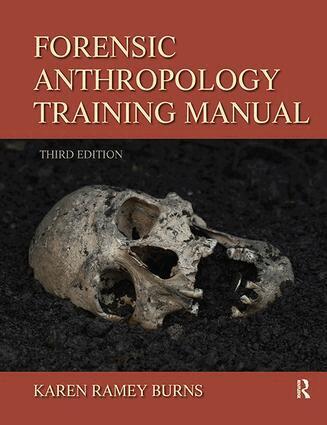
    Forensic Anthropology Training Manual

    AvKaren Ramey Burns

    Inbunden, Engelska, 2017

    2 802 kr

    Beställningsvara. Skickas inom 10-15 vardagar. Fri frakt över 249 kr.

    Fler format och utgåvor

    Häftad

    1 362 kr

    E-bok

    1 626 kr

    E-bok

    1 626 kr

    Beskrivning

    Provides basic information on successfully collecting, processing, analyzing, and describing skeletal human remains. Forensic Anthropology Training Manual serves as a practical reference tool and a framework for training in forensic anthropology. The first chapter informs judges, attorneys, law enforcement personnel, and international workers of the information and services available from a professional forensic anthropologist. The first section (Chapters 2-11) is a training guide to assist in the study of human skeletal anatomy. The second section (Chapters 12-17) focuses on the specific work of the forensic anthropologist, beginning with an introduction to the forensic sciences. Learning GoalsUpon completing this book readers will be able to: Have a strong foundation in human skeletal anatomy Explain how this knowledge contributes to the physical description and personal identification of human remains Understand the basics of excavating a grave, preparing a forensic report, and presenting expert witness testimony in a court of law Define forensic anthropology within the broader context of the forensic sciences Describe the work of today‘s forensic anthropologists

    Produktinformation

    • Utgivningsdatum:2017-07-03
    • Mått:216 x 280 x undefined mm
    • Vikt:1 140 g
    • Format:Inbunden
    • Språk:Engelska
    • Antal sidor:384
    • Upplaga:3
    • Förlag:Taylor & Francis Ltd
    • ISBN:9781138403840

    Utforska kategorier

    • Antropologi inom Samhälle och politik

    Mer om författaren

    Karen Ramey Burns is a practicing forensic anthropologist, teacher, writer, and human rights worker. She received her graduate education in forensic anthropology under the direction of the late Dr. William R. Maples at the University of Florida and developed experience in major crime laboratory procedures while working for the Georgia Bureau of Investigation, Division of Forensic Sciences. She continues to serve the state of Georgia as a consultant in forensic anthropology and as an appointed member of the Georgia Council on American Indian Concerns. She has testified as an expert witness in local,state, and international cases.Dr. Burns has devoted much of her professional career to international work, providing educational and technical assistance in the excavation and identification of human remains in Latin America, Haiti, the Middle East, and Africa. She documented war crimes in Iraq after the Gulf War (1991) and provided testimony in the Raboteau Trial in Gonaïve, Haiti (2000). She is the author of the “Protocol for Disinterment and Analysis of Skeletal Remains,” in the Manual for the Effective Prevention and Investigation of Extra-Legal, Arbitrary, and Summary Executions (1991), a United Nations publication.In times of national emergency, she works for the National Disaster Medical System, part of the U.S. Department of Homeland Security. She was deployed for the Katrina/Rita Hurricanes disaster in 2005, Tri-State Crematory incident in 2002, the World Trade Center terrorist attack in 2001, the Tarboro, North Carolina, flood in 1999, and the Flint River flood of 1994.Dr. Burns has contributed to several historic research projects, including a study of the Phoenician genocide in North Africa (Carthage), the identification of the revolutionary war hero Casimir Pulaski, and the search for Amelia Earhart. Dr. Burns is a coauthor of the award-winning book Amelia Earhart’s Shoes, Is the Mystery Solved? (2001), a discourse on the archaeological investigation.Her research interests include microstructure of mineralized tissues, effects of burning and cremation, and decomposition. She teaches human osteology, forensic anthropology, and human origins at the University of Georgia, as well as forensic anthropology and expert witness testimony for the U.S. Department of Justice’s International Criminal Investigative TrainingAssistance Program (ICITAP).Dr. Burns is presently the Director of Field Investigations for EQUITAS,the Colombian Interdisciplinary Team for Forensic Work and Psychosocial Assistance, Bogotá, Colombia.

    Innehållsförteckning

    • Chapter 1. Introduction to Forensic AnthropologyChapter 2. The Biology of Bone and JointsChapter 3. The Skull and HyoidChapter 4. The Shoulder Girdle and Thorax: Clavicle, Scapula, Ribs, and SternumChapter 5. The Vertebral ColumnChapter 6. The Arm: Humerus, Radius, and UlnaChapter 7. The Hand: Carpals, Metacarpals, and PhalangesChapter 8. The Pelvic Girdle: Illium, Ishium, and PubisChapter 9. The Leg: Femur, Tibia, Fibula, and PatellaChapter 10. The Foot: Tarsals, Metatarsals, and PhalangesChapter 11. Odontology (Teeth) Chapter 12. Introduction to the Forensic SciencesChapter 13. Laboratory AnalysisChapter 14. Race and Cranial MeasurementsChapter 15. Field MethodsChapter 16. Professional ResultsChapter 17. Large-Scale Applications