• Fri frakt över 249 kr
  • •
  • Snabba leveranser
  • •
  • Billiga böcker
Kundservice

Du är på sajten för privatpersoner.

Företag, bibliotek eller offentlig verksamhet?

Du handlar på classic.bokus.com, där alla dina funktioner finns intakta.
Till classic.bokus.com
Bokus logotyp. Gå till startsidan.
  • Erbjudanden
  • Nyheter
  • Student
  • Topplistor
  • Barn & ungdom
  • Bokus Play
  • E-böcker
  • Pocketböcker
  • Spel & pussel

10% studentrabatt med kod TERM26

Sidfot

Mina sidor

    Hjälp

    • Kundservice
    • Vanliga frågor och svar
    • Frakt och leverans
    • Retur vid ångerrätt
    • Reklamera vara
    • Betalning
    • Köpvillkor
    • Allmänna villkor
    • Information om webbplatsens tillgänglighet

    Om Bokus

    • Om oss
    • Pressrum
    • För studenter
    • För företag
    • För bibliotek och offentlig verksamhet
    • För leverantörer
    • Hållbarhet

    Populärt

    • Aktuella erbjudanden
    • Presentkort
    • Studentlitteratur
    • Nya böcker
    • Topplistor
    • Signerade böcker
    • Engelska böcker

    Inspiration

    • Boktips
    • BookTok
    • Populära bokserier
    • Barnbokskaraktärer
    • Populära författare
    Logotyp för Bokus
    Följ oss på Facebook (extern länk)Följ oss på Instagram (extern länk)Följ oss på YouTube (extern länk)Följ oss på TikTok (extern länk)
    bokus @ CookiesAnpassa cookiesIntegritetspolicyKöpvillkor
    Till Citymail hemsida (extern länk)Till Budbee hemsida (extern länk)Till Postnord hemsida (extern länk)Till Schenker hemsida (extern länk)Till Early Bird hemsida (extern länk)Till Walleys hemsida (extern länk)
    1. Ekonomi och Ledarskap
    2. Nationalekonomi

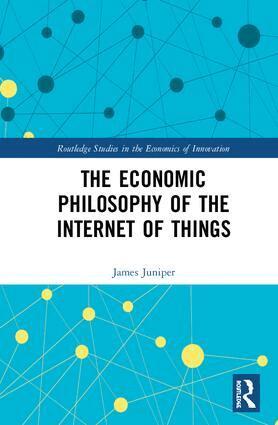
    Economic Philosophy of the Internet of Things

    AvJames Juniper

    Inbunden, Engelska, 2018

    Del i serien Routledge Studies in the Economics of Innovation

    2 506 kr

    Beställningsvara. Skickas inom 10-15 vardagar. Fri frakt över 249 kr.

    Fler format och utgåvor

    Häftad

    690 kr

    E-bok

    788 kr

    E-bok

    790 kr

    Beskrivning

    To properly understand the nature of the digital economy we need to investigate the phenomenon of a "ubiquitous computing system" (UCS). As defined by Robin Milner, this notion implies the following characteristics: (i) it will continually make decisions hitherto made by us; (ii) it will be vast, maybe 100 times today’s systems; (iii) it must continually adapt, on-line, to new requirements; and, (iv) individual UCSs will interact with one another. This book argues that neoclassical approaches to modelling economic behaviour based on optimal control by "representative-agents" are ill-suited to a world typified by concurrency, decentralized control, and interaction. To this end, it argues for the development of new, process-based approaches to analysis, modelling, and simulation. The book provides the context—both philosophical and mathematical—for the construction and application of new, rigorous, and meaningful analytical tools. In terms of social theory, it adopts a Post-Cognitivist approach, the elements of which include the nature philosophy of Schelling, Marx’s critique of political economy, Peircean Pragmatism, Whitehead’s process philosophy, and Merleau-Ponty’s phenomenology of the flesh, along with cognitive scientific notions of embodied cognition and neural Darwinism, as well as more questionable notions of artificial intelligence that are encompassed by the rubric of "perception-and-action-without-intelligence".

    Produktinformation

    • Utgivningsdatum:2018-06-27
    • Mått:156 x 234 x 21 mm
    • Vikt:454 g
    • Format:Inbunden
    • Språk:Engelska
    • Serie:Routledge Studies in the Economics of Innovation
    • Antal sidor:246
    • Förlag:Taylor & Francis Ltd
    • ISBN:9781138478176

    Utforska kategorier

    • Nationalekonomi inom Ekonomi och Ledarskap
    • Ledarskap och motivation inom Ekonomi och Ledarskap
    • Organisationsteori inom Ekonomi och Ledarskap

    Mer om författaren

    James Juniper is a lecturer at the University of Newcastle, NSW, Australia.

    Innehållsförteckning

    • Introduction: Post-Cognitivism and the Digital Economy; Chapter One: Transcendental Empiricism: From Schelling to Benjamin and Bloch; Chapter Two: Bourdieu and Structuralism; Chapter Three: ‘Co-Creation’ in the Creative Industries: a New Neoliberal Technology of Self?; Chapter Four: Neoliberalism, ‘Digitization’, and Creativity: the Issue of Applied Ontology; Chapter Five: Ubiquitous Computing Systems and the Digital Economy; Chapter Six: The Use of Diagrammatic Reasoning in Teaching Economics for the Digital Economy; Chapter Seven: Category-theoretic Approaches to Semantic Technologies; Technical Appendix: Category Theory and Sematic Technology; Chapter Eight: Conclusion; Glossary