• Fri frakt över 249 kr
  • •
  • Snabba leveranser
  • •
  • Billiga böcker
Kundservice

Du är på sajten för privatpersoner.

Företag, bibliotek eller offentlig verksamhet?

Du handlar på classic.bokus.com, där alla dina funktioner finns intakta.
Till classic.bokus.com
Bokus logotyp. Gå till startsidan.
  • Erbjudanden
  • Student
  • Topplistor
  • Barn & ungdom
  • Bokus Play
  • E-böcker
  • Ljudböcker
  • Pocketböcker
  • Spel och pussel

5% studentrabatt – använd koden KURSBOK27 →

Sidfot

Mina sidor

    Hjälp

    • Kundservice
    • Vanliga frågor och svar
    • Frakt och leverans
    • Retur vid ångerrätt
    • Reklamera vara
    • Betalning
    • Köpvillkor
    • Allmänna villkor
    • Information om webbplatsens tillgänglighet

    Om Bokus

    • Om oss
    • Pressrum
    • För studenter
    • För företag
    • För bibliotek och offentlig verksamhet
    • För leverantörer
    • Hållbarhet

    Populärt

    • Aktuella erbjudanden
    • Presentkort
    • Studentlitteratur
    • Nya böcker
    • Topplistor
    • Signerade böcker
    • Engelska böcker

    Inspiration

    • Boktips
    • BookTok
    • Barnbokskaraktärer
    • Populära författare
    Logotyp för Bokus
    Följ oss på Facebook (extern länk)Följ oss på Instagram (extern länk)Följ oss på YouTube (extern länk)Följ oss på TikTok (extern länk)
    bokus @ CookiesAnpassa cookiesIntegritetspolicyKöpvillkor
    Till Citymail hemsida (extern länk)Till Budbee hemsida (extern länk)Till Postnord hemsida (extern länk)Till Schenker hemsida (extern länk)Till Early Bird hemsida (extern länk)Till Walleys hemsida (extern länk)
    1. Psykologi och pedagogik
    2. Pedagogik
    3. Skolväsen och utbildningssystem
    4. Examination och betygsättning

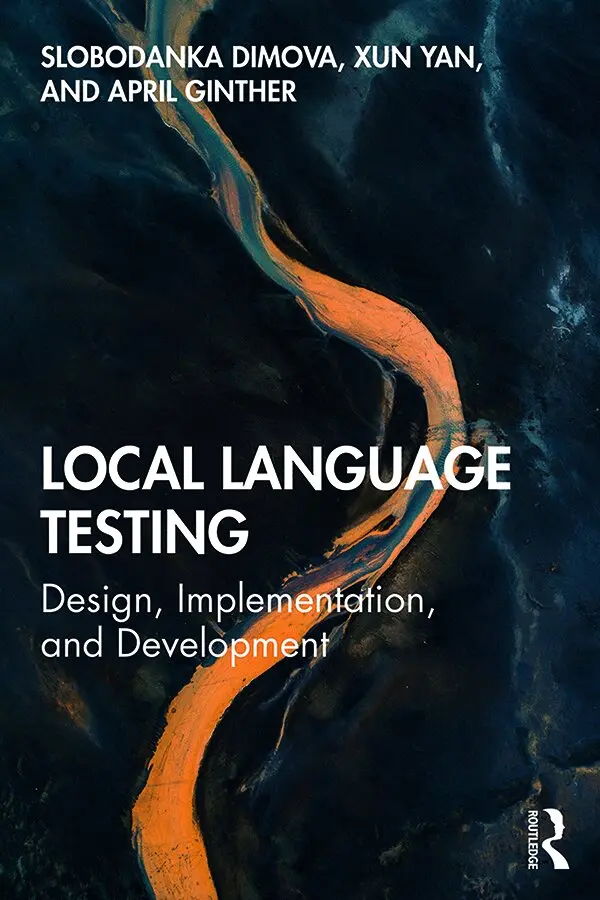
    Local Language Testing

    Design, Implementation, and Development

    AvSlobodanka Dimova,Xun Yan

    Häftad, Engelska, 2020

    591 kr

    Beställningsvara. Skickas inom 10-15 vardagar. Fri frakt över 249 kr.

    Fler format och utgåvor

    Inbunden

    2 345 kr

    Beskrivning

    Local Language Testing: Design, Implementation, and Development describes the language testing practice that exists in the intermediate space between large-scale standardized testing and classroom assessment, an area that is rarely addressed in the language testing and assessment literature. Covering both theory and practice, the book focuses on the advantages of local tests, fosters and encourages their use, and provides suggested ideas for their development and maintenance. The authors include examples of operational tests with well-proven track records and discuss:the ability of local tests to represent local contexts and values, explicitly and purposefully embed test results within instructional practice, and provide data for program evaluation and researchlocal testing practices grounded in the theoretical principles of language testing, drawing from experiences with local testing and providing practical examples of local language tests, illustrating how they can be designed to effectively function within and across different institutional contextsexamples of how local language tests and assessments are developed for use within a specific context and how they serve a variety of purposes (e.g., entry-level proficiency testing, placement testing, international teaching assistant testing, writing assessment, and program evaluation)Aimed at language program directors, graduate students, and researchers involved in language program development and evaluation, this is a timely book in that it focuses on the advantages of local tests, fosters and encourages their use, and outlines their development and maintenance. It constitutes essential reading for language program directors, graduate students, and researchers involved in language program development and evaluation.

    Produktinformation

    • Utgivningsdatum:2020-03-03
    • Mått:156 x 234 x 21 mm
    • Vikt:360 g
    • Format:Häftad
    • Språk:Engelska
    • Antal sidor:212
    • Förlag:Taylor & Francis Ltd
    • ISBN:9781138588493

    Utforska kategorier

    • Examination och betygsättning inom Psykologi och pedagogik
    • Språk: referensverk och allmänt inom Språk och ordböcker

    Mer om författaren

    Slobodanka Dimova is an associate professor in Language Testing and the coordinator of the Test of Oral English Proficiency for Academic Staff (TOEPAS) at the University of Copenhagen, Denmark. She currently serves as the book review editor for the journal Language Testing, a member of the Executive Committee of the European Association of Language Testing and Assessment (EALTA), and the Chair of the Danish Network for Language Testing and Assessment (DASTEN). She has also been a language testing consultant for the Danish Ministry of Education regarding the foreign language tests administered at the end of obligatory education. Her current research interests include rater training and rater behavior for oral proficiency tests, the development and validation of scales for performance-based tests, the use of technology in language testing and assessment, and the policies and practices related to the implementation of English-medium instruction (EMI) programs at non-Anglophone universities.Xun Yan is an assistant professor of Linguistics, Second Language Acquisition and Teacher Education (SLATE) and Educational Psychology at the University of Illinois at Urbana-Champaign (UIUC). At UIUC, he also supervises the university-level English Placement Test (EPT), designed to assess international students’ writing and speaking skills. His research interests include speaking and writing assessment, scale development and validation, psycholinguistic approaches to language testing, rater behavior and cognition, and language assessment literacy. His work has been published in Language Testing, Assessing Writing, TESOL Quarterly, and Journal of Second Language Writing.April Ginther is a professor of English at Purdue University and teaches graduate classes in language testing and quantitative research. During her tenure at Purdue, she has advised more than 20 graduate student dissertations. She is also the director of Purdue’s two primary English language support programs: The Oral English Proficiency Program, the support program for international teaching assistants, and The Purdue Language and Cultural Exchange, the support program for incoming international undergraduate students. As director of both programs, she is responsible for the development, maintenance, and administration of the local tests used to evaluate the English language skills of 1,000 incoming students each academic year. She is a founding member of MwALT, the Midwest Association of Language Testers, and is a well-respected member of the international language testing community. She served as the co-editor of the journal Language Testing from 2012 to 2017.

    Innehållsförteckning

    • PrefaceAcknowledgementsChapter 1: Introduction Why local tests?IntroductionOur testsContexts and problem solvingLarge-scale language tests and academic language testingOrganization of the rest of this volumeFurther readingReferences Chapter 2: Local tests, local contextsIntroductionLocal contexts and test purpose – decisions about test-takersLinking test purpose to instructional outcomesFurther readingReferencesChapter 3: Local test developmentIntroductionPlanning test developmentTest designTechnical manualsSummaryFurther readingReferencesChapter 4: Test tasksIntroductionDiscrete-point lexico-grammar itemsIntegrative measures of general language abilitySkill-based performance assessmentsSummaryFurther readingReferencesChapter 5: Local test deliveryIntroductionDigital devicesProduction of traditional and digitally delivered tests: what does it take?Opportunities for innovative task designTest administrationSelection of test delivery format: what to considerSummaryFurther readingReferencesChapter 6: ScalingIntroductionWhy do we need a rating scale?Different types of rating scalesApproaches to scale development and validationIssues to consider during scale validationUnique challenges and opportunities for scaling in local testing contextsSummaryFurther readingReferencesChapter 7: Raters and rater trainingIntroductionThe promise and perils of rater-mediated language assessmentRater behavior: a catalog of rater effectsWhy do we need rater training? Does it really work?Best practice for rater trainingSummaryFurther readingReferencesChapter 8: Data collection, management, and score reportingIntroductionData flowData storageData managementData usesSummaryFurther readingReferencesChapter 9: ReflectionsIntroductionSome reflections on the revision of the TOEPASSome reflections on the EPT scale revision processSome reflections on the development of the OEPTConclusionsReferencesAppendix AIndex