• Fri frakt över 249 kr
  • •
  • Snabba leveranser
  • •
  • Billiga böcker
Kundservice

Du är på sajten för privatpersoner.

Företag, bibliotek eller offentlig verksamhet?

Du handlar på classic.bokus.com, där alla dina funktioner finns intakta.
Till classic.bokus.com
Bokus logotyp. Gå till startsidan.
  • Erbjudanden
  • Nyheter
  • Student
  • Topplistor
  • Barn & ungdom
  • Bokus Play
  • E-böcker
  • Pocketböcker
  • Spel & pussel

10% rabatt på allt med kod NYSTART10 →

Sidfot

Mina sidor

    Hjälp

    • Kundservice
    • Vanliga frågor och svar
    • Frakt och leverans
    • Retur vid ångerrätt
    • Reklamera vara
    • Betalning
    • Köpvillkor
    • Allmänna villkor
    • Information om webbplatsens tillgänglighet

    Om Bokus

    • Om oss
    • Pressrum
    • För studenter
    • För företag
    • För bibliotek och offentlig verksamhet
    • För leverantörer
    • Hållbarhet

    Populärt

    • Aktuella erbjudanden
    • Presentkort
    • Studentlitteratur
    • Nya böcker
    • Topplistor
    • Signerade böcker
    • Engelska böcker

    Inspiration

    • Boktips
    • BookTok
    • Populära bokserier
    • Barnbokskaraktärer
    • Populära författare
    Logotyp för Bokus
    Följ oss på Facebook (extern länk)Följ oss på Instagram (extern länk)Följ oss på YouTube (extern länk)Följ oss på TikTok (extern länk)
    bokus @ CookiesAnpassa cookiesIntegritetspolicyKöpvillkor
    Till Citymail hemsida (extern länk)Till Budbee hemsida (extern länk)Till Postnord hemsida (extern länk)Till Schenker hemsida (extern länk)Till Early Bird hemsida (extern länk)Till Walleys hemsida (extern länk)
    1. Naturvetenskap och teknik
    2. Geovetenskap
    3. Regional planering

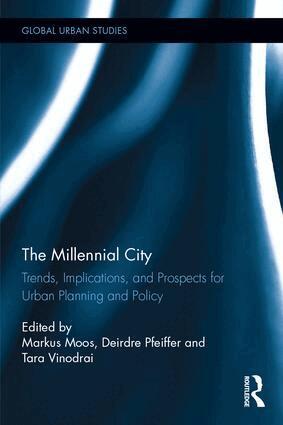
    Millennial City

    Trends, Implications, and Prospects for Urban Planning and Policy

    AvMarkus Moos,Deirdre Pfeiffer

    Inbunden, Engelska, 2017

    Del i serien Global Urban Studies

    2 423 kr

    Beställningsvara. Skickas inom 10-15 vardagar. Fri frakt över 249 kr.

    Beskrivning

    Millennials have captured our imaginaries in recent years. The conventional wisdom is that this generation of young adults lives in downtown neighbourhoods near cafes, public transit and other amenities. Yet, this depiction is rarely unpacked nor problematized. Despite some commonalities, the Millennial generation is highly diverse and many face housing affordability and labour market constraints. Regardless, as the largest generation following the post-World War II baby boom, Millennials will surely leave their mark on cities.This book assesses the impact of Millennials on cities. It asks how the Millennial generation differs from previous generations in terms of their labour market experiences, housing outcomes, transportation decisions, the opportunities available to them, and the constraints they face. It also explores the urban planning and public policy implications that arise from these generational shifts.This book offers a generational lens that faculty, students and other readers with interest in the fields of urban studies, planning, geography, economic development, demography, or sociology will find useful in interpreting contemporary U.S. and Canadian cities. It also provides guidance to planners and policymakers on how to think about Millennials in their work and make decisions that will allow all generations to thrive.

    Produktinformation

    • Utgivningsdatum:2017-08-14
    • Mått:156 x 234 x 24 mm
    • Vikt:740 g
    • Format:Inbunden
    • Språk:Engelska
    • Serie:Global Urban Studies
    • Antal sidor:298
    • Förlag:Taylor & Francis Ltd
    • ISBN:9781138631236

    Utforska kategorier

    • Regional planering inom Naturvetenskap och teknik
    • Sociala grupper och identitet inom Samhälle och politik

    Mer om författaren

    Markus Moos, PhD MCIP RPP, is Associate Professor in the School of Planning at the University of Waterloo in Canada. His research is on the economies, housing markets and social structures of cities, including youthification and the generational dimensions of urban change.Deirdre Pfeiffer, PhD AICP, is Assistant Professor in the School of Geographical Sciences & Urban Planning at Arizona State University in the U.S.A. Her research focuses on housing strategies in the U.S. relevant to an aging and diversifying society, the outcomes of the foreclosure crisis, and the relationship between suburban growth and racial equity.Tara Vinodrai, PhD, is Associate Professor in the Department of Geography & Environmental Management and the School of Environment, Enterprise, and Development at the University of Waterloo in Canada. At the core of her research program is a concern with understanding and theorizing the dynamics of contemporary economic change and the emerging and evolving geographies of the knowledge-based economy.

    Innehållsförteckning

    • Part 1: Introduction Chapter 1: The Millennial City, Shaped by Contradictions Chapter 2: The Impact of Generational Change On Cities Chapter 3: Planning for Cool: Millennials and The Innovation Economy of Cities Part 2: Millennial Economies Chapter 4: Young Adult Household Economic Well-Being: Comparing Millennials to Earlier Generations in The United States Chapter 5: Underwater Generation? Debt and Wealth Among Millennials Chapter 6: The Millennial Urban Space-Economy: Dissolving Workplaces and The De-Localization of Economic Value-Creation Chapter 7: The Privilege of A Parental Safety Net: Millennials and The intergenerational Transfer of Wealth and Resources Chapter 8: Planning for The Sharing Economy Part 3: Housing The Next Generation Chapter 9: Generationing Housing: The Role of intergenerational Wealth Transfer in Young Adults’ Housing Outcomes Chapter 10: Is The Real Estate Industry Cementing Millennials’ Residence in Urban Cores and Central Cities? Insights from Phoenix and Houston Chapter 11: Boomers and Their Boomerang Kids: Comparing Housing Opportunities for Baby Boomers and Millennials in The United States Chapter 12: Beyond "Peak Millennial": Developing an index of Generational Congestion for Local Government Use in The United States and Canada Chapter 13: Urban Vacation Rentals and The Housing Market: Boon or Bane in The Millennial City Part 4: Millennial Mobilities Chapter 14: Will Millennials Remain in The City? Residential Mobility in Post-industrial, Post-Modern, Post-Suburban America Chapter 15: Meet The Four Types of U.S. Millennial Travelers Chapter 16: Emerging Mobility Patterns of the Millennials in Canada Chapter 17: I Drive to Work, Sometimes: Motility Capital and Mode Flexibility Among Young Adult Gentrifiers Part 5: Millennial City Futures Chapter 18: Fun for All Ages: Weaving Greenspace, Transportation, and Housing Together in The intergenerational City Chapter 19: What Does the March of The Millennials Mean for The Future American City? Chapter 20: (Millennial) Cities of Tomorrow