• Fri frakt över 249 kr
  • •
  • Snabba leveranser
  • •
  • Billiga böcker
Kundservice

Du är på sajten för privatpersoner.

Företag, bibliotek eller offentlig verksamhet?

Du handlar på classic.bokus.com, där alla dina funktioner finns intakta.
Till classic.bokus.com
Bokus logotyp. Gå till startsidan.
  • Erbjudanden
  • Student
  • Topplistor
  • Barn & ungdom
  • Bokus Play
  • E-böcker
  • Ljudböcker
  • Pocketböcker
  • Spel och pussel

5% studentrabatt – använd koden KURSBOK27 →

Sidfot

Mina sidor

    Hjälp

    • Kundservice
    • Vanliga frågor och svar
    • Frakt och leverans
    • Retur vid ångerrätt
    • Reklamera vara
    • Betalning
    • Köpvillkor
    • Allmänna villkor
    • Information om webbplatsens tillgänglighet

    Om Bokus

    • Om oss
    • Pressrum
    • För studenter
    • För företag
    • För bibliotek och offentlig verksamhet
    • För leverantörer
    • Hållbarhet

    Populärt

    • Aktuella erbjudanden
    • Presentkort
    • Studentlitteratur
    • Nya böcker
    • Topplistor
    • Signerade böcker
    • Engelska böcker

    Inspiration

    • Boktips
    • BookTok
    • Barnbokskaraktärer
    • Populära författare
    Logotyp för Bokus
    Följ oss på Facebook (extern länk)Följ oss på Instagram (extern länk)Följ oss på YouTube (extern länk)Följ oss på TikTok (extern länk)
    bokus @ CookiesAnpassa cookiesIntegritetspolicyKöpvillkor
    Till Citymail hemsida (extern länk)Till Budbee hemsida (extern länk)Till Postnord hemsida (extern länk)Till Schenker hemsida (extern länk)Till Early Bird hemsida (extern länk)Till Walleys hemsida (extern länk)
    1. Filosofi och religion
    2. Filosofi
    3. Filosofiska discipliner

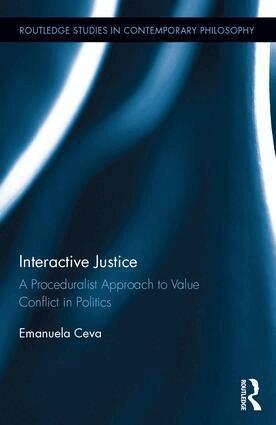
    Interactive Justice

    A Proceduralist Approach to Value Conflict in Politics

    AvEmanuela Ceva

    Inbunden, Engelska, 2016

    Del i serien Routledge Studies in Contemporary Philosophy

    2 413 kr

    Beställningsvara. Skickas inom 10-15 vardagar. Fri frakt över 249 kr.

    Fler format och utgåvor

    Häftad

    706 kr

    E-bok

    838 kr

    E-bok

    838 kr

    Beskrivning

    Contemporary societies are riddled with moral disputes caused by conflicts between value claims competing for the regulation of matters of public concern. This familiar state of affairs is relevant for one of the most important debates within liberal political thought: should institutions seek to realize justice or peace? Justice-driven philosophers characterize the normative conditions for the resolution of value conflicts through the establishment of a moral consensus on an order of priority between competing value claims. Peace-driven philosophers have concentrated, perhaps more modestly, on the characterization of the ways in which competing value claims should be balanced, with a view to establishing a modus vivendi aimed at containing the conflict.Interactive Justice addresses an important question related to this debate: on what terms should the parties interact during their conflict for their interaction to be morally acceptable to them? Although largely unexplored by political philosophers, this is a main area of concern in conflict management. Building on a proceduralist interpretation of "relational" concerns of justice, the author develops a liberal normative theory of interactive justice for the management of value conflict in politics grounded in the fundamental values of fair hearing and procedural equality. This book innovatively builds a bridge between works in political philosophy and peace studies to propose a fresh lens through which to view the normative responses liberal institutions ought to give to value conflict in politics, and moves beyond the apparent dichotomy between pursuing end-state justice through conflict resolution or peace through conflict containment.

    Produktinformation

    • Utgivningsdatum:2016-05-23
    • Mått:152 x 229 x 16 mm
    • Vikt:430 g
    • Format:Inbunden
    • Språk:Engelska
    • Serie:Routledge Studies in Contemporary Philosophy
    • Antal sidor:196
    • Förlag:Taylor & Francis Ltd
    • ISBN:9781138676466

    Utforska kategorier

    • Filosofiska discipliner inom Filosofi och religion
    • Statsvetenskap och politisk teori inom Samhälle och politik

    Mer om författaren

    Emanuela Ceva is Professor of Political Theory at the University of Geneva. She is the author of Is Whistleblowing a Duty? (2018). She has held visiting positions at Harvard, Leuven, Oxford, St. Andrews, Montreal. She works on value conflict, democracy, and corruption. Recent articles have appeared in Journal of Political Philosophy, Social Philosophy and Policy, Philosophy Compass, and Politics, Philosophy & Economics.

    Recensioner i media

    "Ceva offers a unique and needed contribution to discussions of justice as well as to the existing literature on peace studies...[She] succeeds in showing the plausibility of ways to handle conflicts that move us away from common and simple attempts to defeat opponents, that the methods we use can be just as important morally as the outcomes we reach, and that value conflicts run deeper than the political disputes they are symptoms of (and therefore require different kinds of considerations). Furthermore, her command of and deep engagement with a broad and diverse body of relevant literature is impressive."—Notre Dame Philosophical Reviews"Ceva’s book is short and concise, her writing style is clear and the topic is interesting. Interactive Justice provides a welcome new philosophical perspective on value conflicts in contemporary democracies, asking us to recognize the justice dimension in conflict management."—Ethical Theory and Moral Practice

    Innehållsförteckning

    • Introduction Part I: Justice and Value Conflict in Politics 1. Value Conflict in Politics as a Circumstance of Interactive Justice 2. Normative Responses to Value Conflict: Resolving, Containing, Managing Part II: Conflict Management and the Procedural Theorization about Justice 3. Procedural and Outcome Theories of Justice 4. Proceduralism and the Management of Value Conflict Part III: Interactive Justice for the Management of Value Conflict: A Procedural Conception 5. Just Conflict Management in Theory: Egalitarian Procedures of Adversary Argumentation 6. Just Conflict Management in Practice: The Role of Understanding Conclusion