• Fri frakt över 249 kr
  • •
  • Snabba leveranser
  • •
  • Billiga böcker
Kundservice

Du är på sajten för privatpersoner.

Företag, bibliotek eller offentlig verksamhet?

Du handlar på classic.bokus.com, där alla dina funktioner finns intakta.
Till classic.bokus.com
Bokus logotyp. Gå till startsidan.
  • Erbjudanden
  • Nyheter
  • Student
  • Topplistor
  • Barn & ungdom
  • Bokus Play
  • E-böcker
  • Pocketböcker
  • Spel & pussel

10% rabatt på allt med kod: NYSTART10 →

Sidfot

Mina sidor

    Hjälp

    • Kundservice
    • Vanliga frågor och svar
    • Frakt och leverans
    • Retur vid ångerrätt
    • Reklamera vara
    • Betalning
    • Köpvillkor
    • Allmänna villkor
    • Information om webbplatsens tillgänglighet

    Om Bokus

    • Om oss
    • Pressrum
    • För studenter
    • För företag
    • För bibliotek och offentlig verksamhet
    • För leverantörer
    • Hållbarhet

    Populärt

    • Aktuella erbjudanden
    • Presentkort
    • Studentlitteratur
    • Nya böcker
    • Topplistor
    • Signerade böcker
    • Engelska böcker

    Inspiration

    • Boktips
    • BookTok
    • Populära bokserier
    • Barnbokskaraktärer
    • Populära författare
    Logotyp för Bokus
    Följ oss på Facebook (extern länk)Följ oss på Instagram (extern länk)Följ oss på YouTube (extern länk)Följ oss på TikTok (extern länk)
    bokus @ CookiesAnpassa cookiesIntegritetspolicyKöpvillkor
    Till Citymail hemsida (extern länk)Till Budbee hemsida (extern länk)Till Postnord hemsida (extern länk)Till Schenker hemsida (extern länk)Till Early Bird hemsida (extern länk)Till Walleys hemsida (extern länk)
    1. Ekonomi och Ledarskap
    2. Nationalekonomi
    3. Ekonomisk politik

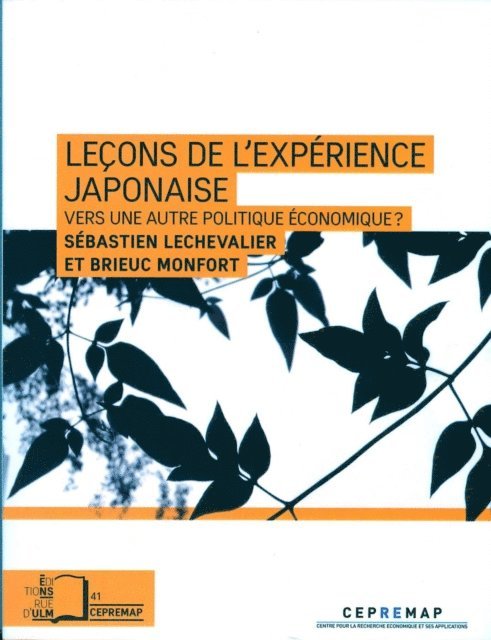
    Great Transformation of Japanese Capitalism

    AvSébastien Lechevalier

    Häftad, Engelska, 2016

    Del i serien Nissan Institute/Routledge Japanese Studies

    723 kr

    Beställningsvara. Skickas inom 10-15 vardagar. Fri frakt över 249 kr.

    Beskrivning

    In the 1980s the performance of Japan’s economy was an international success story, and led many economists to suggest that the 1990s would be a Japanese decade. Today, however, the dominant view is that Japan is inescapably on a downward slope. Rather than focusing on the evolution of the performance of Japanese capitalism, this book reflects on the changes that it has experienced over the past 30 years, and presents a comprehensive analysis of the great transformation of Japanese capitalism from the heights of the 1980s, through the lost decades of the 1990s, and well into the 21st century. This book posits an alternative analysis of the Japanese economic trajectory since the early 1980s, and argues that whereas policies inspired by neo-liberalism have been presented as a solution to the Japanese crisis, these policies have in fact been one of the causes of the problems that Japan has faced over the past 30 years. Crucially, this book seeks to understand the institutional and organisational changes that have characterised Japanese capitalism since the 1980s, and to highlight in comparative perspective, with reference to the ‘neo-liberal moment’, the nature of the transformation of Japanese capitalism. Indeed, the arguments presented in this book go well beyond Japan itself, and examine the diversity of capitalism, notably in continental Europe, which has experienced problems that in many ways are also comparable to those of Japan.The Great Transformation of Japanese Capitalism will appeal to students and scholars of both Japanese politics and economics, as well as those interested in comparative political economy.

    Produktinformation

    • Utgivningsdatum:2016-04-21
    • Mått:156 x 234 x 17 mm
    • Vikt:440 g
    • Format:Häftad
    • Språk:Engelska
    • Serie:Nissan Institute/Routledge Japanese Studies
    • Antal sidor:204
    • Förlag:Taylor & Francis Ltd
    • ISBN:9781138678187
    • Översättare:J. A. A. Stockwin

    Utforska kategorier

    • Ekonomisk politik inom Ekonomi och Ledarskap
    • Statsvetenskap och politisk teori inom Samhälle och politik

    Mer om författaren

    Sebastien Lechevalier is Associate Professor at the EHESS in France.

    Recensioner i media

    "The range of material covered is impressive. It is not often that a book makes you sit up and reflect carefully on your own understanding of Japan, which tends to be compartmentalized, acquired piecemeal, over time, and subject to various biases. This book does that. For me its value lies in what is says about changes to the Japanese variety of capitalism on the one hand, and the insights it offers about the French r!egulation approach to varieties of capitalism on the other. It should appear in reading lists on the Japanese economy and society, varieties of capitalism and institutions." - D. Hugh Whittaker, University of Oxford, Japan Forum 2015, 276-278"Nevertheless, with all its profound insights, The Great Transformation of Japanese Capitalism should be picked up by scholars and students interested in the analysis of capitalism and its subcomponents, be they the business system, labor-management relations, employment, or the welfare state." - Mari Sako, University of Oxford, ILR REVIEW"This highly stimulating book takes up a wide range of core themes and debates in studies of Japanese capitalism, and of comparative political economy (CPE) more broadly...the book is an impressive achievement, and anyone with an interest in Japanese and comparative political economy will benefit from reading it." - Derek Hall, Wilfrid Laurier University, Pacific Affairs: Volume 88, No. 4 – December 2015"...a valuable source on the recent development and the current state of the Japanese economic system...The book is an important step on this way and deserves a wide readership." -Werner Pascha, Journal of Economics 2015, Volume 116, Issue 1, pp 95-98"The Great Transformation of Japanese Capitalism, edited by Sébastien Lechevalier (translated by a prominent expert on Japanese politics, J. A. A. Stockwin), presents a clear counterargument against such a dominant and widespread view of Japanese capitalism....the book certainly makes an important scholarly contribution by raising questions for further research." - Hiroko Takeda, University of Tokyo

    Innehållsförteckning

    • Preface Foreword: From ‘Japanophilia’ to Indifference? Three decades of research on contemporary Japan Introduction: Seven Japanese Lessons on the Diversity of Capitalism and its Future 1. Thirty Years of Neo-Liberal Reforms in Japan 2. Is this the End of the J-Model of the Firm? 3. Is Japanese capitalism still coordinated? 4. What is the Nature of the Japanese Social Compromise Today? 5. Which education system in a neoliberal world? 6. Is convergence towards the Silicon Valley model the only way for the Japanese innovation system? 7. Should Japanese capitalism adapt itself to globalization? Conclusion