• Fri frakt över 249 kr
  • •
  • Snabba leveranser
  • •
  • Billiga böcker
Kundservice

Du är på sajten för privatpersoner.

Företag, bibliotek eller offentlig verksamhet?

Du handlar på classic.bokus.com, där alla dina funktioner finns intakta.
Till classic.bokus.com
Bokus logotyp. Gå till startsidan.
  • Erbjudanden
  • Nyheter
  • Student
  • Topplistor
  • Barn & ungdom
  • Bokus Play
  • E-böcker
  • Pocketböcker
  • Spel & pussel

10% rabatt på allt med kod: NYSTART10 →

Sidfot

Mina sidor

    Hjälp

    • Kundservice
    • Vanliga frågor och svar
    • Frakt och leverans
    • Retur vid ångerrätt
    • Reklamera vara
    • Betalning
    • Köpvillkor
    • Allmänna villkor
    • Information om webbplatsens tillgänglighet

    Om Bokus

    • Om oss
    • Pressrum
    • För studenter
    • För företag
    • För bibliotek och offentlig verksamhet
    • För leverantörer
    • Hållbarhet

    Populärt

    • Aktuella erbjudanden
    • Presentkort
    • Studentlitteratur
    • Nya böcker
    • Topplistor
    • Signerade böcker
    • Engelska böcker

    Inspiration

    • Boktips
    • BookTok
    • Populära bokserier
    • Barnbokskaraktärer
    • Populära författare
    Logotyp för Bokus
    Följ oss på Facebook (extern länk)Följ oss på Instagram (extern länk)Följ oss på YouTube (extern länk)Följ oss på TikTok (extern länk)
    bokus @ CookiesAnpassa cookiesIntegritetspolicyKöpvillkor
    Till Citymail hemsida (extern länk)Till Budbee hemsida (extern länk)Till Postnord hemsida (extern länk)Till Schenker hemsida (extern länk)Till Early Bird hemsida (extern länk)Till Walleys hemsida (extern länk)
    1. Historia och arkeologi
    2. Historia
    3. Historia: särskilda händelser och ämnen
    4. Socialhistoria och kulturhistoria

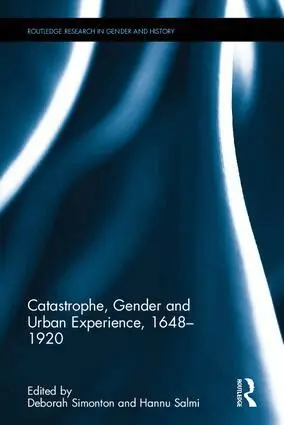
    Catastrophe, Gender and Urban Experience, 1648-1920

    AvDeborah Simonton,Hannu Salmi

    Inbunden, Engelska, 2016

    Del i serien Routledge Research in Gender and History

    2 724 kr

    Beställningsvara. Skickas inom 10-15 vardagar. Fri frakt över 249 kr.

    Beskrivning

    As Enlightenment notions of predictability, progress and the sense that humans could control and shape their environments informed European thought, catastrophes shook many towns to the core, challenging the new world view with dramatic impact. This book concentrates on a period marked by passage from a society of scarcity to one of expenditure and accumulation, from ranks and orders to greater social mobility, from traditional village life to new bourgeois and even individualistic urbanism. The volume employs a broad definition of catastrophe, as it examines how urban communities conceived, adapted to, and were transformed by catastrophes, both natural and human-made. Competing views of gender figure in the telling and retelling of these analyses: women as scapegoats, as vulnerable, as victims, even as cannibals or conversely as defenders, organizers of assistance, inspirers of men; and men in varied guises as protectors, governors and police, heroes, leaders, negotiators and honorable men. Gender is also deployed linguistically to feminize activities or even countries. Inevitably, however, these tragedies are mediated by myth and memory. They are not neutral events whose retelling is a simple narrative. Through a varied array of urban catastrophes, this book is a nuanced account that physically and metaphorically maps men and women into the urban landscape and the worlds of catastrophe.

    Produktinformation

    • Utgivningsdatum:2016-10-31
    • Mått:152 x 229 x 22 mm
    • Vikt:476 g
    • Format:Inbunden
    • Språk:Engelska
    • Serie:Routledge Research in Gender and History
    • Antal sidor:268
    • Förlag:Taylor & Francis Ltd
    • ISBN:9781138696976

    Utforska kategorier

    • Socialhistoria och kulturhistoria inom Historia och arkeologi
    • Europas historia inom Historia och arkeologi

    Mer om författaren

    Deborah Simonton is Associate Professor of British History at the University of Southern Denmark.Hannu Salmi is Professor of Cultural History at the University of Turku.

    Innehållsförteckning

    • 1. Introduction: Catastrophe, Gender and Urban Experience[Deborah Simonton and Hannu Salmi]Part 1: Catastrophe in the Age of Enlightenment and Absolutism2. Surviving the Siege: Catastrophe, Gender and Memory in La Rochelle [Deborah Simonton]3. Between Despair And Hope: The 1755 Earthquake In Lisbon [Helena Murteira]4. Drowned in Westminster: A Social Catastrophe in a West London Suburb, 1550-1650 [Imtiaz Habib and Michan Myer]5. The Plague and the Urban Police in Montpellier at the Beginning of the Eighteenth Century [Nicolas Vidoni]6. Catastrophe, the Civilizing Process and the Urban Built Environment in the Eighteenth-Century British Atlantic World [Emma Hart]Part 2: Catastrophe in the Age of Democracy7. Catastrophe, Emotions and Guilt : The Great Fire of Turku, 1827 [Hannu Salmi]8. Personal Catastrophe, Communal Misfortune: Bankruptcy in an Eighteenth-Century Merchant Family [Jarkko Keskinen]9. City Upside Down: Laughing at the Flooding of the Danube in Late Nineteenth-Century Vienna [Heidi Hakkarainen]10. The Baltic Storm Surge in November 1872: Urban Processes, Gendered Vulnerability and Scientific Transformations [Rasmus Dahlberg, Kristoffer Albris and Martin Jebens]11. Managing the Catastrophe: Cholera, Urban Community and Health Politics in Imperial Moscow [Anna Mazanik]12. One Disaster After Another: The Debate about the University of Ghent as Unfinished Business of the First World War, 1918-1923 [David J. Hensley]Guide to Further Reading