• Fri frakt över 249 kr
  • •
  • Snabba leveranser
  • •
  • Billiga böcker
Kundservice

Du är på sajten för privatpersoner.

Företag, bibliotek eller offentlig verksamhet?

Du handlar på classic.bokus.com, där alla dina funktioner finns intakta.
Till classic.bokus.com
Bokus logotyp. Gå till startsidan.
  • Erbjudanden
  • Nyheter
  • Student
  • Topplistor
  • Barn & ungdom
  • Bokus Play
  • E-böcker
  • Pocketböcker
  • Spel & pussel

10% rabatt på allt med kod: NYSTART10 →

Sidfot

Mina sidor

    Hjälp

    • Kundservice
    • Vanliga frågor och svar
    • Frakt och leverans
    • Retur vid ångerrätt
    • Reklamera vara
    • Betalning
    • Köpvillkor
    • Allmänna villkor
    • Information om webbplatsens tillgänglighet

    Om Bokus

    • Om oss
    • Pressrum
    • För studenter
    • För företag
    • För bibliotek och offentlig verksamhet
    • För leverantörer
    • Hållbarhet

    Populärt

    • Aktuella erbjudanden
    • Presentkort
    • Studentlitteratur
    • Nya böcker
    • Topplistor
    • Signerade böcker
    • Engelska böcker

    Inspiration

    • Boktips
    • BookTok
    • Populära bokserier
    • Barnbokskaraktärer
    • Populära författare
    Logotyp för Bokus
    Följ oss på Facebook (extern länk)Följ oss på Instagram (extern länk)Följ oss på YouTube (extern länk)Följ oss på TikTok (extern länk)
    bokus @ CookiesAnpassa cookiesIntegritetspolicyKöpvillkor
    Till Citymail hemsida (extern länk)Till Budbee hemsida (extern länk)Till Postnord hemsida (extern länk)Till Schenker hemsida (extern länk)Till Early Bird hemsida (extern länk)Till Walleys hemsida (extern länk)
    1. Historia och arkeologi
    2. Historia
    3. Europas historia

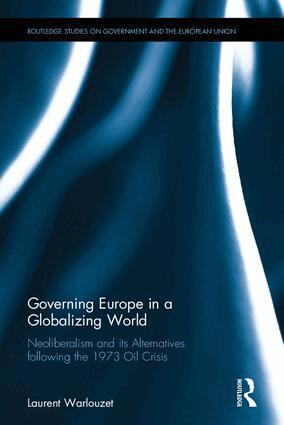
    Governing Europe in a Globalizing World

    Neoliberalism and its Alternatives following the 1973 Oil Crisis

    AvLaurent Warlouzet

    Inbunden, Engelska, 2017

    Del i serien Routledge Studies on Government and the European Union

    2 493 kr

    Beställningsvara. Skickas inom 10-15 vardagar. Fri frakt över 249 kr.

    Fler format och utgåvor

    Häftad

    744 kr

    E-bok

    881 kr

    E-bok

    883 kr

    Beskrivning

    The complex relationship between globalization and European integration was largely shaped in the 1970s. During this decade, globalization began, for the first time, to threaten Western European prosperity. Using an innovative approach, the book shows how western Europeans coped with the challenges of globalization during a time of deep economic crisis during the period 1973-1986. It examines the evolution of economic and social policies at the national, European and global level and expands beyond the European Economic Community (EEC) by analysing the various solutions envisaged by European decision-makers towards regulating globalization, including the creation of the Single Market. Based on extensively examined archives of transnational actors, international organizations and focusing on the governments of France, Germany and the UK, as well as the European Commission, the book uncovers deep, previously unknown, economic divisions among these actors and the roles they played in the success of the EEC.This book will be of key interest to students, scholars and practitioners of political science, European studies, history, comparative politics, public policy and economic history.

    Produktinformation

    • Utgivningsdatum:2017-07-27
    • Mått:156 x 234 x 22 mm
    • Vikt:540 g
    • Format:Inbunden
    • Språk:Engelska
    • Serie:Routledge Studies on Government and the European Union
    • Antal sidor:274
    • Förlag:Taylor & Francis Ltd
    • ISBN:9781138729421

    Utforska kategorier

    • Europas historia inom Historia och arkeologi
    • Ekonomisk politik inom Ekonomi och Ledarskap
    • Politik och statsskick inom Samhälle och politik

    Mer om författaren

    Laurent Warlouzet is a Professor in History at the University of Littoral-Côte d’Opale, Boulogne-sur-mer, France. He was a postdoctoral fellow at the London School of Economics and Political Science (LSE), UK, and the European University Institute of Florence, Italy. His work has appeared in journals such as the Journal of Common Market Studies and Contemporary European History and is also the co-editor-in-chief of the French global history journal Monde(s).

    Recensioner i media

    "This is an important and stimulating attempt to explain how Western Europe eventually chose a market orientated approach to European integration. It highlights the range of choices that faced Western Europe’s major governments during the 1973 to 1986 period. And it provides a persuasive account of how and why the key decisions were made." - N. Piers Ludlow, London School of Economics, UK."Warlouzet delivers a masterpiece dealing very successfully with the response by European policy-makers to the challenges of globalization during the 1970s and 1980s. The author offers a thoroughly multi-level analysis. He combines international as well as transnational history and presents comparative contemporary European integration history at his best. The study is highly recommendable." - Michael Gehler, Jean Monnet Chair ad personam, University of Hildesheim/Austrian Academy of Sciences, Austria."Let me say from the outset: this book is deemed to become a classic and compulsory reading for any scholar in these three disciplines, like those written by the maestro [Alan Milward] [...] This book is both an original interpretative proposal and a newly documented synthesis of this crucial period, still considered in handbooks the dark ages of European integration. After reading this book I am convinced that this period was the bedrock of an epochal historical transformation, which has structurally marked European integration and still frames today the debate about its nature and objectives in the framework of globalization." - Sigfrido M. Ramirez Perez, Max Planck Institute for European Legal History.

    Innehållsförteckning

    • Introduction1. Three Responses to the Shock of the Global2. A Social Regulation of Globalization3. Controlling Multinationals4. Organizing Global Markets5. Managing Decline in Traditional Manufacturing6. Creating European High-technology Champions7. National Financial Crisis and Monetary Cooperation8. The Rise of Competition Policy9. The New Institutional Arrangement to Regulate Globalization (1984-86)10. Conclusion